Showing posts with label behavioral health. Show all posts

Tradition to Transition: Dietary Shifts in Immigrant Patients (Rayas, 8/7/2024)

Muchas gracias to Dr. Lourdes "Lulu" Rayas for a wonderful presentation this week on food customs and Habits in our Mexican immigrant patient population. She titled the presentation, From Traditional to Transitional: Dietary Shifts with Immigration.  

A recording of her wonderful (and tasty) presentation is available HERE

***

My notes:

16% of our population in Sonoma County is foreign born.

Chronic disease is more prevalent  in the Latinx population. In fact, compared to non-Hispanic whites,

  • Hispanic adults 70% more likely be diagnosed with DM2
  • Hispanics are 1.3x more likely to die from diabetes 
  • Hispanics have 2x risk of being hospitalized with ESRD
Of note, the immigrant paradox is a statistical pattern that shows first-generation immigrants may have better health outcomes than native-born people of the same age, race, and gender, even if they have lower socioeconomic status. This pattern has been observed for cardiovascular disease, mental health, and mortality. However, recent research suggests that immigrants may experience a decline in cardiovascular health over time. 

Some of this paradox may be explained by dietary acculturation-- the notion that, over time, immigrants gradually abandon eating habits from their native countries, ultimately increasing fats, sugary beverages, and decreasing fruits and vegetables. 


Children of immigrants have also been noted to have less physical activity (than native born children) and less healthy diets. 

In a study of Latinx immigrants, people were asked to share the pros and cons of their eating habits and food access in their country of origin as compared to the USA. You can see these lists in the images below. I was most struck by the notion that many immigrants literally do not have the time to cook like they did when they lived in their country of origin -- this is likely due to long work hours and less flexible home schedules. Also note, that people report eating more legumes (and less meat) in their country of origin. 


So what can we do as primary care providers? 
Dr. Lulu encouraged us to adhere to three principles: 1) have a culturally competent approach to nutrition 2) help patients find a community that shares valued and traditions, and 3) connect patients to food access resources. 

Culturally competent nutrition
Traditional Mexican cooking, Dr. Rayas, pointed out, contains tons of fresh fruits and vegetables and very little processed foods. We can encourage our patients to carry forward traditional family  menus and discourage processed foods. Commonly used foods used in Mexican cooking have well-documented health benefits:
  • tomato (jitomate) has evidence that it lowers lipids, decreases blood pressure and general inflammation
  • peppers (chiles) help with glucose metabolism 
  • avocado (aguacate) decreases CVD, cancer, and works on the GLP system
  • corn (elote) has been shown to be anti-inflammatory, anti-angiogenesis properties, and anti-carciongenic. (And, btw, corn is the foundation of the Mexican diet). 
  • cactus (nopales) also has anti-inflammatory properties, hypoglycemic (one study showed 85gm of nopales daily demonstrated a 20% reduction in glucose levels), and anti-microbial. 
  • hibiscus (jamaica) can decrease blood pressure (in one study from 134 to 112 SBP it drunk BID x 1 month)

Help patients find community
Many of our immigrants patients are isolated and need help accessing community services and opportunities. Don't forget about some of our amazing community resources, including:
  • Bayer Farms: a community garden space, sponsored by Land Paths, they offer garden space, herbal medicine classes, and a great park/playground
  • The Botanical Bus: featuring bilingual health promotoras bringing a mobile herb clinic all around Sonoma County
  • Campeones de Salud, a 6 week program run by SRCH for families to improve healthy eating and exercise (SRCH referral SA260 Dutton)
  • Center for Well-Being, which offers nutrition classes in English and Spanish (SRCH providers can refer via EpiC)
Connecting patients with food access resources, including:
  • WIC, a food supplementation program for pregnant women, post partum and breastfeeding, and children up to age 5.  
  • Ceres Community Project, free medically tailored meals for patients with chronic illness, including heart failure, cancer, and diabetes. 
  • Redwood Empire Food Bank, which comes to Vista Clinic every Monday from 11am-12pm. 
A poster with text and images of children jumping

Description automatically generated

Live long and Prosper: Longevity and Blue Zones (Perez, 2/21/2024)

 A recording of this presentation can be found HERE.

***

Many thanks to Dr. Jesse Perez for an excellent talk on longevity and "the blue zones". A recording is available above.

My notes:

Dan Buettner, a National Geographic explorer and journalist, coined a term called "the blue zones" in 2004  (and later wrote a book about them with the same name) after an exploratory visit to Okinawa to investigate longevity.

Buettner called out these places

  • Sardinia, Italy
  • Nicoya, Costa Rica
  • Ikaria, Greece
  • Okinawa, Japan
  • Loma Linda, CA USA

These are all geographic centers where, not only do people live longer, but they also have a good quality of life as they age. They all contain a disproportionate number of centenerians (people over 100 years old), who have been able to delay chronic disease by decades and who have also been able to stay physically active and mentally sharp. 

In terms of centenarians (per 100K population), Japan boasts 73/100K, the US 24/100K, Canada 33.5/100K, and China 4/100K.


Sardinia, Italy, a Mediterranean island, was one of the first blue zones to be "discovered". They eat a mostly plant-based diet (only 5% of the diet is meat/fish/poultry). They have steep hills that inhabitants must traverse -- going up and down many times per day -- and they have cultural norms that promote stress management. 

Loma Linda, CA is a Seventh Day Adventist community which deeply respects the sabbath as a day of rest, is grounded in gratitude and fellowship with community, follows a mostly plant-based diet with the biggest  meal earlier in the day. People there partake in regular exercise, and limited alcohol, tobacco and caffeine. 

What do these places have in common?

 Customs and norms that seem to be replicated in different places and promote longevity include:

  • natural daily movement
  • purpose (reason to get out of bed)
  • stress management 
  • 80% rule of Okinawa, in which people are taught to eat until they are "80% full"
  • plant-based diets
  • moderate alcohol use (except Loma Linda, which has none)
  • community and religiosity
  • keeping family close
  • positive influences

There is much debate over the nature vs. nurture in life expectancy. Twin studies show that 50% is likely environmental and 20-30% is genetics. Interestingly people who live over 90 years old have an even stronger genetic influence.

A case study of a town of 9K people in 2009, in which some of the principles of the "blue zones" were implemented town-wide -- found that when you increase people's access to plant based food options, provide healthier options, have children provide no-candy based fundraisers, offer fruit as the default (instead of fries) and improve walking paths -- in just one year, life expectancy was extended by 3.2 years AND health care costs were decreased by 40%. 

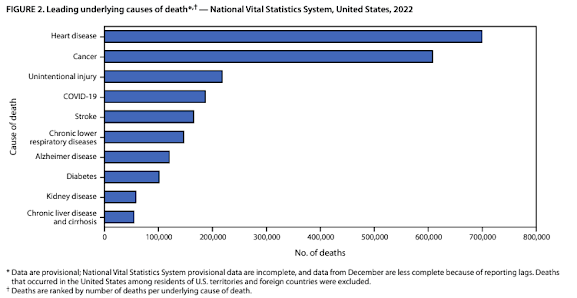
What are the leading causes of death in the US?


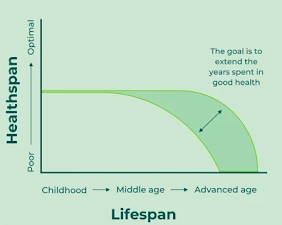
Lifespan vs. Health span

There is also a concept in longevity medicine of considering Health span vs. Lifespan, that is what is the quality of your life not just the longevity of life. Health span takes into account cognitive health, physical health and emotional/mental health. 

We know that several lifestyle factors influence cognitive decline: exercise, moderate alcohol use (1/day), sleep, mental stimulation, and social connection.

UCSF has an E Prognosis calculator, which estimates your 6 month mortality based on a number of factors. Evidence shows that patients DO want to understand how much time they have left. Consider trying it out with some of your elders.

Final recs from Dr. Perez to live a long and health life:

  • plant based diet
  • movement
  • stress management
  • community
  • have a purpose

Primary Care for Patients with Alcohol Use Disorder (Lund, 11/15/2023)

A recording of this presentation is available HERE

***

Deep gratitude to our Assistant Program Director and local expert, Dr. Erin Lund, for an excellent presentation on Primary Care Management of Alcohol Use Disorder (AUD). Living in the wine country, this is a medical problem that sometimes hides in the shadows of social acceptability and cultural norms. 

Dr. Lund covered a broad range of topics related to AUD, including healthy drinking, screening for risky drinking, assessing severity of the use disorder and treatment (both acute withdrawal and chronic management). Alcohol, consumed around the world, is one of the oldest-used psychoactive substances, 2/2 only to caffeine.  There is documentation of humans indulging in alcohol dating back 9,000+ years.

(Note: much of the ETOH literature includes gender-based nomenclature. In an effort to be gender inclusive, I will use the following terms in this blogpost: AMAB: assigned male at birth, AFAB: assigned female at birth)

Healthy drinking

Standard drinks vary based on alcohol content and volume: 12 oz beer, 8-9 oz malt liquor, 5 oz wine, 1.5oz distilled spirits (see image below). Healthy drinking guidelines are based on age and gender assigned at birth: for adults under age 65, no more than 4 drinks for AMAB or 3 drinks for AFAB on any one day AND no more than 14 drinks/week for AMAB and 7 drinks/week for AFAB.


Risky Drinking

Rates of risky drinking and AUD are shockingly high in the US: 12-month prevalence of 13.9% of AUD (7% mild, 3% moderate and 3% severe) and a lifetime overall prevalence of 29%. Typically people AMAB have higher rates than people AFAB, but this is changing, as alcohol becomes more socially acceptable for AFAB patients. People ages 18-35 have the highest prevalence. 

A binge episode is defined as: 

  •  >4 drinks for AFAB >5 drinks for AMAB,
  • at least one day in the last 30 days

>5 days of binge drinking=HEAVY USE

Heavy use is NOT the same as AUD, but intervention should be considered, as heavy use is associated with increased all-cause mortality, earlier death, increased automobile accidents, increased accidental and intentional injuries, and social and legal problems.

Alcohol Use Disorder

DSMV outlines AUD* as "a maladaptive pattern of alcohol use" within the past 12 months, as defined by at least two of the following criteria:

  • Drinking larger amounts/longer periods than intended
  • Efforts/desire to cut down
  • Great deal of time spent obtaining, using, recovering
  • Craving
  • Recurrent failure to fulfill role
  • Continued use despite social/interpersonal problems related to drinking
  • Activities given up (social, occupational, recreational)
  • Recurrent physically hazardous behavior
  • Continued use despite physical or psychological problems
  • Tolerance
  • Withdrawal

*Mild AUD: 2-3 criteria, moderate 4-5, severe ≥ 6

Screening for AUD

USPSTF gives a grade B recommendation to screen ALL adults for unhealthy alcohol use. Here's the good news: when we screen, it makes a difference! Patients actually cut back and change their use habits. People live longer. 

There are a variety of standardized screening tools; these include:

  • 1Q screen: How many times in the past year have you had more than 4 drinks/day (AFAB) or 5 drinks/day (AMAB). Positive with answer of >1
  • AUDIT-C (which is what is used at SRCH, see image below)
A nice thing about using the AUDIT-C is that the results can be used to guide treatment. An AUDIT-C score of 0-3 indicates low risk drinking (no intervention needed), a score 4-5 is moderate risk (brief intervention indicated). A score 6-7 merits a brief intervention + psychotherapy and consideration of pharmacotherapy. A score of 8-9 is an indication for pharmaceutical intervention + psychosocial intervention+/-specialty care management. A score of 10+ merits urgent specialty referral.

Treatment of AUD
Treatment of AUD includes both psychosocial and pharmacological treatments. It also involves both an acute stage (active use, withdrawal) and a chronic stage (maintenance, harm reduction, reduction).

Psychosocial support involves both formal treatment programs (inpatient and outpatient programs), many of which are based in Peer Support. These include but are not limited to AA, smart recovery, etc.
Pharmacological management involves, at the minimum, 1 of 3 FDA-approved medications. These meds can be started in the inpatient or outpatient setting. We have great room to improve in this area. A study in 2012 found that only 8% of US patients with AUD were being treated with medications. 

Considerations in starting meds for patients should include goals (e.g. abstinence vs. reduced use), relevant health factors (e.g. comorbidities like chronic pain, cirrhosis, etc.), and external barriers. 

Alcohol Withdrawal Syndrome (AWS)

The slide pasted below demonstrates the timeline for Alcohol withdrawal and some recommendations in terms of who can withdraw in an outpatient setting vs. those who need inpatient support.

Alcohol withdrawal is most likely to occur in patients who have been drinking for more than 2 weeks and who have abruptly stopped drinking. Once a person is 5 days past their last drink, they are outside the window of acute withdrawal. And one can move onto the maintenance stage of management of AUD. 

Providers should use standardized scores to keep an objective assessment of a patient's alcohol withdrawal. There are several, including the CIWA (10q, objective + subjective report), the SAWS (10q, patient-completed), and the SEWS (7q, clinical assessment)

CIWA: <10: very mild AWS, 10-15 mild AWS, 16-20 modest AWS, >20 severe (DTs)


SAWS: patient scores their own symptoms in past 24 hours, <12 is mild AWS, >12 is moderate to severe AWS


SEWS

The severity of AWS dictates the level of care the patient needs. Patients with mild-moderate withdrawal can be managed in the outpatient setting, assuming they can also 1) have consistent follow-up 2) take PO meds 3) have friend/relative/support person 4) have no prior hx of DTs 5) have no high risk comorbidities (physical or psychiatric) that would make home withdrawal unsafe (e.g. extreme anemia, decompensate cirrhosis) 6) do NOT have polysubstance use.

All other patients should be managed in an inpatient setting.

Pharmacotherapy for AWS

Goal of treatment of AWS is to help patients withdraw safely (prevent DTs, seizures, death) and reduce likelihood of relapse. This can be accomplished using either benzodiazepines (e.g. chlordiazepoxide or lorazepam), which was the previous gold standard, and/or with benzo-sparing protocols, most of which use anticonvulsants and anti-adrenergic medications. 

Anticonvulsants: phenobarbital, gabapentin, valproic acid, carbamazepine

Anti-adrenergic: clonidine, propranolol, guanfacine, precedex

Everyone with AWS should get folic acid (1gm/day) and vitamin B1 (thiamine, 100mg/day)

The idea behind the benzo-sparing protocols is that these medications are AS effective in safe withdrawal with less abuse potential than benzos. There are still evolving studies in this area, and some agents have more evidence than others. These protocols vary based on location and experience. 

See below the draft algorithm (not yet live) at SRCH, which screens for patients who may safely withdraw outpatient and uses fixed dose gabapentin (300mg TID vs. 600mg TID).


Older algorithms use fixed vs. on demand dosing of lorazepam and/or chlordiazepoxide. You can find a link to those older guidelines HERE

Chronic Management of AUD

Okay, finally, moving onto medications that prevent relapse and/or help people cut back and/or help people remain abstinent. Most studies look at a period of time of 12-16 weeks of reduced use and/or abstinence, but in clinical practice a minimum of a year of maintenance therapy is recommended, particularly if there is a high risk of relapse.

FDA approved: naltrexone, Acamprosate, disulfiram

  • Naltrexone: 50mg PO daily OR 380mg IM monthly, reduces risk to any drinking (NNT 10) and heavy drinking (NNT 12), injectable has evidence for reducing number of heavy drinking days. Reduces craving and pleasurable effect of drinking. Contraindicated in liver failure, concomitant opiate use (within 7 days). Pregnancy is relative contraindication.
  • Acamprosate 333mg, 2 tabs TID daily. Reduces return to any drinking (NNT 12), reduces withdrawal associated dysphoria. Has mixed evidence on efficacy compared to placebo. Contraindicated in renal failure (GFR<30) and pregnancy. 
  • Disulfiram: oldest med on the market for AUD (1949), anticipation of feeling sick discourages use. Blinded studies don't show great effect, but open label studies do show reasonable effect. 

Non-FDA approved but have some evidence: topiramate, baclofen, gabapentin, ondansetron, sertraline, semaglutide

  • Topiramate: non-FDA approved, may reduce cravings, impulsivity and post-withdrawal dysphoria, 100-300mg/day (titrated up over 6 weeks from 25mg day starting dose, increase by 50 mg per week), BID dosing recommended. Contraindicated in pregnancy and renal failure.
  • Gabapentin: non-FDA approved, may be continued after using for treatment of AWS, 300mg-600mg TID for maintenance dosing to reduce cravings and return to drinking

Let's Talk about Sex (MacArthur 5/4/2022)

 Big thanks to Dr. Sophie MacArthur for her excellent presentation on a topic that we could  ALL use a little education on-- Sex. And specifically how we talk about it with patients.

The recorded presentation is available HERE

Link to her slides is HERE

My notes:

  • The Sex Ed most of us had in school wasn't any good 
    • a meta-analysis of 48 different studies in 10 countries (including US) in BMJ found high school students believed their sex ed to be impractical, out of touch, sexist, heteronormative, and embarrassing
  • And. .. let's face it. Physicians aren't very good at talking about sex with patients. 
    • While 88% of primary care physicians say they take a sexual history, only 25% of charts have said history recorded
    • A study from the 1990s-- height of the AIDS epidemic-- found providers didn't take sexual history because they didn't feel it was relevant, didn't feel well-trained, and felt embarassed
    • We are inadequately trained
    • We tend to discuss sex only when patients ask
  • But. . .patients want to talk about sex! 
    • In one large study from Europe, 91% of patients want their physicians to ask about their sexual history and sexual health
    • Even of the 15% who would feel embarrassed talking about sex, 75% still wanted their doctor to ask
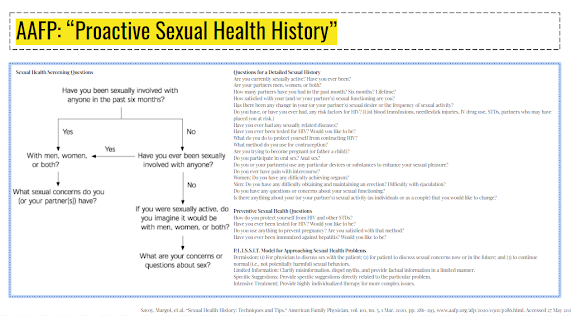
As part of sexual history and STI screening, many of us were trained to ask the following question: "Do you have sex with me, women or both?"

Dr. MacArthur asked us to consider a better question: "When you have sex, what parts of your body come in contact with what parts of someone else? And how?"


Two reasons this question is a better question than the men, women or both question:
  • it is not heteronormative
  • it allows us to screen people for STIs at appropriate sites (e.g. for rectal,  oral GC/CT)
There are several different ways we can approach the topic of discussing sex with our patients. All of them promote using open ended questions. 

3 options:
  • Permission ("May ask you a few questions about your sexual health and sexual practices?")
  • Partners ("Do you have any new partners in the last 12 months? How many? Do your partners have any risk factors?"
  • Practices ("When you have sex, what parts of your body come in contact with what parts of someone else? And how?")
  • Protection from STIs ("Do you and your partners discuss protection from STIs? "What methods do you use? How often do you use them?")
  • Past history STIs ("Have you ever been tested for STIs? Have you ever had an STI?")
  • Pregnancy intention ("Do you think you would like to have (more) children some day?")


3) Fenway Institute/Harvard: 6Ps + Guidance: Taking an Affirming Sexual History
  • Ask routinely, confidentially and free of assumptions
  • Do it often (you will get better at it)
  • Explain why it's important to know what you are asking
  • Ask about function and satisfaction (not just about STI risk)
  • Use open ended questions (e.g. "what types of sex do you have?"), at least initially
  • Normalize less desired responses (e.g. many people don't consistently use condoms; how often do you find yourself not using a condom?")
  • Mirror patient's language if possible 
  • Make the interaction as natural as possible (not robotic) 
  • Give patients the option to answer questions indirectly (e.g. I recommend screening for GC/CT in all the sites that may have been exposed; for example, the throat, the anus, the penis, the vagina. Which of these sites should you have tested today?)
  • Tone and rapport matter, at least as much as the questions 

Risk reduction is an important part of sexual history, but risk extends beyond our traditional view of STIs and unwanted pregnancy. 
Risk=anything that is not sexual health and/or sexual well-being

This can include non-consensual sex, painful sex, bad sex, legal repercussions of sexual behavior (e.g. consent is not sufficient to protect someone), nerve damage (S&M practices)


Risk reduction Resources

Diagnosis and Management of Osteoporosis (Hamann 7/23/2026)

 A recording of this presentation is available HERE .  *** Thanks so much to Dr. Kendal Hamann, SMGR Endocrinologist, for an outstanding Gra...