Showing posts with label opioid use disorder. Show all posts

Addressing Benzodiazepines in Primary Care (Threlfall, 2/28/2024)

A recording of this presentation is available HERE.
***
Many thanks to local psychiatrist, Dr. Alex Threlfall for an excellent Grand Rounds presentation this week: Addressing Benzodiazepines in Primary Care. As we all know, benzodiazepines (heretofore BZD) play a major role in the national opioid epidemic, and despite lack of organized attention to the issue, addressing concomitant BZD use and misuse is an important public health and safety issue for all our patients.

My summary:

BZD were historically the number one prescribed medication in the world (in 1960s and 1970s). They are frequently involved in opiate overdose deaths. The combination is very dangerous. After opioids, BZD are the most commonly caused agent involved in intentional and unintentional overdoses. 
Let's start with six areas of risk (i.e. patients in which you should NOT start BZD).
History of:
  • Mental health conditions associated with trauma
  • Substance use disorder (SUD)
  • Elderly (>65)
  • Chronic pulmonary disease (e.g. COPD)
  • Women of child-bearing age
  • Chronic pain (with or without opiate use)
Trauma
Trauma is rampant in our patient population, upwards of 20-50% of the general US population report a history of childhood physical or sexual abuse. It's even higher -- 70%-- in populations with depression/anxiety, SUD, chronic pain and functional pain disorders like IBS. Sexual abuse directly influences development of SUD.

**THERE IS NO EVIDENCE SUPPORTING THE USE OF BZD in TRAUMA or PTSD (either acute trauma or long term treatment). In fact, there are  studies that suggest that adding benzos at the time of a traumatic event can increase PTSD, can lead to addiction, and that benzos can even reduce the efficacy of psychotherapy by blunting therapeutic effect.


Benzodiazepines are highly addictive. 
VA data from 2016 shows that 58-100% of patients prescribed BZD will become physically dependent, 50% of patients with a pre-existing SUD will develop a BZD use disorder, and 5-10% of patients newly on BZD will develop SUD. 

Benzodiazepines are particularly risky for older adults.
We have not paid attention to our patients as they have aged. People prescribed a BZD were often not offered a safer alternative. In a study of geriatric patients on BZD, <1% had been referred for psychotherapy, 10% were co-prescribed an opioid. The most common indication for BZD in these patients were insomnia and anxiety. Despite this evidence of harm, population studies show increasing rates of BZD rx in elderly patients and failure to discontinue, particularly in people >80 years old and Trend women>> men.

All adults on new or continuous BZD rx

The older you are, the more likely you are to be on a BZD. This is a problem. White people have "better access" to BZD than their non-white cohorts and higher rates of BZD misuse. 

Risks of BZD are real.
Falls, hip fractures, sedation, cognitive impairment, motor vehicle accidents. While an observational study from ~10 years ago found that being on BZD, people were more likely to develop dementia. It is not true that BZD causes dementia, but it does cause cognitive impairment. All BZD are on the Beer's list of medications not safe for elderly patients. Number needed to harm is 2: for every person you successfully treat with BZD, you will harm two. 

As in everything, prevention in the best strategy. In other words, avoid new starts of BZD.

Okay, so when are BZD actually indicated as first-line therapy?
  • Acute crisis setting (e.g. patient floridly manic, psychotic, agitated patient => 2mg lorazepam)
  • Bipolar mania
  • Severe panic
  • Alcohol withdrawal (though we are moving away from BZD use)
  • Seizure disorders
  • Procedures & planned events (e.g. for patients with intellectual disability who need sedation)
  • Phobias (e.g. flying, but beware)
If prescribing BZD for these conditions, you should use the lowest effective dose, avoid alprazolam (aka xanax) whenever possible (super short, very fast acting, too much reinforcement) and restrict prescription for 2 weeks or less.

Of note, BZD are THIRD line treatment for anxiety
First line is pharmacotherapy -- SSRI, SNRI-- and/or evidence based psychotherapy (CBT, mindfulness). 
  • SSRIs/SNRIs are all effective for anxiety disorders. Dr. Threlfall's favorites are escitalopram and sertraline. Start super low (2.5 or 5mg escitalopram=> target 5-20mg 25 mg sertraline, target 100-200mg). People with anxiety will often respond sooner than with depression. If they tolerate, will respond within 1-2 weeks. 
  • Part of efficacy is you! You need to reassure patients, check in (1 week to be sure started/tolerating), then see again in 2-4 weeks. You hold them psychically through the process
  • Buspirone can be effective either standing or PRN. Literature doesn't do it justice. Titrate 10-30mg TID. Watch for serotonin syndrome. 
    • uses for Vets for prn to cross the GG bridge, take prn
    • It's not sedating, but still helps with anxiety.
Second line: gabapentin>>pregabalin>>propranolol>>clonidine
                    amitriptyline*>>nortriptyline
                    hydroxyzine*>> diphenhydramine
  • clonidine for pts with extreme anxiety 0.1mg TID can be pretty effective (BP and adherence and rebound BP issues). Can use 0.1mg patch, can co-treat hypertension
  • *DON'T use amitriptyline in EVER elderly b/c of anti-cholinergic effects
  • *DON'T use hydroxyzine and diphenhydramine in older adults >65 (people with cognitive impairment). Effects wear off pretty quickly, get tolerant quickly
Another note, BZD is NOT FIRST LINE TX for INSOMNIA (per all professional societies)

First line
All recommend CBTi as first-line treatment for insomnia
VA has a free app, free to download, easy to use, is effective: "CBTi coach"
Free app from the VA
Second line options
  • Melatonin: 1-2mg max (long acting)
  • Prazosin (if nightmares/trauma or waking startled): 1mg to start, up by 1mg every 4 days, as much as tolerated, stop at 3mg to see again. VA says 12-18 is safe dose (Threlfall maxes out at 8mg). Side effects: orthostasis, sedation, congestion
  • Trazodone, low dose, start at 25mg, rarely go about 150mg. Above 200mg getting into anti-depressant range. Can get serotonin syndrome if on SSRI. People don't like hangover effect
  • Mirtazapine: more sedating at lower dose 7.5-15mg, above that lose the sedation effect (but keep increased appetite). People when starting mirtazapine can experience heavy sedation during the day for 3-5 days. Try it when that sedation is not going to be too bothersome. Restless legs
  • Doxepin: recent study 3-6mg safe and effective in older adults. On Beer's list, anti-cholintergic but at low dose, better safety profile
  • Amitriptyline/nortriptyline 
Third line
  • Hydroxyzine, diphenhydramine
  • Ambien (Zolpidem) or Temazepam if you really need to, particularly if concomitant bipolar disorder
How to initiate BZD:
1. Rare if you ever do
2. Short symptomatic relief 1-2 weeks
3. Get psychiatry consult
4. Make sure you have the conversation with the patient, "This is going to be short term"
5. Be very clear about the risks
6. Discuss exit strategies (taper, switch)
7. Be the only prescriber
8. Document failure of other trials of meds
9. CURES, urine drug screen
10. BZD treatment agreement if going more than 2 weeks

Use these only Total Daily Dose (TDD): Lorazepam 2mg TDD, Clonazepam 1.5 TDD, Diazepam (he doesn't like, people seek out the effect, 15mg TDD), Temazpeam 30mg TDD

There is evidence that if patients are informed of the risks of BZD, they want off them. In one study in which pharmacy sent patients taking BZD information on the risks of BZD: 62% self-started BZD taper, 21% were completely off at 6 month follow-up. Give people the opportunity to get off with education, encouragement and support. 

One final note, getting people off BZD is not not without risk. In fact, there is new evidence that there is real risk in discontinuing BZD. When people are taken off BZD, they die more, fall more, go to the hospital more, have more suicide attempts and non-fatal overdoses. We have to pay attention to the effects of long-term BZD on their neurophysiology. When people are really attached, get them on the lowest dose possible. And don't use them every day -- intermittent use is MUCH safer than chronic use. 

Tapering is a team-based approach. Use your nurse, your MA, a colleague, behavioral health. Don't start right away. Establish relationship. You ARE the medicine in the room. Establish that before making any changes. It goes a long way. 

An Integrative Approach to Substance Use Disorder (Adachi Serrano, 12/13/2023)

 A recording of this presentation is available HERE

***

Many many thanks to Dr. Katya Adachi Serrano, SRFMR Alumna class of 2014 and Integrative Medicine Fellow (2015) on An Integrative Approach to Substance Use Disorders. Dr. Adachi Serrano blends her family medicine background with training in herbal and integrative medicine, plus a board certification in addiction medicine. In so doing, she spoke thoughtfully on topics from buprenorphine  induction to  herbal supplements for SUD to spiritual support. This is definitely a presentation worth watching! The link is above.

For those of you who prefer the written word, my notes below:

Dr. Adachi Serrano took us through the case of a young man suffering from alcohol use disorder (AUD) and repeated episodes of alcohol withdrawal syndrome (AWS). She started by grounding us in the concept of the tribal MAT Echo Clinic Wellness Wheel (see below): consideration of the mind, body, spirit, and community, as a means to think about the care of patients with SUD. 

Tribal MAT Echo Clinic "Wellness Wheel"

The Body

Medication assisted treatment -- or medication for addiction treatment (MAT)-- is the gold standard for treatment of patients with many SUD. SUD is just like any other chronic disease, Dr. Adachi Serrano argues: SUD has a gradual onset, affects all races/ethnicities/SES, it relapses and remits, is partially relieved by lifestyle changes. And so, we should approach SUD like any other chronic disease.


AWS; Typical treatment for acute alcohol withdrawal involve either long-acting benzodiazepines (chlordiazepoxide or diazepam), or gaba-ergic meds (e.g. gabapentin) tapered by either dosing interval or amount daily. See these patients daily, says Dr. Adachi Serrano.

AUD: The best medication option we have for chronic management of AUD is naltrexone, which decreases cravings and suppresses the pleasure people get from drinking ETOH. This can be dosed 25-50mg qhs, Precaution with: acute hepatitis, liver enzymes 3-5x normal, decompensated cirrhosis, active opioid use. Common adverse events include headache, nausea, drowsiness. Some people also experience anhedonia. 

Another option is long-acting naltrexone (aka vivitrol), which is an IM injection 380mg given q4 weeks (after a 4 day PO trial of naltrexone oral). An alternative maintenance medication is acamprosate, which is dosed 666mg TID (2 tabs of 333 TID). Side effects include diarrhea and adherence. A third option is Gabapentin 100-300mg daily to TID.

OUD: Standard treatment or opiate withdrawal syndrome (OWS) is supportive measures (e.g. clonidine, hydroxyzine, trazodone, ondansetron). Maintenance for OUD is either suboxone or methadone, usually dosed 2-4mg q2-4 hours, max 8mg on D#1. Sublocade, a long-acting injectable buprenorphine, may be available to better-insured patients, dosed at 300mg SQ x 1-2 doses, then 100mg q28 days. Finally, naltrexone is a third maintenance option, but you must be opioid free for minimum of 5 days (ideally 7-10 days). This is idea for patients who do not use opioids. Clonidine is often used as an adjunct during the withdrawal phase 0.1-0.3mg q1 hour. 

Dr. Adachi went on to talk about the value of herbal supplements for SUD, as an adjunct to the standard allopathic medications. Three main categories of herbs: adaptogens, nervine, and nutritive. 

1) Adaptogens help the body to adapt to stress, "normalizing influence on physiology". They tend to be derived from the roots of plants that grow in hardy environments and rugged terrain, and their effect is thought to be due to the hormones the plants themselves have generated in these rugged environments.

  • Ashwagandha, dosed 400-500mg BID helps to normalize GABA activity in the body. This can be helpful in all forms of SUD. Precautions: nightshade allergy, hyperthyroid
  • Rhodiola, derived from arctic regions, is very stimulating. Dosed 100-200mg. Caution: can sometimes be too stimulating, especially in stimulant use, w/d and recovery. Thought to "get the fire burning again"
  • Eleutero aka Siberian Ginseng, increased dopamine, thereby increasing energy levels
  • Licorice also can be helpful, sweet and easy to take
2) Nervines: have a direct effect on the nervous system. The following nervines are considered "calming nervines" which can be helpful in recovery:
  • Skull cap, a GABA agonist, 850-1200mg daily in tincture (very concentrated)
  • Valerian, another GABA agonist
  • Lavender, 1-2 tsp in 8 oz of water
3) The last category are the Nutritives, which are nutrient rich and thought to support the body. One of Dr. Adachi's favorite is milky oats extract, which is nourishing to the nervous system and also increases dopamine. 

The Mind

Mental health treatment should be considered an essential part of MAT. All patients with SUD should be screened for underlying mood disorders (including anxiety, complex PTSD), learning disabilities, and ADHD. These underlying disorders should be treated with both medications and therapy.

Trauma: 90% of patients with OUD report a history of trauma, 80% have child sexual abuse, emotional abuse, or violent trauma. We should see SUD as a marker of trauma and work to normalize  in a therapeutic way. Here Dr. Adachi Serrano used the image of a record playing in our ear-- "our early experiences teach us messages, like a record playing in our mind" that we may not even know is playing. 


This is where mindfulness practice comes in, also CBT. Introduce the concept of brief CBT for a non-therapist (for those of working in primary care practices where mental health services can be hard to come by). Dr. Adachi Serrano took us through brief CBT (see image) and reminded us that the goal is to rewrite the core message, overwrite the music playing in our head: "I am valuable. I am loved. I matter. I am safe"


She encouraged us to teach residents to cultivate their own dopamine -- "give yourself a high five and do a little dance". But in order to prevent burnout in primary care, really important to use motivational interviewing techniques and meet patients where they are at-- know the stages of change and tailor your intervention to the patient's stage, not your desired outcome.

The Spirit

This leads us to spiritual and somatic treatments. Often in patients with SUD there is a temporal disconnect between what the body is experiencing and the present, i.e. the spirit is not living within themselves. This is categorized in different cultures with different words, including susto, soul wound, etc.

EMDR and somatic experiencing may be helpful treatment modalities.

In addition, there are many other spiritual treatments: sweat lodges, talking circles, spiritual counseling, limpiezas.

Meaning is important, and looking for ways to experience normal emotions  -- a safe space to feel both sadness and JOY. To look for one's core values, to recognize safety.

The Community

Healing community is necessary to support recovery. Patients need to ask if their community is supportive to recovery? Is their current community a barrier to recovery? Dr. Adachi Serrano described a person in recovery as being in a "bubble". When you are early in recovery, you are cleaning up your space, trying to keep your bubble strong. If your bubble doesn't have a thick shell, you don't want to be in an environment that is going to stress or test that bubble. You also need the community to provide support around that bubble, to protect the individual while they are vulnerable. This involves tending to the community, offering community -- in whatever healthy forms are available.

Group settings for SUD include: NA, AA, SMART Recovery groups, Talking circles, spiritual communities, etc. Creating connection to community, culture, family. Find space for new identity to grow. We may need to help patients guide them through a change of identity, friends/support circles to see the opportunities that are there.

Treating Opioid Use Disorder in the Hospital: A Trauma Informed Approach (Strickland, 11/17/2021)

Many thanks to Dr. Tiffani Strickland, who gave an action packed Grand Rounds this week on Treating Opioid Use Disorder in the Hospital. She covered a ton of ground on this important topic-- from opioid use trends to adverse child experiences to trauma informed care to  micro-dosing of buprenorphine in the hospital.

To see a full recording of Dr. Strickland's excellent presentation click HERE.

My notes:

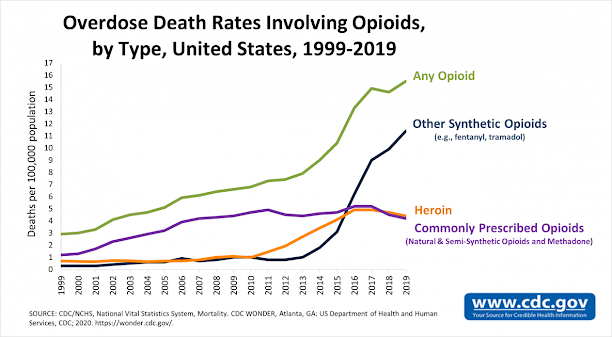
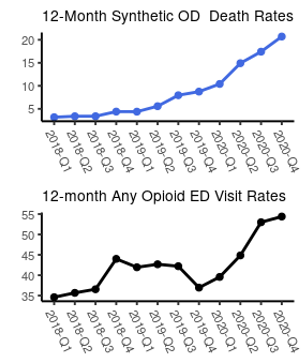
  • Overdose deaths from opioids are off the charts and continue to increase in the US and in our own Sonoma County (see graphs below, including local data)
  • If you only have 5 minutes, watch this video about our current understanding of addiction and social isolation: "Everything you know about addiction is wrong". It challenges our traditional framework for addiction and substance use disorder.
  • Also consider reading this book: Chasing the Scream (by Johann Hari)
SoCo DPH opioid overdose rates (Death and ED visits)

Racism and the opioid epidemic
  • Despite similar rates of drug use, Black Americans (who make up 13% of the population) make up 27% of drug arrests (2018)
  • Disparities in incarceration have affected generations of communities of color
  • African American and Hispanic Americans are 7.5 and 2.3 times more likely to have an incarcerated parent (than white children)
    • having an incarcerated parent puts children at increased risk for future substance use
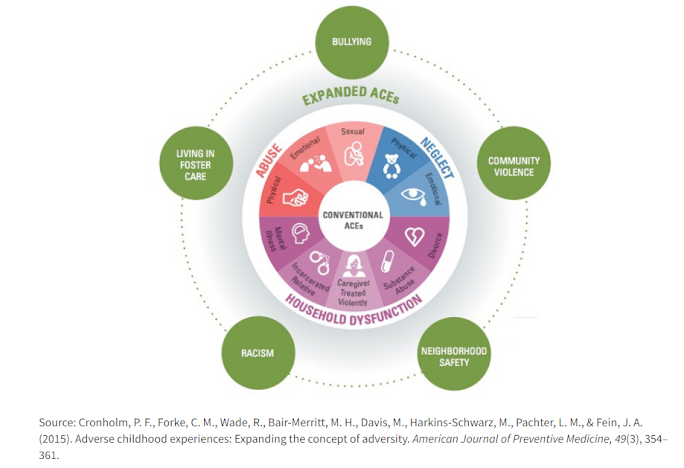
Adverse Childhood Events (ACES)
We know that ACES (childhood abuse, neglect and household dysfunction)are associated with risk for substance use disorder. I.e. the more ACES you have, the higher risk you have to have issues with substances, including IVDU.

Trauma Informed Care
  • It is our job to care for patients with a hx of trauma by influencing healthy coping mechanisms and helping patients build resiliency
  • The Substance Abuse and Mental Health Service Administration (SAMSHA) decribes 6 principles of a trauma-informed approach. These are SO important to consider in how to engage with all patients, but particularly those with high ACE scores
    1. Safety
    2. Trustworthiness and transparency
    3. Peer support
    4. Collaboration and mutuality
    5. Empowerment, voice and control
    6. Cultural, historical and gender issues
  • Again, providers should consider how to help patients focus on RESILIENCE and COPING
  • Examples of how to do this include
    • Openly discussing harm reduction methods (prevent dying and suffering)
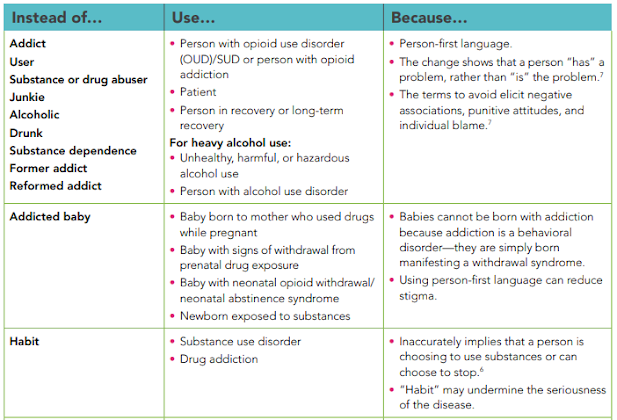
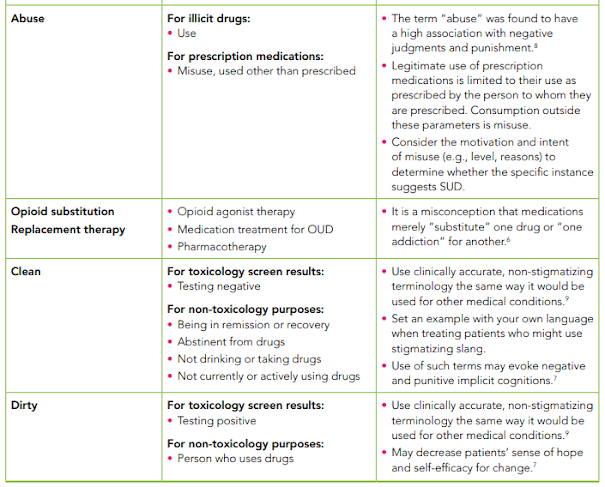
    • Person first language, welcoming, non-discriminatory, non stigmatizing language
      • i.e. person with substance use disorder, person in recovery
      • i.e. avoid "clean" and "dirty" when talking about drug screen results
    • Put up signage offering treatment for opioid use disorder in hospitals and clinics
Words Matter! Check out these tables to make sure that you are using language that is non-stigmatizing.

https://www.drugabuse.gov/sites/default/files/nidamed_wordsmatter3_508.pdf 


Treatment of acute pain and management of withdrawal 
  • If a patient is on BUP, don't STOP it when treating acute pain
    • patients can safely get acute pain meds on top of their BUP
    • you will only precipitate withdrawal at initiation of BUP
    • split dosing to BID for pain management in the acute setting
    • provide sense of calm and comfort (help patient feel safe and connected)
  • Also, schedule tylenol and/or ibuprofen (or toradol) in setting of acute pain
  • consider gabapentinoids, SSRI, TCA, regional block
  • can increase up to 32 mg/day for acute pain
    • add opioids with higher Mu affinity: morphine, hydromorphone, fentanyl
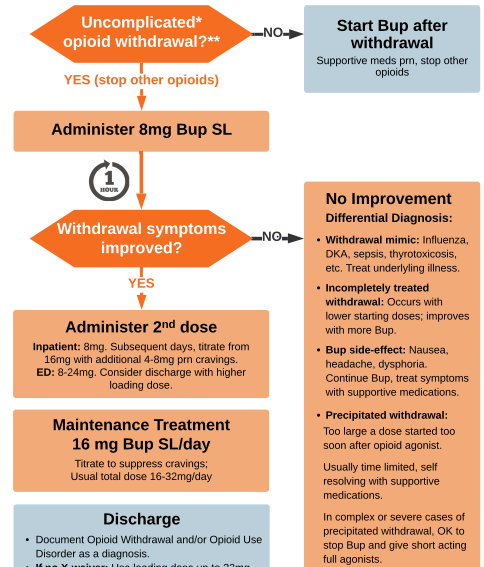
Buprenorphine (BUP) inductions in the hospital (simplified from CA Bridge: https://cabridge.org/tools/resources).
  • Very simple! For uncomplicated withdrawal (COWS>8), start with 8mg BUP SL, recheck in 1 hour, give second dose of 8mg
  • Subsequent days, titrate from 16mg with additional 4-8mg prn cravings
  • Labs to consider (but don't need results to start): UDOA, CBC, HIV, HCV, RPR, HCG, HAV and HBV immunity
  • Adjunctive medications: acetaminophen (pain, headache), clonidine (w/d symptoms), diphenhydramine (anxiety), loperamide (diarrhea), ondansetron (n/v), trazodone, melatonin (sleep)


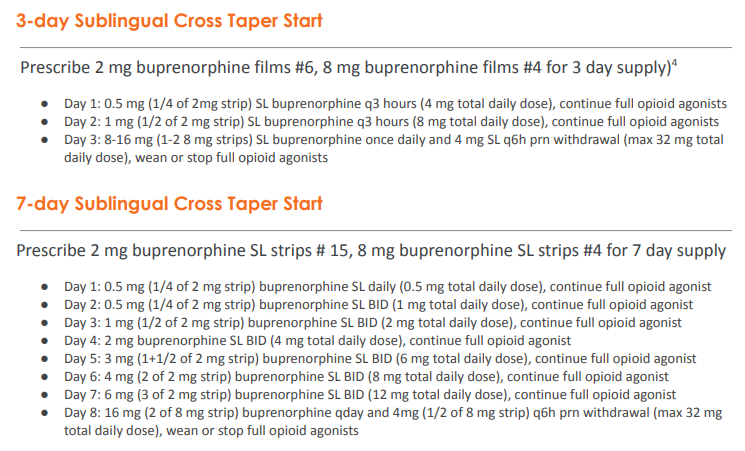
Microdose inductions of BUP
  • Very slow start of BUP to decrease or even eliminate withdrawal symptoms 
  • Consider: if patient taking methadone, history difficulty BUP start, transitioning from prescription opioids, intentionally taking fentanyl daily
  • Avoid: if already significant withdrawal (it's too slow), don't want to continue full opiate agonist, risk for respiratory depression/sedation, prefer rapid start
Harm reduction refers to a set of policies, programs and practices that aim to reduce health, social and economic consequences of drug and alcohol use. 
  • Reduce stigma by being a safe place, regardless of ongoing substance use
  • Offer clean needles (available at Face to Face, DAAC, but also on PHP formulary (see image below)
  • Always give Narcan Rx
  • Give Fentanyl test strips (available at Face to Face)
  • Resource support
  • If patient leaving AMA, give direct phone # to outpatient MAT care:
    • Marla Pfohl MAT program manager SRCH 707-890-0375
    • Erick Hill, Matt Clinic supervisor SRCH 707-867-8690
    • Never Use Alone phone # 800-484-3731
  • Connect to outpatient MAT, give bridge Rx to outpatient MAT (x-license no longer required)


Diagnosis and Management of Osteoporosis (Hamann 7/23/2026)

 A recording of this presentation is available HERE .  *** Thanks so much to Dr. Kendal Hamann, SMGR Endocrinologist, for an outstanding Gra...