Showing posts with label geriatrics. Show all posts

Diagnosis and Management of Osteoporosis (Hamann 7/23/2026)

 A recording of this presentation is available HERE

***

Thanks so much to Dr. Kendal Hamann, SMGR Endocrinologist, for an outstanding Grand Rounds presentation on Osteoporosis. Dr. Hamann covered the basics and the nuances of osteoporosis diagnosis, reminded us that the DEXA scan results are only part of the clinical picture, and clarified when bisphosphonates should be first vs. second line.

Please watch the recorded version above if you want all the details.

4 clinical pearls:

  • Use the FRAX score (10 year fracture score) to guide who should be treated for osteoporosis
  • Even patients whose T score doesn't improve on bisphosphonates, there is a 30-50% decrease in fractures
  • Rebound fractures are real. Never start denosumab (Prolia) without a plan for bisphosphonates after completion
  • Check DEXA 2-5 years into treatment, at start of drug holiday (which is generally 5 years into bisphosphonates), then 2-5 years later

Osteoporosis= decreased BONE STRENGTH, which is a combination of Bone DENSITY (BMD) + Bone TURNOVER + Bone ARCHITECTURE

Normal BMD T>1.0, osteopenia BMD 1>T>-2.5, osteoporosis T<-2.5

Diagnosis of osteoporosis= 

  • Fragility fracture (most commonly, fracture of wrist spine, hip from standing height) 
OR 

  • T-score of <-2.5 by DEXA scan. 
    • Of note, 50% of people with fragility fractures will NOT meet criteria by DEXA
Normal aging vs. Disease
Bone density peaks around 30 years in women and decreases p after that, with a particular drop after menopause. It is part of the normal aging process BUT also leads to significant morbidity and mortality. 
  • Vertebral fractures cause pain, loss of mobility, loss of height, even restrictive lung disease and abdominal issues. Plus, once you have a vertebral fracture, you have 20% risk of a second one in the next year. 
  • Hip fractures: 30% 1 year mortality (higher in men), 40% of people never walk independently after hip fx, 25% wind up needing care in long-term care facility


Bone density scan (i.e. DEXA) is a screening tool. But it only captures 60-80% of bone strength. You should be using  the FRAX score (10 year risk of fracture) in addition to the T score to direct treatment
  • FRAX: >3% risk of hip fracture, >20% risk of any fracture are indications for treatment
  • Usng a T score of <-2.5, about 30% of menopausal women will qualify as having osteoporosis
  • 1/2 of women with fragility fracture do not qualify as having osteoporosis on DEXA (i.e. T score will be >-2.5)
  • Indications for DEXA:
    • women and trans-people >65
    • men >70
    • any adult over 50 with a fragility fracture
    • monitoring treatment
    • lots of other people:
      • primary hyperparathyroidism
      • chronic steroids
      • hypogonadism
      • premature menopause
      • longstanding hyperthyroidism
      • celiac disease
      • pregnancy w/fragility fracture
      • people on GnRH agonists
Risk factors for Osteoporotic Fractures:
Age
History of previous fracture
FALL risk
Family history
Cigarette smoking (1/8 people with hip fx are smokers see below)
ETOH >3 drinks/day
Immobilization
Inadequate Ca and Vitamin D (during childhood, leading to low peak in 30s)

Smoking!!!


Treatment:
Don't forget fall prevention!

Calcium and Vitamin D were given to every patient in every treatment arm of every trial for osteoporosis. They are still the mainstay of osteoporosis treatment and prevention. There is old data demonstrating they definitely decrease risk of fracture. Dosing is all over the place, but Dr. Hamann generally recommends 1000mg of Calcium and 800u of Vitamin D/day. It's fine to get your calcium through dietary means (particularly if you have a history of kidney stones and cannot tolerate supplements), just make sure you're getting 1000mg/day. 

Who should receive treatment?
-anyone with T score <-2.5
-anyone with hx of vertebral/hip fracture from standing
-anyone with 10 year fracture risk (FRAX) > 20%
-anyone with 10 year hip fracture risk (FRAX) >3%
-clinical judgement


Bisphosphonates are the mainstay of osteoporosis treatment. They inhibit osteoclast. Data for fracture risk reduction is robust-- decreased fracture risk 30-50% reduction after about 6 months on bisphosphonates. Cost is low. We have 25+ years of experience now with these meds. 
PO alendronate, ibandronate, risendronate
IV zoledronic acid, ibandronate

Risk of osteonecrosis of the jaw (ONJ) is low but real 1/10,000, risk of atypical femur fracture 1/50,000-1/100,000-- much lower than the number of fractures prevented by the medication.

Side effects: GI 10% (heartburn, upset stomach, nausea), aches (1%), hypocalcemia (check vitamin D and replete  before starting), 1 in 5 people will get a flu-like infusion reaction to zoledronic acid. These should NOT be used in childbearing women. 

Newer agents=Anabolic agents: Romozosumab (sclerostin inhibitor, sq monthly x 1 year, only approved in women), teriparatide & abaloparatide (parathyroid hormone agonists, sq daily x 2 years)
Costly, only approved for 1-2 years
Romozosumab: treat to target T>-2.5, should be used FIRST line for "severe osteoporosis" (T score <-3.0)
Order matters (see image below)-- these anabolic agentsshould be followed by bisphosphonates (not the reverse)
IN particular with denosumab (prolia), fragility fractures of the spine and rebound fractures are real. MUST always be followed by a bisphosphonate. 
order matters!!


Dr. Hamann's General Approach:
Drug holidays and repeat DEXA?
Consider drug holiday after 5 years on bisphosphonate (if not fracturing)
Check DEXA 2-5 years into treatment, at start of drug holiday, then 2-5 years later

When to consult endocrinology?
-intolerance of oral bisphosphonate
-severe osteoporosis (T<-3.0)
-multiple fractures despite treatment
-anyone needing to stop denosumab (prolia)

Family Communication in Palliative Care (Wagner, 12/3/2025)

 A recording of this presentation is available HERE.


***

Thanks to Dr. Andrew Wagner, who gave a really thoughtful and important Grand Rounds this week entitled, Palliative Care Pearls. He spent the bulk of the time showering us with pearls about how to connect and communicate with patients, particularly at the end of life. He touched on spirituality in medicine and lifted up the notion that good communication is good medicine. The sound quality on the recording isn't excellent, but still is worth watching so that you can experience directly his wisdom and experience.

I highlighted the key pearly questions in bold below. 

He highlighted listening and relationship, generous listening, and presence/compassion/empathy. He talked about how death is a part of the life cycle (not a failure) and that healing is coming to peace with mind, body, and soul relationships with spirits on a higher power. If we reframe death as a life cycle event, we can help patients find peace.

One question: "What needs to happen so you can lay your head on your pillow, and say 'I am good'?"

Dr. Wagner talked extensively about centering the patient's identity, values and meaning, which lends itself toward shared decision making: align decisions with values and what matters most, explore "what are you hoping for and what are you most worried about"?, present options in terms of burdens and benefits, and ensure patient and family understand prognosis realistically.

We have the opportunity to offer "a sense of calm", which can be achieved by making eye contact, touch (if/when appropriate), reading the room, modulating voice, sitting down (and ensuring everyone has a chair), arranging the room. 

Another possible question: "How are you doing? How is this going for you?"

Imagine if we regarded death as a final stage of growth. Could we then turn toward death as a master teacher and ask "How then shall I live?"

A third question: "What do you know about what the doctors have been telling you?"

Normalize things for patients, "most people in your situations are anxious/fearful-- how are you doing?", OR "Many people are afraid of dying, is that you?"

Palliative care is understanding people's values and goals and creating care plans that are consistent with those values and goals. Everyone gets tired and frustrated with serious illness, but if someone is feeling that way consistently, "it's important for you to tell us that because there are care plans for people who are tired of doing those things". 

When dealing with surrogate decision makers, it is extremely important to help the surrogate bring the patient into the room: Tell us about [Joe]. Who was he? What did he love? What made him happy? What was important to him?

A fourth question: "Imagine [Joe] had a crystal ball and could hear all the things we have been talking about; what would [Joe] say?". And then a follow-up once you have elicited Joe's ideals, "I recommend, given what we know about what [Joe] cares about, I recommend . . ." (is this consistent/not consistent with Joe's values.

Dr. Wagner reminded us that physicians can and should be more directive when it comes to Code/CPR decisions.

And when it comes to families that do not want information disclosed to patients, try this fifth question: "I understand you don't want me to tell grandma, but is it okay if I ask grandma if she wants to know more about what is going on?"

Lean into the mystery. Nobody knows.

He also reminded us about self care-- I am enough (see below) and I am not alone (we have teammates, colleagues, chaplains, pastoral consultation), and we should be sharing stories as a means of self-healing.

For those of you interested in the resources he references, here are some:

  • Rachel Naomi Remen, MD (Kitchen Table Wisdom and My Grandfather's Blessings) "Healing and the Inner Life: The role of clinician is witnessing>> connection>>healing
    • "I am enough" (this he lifted up as important to physicians to remember and recite before stepping into challenging situations. We meet patients AS THEY ARE; our presence is enough"
    • "All healing is mutual" (physicians are also healed by the encounter)
    • Generous listening-- listening to understanding, NOT fixing, the quality of listening 
    • Blessing each other-- seeing wholeness beneath illness
  • Ira Byock, MD "The Four Things:
    • Please forgive me
    • I forgive you
    • Thank you
    • I love you
  • Balfour Mount, MD "Human Question": What would you want me to know that will allow me to give you excellent care?
  • Harvey Chochinov, MD, "Dignity Therapy"
    • continuity of self: "What do you most want remembered about you?"
    • role preservation
    • generativity
    • hopefulness

Finally, some clinician take-aways: 1) holding safe space 2) healing at the end of life 3) honoring intuation and wisdom ("trust your gut, your intuition, your wisdom"). A final useful statement: "We are helping [Joe] to die".

Alzheimer's Disease 2025 (Mendius 10/15/2025)

 A recording of this presentation is available HERE.

***

Thanks to Dr. Mendius, SMGR Neurologist, for a practice-changing Grand Rounds presentation on Alzheimer's Disease (AD) in 2025. Dr. Mendius shared that he had updated this presentation from 2022, and whereas in 2022, he was filled cynicism and despair regarding the diagnosis and treatment of AD, just three years later, he is filled (and filled us) with tremendous hope. 

Gosh, don't we all need a little more hope these days?! Well. . .here it is, in the form of GR notes on AD!

Two important primary care practice changers right up front:

  • Primary care providers should be ordering a serum blood test  for diagnostics-- Lumipulse G pTau217/ß-Amyloid 1-42 Plasma Ratio -- for patients with cognitive impairment and in whom you suspect Alzheimer's Disease
  • Primary care providers should refer ALL patients with cognitive impairment/concern for dementia to neurology for assessment for new anti-amyloid treatments if they meet indications

 Major neurocognitive disorder criteria

  • Acquired
  • disabling decline from prior level of function (be aware that if you are declining from a relatively high level of function, you may still have a significant dementia)
  • single cognitive area sufficient
Cognitive domains
  • learning and memory (ability to acquire, store, recall info)
  • language (comprehend, repeat, produce in reading/writing/speaking)
  • executive function (plan for something, e.g. get to store and back with all the things)
  • complex attention (sustained focus/attention on something, divided attention)
  • perceptual motor (take a visual, auditory or tactile stimulus and make a complex response)
  • social cognition (can you process social cues, appropriateness of their and your own behavior, theory of mind-- understand their processes)
Ddx of Dementia
  • Alzheimer 60-80% (most common by far)
  • Vascular 15-20% 
  • Lewy Body 10%
  • Frontotemporal 2-10%
  • Parkinson's Dementia 2%
  • Mixed 10%
  • Other: Huntington, CJD, CTE 
Life Expectancy: at age of 70, 3-10 years at time of diagnosis. Average is 7 in AD, but 6-20 years is what Dr. Mendius quotes to patients. 

"Reversible" Dementias: Alcohol, Depression, Metabolic (Thyroid, Parathyroid, B12/folate), Infectious (HIV, syphilis, long COVID), Structural (NPH, subdural hematoma, tumor)

Top Score=30, 26 is lower limit of normal

Dr. Mendius prefers the MOCA due to combination of executive function, language function, visuospatial function and memory. Formal neuropsych testing costs thousands of dollars and 2 days of work. Comprehensive Dementia Review (CDR) is used a lot in research studies but not used much in clinic. 

A few pearls on Parkinsonism and Dementia
  • Parkinson's Disease (PD) has significant dementia component, 40-60% of PD patients "dement" during the course of their disease
  • There is an important difference between Lewy Body Dementia and PD Dementia>>stiffness/tremor/slowness/postural instability presents WITH the dementia at time of  onset. Also presents with REM sleep, visual hallucinations, vivid dreams. 
  • In PD, dementia presents late, 5-8 years after the onset of tremor/movement disorder
Mild Cognitive Impairment: 20% of population >70 has MCI. Most will remain stable, about 25-40% progress to dementia (10-15% per year). People with MCI presenting with primarily short term memory group is most likely to progress to AD
RF: age, smoking, obesity, lack of exercise

Alzheimer's Disease
Genetic Autosomal Dominant occurs in  <1% of AD, mutation amyloid precursor
Only 7.5% of AD presentation presents <65 years (some genetics, some non-genetics)

Cardinal features of AD:
  • Memory impairment-- generally begins with declarative episodic memory (time/place) BEFORE semantic and procedural memories. Anterograde long term episodic amnesia. Trouble laying down new memories. In MOCA task, give 5 words to remember>> if unable to recall words with hints indicate more significant Alzheimer pathology
  • Executive functioning-- anosognosia "I don't know I have a problem" (If someone comes in worried about their memory, they usually don't have dementia, if their spouse is worried>> more likely to be a problem)
  • Visuospatial impairment: ability to draw cube, numbers on clock
  • Language difficulties: "like pruning a tree", language becomes very simple, words to describe things begin to disappear, circumlocution (talk all around a word to describe something)
  • Behavioral Symptoms: apathy and social disengagement, irritability/wandering/aggression tend to be late. Capgras phenomenon: "this is not my wife"
  • Apraxia: motor tasks, e.g. show me how you brush your teeth, use a razor to shave
  • Olfactory dysfunction is typically late
  • Sleep disturbance: frequent arousal
  • Seizures 10-20% of patients with AD have seizures
  • Motor: myoclonus, frontal release signs late in the course
Neuroimaging reveals specific atrophy patterns:

Alzheimer Molecular Biomarkers
  • Currently studying and targeting amyloid and tau, microglia
  • NEW this year!!!! Lumipulse G pTau217/ß-Amyloid 1-42 Plasma Ratio (17970) is a serum test that is sufficiently diagnostic for AD, some pretty good numbers: 91% positive predictive value and 95% negative predictive value (Palmquist 2025). You can reduce the "indeterminate population" down to about 10%. Seems to be covered by insurance!
  • Can be used in the amnestic/MCI population
  • This test should not be done on a "normal" (i.e. not cognitively impaired) patient
  • Lumipulse is necessary to get into trials for antibody infusions

Amyloid is in the brain for a reason>> part of the innate immune system, involved in synaptic formation and repair, organizing long term memory and synaptic organization, also involved in moving things from cell bodies into dendrite and axons

There are TWO Current anti amyloid antibodies that are available:
1) Lecanemab: against protofibrils, used in MCI and mild AD dementia, 10mg/kg every other week. Infusion reactions are common 26% (need to watch 4 hours after first three infusions). need frequently MRI scans to look for flare/T2 for edema, hemorrhage and hemosiderin (12-17% of patients, most asymptomatic, but 9/900 had significant hemorrhage)
-Efficacy demonstrated in study of  1800 patients, 18 months, outcome: CDR, 30% slowing of decline, marked reduction of amyloid in the brain, improvement best if amyloid reduced to 15-20% of what you expect in AD population. Efficacy is maintained to a couple of years for those who respond. NEW Subq injection (weekly) just approved. 

2) Donanemab: goes against deposited plaques, this is a monthly injection, need frequent MRIs
-Efficacy : similar to Lecanemab -- 30% slowing in decline, side effects: 24% edema, hemorrhage/hemosiderin in 30% (vs. 13% in placebo arm)

FUTURE????
Tau seems like major target we will be treating in the future>> tau stabilizes microtubule bundles (internal cytoskeleton of the neuron). Also involved in transport functions. Functional tau has a specific distribution, pathologic tau clumps and destabilizes the microtubule>> neurofibrillary tangle. Stages of AD seem related to Tau.

Microglia also seems like future possibility>> microglia is brain's immune system (lymphocyte infiltrated into the tissue)

170 drugs in various stages of development!

Lifetime interventions for dementia prevention: see the Lancet image below: ~30-40% of dementia is preventable over a lifetime.
2024 Lancet standing commission


Medical Aid in Dying (Rubin 2/26/2025)

A recording of this presentation is available HERE

Many thanks to Dr. Rebecca Rubin for an excellent talk on Medical Aid in Dying (MAID), California's legislation, which allows patients with terminal illness (<6 month prognosis) to request and be prescribed medication to self-administer to end their own life. 

This was a fantastic presentation that included the history of physician-assisted suicide and euthanasia as well as present moral and ethical challenges. Do watch if you have 45 minutes!

My notes from this presentation:


Documentary: How to Die in Oregon (2011) follows the stories of terminally ill patients in Oregon as they navigate physician assisted suicide.

Medical aid in dying, in which a patient must self-administer lethal medications, is not the same as physician-assisted suicide, in which a physician does the administration.

And yet, MAID is still controversial, brings up many social, cultural and ethical issues, including:

  • patient autonomy (the right to make this choice)
  • beneficence (do no harm)
  • the ethical difference between prescribing medication to end someone's life vs. withdrawing life-sustaining care
  • physician patient relationship
Medical Aid in Dying was legalized in California via the "End of Life Options Act", which took effect in June 2016. This followed Oregon's law, "Death with Dignity" which passed in 1997.

The AMA has formally opposed "assisted suicide" since 1993. This was affirmed in 2018 in a close vote. In the same year (2018), the AAFP broke ranks with the AMA and took a position of "engaged neutrality" and deemed the decision a personal one between a physician and patient.

Reasons patients choose MAID from a 2024 Oregon survey, The Commpasion and Choices Meidcal Aid in Dying Utilization Report:
  • loss of autonomy (91.6%)
  • loss of dignity (63.8%)
  • control of bodily functions (46.6%)
  • burden on others (43.3%)
  • pain control (34.3%)
  • finances (8.2%)
The most common illnesses for which people request MAID are cancer>> neurodegenerative>> cardiovascular disease. BUT disproportionate % of people with ALS choose MAID
-88% of people who choose MAID are simultaneously in hospice
-men=women (no data on non-binary, trans)
-disproportionate rates of white and college educated patients
-while rates are rising in BIPOC, still much lower than white

There are currently 11 states in the USA that legally permit MAID (see image)


There are also different policies and procedures, most notably in Europe, but also in parts of Latin America and Oceania (see image)


In California, patients must:

  • Independently and voluntarily request info from two providers
    • Prescriber and consulting physician

    • Some states require written request with witnesses
  • Mandatory waiting period of 2-15 days
  • Terminal illness, life expectancy <6 months
  • Be over the age of 18
  • Have the mental capacity to make decision
  • Physically be able to self-administer meds into GI tract
Evaluation and death must occur within a state’s borders

The Netherlands and Switzerland are both known for more liberal policies around death and dying in patients with terminal illness
  • In the Netherlands, this includes: the possibility of either medical aid in dying OR physician assisted suicide, services available to patients > 12 years old
In Switzerland, their exists "altruistic assisted suicide by non-physicians", Dignitas in Zurich, is open to foreigners as well, 88% of Swiss people believe in MAID, but euthanasia is illega

Access can be an issue:
  • Medication costs ~$600-$800 
  • Independent physicians (private pay) charge between $2000 and $3000 for their services
  • Health plans are not required to cover
  • SNFs have varying rules about what can happen in their facilities
In SoCo, there are 6-7 current consulting physicians but not many prescribers
Kaiser has a robust internal referral system
Some religious intuitions forbid discussing MAID with patients
There does exist the Sonoma County End of Life Doula Initiative. "Death Doulas" help patients and families prepare for death, including planning end of life celebrations, discussing fear, writing stories, etc
Which medications?

Standard medication before 2016 was secobarbital, a potent barbiturate with a time to death that averages 30 minutes. Since 2016, a cocktail that includes medications that decrease respiratory drive, cause an arrythmia, suppress escape rhythm (+nausea meds). See slide below for dosing.

One of the current areas of controversy in MAID is assistance for "psychological suffering"-- in the Netherlands, there have been increasing numbers of patients receiving MAID for mental illness (though rates are still very low--  95% of people who apply are rejected).

Conclusions:
  • MAID is legal in 10 states plus Washington D.C.

  • Criteria for MAID: 

    • Independently and voluntarily request info from two providers

    • Life expectancy<6mo

    • Waiting period 2-15

    • Have capacity

    • Self-administer into GI tract

  • Medication protocol: DDMAPh (digoxin 100mg, diazepam 1gm, morphine 15mg, amitriptyline 8gm, phenobarbital 5gm)


Resources:


Addressing Benzodiazepines in Primary Care (Threlfall, 2/28/2024)

A recording of this presentation is available HERE.
***
Many thanks to local psychiatrist, Dr. Alex Threlfall for an excellent Grand Rounds presentation this week: Addressing Benzodiazepines in Primary Care. As we all know, benzodiazepines (heretofore BZD) play a major role in the national opioid epidemic, and despite lack of organized attention to the issue, addressing concomitant BZD use and misuse is an important public health and safety issue for all our patients.

My summary:

BZD were historically the number one prescribed medication in the world (in 1960s and 1970s). They are frequently involved in opiate overdose deaths. The combination is very dangerous. After opioids, BZD are the most commonly caused agent involved in intentional and unintentional overdoses. 
Let's start with six areas of risk (i.e. patients in which you should NOT start BZD).
History of:
  • Mental health conditions associated with trauma
  • Substance use disorder (SUD)
  • Elderly (>65)
  • Chronic pulmonary disease (e.g. COPD)
  • Women of child-bearing age
  • Chronic pain (with or without opiate use)
Trauma
Trauma is rampant in our patient population, upwards of 20-50% of the general US population report a history of childhood physical or sexual abuse. It's even higher -- 70%-- in populations with depression/anxiety, SUD, chronic pain and functional pain disorders like IBS. Sexual abuse directly influences development of SUD.

**THERE IS NO EVIDENCE SUPPORTING THE USE OF BZD in TRAUMA or PTSD (either acute trauma or long term treatment). In fact, there are  studies that suggest that adding benzos at the time of a traumatic event can increase PTSD, can lead to addiction, and that benzos can even reduce the efficacy of psychotherapy by blunting therapeutic effect.


Benzodiazepines are highly addictive. 
VA data from 2016 shows that 58-100% of patients prescribed BZD will become physically dependent, 50% of patients with a pre-existing SUD will develop a BZD use disorder, and 5-10% of patients newly on BZD will develop SUD. 

Benzodiazepines are particularly risky for older adults.
We have not paid attention to our patients as they have aged. People prescribed a BZD were often not offered a safer alternative. In a study of geriatric patients on BZD, <1% had been referred for psychotherapy, 10% were co-prescribed an opioid. The most common indication for BZD in these patients were insomnia and anxiety. Despite this evidence of harm, population studies show increasing rates of BZD rx in elderly patients and failure to discontinue, particularly in people >80 years old and Trend women>> men.

All adults on new or continuous BZD rx

The older you are, the more likely you are to be on a BZD. This is a problem. White people have "better access" to BZD than their non-white cohorts and higher rates of BZD misuse. 

Risks of BZD are real.
Falls, hip fractures, sedation, cognitive impairment, motor vehicle accidents. While an observational study from ~10 years ago found that being on BZD, people were more likely to develop dementia. It is not true that BZD causes dementia, but it does cause cognitive impairment. All BZD are on the Beer's list of medications not safe for elderly patients. Number needed to harm is 2: for every person you successfully treat with BZD, you will harm two. 

As in everything, prevention in the best strategy. In other words, avoid new starts of BZD.

Okay, so when are BZD actually indicated as first-line therapy?
  • Acute crisis setting (e.g. patient floridly manic, psychotic, agitated patient => 2mg lorazepam)
  • Bipolar mania
  • Severe panic
  • Alcohol withdrawal (though we are moving away from BZD use)
  • Seizure disorders
  • Procedures & planned events (e.g. for patients with intellectual disability who need sedation)
  • Phobias (e.g. flying, but beware)
If prescribing BZD for these conditions, you should use the lowest effective dose, avoid alprazolam (aka xanax) whenever possible (super short, very fast acting, too much reinforcement) and restrict prescription for 2 weeks or less.

Of note, BZD are THIRD line treatment for anxiety
First line is pharmacotherapy -- SSRI, SNRI-- and/or evidence based psychotherapy (CBT, mindfulness). 
  • SSRIs/SNRIs are all effective for anxiety disorders. Dr. Threlfall's favorites are escitalopram and sertraline. Start super low (2.5 or 5mg escitalopram=> target 5-20mg 25 mg sertraline, target 100-200mg). People with anxiety will often respond sooner than with depression. If they tolerate, will respond within 1-2 weeks. 
  • Part of efficacy is you! You need to reassure patients, check in (1 week to be sure started/tolerating), then see again in 2-4 weeks. You hold them psychically through the process
  • Buspirone can be effective either standing or PRN. Literature doesn't do it justice. Titrate 10-30mg TID. Watch for serotonin syndrome. 
    • uses for Vets for prn to cross the GG bridge, take prn
    • It's not sedating, but still helps with anxiety.
Second line: gabapentin>>pregabalin>>propranolol>>clonidine
                    amitriptyline*>>nortriptyline
                    hydroxyzine*>> diphenhydramine
  • clonidine for pts with extreme anxiety 0.1mg TID can be pretty effective (BP and adherence and rebound BP issues). Can use 0.1mg patch, can co-treat hypertension
  • *DON'T use amitriptyline in EVER elderly b/c of anti-cholinergic effects
  • *DON'T use hydroxyzine and diphenhydramine in older adults >65 (people with cognitive impairment). Effects wear off pretty quickly, get tolerant quickly
Another note, BZD is NOT FIRST LINE TX for INSOMNIA (per all professional societies)

First line
All recommend CBTi as first-line treatment for insomnia
VA has a free app, free to download, easy to use, is effective: "CBTi coach"
Free app from the VA
Second line options
  • Melatonin: 1-2mg max (long acting)
  • Prazosin (if nightmares/trauma or waking startled): 1mg to start, up by 1mg every 4 days, as much as tolerated, stop at 3mg to see again. VA says 12-18 is safe dose (Threlfall maxes out at 8mg). Side effects: orthostasis, sedation, congestion
  • Trazodone, low dose, start at 25mg, rarely go about 150mg. Above 200mg getting into anti-depressant range. Can get serotonin syndrome if on SSRI. People don't like hangover effect
  • Mirtazapine: more sedating at lower dose 7.5-15mg, above that lose the sedation effect (but keep increased appetite). People when starting mirtazapine can experience heavy sedation during the day for 3-5 days. Try it when that sedation is not going to be too bothersome. Restless legs
  • Doxepin: recent study 3-6mg safe and effective in older adults. On Beer's list, anti-cholintergic but at low dose, better safety profile
  • Amitriptyline/nortriptyline 
Third line
  • Hydroxyzine, diphenhydramine
  • Ambien (Zolpidem) or Temazepam if you really need to, particularly if concomitant bipolar disorder
How to initiate BZD:
1. Rare if you ever do
2. Short symptomatic relief 1-2 weeks
3. Get psychiatry consult
4. Make sure you have the conversation with the patient, "This is going to be short term"
5. Be very clear about the risks
6. Discuss exit strategies (taper, switch)
7. Be the only prescriber
8. Document failure of other trials of meds
9. CURES, urine drug screen
10. BZD treatment agreement if going more than 2 weeks

Use these only Total Daily Dose (TDD): Lorazepam 2mg TDD, Clonazepam 1.5 TDD, Diazepam (he doesn't like, people seek out the effect, 15mg TDD), Temazpeam 30mg TDD

There is evidence that if patients are informed of the risks of BZD, they want off them. In one study in which pharmacy sent patients taking BZD information on the risks of BZD: 62% self-started BZD taper, 21% were completely off at 6 month follow-up. Give people the opportunity to get off with education, encouragement and support. 

One final note, getting people off BZD is not not without risk. In fact, there is new evidence that there is real risk in discontinuing BZD. When people are taken off BZD, they die more, fall more, go to the hospital more, have more suicide attempts and non-fatal overdoses. We have to pay attention to the effects of long-term BZD on their neurophysiology. When people are really attached, get them on the lowest dose possible. And don't use them every day -- intermittent use is MUCH safer than chronic use. 

Tapering is a team-based approach. Use your nurse, your MA, a colleague, behavioral health. Don't start right away. Establish relationship. You ARE the medicine in the room. Establish that before making any changes. It goes a long way. 

Live long and Prosper: Longevity and Blue Zones (Perez, 2/21/2024)

 A recording of this presentation can be found HERE.

***

Many thanks to Dr. Jesse Perez for an excellent talk on longevity and "the blue zones". A recording is available above.

My notes:

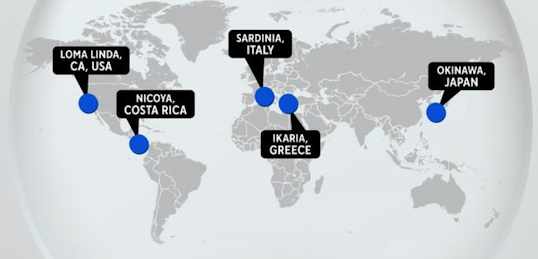
Dan Buettner, a National Geographic explorer and journalist, coined a term called "the blue zones" in 2004  (and later wrote a book about them with the same name) after an exploratory visit to Okinawa to investigate longevity.

Buettner called out these places

  • Sardinia, Italy
  • Nicoya, Costa Rica
  • Ikaria, Greece
  • Okinawa, Japan
  • Loma Linda, CA USA

These are all geographic centers where, not only do people live longer, but they also have a good quality of life as they age. They all contain a disproportionate number of centenerians (people over 100 years old), who have been able to delay chronic disease by decades and who have also been able to stay physically active and mentally sharp. 

In terms of centenarians (per 100K population), Japan boasts 73/100K, the US 24/100K, Canada 33.5/100K, and China 4/100K.


Sardinia, Italy, a Mediterranean island, was one of the first blue zones to be "discovered". They eat a mostly plant-based diet (only 5% of the diet is meat/fish/poultry). They have steep hills that inhabitants must traverse -- going up and down many times per day -- and they have cultural norms that promote stress management. 

Loma Linda, CA is a Seventh Day Adventist community which deeply respects the sabbath as a day of rest, is grounded in gratitude and fellowship with community, follows a mostly plant-based diet with the biggest  meal earlier in the day. People there partake in regular exercise, and limited alcohol, tobacco and caffeine. 

What do these places have in common?

 Customs and norms that seem to be replicated in different places and promote longevity include:

  • natural daily movement
  • purpose (reason to get out of bed)
  • stress management 
  • 80% rule of Okinawa, in which people are taught to eat until they are "80% full"
  • plant-based diets
  • moderate alcohol use (except Loma Linda, which has none)
  • community and religiosity
  • keeping family close
  • positive influences

There is much debate over the nature vs. nurture in life expectancy. Twin studies show that 50% is likely environmental and 20-30% is genetics. Interestingly people who live over 90 years old have an even stronger genetic influence.

A case study of a town of 9K people in 2009, in which some of the principles of the "blue zones" were implemented town-wide -- found that when you increase people's access to plant based food options, provide healthier options, have children provide no-candy based fundraisers, offer fruit as the default (instead of fries) and improve walking paths -- in just one year, life expectancy was extended by 3.2 years AND health care costs were decreased by 40%. 

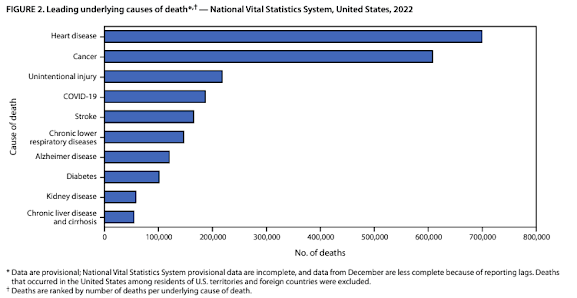
What are the leading causes of death in the US?


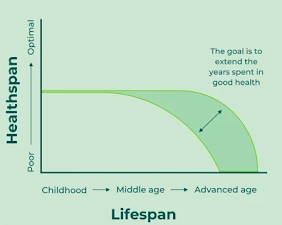
Lifespan vs. Health span

There is also a concept in longevity medicine of considering Health span vs. Lifespan, that is what is the quality of your life not just the longevity of life. Health span takes into account cognitive health, physical health and emotional/mental health. 

We know that several lifestyle factors influence cognitive decline: exercise, moderate alcohol use (1/day), sleep, mental stimulation, and social connection.

UCSF has an E Prognosis calculator, which estimates your 6 month mortality based on a number of factors. Evidence shows that patients DO want to understand how much time they have left. Consider trying it out with some of your elders.

Final recs from Dr. Perez to live a long and health life:

  • plant based diet
  • movement
  • stress management
  • community
  • have a purpose

Wound Care (Cardenas, Cortez, Daly, 3/16/2022)

Many thanks to wound care nurse Wendy Cardenas, general surgeon Allen Cortez, and wound vac rep Kevin Daly for an informative talk this week on Wounds and Wound Care. I learned so much!

For a recording of their presentation click HERE (starting 11 minutes into the recording)

My notes:

  • There are all kinds of wounds: surgical/traumatic, pressure, vascular, diabetic, infectious
  • 1.3-3 million Americans are treated for pressure wounds each year
  • 60,000 deaths per year are attributed to pressure wounds
  • $9.1-11.6 billion dollars spent in the US on pressure wound are alone
  • You only need 33 mmHg of pressure to create a pressure wound--> equivalent to a "gentle handshake"
Physician role in wound management

  • decrease pressure
  • decrease friction/shear forces
  • manage incontinence (urinary, fecal>> indwelling/suprapubic catheters, ostomy)
  • nutrition! nutrition! nutrition! (protein-calorie, blood sugar control, obesity)
  • pain management
  • managing comorbidities (DM, tobacco, drug addiction, venous stasis, etc)
  • education (patient, caregiver, nursing staff, family)>> "you can tell people what to do, but if you give them the reason why, there is much more acceptance and compliance"

Initial management of wounds

  • Identify and treat the cause
  • Clean the wound--> tap water is just as good as sterile saline or any other wash (okay to shower day after surgery, no baths). Pulse evacuation (in OR) with fluid and pressure has been shown to improve outcomes. A simple syringe can also help w/debridement
  • Keep wounds MOIST to allow capillary ingrowth (not too wet/not too dry)
  • Debridement (wet to dry, enzymatic, surgical at bedside or in OR)
    • you want to see bleeding
  • Optimize nutrition (glucose control, protein)
  • Optimize comorbidities (stop smoking!)
  • Antibiotics if appropriate--> only if s/sx infection, "use common sense"
  • Adjuncts (e.g. iodine/betadine-- can cause tissue damage, which can disrupt healthy granulation tissue. No evidence that adjuncts improve healing). 
Q: What is the perfect wound dressing?  A: Skin

Wound Vacs
3M Rep, Kevin Daly, then took us through the history of wound vacs (in hospitals since 1995, outside the hospital since 2000) and the range of products that are available, including silver-impregnated foam, special non-adherent dressings (silicone-based) designed to lay between wound and the wound vac (to prevent foam from sticking to the wound), the evolution of the instill vac 

What does a wound vac do?
reduces edema around wound
heals wound 60% faster than standard dressing
stretches cells--> leads to degranulation tissue

Contraindications to using a wound vac
No active cancer in the wound
Dead/necrotic tissue in the wound
Untreated osteomyelitis (if osteo is being treated, it is fine)

Who qualifies for a wound vac at home?
if wound vac was started in the hospital, generally patients can go home with the vac, but a wound vac isn't always the best thing for a patient
wound vacs weigh 8-11 pounds, too heavy for some
need to have home health care (dressing change 3x/week, 1x/week has to be licensed person who measures the wound to demonstrate healing)
must be able to keep wound vac on 22 hours/day 
  • Of note, patients should be off their wound vac no more than 2 hours/day
  • When vac dressings are used in skin grafts, you must use non-adherent dressing between the graft and the foam
  • Vac instill: instills fluid (e.g. normal saline) into the wound. Protocol: dwell time 10 minutes, 2 hour suction. Vac instill leads to 40% more granulation tissue than regular wound vac. Only available in acute care (hospital, some LTAC/some SNF
  • Prevena vac is used along closed clean incisions, helps approximate the wound. Not for everyone, only place in patients who are high risk for dehiscence (morbid obese, redo). Put on in the OR. Entire product is disposable. When stops holding suction, battery makes noise, it shoudl all get thrown away. No wound care needed, no home health required.
  • Prevena vac
Our Wound Care Queen, Wendy Cardenas, finished off the presentation with these gems

Four stages of wound healing: hemostasis (immediate)>> inflammatory stage (6 days, WBCs/macrophages debride bioburden) >>proliferation (up to 3 weeks, this is where wounds get stuck, go from acute to chronic)>>maturation (can last up to a year, skin is never going to be exactly the same, always a place that can reopen, tensile strength permanently compromised)

How to approach a wound ala Wendy Cardenas

1) Figure out what happened
    chart review, look for all old notes pertaining to wound
    ask the patient, "How did this happen?"
    check for pressure points
2) Check for infection: is the surrounding tissue hot, red, indurated, painful?
    wound bed funky, milky, shiny, smell bad, creamy or copious fluid
3) Foot wounds: pressure, diabetic, venous vs. arterial ulcers
    venous: medial/lateral/posterior: irregularly shaped, shallow, yellow slough, not painful>> compress!
    arterial: medial/lateral: round, deep, pale bed, don't bleed easily, not much pulse>> no pressure!
4) Wound products you might use in the hospital
    foam dressings: prophylactic on sacrum or coccyx, heel + offloading boot
    plura-gel: adds hydration, cleans up wound
    silver-impregnated hydro-gel
    honey: better for superficial wounds
    zinc: moisture associated breakdown, good for venous stasis legs (use w/compression)


Additional pearls:
  • do NOT ever do superficial cultures on wounds; superficial cultures will only reveal polymicrobial organisms and skin flora
    • quantitative tissue cultures are gold standard
  • silver is bacteriostatic 
  • primary closure (clean wound), delayed primary closure (w/steristrips a day or two after), closure w/secondary intention
  • skin graft wound vacs STINK when you first remove (5 days after a skin graft)
  • if you have an abscess make a BIG BIG hole, making a tiny incision and packing will cause more pain. Big wounds are better


The Prelude to Hemodialysis (Cheung 12/1/2021)

Thanks so much to Dr. Eric Cheung, nephrologist, who delivered a FABULOUS Grand Rounds originally titled the Transition from Chronic Kidney Disease to Dialysis, now rebranded as "The Prelude to Hemodialysis" Dr. Cheung’s presentation was tremendously informative and extremely practical. . .and he even had some good jokes. 

A link to a recording of his presentation is available HERE.


 Dr. Cheung first shared with us the global trends regarding dialysis. While center-based hemodialysis (HD) is much more common in the US (~90% of US pts), home peritoneal dialysis (PD) is much more common in developing countries (it’s cheaper and requires less infrastructure). Interestingly PD rates are also quite high in Hong Kong (80%) where ALL patients are mandated to start dialysis on PD. In general the highest rates of dialysis are in the wealthiest countries. Both the US and Japan have a slightly lower incidence of new dialysis over the past decade which is reassuring.


In the US, there are 468,000 patients on dialysis, and 193,000 with a “functional transplant”.


Fortunately there are several minority groups who have a decreasing trend in the need for dialysis over the last decade: 15% lower in Blacks, 24% lower in American Indian/Alaska Native, 17% lower in Hispanic, and 11% lower in females. (We hope this is because of improved prevention and education!)


One area we need to improve in is telling our patients they have CKD.  

  • Of patients who have CKD 1-3 (who are thus asymptomatic), less than 10% know they have CKD
  • For patients who are CKD stage 4, only 45% know they have CKD. Yikes!


There are several types of transition from advanced CKD:

  • Advanced CKD -> dialysiS
  • Advanced CKD -> pre-emptive transplantation
  • Changing dialysis modalities (HDà PD, PDà HD)
  • Failed transplant -> dialysis
  • Dialysis -> transplant
  • Withdraw of care from dialysis (which leads to death in about 7-10 days)

And don’t forget that no initiation of dialysis is an option- just conservative management


Categorizing patient risk for progression from CKD to dialysis:

  • High Risk Patients: any patient with Diabetes (but especially those with proteinuria), uncontrolled HTN, CHF, cirrhosis, >60 years old, and Polycystic CKD.
  • Lower Risk Patients: AKI with recovery (i.e. Sepsis, cardiac arrest, dehydration, obstructive uropathy), ironically Polycystic CKD (really based on family history—if

There is an online calculator to help! https://kidneyfailurerisk.com/


Does it help to start dialysis early (GFR 10-14) vs late (GFR 5-7)?

  • The IDEAL study for ASYMPTOMATIC patients with CKD shows us that there is NO difference in mortality. So…
    • if the eGFR is >15 or is 5-15 without symptoms -> monitor (of course with the help of your friendly neighborhood nephrologist
    • if the eGFR is 5-15 with symptoms or <5 -> start dialysis


Initiation of dialysis is risky!  Especially the first several months—7-10x increase in death (even over all dialysis patients who already have a high mortality)!

Cardiovascular and infectious causes are major causes of increased mortality. Indications to initiate dialysis include:

·         Absolute indications: uremic encephalopathy, uremic pericarditis/pleuritic

·         Common indications: declining  nutrition/appetite, fatigue/malaise, mild cognitive impairment

Ideally, initiation starts gradually with advanced planning including setting expectations and getting long-term access coordinated (see below).

However, some patients need to start HD in the hospital – if no other option, poorly controlled HTN or hypotension, active angina, hx of seizures, or lack of social support.


Hemodialysis Access:

·         AV fistula is preferred and often lasts the longest and is basically a direct connection of the artery and vein in the forearm. Greatest risk of clot in the first month but thereafter clots are uncommon. Can last decades.

·         AV graft needed sometimes in vasculopaths and connect the artery and vein, but tends to clot when no longer in use.

·         Central venous catheter/tunneled cath: definitely least preferred but often used in transition. It is inserted into the internal jugular (NEVER the subclavian due to risk of stenosis), double lumen 14-16 french.

TIPS from your friendly nephrologist for primary care providers:

 Medications to avoid/adjust:

o   DM: ask CKD progresses, pts generally need less insulin needed because it hangs around longer; ALWAYS stop metformin when GFR <30 to avoid lactic acidosis; and d/c thiazolidinediones

o   HTN: as CKD progresses, stop ACE/ARBs (but after they start on HD they are great HTN meds)

o   Seizure/Pain meds: avoid gabapentin and baclofen which have toxic metabolites in CKD/ESRD

o   Antibiotics: Bactrim/Septra – don’t use in CKD patients since the SMX component can cause hyperkalemia; Cefepime can accumulate (care with this!)

 Preserve the Veins in your CKD patients long BEFORE they may need dialysis!

  • Avoid subclavian lines
  • Avoid PICC lines and midlines as much as possible
  • For phlebotomy, use dorsal veins of the dominant hand instead of AC fossa

 A word on race based GFR.  Dr. Kohatsu shared a recent NEJM editorial from a few weeks ago really challenging our notions of race-based GFR estimations, which can lead to underdiagnosis and later transplant evaluation for black patients. For more, check out this article as well. Thanks, Dr. Kohatsu for your local advocacy work to change the way GFR is reported in our community. 


And last but not least. . .What is Dr. Cheung’s personally preferred form of dialysis? (and hopefully he never needs it!)….HD at HOME!  (yes, this is actually an option). Rare but has lower mortality and complications than HD at centers


Serious Illness Communication (Sanders, 6/2/2021)

Many thanks to Dr. Justin Sanders for a really important Grand Rounds presentation this week on Serious Illness Communication. Dr. Sanders is a family physician, a palliative care specialist and a researcher in Dr. Atul Gawande's think tank, Ariadne Labs. He has a particular interest in disparities and inequities in end of life care.

A recording of his Grand Rounds can be found HERE.

What is serious illness communication, you ask? 

Serious Illness Communication is a framework for how health care providers can engage with patients with advanced illness to elicit their goals and values, share their prognosis, and explore key topics for their end of life care-- all essential components of advanced care planning as well as the physician-patient relationship. 

Dr. Sanders (and the serious illness care model) ask us to proactively identify patients with severe illness so that we can prioritize and systematize important conversations. The goal?  Improved communication with our patients and "goal-concordant care"-- that is, to be sure that the care a patient receives at the end of their life is concordant with the life they want to live.

Take a moment to consider your patient panel, or if that feels overwhelming, take a look at your patient schedule for today and ask yourself this question: which of my patients would I not be surprised if they died in the next year? 

This is called "the surprise question" and has been validated in palliative care studies. Maybe you are thinking about a patient with chronic heart disease, lung disease, cancer, or  maybe one who has been hospitalized several times in the last year; perhaps it's someone with decreasing mobility, or even one that you hear a lot from their caretaker. It may be helpful to extend that time to 1-2 years so you capture as many patients is possible.

Now, the next question: is there a way your system can help plan the time, space, and opportunity to have these important conversations? Maybe an EHR prompt? An extended visit? A dedicated visit?

Once the space is set, the serious illness communication can begin-- guided by the serious illness communication guide (SICG) cut and paste below. 

The work is big: Have you asked them who their surrogate decision-maker should be in their stead? Do they have an Advanced Care Plan? Do they have a POLST? But perhaps more importantly:


 Here are the key SICG questions:

  • What are YOUR goals?
  • What are YOUR fears and worries if your health deteriorates or your illness progresses?
  • What are your strengths?
  • What abilities are important for you in your life?
  • What might you be willing to go through for the sake of more time?
These are such a powerful set of questions-- of course, the very questions I would want someone to ask me if my time was short-- and turns out the very questions patients want to be asked. 

He also spent some time talking about framing prognosis and encouraged us to use a framework for how we present this information. An original viewpoint co-authored in JAMA by Dr. Sanders and colleagues is linked here for your own reading.

The short take is this: prognosis communication is super challenging, many of us struggle with how to provide this type of information in a useful way that doesn't allow for hope. The article argues that prognosis may be communicated in three different approaches: time-based, function-based, and reasonable-uncertainty based. Exploring with a patient for his/her preferences to guide the discussion will help providers give the patient the most useful information.

Time: how much time do you think I Have
Function: what will my function look like
Reasonable uncertainty: remember our goal is not to be right; it's to help patients have the information they need to reach their goals.

And then, finally Dr. Sanders said, you (the provider) should take the information gleaned from this rich conversation with your patient, apply the prognosis information you have, and make a recommendation (patients want a recommendation from you!), using language like this: "I have heard you say_________________and based on what you said, I am going to recommend ________________________."

Voila. Hard stuff. Thanks for the work you do.


Diagnosis and Management of Osteoporosis (Hamann 7/23/2026)

 A recording of this presentation is available HERE .  *** Thanks so much to Dr. Kendal Hamann, SMGR Endocrinologist, for an outstanding Gra...