Showing posts with label maternal and child health. Show all posts

Cardio-Obstetrics (Soneji, 5/13/26)

A recording of this presentation is available HERE.

Thanks so much to Dr. Nisha Soneji, a new local expert in Cardio-Obstetrics! She joined SMGR in the fall and gave us a great presentation this week that was very family medicine friendly-- on the overlap of cardiovascular disease (hypertension, pre-E, valvular disease) and the peripartum time. It's a great presentation, and she is going to be an awesome resource to have here in our community.

"Pregnancy itself is a major stress test-- you are basically on a treadmill all the time".

US has a shocking rate of maternal mortality-- the highest among developed countries, 49.5/100K live births (highest for black women in the US) and CVD is the major contributor to maternal mortality. Significant racial and ethnic disparities are seen: black women 2.6x risk of death compared to white women. Advancing maternal age increases risk of maternal mortality (87.1 death/100K births)


CVD accounts for 33% of all maternal deaths. Whereas infectious risk of maternal mortality have decreased over the last decade, CVD related deaths are increasing, 2/3rds are considered preventable.

Most common cause of CVD death:
  • congenital heart disease
  • ischemic heart disease
  • valvular heart disease (esp stenotic disease: aortic stenosis, mitral stenosis)
  • hypertensive heart disease
  • congestive heart failure (peripartum cardiomyopathy, esp post partum)Contributing factors; delayed response to warnings (pregnancy symptoms mimic CVD), ineffective care, misdiagnosis, lack of continuity post partum (risk continues up to 6 months after delivery)
2/3 of maternal deaths occur during post partum period, when women tend to make less time to be seen (caring for newborn, going through hormonal changes, PP depression, etc)

CV changes during pregnancy: "Pregnancy itself is a major stress test-- you are basically on a treadmill all the time". If you are at risk for CVD, in can present in pregnancy or post partum.

See image below:
Normal findings in pregnancy: systolic murmur, elevated JVP, displaced apex, edema, increase in chambers on TTE, small pericardial effusion
NOT normal in pregnancy: S4, diastolic murmur, fixed splitting second heart sound, moderate to large pericardial effusionNOTABLY Unchanged in pregnancy: LVEF, REF, PASP


American College Cardiology


Who should be referred to Cardio-OB?
change in functional status
asthma not responsive to therapy
palpitations
chest pain/tightness that doesn't improve
syncope
SBP not controlled on med
oxygen saturation <90%
hx chemo can lead to HF in pregnant women (10% risk)
existing cardiac conditions: valvular disease, CHF


Risk Assessment:

Modified WHO 2.0 risk calculator


CARPREG

Who doesn't need referral: isolated sinus tachycardia, benign ectopy, mild hypertension managed on meds, normal BNP or TTE. If in doubt, refer!

Preconception counseling: high risk patients should get preconception counseling when risk of death is so high that they really should NOT get pregnant.
Assess risk
medication review (cannot use ACE/ARB)
genetic consultation (if CHD, increased risk of fetal CHD)Testing:
TTE: echo is first line monitoring tool
Troponin, BNP not routinely monitor, but good idea to check baseline if risk factors and/or symptoms. Can then compare post partum to antepartum BNP. Troponin can be ordered routine at the lab.BNP>200 can be normal in pregnancy
BNP >300 VERY suggestive of heart failure
CXR for shortness of breath
Treadmill stress tests in pregnancy can be done safely
Zio/holter
CT chest with angiogram can be considered if benefit>> risk
Hypertension in pregnancy
Chronic hypertension (<20 weeks), gestational hypertension (>20 weeks), preE (+organ dysfunction, Pre-Eclampsia with severe features, Eclampsia (with seizures)
BP Goal <140/90
Daily low dose ASA during pregnancy for preE/eclampsia prevention >12 weeks EGA in moderate to high risk patients
Benefit>>Risk
Pre E: 71% increased risk CVD, 2.5 risk CAD, 4x risk HF

Meds for BP: labetolol (shouldn't be used in asthma, decompensated cardiac function), can use nifedipine

Arrythmias
pregnancy increases aryrthmias due to increased blood flow and hormonal changes. Most common CV complication. Increases with age >41 years.
Preventable
SVT: vagal maneuvers, beta blockers, calcium channel blockers, digoxin (can be added if BB don't work) flecainide
Defer ablation to post partum (due to risk)
Afib: BB, digoxin, 2nd line calcium channel blockers, can be safely cardioverted
Can get implanted devices if need pacemaker

Heart Failure should be treated during pregnancy, cannot be deferred to post partum
-bad outcomes for moms and babies


Peripartum Cardiomyopathy
diagnosis of exclusion
new EF <45% without reversible cause
RF: maternal age, htn, preE, prior cardiomyopathy
present in 3rd trimester to 1 month (up to 6 months PP)
20% recurrence rate, contraception is important
risk of death 5-10% at 1 year
most people with recover EF, but future pregnancy brings higher risk
Meds: loop diuretic, hydralazine, isosorbide dinitrite, digoxin, beta blocker, ((IV dobutamine can be used), AVOID: ACE/ARB/ARNI, SGLT2
Vaginal delivery is recommended unless cardiogenic shock (safer than LTCS)

Valvular Disease
preconception counseling important, especially with L side valve disease (even if asymptomatic)
send to cardiology, need to get stress test pre-conception
TTE q trimester for mild-mod valve disease
R sided valvular disease (e.g. TR), need fetal echo, rarely need intervention>> vaginal delivery preferred
L sided valvular disease: regurgitation well-tolerated, stenotic disease NOT well tolerated in pregnancy (e.g. AS or MS, even if mild). At high risk for atrial arrhthmias

CAD in pregnancy
1/10K hospitalizations after pregnancy
Risk increases 3x
RF: age, black race, eclampsia/preE, known CAD, traditional risk factors (e.g. DM)
Spontaneous dissection (SCAD) most common cause of pregnancy-related MI (conservative tx recommended)

The Care of Children with Medical Complexity (Naber, 1/21/26)

A recording of this presentation is available HERE.

Deep gratitude this week to Dr. Urs Naber, CPMC PICU Medical Director, who jumped in last minute to give a moving Grand Rounds this week on the Care of Children with Medical Complexity (CMC). Please do watch his presentation at the above link if you are interested in the topic. 

In the literature 0.7-11% of ALL children have medical complexity (definition somewhat vague)>> about 1-2% of all children


Defining CMC: chronic condition + substantial family needs + functional limitation + heath care utilization

  • previously CF patients were the highest percentage of CMC, but new treatments has changed this.
  • Any medical condition can count as a chronic condition, depending on its length >> technology dependence is a driver that makes this population so vulnerable


Children with CMC have specific in home needs: medical equipment, medication administration, assistance with ADLs. CP/MD often have respiratory support technology and functional limitations that lead to high needs and high healthcare utilization


Dr. Naber shared with us a video (included in the link of the full presentation above) about a child with medical complexity named Connor and his two dads and four adopted siblings. Connor was born with Trisomy 9 and is G-tube dependent, wheelchair bound, non-verbal. The video really showed us how complex it is to take care of these children, a reminder of what it means to families to be together. Reminder to

CMC have a substantial impact on healthcare, which is expanding, 2006 <1% population, making up 10% of pediatric hospitalizations, 25% of all hospital days, 41% of all healthcare costs (attributed to hospitalizations). . . 2022, now 1-2% of population, 63% of hospitalizations attributed, 79% of all hospital days, 84% of healthcare costs. Many times these kids have to stay in ICU for their respiratory care. 

Why is this happening? 

  • increased survival for children with chronic conditions (e.g. spina bifida, esophageal atresia, biliary atresia, congenital heart disease, prematurity>> previously led to non-survival, but over the last 50 years, rate of survival has increased and continues to increase)
  • Total ICU costs are driven dramatically by CMCs (see image below), only 10% of pediatric critical care do not have chronic disease
  • ED visits: CMCs comprise 20-30% of all visits (even though 1-2% of population), most commonly respiratory infections, medical device malfunction
    • presents unique challenges for ED physician (medical complexity, long medlists), as well as caregiver and patients (subspecialists not available, ED is dangerous)

Dr. Naber shared data from Houston looking at the impact of a comprehensive care program  (JAMA, Mosquera, et al 2014), over 3 year timespan>> care coordinator, nurse, cluster care, how much would that effect care?
  • 52% reduction in ED visit
  • 55% reduction in days of serious illness
  • 42% reduction in cost (including the comprehensive care costs)
  • time investment decreased over time>> had to invest 6 hours/month per child up front, down to 2 hours/month per child over time  and still maintain the drastic impact (see image)


Helping families cope with medical complexity-- surrounding structures really matter 


Dr. Naber reminded us of the IHSS program in California, which allows parents to get some income for their caregiving of children with medical complexity. Doesn't cover medical care, but does help cover ADLS (feeding, bathing, clothing)>> family  must register and become a provider through the program. Payment is low but is something for parents who are unable to work due to their children with medical complexity. Caregivers with CMC experience an overwhelming burden (almost double) of financial hardship (JAMA 2025)
Families of CMC struggle with cost of living, housing instability, transportation challenges. 

Access to specialists and subspecialists is particularly challenging: long wait times (more pronounced if poor or brown in CA). These access challenges add to the parental burden>> leading to missed work/school days, delays diagnosis, delays treatment, etc.

Subspecialty access is only readily available in concentrated metropolitan areas of California (SF Bay area and LA area). See map. Most children don't have adequate access. 1/3 of CMC families report they have drastic challenges accessing pediatric specialty care. Can be average 84 minutes of travel one way to access specialists>> every trip is one day. Again, time off work, paying cost, finding childcare for other children. Though families still prefer in person care (over telemedicine)-- feel more of a connection, get physical exam, etc
Transitions of care can be complex: this includes discharge from hospital (changes in meds/regimens), but also the huge transition when patients age out and become adults. Family physicians can care for these patients as children and continue caring for them as they become adults. In SF Bay Area 1,000 CMC age into adulthood (50% of CMCs)>> these patients continue to have high healthcare utilization rates. 

What are additional supports:
  • Evidence from the same Houston comprehensive care program>> adding telemedicine support showed even better outcomes and even more decreased cost
  • CMC Emergency form, better for patients, caregivers and doctors (especially ED)
  • some states have CNA model, where caregivers can get additional training and payment for medical care
  • patient/care navigators 
  • CPMC in process of building a Bridge program, hoping that will move care for CMC in our area to the next level, where they can get subspecialty access and better long-term care


Medical Evaluation of Suspected Child Abuse (Tayama and Evans - 8/23/23)

 A recording of this presentation can be viewed HERE.

***

This week's Grand Rounds Presentation, by Kaiser physicians Drs. Tricia Tayama and Michele Evans, on Medical Evaluation of Suspected Child Abuse, was an excellent review of when to suspect physical abuse, how to systematically approach a patient and family, and a reminder to check your biases while doing so.

I highly recommend you take 45 minutes to watch this one.

They covered medical history taking, physical exam findings, sentinel injuries, and how to minimize bias and disparities in suspected abuse. 

My notes: 

History

  • use open ended questions (e.g. "tell me how this injury happened")
  • take separate histories from everyone caring for the child (e.g. father, mother, grandparent)
  • don't interrupt the patient
  • be specific with your word choices, particularly if working with an interpreter
  • clarify the mechanism of injury AND scene evaluation (e.g. stairway, toy, bed height)
  • be aware of specific developmental skills (e.g. some 3 month olds do not roll, others roll actively)
  • clarify when the child was "last normal"
  • use humble inquiry, particularly with regards to discipline, cultural practices, and checking your own biases
Physical Exam
  • do a thorough, undressed medical exam in person 
  • this is NOT the time for telephone or video visits
  • missed areas to examine: behind the ears, inside the mouth, anything covered by diapers, clothes shoes
  • measure head circumference for any child under 2 years old
Photo documentation
  • photos are extremely important to document injuries, but you are not the investigator, you are the clinician. Photograph injuries that will be helpful for your medical management and decision-making
  • multiple views, show location, consider using a ruler or standard object (e.g. coin) to show the size of the injury
  • use modesty
  • get permission


Sentinel injuries

Sentinel injuries are not confirmation of physical abuse, but they are injuries that definitely merit further evaluation. There are two pneumonics to help you remember sentinel injuries. 
  • TEN-4
    • T is for torso ("spine is fine")
    • E is for ear
    • N is for neck
    • any TEN location in a child younger than 4 years old, or ANY bruise in an infant younger than 4 months old


  • FACES-p
    • F is for frenulum (mouth in an infant)
    • A is for angle of the jaw and auricular area
    • C is for cheek (soft part)
    • E is for eyelid
    • S is for sclera, subconjunctival hemorrhage (whites of the eyes, care with newborns who can have such hemorrhages with traumatic birth)
    • P is for patterned bruising
Labs and Radiology
the less verbal the child, the more evaluation needed
  • standard of care for any child <24 months is a skeletal survey to check for fractures
    •  this must always be repeated 2-3 weeks later to evaluate for any missed or new fracture
    • this is ideally read by a pediatric radiologist (locally, can be done at SRMH but not read by pedi radiology)
    • takes up to an hour to complete, can be a lot of the child and the parents
AND
  • head CT with 3D reconstruction


Medical Evaluation depends on age of child, cut-off is generally younger than two years old

For a child 0-23 months, 
  • Screen for bleeding disorders and metabolic/genetic conditions (with blood work). 
  • If there is any sign abdominal injury or trauma (pain, bruising), screen with AST/ALT/amylase and lipase. If these are abnormal (usually defined as AST/ALT > 80), get a CT scan of the abdomen.
  • 2 skeletal surveys (2-3 weeks apart, the second one generally excludes skull, spine, and pelvic bones)
  • Dilated eye exam by optho to r/o retinal hemorrhage
  • CT for any head injury <1 year old
  • Urine tox (if indicated)
  • other medical care
For a child 2+ years of age,
  • a thorough undressed physical exam with pictures of any findings
  • IF there are any findings, then do additional evaluation
    • e.g. labs/imaging for abdominal trauma
  • Xrays are only done PRN, skeletal survey not usually done, only xray body parts that need to be imaged based on your exam and history
  • Urine tox if indicated
  • Other medical care
If there are household contacts (e.g. twins, siblings), they should receive age-appropriate evaluation. A twin under 2 should also undergo skeletal survey.

Resources for family: it is our job not to decide who is abusing a child or what is the extent of the abuse. We are mandated reporters, and our job is to assess the child medically and document any evidence of suspected abuse. We also need to over support and resiliency for families undergoing this evaluation because it can be extremely stressful. 

Of note, a question came up during Q&A about neglect and mandated reporting, and the speakers deferred the topic to a future talk. They did note, however, that there is a movement in California to remove "neglect" from mandated reporting because it is almost entirely related to poverty and very racially biased. 

More to come. . .in the meantime, here is an interested policy paper on the topic, titled Shifting from Mandated Reporting to Community Supporting and another from Human Rights Watch, If I wasn't poor, I wouldn't be unfit.


Neonatal Indirect Hyperbilirubinemia (>35 weeks) (Kutilda, 1/5/2022)

Many thanks to Dr. Pumi Kutilda who is such a dedicated teacher for our residents and gave an excellent detail-packed, graphic-filled presentation on Neonatal Indirect Hyperbilirubinemia this week. 

A recording of her presentation is available HERE.

Abbreviations used below: Total serum bilirubin (TsB), Transcutaneous bilirubin (TcB), gestational age (GA), Red blood cells (RBC), Risk factors (RF)

  • Severe hyperbilirubinemia TsB >20 mg/dl (during first 28 days)
  • Critical hyperbilirubinemia TsB>25 mg/dl  (during first 28 days)
  • Cholestasis is defined as Direct bilirubin >1 mg/dl (need be checked only ONCE)
  • RBC lifespan in newborns is 70-80 days (compared to 120 for adults)
    • the lower the GA, the lower the RBC lifespan-- which puts preemies at higher risk
  • High levels of free unconjugated bilirubin (not bound to albumin) crosses the blood brain barrier (specifically the globus pallidus) and causes neurological effects (i.e. kernicterus)
    • this is why babies w/low albumin (<3) are at higher risk for hyperbilirubinemia 

History and Physical Exam are essential in diagnosis and management
  • Prematurity 
  • Polycythemia
  • Known Hemolysis
  • History of dehydration, suboptimal breastfeeding, poor latch, etc
  • Constipation
Work up for Neonatal Hyperbilirubinemia
CBC + Diff, reticulocyte count + blood smear (retic count is critical because determines whether or not there is hemolysis, may need to be done serially), albumin, BMP/CMP, Direct bilirubin (just once to rule out conjugated hyperbilirubinemia), CBG/ABG + lactate (if hypoxic), G6PD (if hemolysis identified), Urine Culture (silent infection), thyroid function tests (if persistent jaundice >2 weeks)


See Pumi's excellent graphic for representation of how the peripheral blood smear can determine diagnosis

Where do we go wrong with diagnosing hyperbilirubinemia?

  • missed hemolytic disease (e.g. G6PD deficiency)
  • not repeating reticulocyte count
Physical Exam
lethargy, s/sx dehydration, hypertonia, "scared" upward gaze, high pitched cry
Screening and Management

1) Promote breastfeeding 
            Should be based on feeding cues
            No forced or supplemental feeding <24 hours (very minimal intake first 24 hours)
            Amount to feed is based on time after birth (H)
                    12-24 hours: 5-10ml q2-3 hour
                    24-48 hours: 10-30ml q2-3 hours
                    48-72 hours: 15-30ml q2-3 hour
                    72-96 hours: >30ml >8 times/day
2) Risk factor assessment 
    MOST important RF: gestation age <38 weeks, sibling who required phototherapy, visible jaundice first 24 hours, maternal coomb's positive
    LESS important RF: male, non-white (esp SE Asian), exclusive breastfeeding, cephalohematoma or significant bruising

Absence of these risk factors means extremely low risk for severe hyperbilirubinemia
    
3) Hour specific TcB screening: @12 hours, 24 hours (plotted on hour specific nomogram)
4) Assess adequate intake via both weight measurements AND stool patterns
                                #stools + # urine             weight loss %
                                    <24 hours 1+1                     <3%
                                    48 hours 2+2                        <7%
                                    72 hours 3+3                        7%
5) Risk factors for phototherapy: GA + hemolytic disease, suspected sepsis, asphyxia, acidosis, serum albumin <3


Added Pearls

  • Both ibuprofen and naproxen increase bilirubin so are not used in newborns (indomethacin is used instead, eg PFO closure)
  • To avoid degradation and ensure accurate measurements, blood should be carefully handled,  drawn into clouded red tube, and sent to lab to evaluated right away (<2 hours)
  • Of note, TcB using one of two specific machines (JM103, JM105-- one of which we have at SSRRH) correlates VERY well with TsB except when TsB gets very high (>17). 
    • We should be considering the TcB results as quite accurate as long as TcB is <13. 
    • IF TcB>13, TsB indicated right away
  • Home phototherapy (via bili blanket) is an option for medically stable patients (no neurotoxicity risk factors, no hemolysis, feeding well and well appearing). Costs about $200 delivery and $85/day. Patients have to pay up front but are generally reimbursed by their insurance
  • There are new guidelines from UCSF (Northern California Neonatal Consortium), not active at SSRRH yet but soon will be. Keep your eye out


Pediatric Trauma (Bellman, 12/8/2021)

 A big thanks to Dr. Lilly Bellman of CPMC Pediatric Emergency Medicine for her presentation on Pediatric Trauma this week.

A recording of her presentation is available HERE

We learned that trauma in children is different: remember KIDS ARE SQUISHY
    *many have internal injuries without much sign on the outside
    *children have bigger heads proportionally
    *their bodies are more flexible and their bones are less calcified
    *their abdominal organs are less protected and relatively larger, thus more susceptible to trauma

Clinical decision tools can help us determine risk and evaluation. They help us identify children that are at lower risk and in whom we can avoid imaging.
  • Head CT has 1:6,000 lifetime risk of fatal cancer
  • Abdominal CT has 1:1,000 lifetime risk of fatal cancer
The mechanism matters, for example in an MVA, how fast? restrained? rollover? need for extrication? Or a fall - from what height? onto what surface?
What is your clinical evaluation - are they acting normally? ambulatory? LOC? witnesses? Intoxicated? and of course - last Td? (if they are 10+ may not be protected)

Decision Tools: 

Nexus Criteria for neck injuries
In addition to Nexus, get a Neck CT if trauma + torticollis. Get Neck CT or XR if midline tenderness. Get MRI if abnormal neuro findings
Inline image

Blunt abdominal trauma algorithm: 
Inline image

and there are several other useful decision tools...

When to get imaging in children with head trauma 


Finally, don't forget about NAT (non-accidental trauma) any time there's a history and/or mechanism inconsistent with injuries or the child's development.

If they can't cruise, they can't bruise....

  • Sentinel injuries include: bruises (trunk, ears, neck) <4 yo, oral injuries in infants, or patterned bruises or burns
  • Evaluation: skeletal survey (<2 yo), screening labs for occult abdominal trauma (LFTs, lipase), have a low threshold for head CT, and consult CPS. 
  • Protocolized systems for NAT screening are helpful to reduce bias - remember to check your biases along with your suspicions!

What Every Health Provider Needs to Know about Drowning (Hoffman, 11/3/2021)

 Thank you to Dr. Ben Hoffman who gave a profoundly moving talk on Drowning Prevention in Children. What an honor to host the national expert on accident prevention!

A recording of the excellent presentation is HERE

I consider this presentation a MUST for all of us that care for children. This is PRACTICE CHANGING.

Here are our notes:


Drowning is the leading cause of unintentional injuries in children 1-18 from data collected between 2009-2018-- that’s over 9,000 children. 

  • Imagine 9 school buses of children-- 72 kiddos in each bus-- that die every year from drowning.
  • Drowning is the single leading cause of death in children ages 1-4, and the 2nd leading cause in children 15-19.
  • We must remember the BIPOC community who suffer disproportionately from incidents of drowning.
    • we can trace this reality back to systemic racism and lack of access to pools, swimming lessons, etc.

 PREVENTION: the AAP has created both a toolkit https://www.aap.org/drowning and a policy (attached) to help providers educate family’s on drowning prevention. The toolkit has both general information and patient handouts and posters for your office.

https://www.aap.org/drowning

The bottom line: LAYERS OF PROTECTION to prevent drownings, and we should focus particularly on new parents of children <4, teens, BIPOC families, and children with disabilities and epilepsy.

                *infants: never leave unsupervised – even a second- in water.

                *toddlers: their curiosity is dangerous. Never leave a toddler unsupervised around any water. They can get into tubs, toilets, wading pools. Lock or empty these when not in use.

                *swimming lessons: no evidence that they protect infants, but there IS evidence that they work for children 1-4 yrs old and shows a significant reduction in drownings.

                *water competence: we should teach our families that learning to swim is a life skill. Many BIPOC parents were never taught to swim so consider the water dangerous.

                *erect barriers: particularly pools – 70% of pool drownings are when it’s not “swim time”. Pool fences that have 4 sides with a locking gate reduce drownings by 50%.

                *supervision: constant, close and capable supervision-at arm’s length if a child can’t swim competently. Don’t rely on lifeguards – children still drown in their presence.

*life jackets: only coast guard approved life jackets are appropriate (and a must when our families visit the Russian River or the Sonoma Coast). Never rely on anything inflatable. The coast guard approved life jackets are more expensive than the inflatables.

*advocacy: some cities have life jacket loaner programs. Dr Hoffman will be glad to speak to anyone who is interested in starting a program locally (for example Spring Lake loans them with boat rentals).


Birth Equity (Jimenez, Lund, Bacon 9/8/2021)

Many thanks to Drs. Jimenez, Lund and Bacon for an important presentation on Addressing maternal health disparities and birth equity this week. A full recording of their excellent presentation is available HERE.

https://youtu.be/Y2uJEZyT1ZE

My notes:

What is birth equityBirth equity is the assurance of the conditions of optimal births for all people with a willingness to address racial and social inequities in a sustained effort  

https://www.cmqcc.org

Dr. Jimenez led off with a review the concept of race

  • The notion of race is a social construct designed to divide people into groups ranked as superior and inferior. Societies use race to establish and justify systems of power, privilege, disenfranchisement and oppression
  • Scientific consensus: race has no biological basis (we are all one race)
  • In a racialized society like the US, we are all assigned a racial identity, whether we are aware of it or not
  • Geographic ancestry (which does have genetic importance) is not the same thing as race (which does not)
  • 1700s, Carl Linnaeus, father of modern taxonomy, classified our own species into races based on reports from explorers and conquerors 
    • Americanus, Africanus, Europaeus, Asiaticus, Monstrosus
    • Western concept of race is based on a classification system that emerged from, and in support of, European colonialism
He followed with a review of racism and bias
  • Racism is an organized system premised on the categorization and ranking of social groups into races, and devalues, disempowers, and differentially allocates desireable societal opportunities to racial groups regarded as inferior (Bonilla-Silva 1996)
  • Racism often leads to the development of negative attitudes (prejudice) and beliefs (stereotypes) toward non-dominant stigmatized racial groups and differential treatment (discrimination) of these groups by both individuals and social institutions 
  • Bias is a decision we make so quickly that it simply occurs to us as data; we don't even rela
Dr. Jimenez finished his section with real life examples of racism in maternity care (past and present) and an encouragement that we must begin to come to terms with our own past
  • The 2018 story of tennis star Serena William's emergency c-section, complicated by PEs and failure of her physicians to listen to her and diagnose her quickly
  • Slave-holding surgeon (Francois Marie Prevost) pioneered c-section surgeries on American enslaved women's bodies through repeated experimentation
  • In the 1840s, J Marion Sims, father of modern gynecology, was a plantation physician and then gynecological surgeon in Alabama--> experimental surgeries on enslaved women for vesico-vaginal fistulas. Did not use anesthesia, despite it being readily available. Got rich and famous from his work.
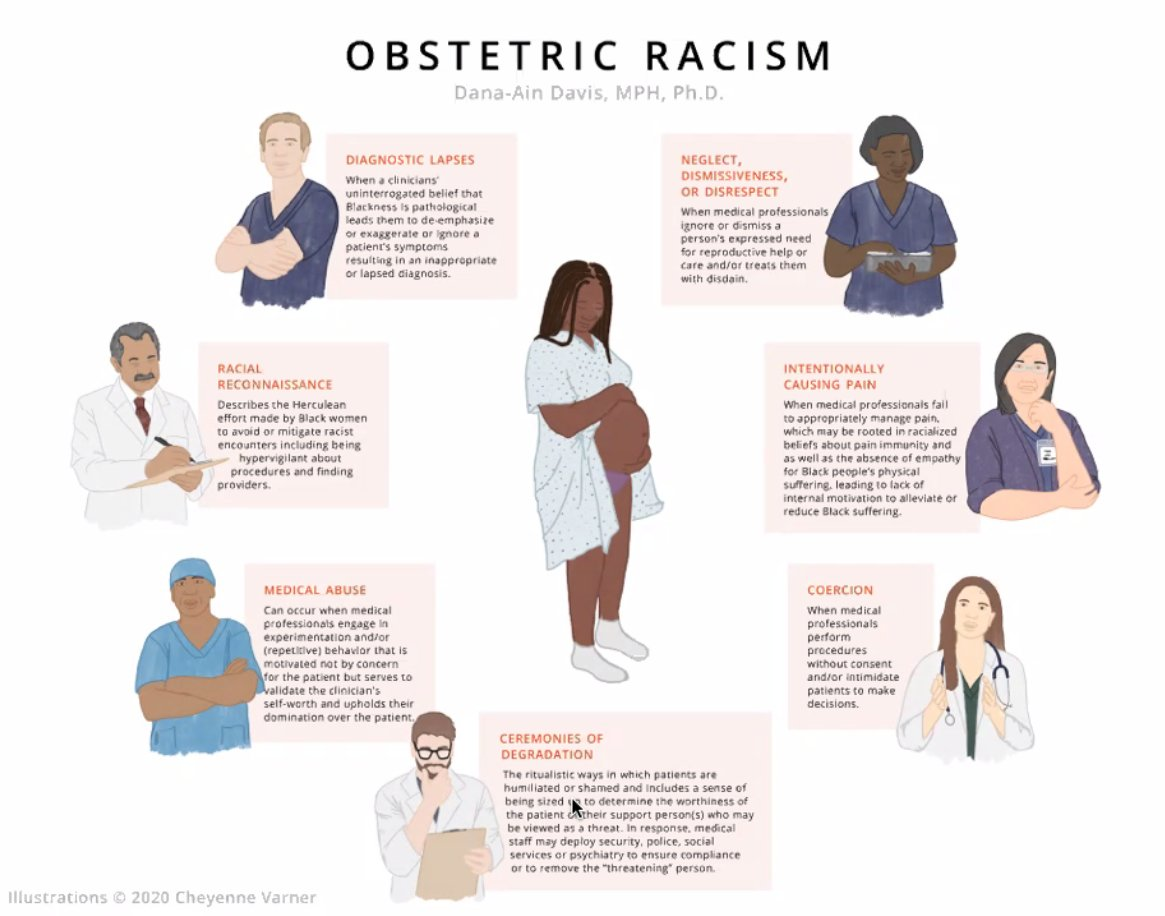
  • Consider reviewing the image below to understand how racism impacts obstetric care
Dr. Lund took part 2 of the presentation to review disparities in maternity care in the US
  • Black women experience far worse outcomes than any other racial or ethnic group. Black women:
    • are 3-4x more likely to die than their white counterparts
    • comprise 13.5% of live births, but 35.5% of pregnancy-related deaths
    • have higher preterm delivery (13.4% vs. 9%)
    • have higher c-section rate (RR 1.23)
    • have higher PPH rates (3% vs. 1.6%)
    • have higher peripartum infection (4.9% vs. 4.1%)
  • Pre-E, diabetes, and and unintended pregnancy are also higher for black women
  • American Indian/Alaskan Natives (AI/AN) are also at risk for adverse outcomes
  • Black and AI/AN infants are more likely to die in their first year of life
    • black infants diet at greater than 2x rate of white infants (11.4 vs. 5.2 per 1000 live births)
California has been working hard since 2006 to reduce our maternal mortality rates, and it's working!
(this graph below shows a decline by 55% 2006 to 2013)
However, despite tons of successful work to reduce maternal mortality, the disparity ratio (black women vs. white women) remains unchanged (see image below):
Dr. Lund also shared some of our local stats at SSRRH
  • ~50% of our deliveries are to Hispanic patients (~ 20% US-born and 30% foreign born)

  • Another 37.5% of our deliveries are to non-Hispanic White identified Patients
  • 4.5% of births to Asian or Pacific Islander patients
  • <2% of our deliveries to non-Hispanic Black identified Patients
  • About 2% “other” which primarily represent American Indian/Alaskan Native patients
  • A full 6% were race/ethnicity “unknown”
Dr. Lund shared important outcomes for our maternity patients, including NTSV c-section rates, maternal morbidity, preterm birth rates, unexpected newborn complications, and exclusive breastfeeding at discharge:
  • Hispanic born US rates of pLTCS are the lowers of all, much lower than state average
  • Non-Hispanic black patient cesarean rates are about 4% higher than almost all others but lower than state average. 
  • Our “other” category (largely AI/AN) exceptionally high NTSV c-section rate. Total # of patients in the “other” category higher than for non-hispanic black but still only about 145 patients over 5 years. 


And for preterm birth:

  • Non-Hispanic Black preterm birth rate is similar to others at our facility and lower than state average, however note that #’s are quite small so should continue to trend over time 11 patients out of 124 patients total in 5 years. 
  • Rate of PTB among white patients higher than the rest of CA
  • “Other” preterm birth rate is quite high, mostly represented by AI/AN individuals, numbers still low 28 patients out of 144 over 5 years. 


What can be done?

Dr. Bacon capped off this week's Grand Rounds presentation with a series of recommendations of how you might engage in local advocacy and beyond to work on birth equity:

  • Individual work: if you are unsure where to begin and/or unsure about what you think about this information, individual work is the place for you
    • consider reading and/or listening to podcasts, listening to the experiences of others (particularly BIPOC), assessing your own personal unconscious bias, and work on retraining your brain on these biases
    • Listen to Dr. Camara Jones
    • Visit Project Implicit
    • I personally recommend Seeing White on Scene On Radio as a good place to start (we have been listening to this as a faculty for our anti-racism work)
  • Institutional work
    • there are lots of robust toolkits and trainings to help guide institutions
    • these might help you help guide YOUR institution
    • try: CMQQ, ACOG/SMFM, https://blackmamasmatter.org/, CDC's Hear Her campaign
    • Locally, attend CEDAWG grand rounds, September 22 Foundations for Health Equity Workshop, UCSF Differences Matter, Trauma informed care trainings
    • Check out the SSRRH Labor Culture Committee (LCC) at SSRRH (inquire with Julie Barajas or 
  • Community Work
    • Workforce development, pipelines
    • Community health workers
    • Doulas
    • Black midwifery
    • Centering pregnancy
  • Statewide and National work
    • Pay attention to what is happening in politics and policy:
      • SB65: a bill that creates a committee to investigate maternal deaths, examines adding a doula benefit to medi-cal funding, and helps low income communities have access to midwifery care
      • California AB4: removing documentation status for Medi-cal benefits
      • Governor Newsom's 2022 budget, which includes California extension of OB Medi-cal to 1 year postpartum
    • Also take a look at commonwealthfund.org Maternal mortality and maternity care project

And more resources:

Jenee Desmond-Harris: Implicit bias means we're all probably at least a little bit racist. https://www.vox.com/2014/12/26/7443979/racism-implicit-racial-bias

Eric Deggans: 'Not Racist' Is Not Enough: Putting In The Work To Be Anti-Racist. https://www.npr.org/2020/08/24/905515398/not-racist-is-not-enough-putting-in-the-work-to-be-anti-racist

Camara Phyllis Jones, MD, MPH, PhD: 


https://www.projectimplicit.net/

CDC Hear Her campaign: https://www.cdc.gov/hearher/resources/download-share/warning-signs-poster.html

ACOG Health Equity Curriculum: https://www.acog.org/education-and-events/creog/curriculum-resources/additional-curricular-resources/health-equity

ACOG CO 649 (2015): Racial and Ethnic Disparities in Obstetrics and Gynecology https://www.acog.org/-/media/project/acog/acogorg/clinical/files/committee-opinion/articles/2015/12/racial-and-ethnic-disparities-in-obstetrics-and-gynecology.pdf

Black Mamas Matter Alliance Toolkit: https://blackmamasmatter.org/resources/toolkits/


Concussion Management in Primary Care (Affleck, Ohkubo, Matthew 9/1/2021)

Many thanks to Dr. Monica Ohkubo,  Dr. Ty Affleck, Athletic Trainer Chelsea Matthew, and DNP Surani Kwon for a great interdisciplinary Grand Rounds presentation from the North Coast Concussion Management team on Concussion Management in Primary Care

A recording of their presentation is available HERE

Driven by increased attention on head injuries over the last decade, the standard of care for sport-related concussions has changed significantly from a general If you feel okay, it's okay, go back in and play mentality to a much more evidence-based stepwise management approach to concussion. 

  • In US, there are 1.3-3.8 million concussions annually, close to 300,000  ER visits (2010-2016)
  • In football alone, 7.7% NFL players experience concussion (this amounts to only about 130/year), but if 4-6% of high schoolers also experience concussion, this amounts to 1.2 million/year
  • People with history of concussion are more likely to have another
  • Hx migraine, depression, insomnia cognitive problems, visual abnormalities-->  concussion can unearth or exacerbate these conditions (learning disability can be activated, depression can represent or be exacerbated)
  • Many used to believe that most athletes recovered from concussion in 7-10 days with a few stragglers. . .new evidence has found that after 2 weeks less than 1/2 of athletes with concussion have fully recovered

Initial Concussion Care: "You don't know how bad it is until it's over" -Dr. Ohkubo

  • You cannot assign a time frame for recovery as soon as the concussion is recognized  (but by state law, it's always at least 7 days)

    • NO return to play in same game/practice
    • Monitor for deterioration over the first few hours after injury (s/sx bleed)
    • Early follow-up with someone trained
    • Physical rest
    • Mental rest: no phones, no school/shortened school
    • Per state law, any high school athlete with a concussion must follow up with physician trained in concussion management for medical clearance
    Best practices for Concussion Management

    Standardized Concussion Assessment Tool (SCAT5)

    The SCAT-5 is a validated tool to use for concussion evaluation. Includes several components: GCS, c-spine evaluation, symptom evaluation, cognitive tests, balance tests, memory, coordination, and 6 step return to play guidelines. The link above will take you to the full 8 page document.

    Of note, the symptom evaluation on the SCAT includes  22 symptoms: physical, emotional, mental, sleep. Different areas can be differentially affected
    Athletes also can cover up symptoms because they are used to pushing themselves, so pay attention to the individual answers

    Eye and Balance Test
    Balance testing (BESS): 20 second each feet together hands on the hip eyes closed, non-dominant leg, tandem stance with non dominant foot in the back

    Neurocognitive Testing
    Gold standard is baseline testing (pre injury) to be able to assess extent of injury if/when it occurs
    SRJC and SRCS are doing this for all athletes: Computerized neurocognitive baseline and f/u testing

    Athletic Trainers

     Athletic trainers are (board certified, link between healthcare provider and the athlete and parent) important resource to be able to be available to do concussion training/prevention as well as assist with assessment and return to play protocols

    • prevention and recognition of injury, referral, treatment rehabilitation
    • academic modification
    • objective assessment at sideline, retesting
    • referrals for physician, mental health support
    • facilitation of return to play protocol
    • day to day contact with athletes
    Treatment and Management of Concussion
    1. Cognitive and physical REST is huge. Academic accommodations have to be provided by doctors specific form that physicians need to fill out (e.g. half days at school, extra time on tests, reduced homework load, note taking, not on computer all the time)
    2. Diet: appetite changes after concussion (more/less hungry). Eat small things through the day
    3. Hydration: nausea, drinking small amount during the day
    4. Sleep: sleep patterns can change (more/less than normal, frequent waking). Don't wake a sleeping athlete. Sleep is important in recovery. Naps: not after 3pm
    5. Exertion: people recovering both physical and mental, though small sub-symptom exercise can help recovery. 
    6. Stress: interpersonal arguments, emotions can change post concussion, crying out of nowhere (not criers), lights/sound noise: bright lights, fluorescent lights, sunglasses (accommodation), loud sounds (e.g. PE class)
    7. Do NOT push the symptoms
    Return to Play Process (CA state law)
    • Anyone diagnosed with concussion, must go through the process that starts with a medical evaluation, and then start 7 day process
    • For contact sports, athletes must get a two step medical clearance
    • Each step MUST be separated by at least 24 hours
    • If symptoms return at any step, stop the activity, let rest for the rest of the day and return to the same step
    ***********************************************************
    Step#1      Rest until asymptomatic

    MEDICAL CLEARANCE

    Step#2:     Light aerobic activity (walk around track or football field)
    Step#3:     Sport specific exercise (running, swimming)
    Step#4:     Non contact training drills (shooting, serving, setting)

    MEDICAL CLEARANCE

    Step#5:     Contact practice
    Step#6:     Contact game

    ************************************************************

    It's important to note that concussion symptoms tend to cluster: "Concussion picks on everyone's weakness". 

    Someone may have minimal to no symptoms in one category but profound deficits in another. Directing your attention to where their symptoms are is a key take home. 
    • vestibular
    • cognitive/fatigue
    • ocular
    • post-traumatic migraine
    • anxiety/mood
    • cervical 
    Specialists can be helpful depending on the problem: concussion specialist, vestibular rehab, neuro opthamologist, neuropsychologist

    Use of neurocognitive tests
    Gold standard is to have a baseline and post-test injury test. That way you can compare the two. IF you don't have a baseline, there are standardized scores based on age/educational level that you can use to make your assessment.  
    Specifically, the computerized neurocognitive test ImPACT used at SRJC and SRCS (see image below for an example report)


    Other tools:
    • Vestibular and oculomotor testing (VOMS test)
    • A "Home SCAT test": ideally, athletic trainers are supporting the return to play process; however, if there is no athletic trainer to link to care, consider using parent to help athletes get through the process. Have the athlete go through above steps and have parent administer a variation on the SCAT (below)
    • Light aerobic exercise (in Dr. Affleck's words, "oxygen") can help speed recovery
    • Disrupted sleep? Consider melatonin


    Additional References/resources:
    CDC: www.cdc.gov/concussion/
    UPMC: www.upmcphysicianresources.com
    northcoast concussion.org 
    CIF physician letter to school: https://cifstate.org/sports-medicine/concussions/CIF_Physician_Letter_to_School_after_Concussion_Visit.pdf


    Why Discharge Before Noon. . and other Hospital Metrics (Picetti, 9/9/2026)

    A recording of this presentation is available  HERE .