Showing posts with label behavior change. Show all posts

Tradition to Transition: Dietary Shifts in Immigrant Patients (Rayas, 8/7/2024)

Muchas gracias to Dr. Lourdes "Lulu" Rayas for a wonderful presentation this week on food customs and Habits in our Mexican immigrant patient population. She titled the presentation, From Traditional to Transitional: Dietary Shifts with Immigration.  

A recording of her wonderful (and tasty) presentation is available HERE

***

My notes:

16% of our population in Sonoma County is foreign born.

Chronic disease is more prevalent  in the Latinx population. In fact, compared to non-Hispanic whites,

  • Hispanic adults 70% more likely be diagnosed with DM2
  • Hispanics are 1.3x more likely to die from diabetes 
  • Hispanics have 2x risk of being hospitalized with ESRD
Of note, the immigrant paradox is a statistical pattern that shows first-generation immigrants may have better health outcomes than native-born people of the same age, race, and gender, even if they have lower socioeconomic status. This pattern has been observed for cardiovascular disease, mental health, and mortality. However, recent research suggests that immigrants may experience a decline in cardiovascular health over time. 

Some of this paradox may be explained by dietary acculturation-- the notion that, over time, immigrants gradually abandon eating habits from their native countries, ultimately increasing fats, sugary beverages, and decreasing fruits and vegetables. 


Children of immigrants have also been noted to have less physical activity (than native born children) and less healthy diets. 

In a study of Latinx immigrants, people were asked to share the pros and cons of their eating habits and food access in their country of origin as compared to the USA. You can see these lists in the images below. I was most struck by the notion that many immigrants literally do not have the time to cook like they did when they lived in their country of origin -- this is likely due to long work hours and less flexible home schedules. Also note, that people report eating more legumes (and less meat) in their country of origin. 


So what can we do as primary care providers? 
Dr. Lulu encouraged us to adhere to three principles: 1) have a culturally competent approach to nutrition 2) help patients find a community that shares valued and traditions, and 3) connect patients to food access resources. 

Culturally competent nutrition
Traditional Mexican cooking, Dr. Rayas, pointed out, contains tons of fresh fruits and vegetables and very little processed foods. We can encourage our patients to carry forward traditional family  menus and discourage processed foods. Commonly used foods used in Mexican cooking have well-documented health benefits:
  • tomato (jitomate) has evidence that it lowers lipids, decreases blood pressure and general inflammation
  • peppers (chiles) help with glucose metabolism 
  • avocado (aguacate) decreases CVD, cancer, and works on the GLP system
  • corn (elote) has been shown to be anti-inflammatory, anti-angiogenesis properties, and anti-carciongenic. (And, btw, corn is the foundation of the Mexican diet). 
  • cactus (nopales) also has anti-inflammatory properties, hypoglycemic (one study showed 85gm of nopales daily demonstrated a 20% reduction in glucose levels), and anti-microbial. 
  • hibiscus (jamaica) can decrease blood pressure (in one study from 134 to 112 SBP it drunk BID x 1 month)

Help patients find community
Many of our immigrants patients are isolated and need help accessing community services and opportunities. Don't forget about some of our amazing community resources, including:
  • Bayer Farms: a community garden space, sponsored by Land Paths, they offer garden space, herbal medicine classes, and a great park/playground
  • The Botanical Bus: featuring bilingual health promotoras bringing a mobile herb clinic all around Sonoma County
  • Campeones de Salud, a 6 week program run by SRCH for families to improve healthy eating and exercise (SRCH referral SA260 Dutton)
  • Center for Well-Being, which offers nutrition classes in English and Spanish (SRCH providers can refer via EpiC)
Connecting patients with food access resources, including:
  • WIC, a food supplementation program for pregnant women, post partum and breastfeeding, and children up to age 5.  
  • Ceres Community Project, free medically tailored meals for patients with chronic illness, including heart failure, cancer, and diabetes. 
  • Redwood Empire Food Bank, which comes to Vista Clinic every Monday from 11am-12pm. 
A poster with text and images of children jumping

Description automatically generated

Primary Care for Patients with Alcohol Use Disorder (Lund, 11/15/2023)

A recording of this presentation is available HERE

***

Deep gratitude to our Assistant Program Director and local expert, Dr. Erin Lund, for an excellent presentation on Primary Care Management of Alcohol Use Disorder (AUD). Living in the wine country, this is a medical problem that sometimes hides in the shadows of social acceptability and cultural norms. 

Dr. Lund covered a broad range of topics related to AUD, including healthy drinking, screening for risky drinking, assessing severity of the use disorder and treatment (both acute withdrawal and chronic management). Alcohol, consumed around the world, is one of the oldest-used psychoactive substances, 2/2 only to caffeine.  There is documentation of humans indulging in alcohol dating back 9,000+ years.

(Note: much of the ETOH literature includes gender-based nomenclature. In an effort to be gender inclusive, I will use the following terms in this blogpost: AMAB: assigned male at birth, AFAB: assigned female at birth)

Healthy drinking

Standard drinks vary based on alcohol content and volume: 12 oz beer, 8-9 oz malt liquor, 5 oz wine, 1.5oz distilled spirits (see image below). Healthy drinking guidelines are based on age and gender assigned at birth: for adults under age 65, no more than 4 drinks for AMAB or 3 drinks for AFAB on any one day AND no more than 14 drinks/week for AMAB and 7 drinks/week for AFAB.


Risky Drinking

Rates of risky drinking and AUD are shockingly high in the US: 12-month prevalence of 13.9% of AUD (7% mild, 3% moderate and 3% severe) and a lifetime overall prevalence of 29%. Typically people AMAB have higher rates than people AFAB, but this is changing, as alcohol becomes more socially acceptable for AFAB patients. People ages 18-35 have the highest prevalence. 

A binge episode is defined as: 

  •  >4 drinks for AFAB >5 drinks for AMAB,
  • at least one day in the last 30 days

>5 days of binge drinking=HEAVY USE

Heavy use is NOT the same as AUD, but intervention should be considered, as heavy use is associated with increased all-cause mortality, earlier death, increased automobile accidents, increased accidental and intentional injuries, and social and legal problems.

Alcohol Use Disorder

DSMV outlines AUD* as "a maladaptive pattern of alcohol use" within the past 12 months, as defined by at least two of the following criteria:

  • Drinking larger amounts/longer periods than intended
  • Efforts/desire to cut down
  • Great deal of time spent obtaining, using, recovering
  • Craving
  • Recurrent failure to fulfill role
  • Continued use despite social/interpersonal problems related to drinking
  • Activities given up (social, occupational, recreational)
  • Recurrent physically hazardous behavior
  • Continued use despite physical or psychological problems
  • Tolerance
  • Withdrawal

*Mild AUD: 2-3 criteria, moderate 4-5, severe ≥ 6

Screening for AUD

USPSTF gives a grade B recommendation to screen ALL adults for unhealthy alcohol use. Here's the good news: when we screen, it makes a difference! Patients actually cut back and change their use habits. People live longer. 

There are a variety of standardized screening tools; these include:

  • 1Q screen: How many times in the past year have you had more than 4 drinks/day (AFAB) or 5 drinks/day (AMAB). Positive with answer of >1
  • AUDIT-C (which is what is used at SRCH, see image below)
A nice thing about using the AUDIT-C is that the results can be used to guide treatment. An AUDIT-C score of 0-3 indicates low risk drinking (no intervention needed), a score 4-5 is moderate risk (brief intervention indicated). A score 6-7 merits a brief intervention + psychotherapy and consideration of pharmacotherapy. A score of 8-9 is an indication for pharmaceutical intervention + psychosocial intervention+/-specialty care management. A score of 10+ merits urgent specialty referral.

Treatment of AUD
Treatment of AUD includes both psychosocial and pharmacological treatments. It also involves both an acute stage (active use, withdrawal) and a chronic stage (maintenance, harm reduction, reduction).

Psychosocial support involves both formal treatment programs (inpatient and outpatient programs), many of which are based in Peer Support. These include but are not limited to AA, smart recovery, etc.
Pharmacological management involves, at the minimum, 1 of 3 FDA-approved medications. These meds can be started in the inpatient or outpatient setting. We have great room to improve in this area. A study in 2012 found that only 8% of US patients with AUD were being treated with medications. 

Considerations in starting meds for patients should include goals (e.g. abstinence vs. reduced use), relevant health factors (e.g. comorbidities like chronic pain, cirrhosis, etc.), and external barriers. 

Alcohol Withdrawal Syndrome (AWS)

The slide pasted below demonstrates the timeline for Alcohol withdrawal and some recommendations in terms of who can withdraw in an outpatient setting vs. those who need inpatient support.

Alcohol withdrawal is most likely to occur in patients who have been drinking for more than 2 weeks and who have abruptly stopped drinking. Once a person is 5 days past their last drink, they are outside the window of acute withdrawal. And one can move onto the maintenance stage of management of AUD. 

Providers should use standardized scores to keep an objective assessment of a patient's alcohol withdrawal. There are several, including the CIWA (10q, objective + subjective report), the SAWS (10q, patient-completed), and the SEWS (7q, clinical assessment)

CIWA: <10: very mild AWS, 10-15 mild AWS, 16-20 modest AWS, >20 severe (DTs)


SAWS: patient scores their own symptoms in past 24 hours, <12 is mild AWS, >12 is moderate to severe AWS


SEWS

The severity of AWS dictates the level of care the patient needs. Patients with mild-moderate withdrawal can be managed in the outpatient setting, assuming they can also 1) have consistent follow-up 2) take PO meds 3) have friend/relative/support person 4) have no prior hx of DTs 5) have no high risk comorbidities (physical or psychiatric) that would make home withdrawal unsafe (e.g. extreme anemia, decompensate cirrhosis) 6) do NOT have polysubstance use.

All other patients should be managed in an inpatient setting.

Pharmacotherapy for AWS

Goal of treatment of AWS is to help patients withdraw safely (prevent DTs, seizures, death) and reduce likelihood of relapse. This can be accomplished using either benzodiazepines (e.g. chlordiazepoxide or lorazepam), which was the previous gold standard, and/or with benzo-sparing protocols, most of which use anticonvulsants and anti-adrenergic medications. 

Anticonvulsants: phenobarbital, gabapentin, valproic acid, carbamazepine

Anti-adrenergic: clonidine, propranolol, guanfacine, precedex

Everyone with AWS should get folic acid (1gm/day) and vitamin B1 (thiamine, 100mg/day)

The idea behind the benzo-sparing protocols is that these medications are AS effective in safe withdrawal with less abuse potential than benzos. There are still evolving studies in this area, and some agents have more evidence than others. These protocols vary based on location and experience. 

See below the draft algorithm (not yet live) at SRCH, which screens for patients who may safely withdraw outpatient and uses fixed dose gabapentin (300mg TID vs. 600mg TID).


Older algorithms use fixed vs. on demand dosing of lorazepam and/or chlordiazepoxide. You can find a link to those older guidelines HERE

Chronic Management of AUD

Okay, finally, moving onto medications that prevent relapse and/or help people cut back and/or help people remain abstinent. Most studies look at a period of time of 12-16 weeks of reduced use and/or abstinence, but in clinical practice a minimum of a year of maintenance therapy is recommended, particularly if there is a high risk of relapse.

FDA approved: naltrexone, Acamprosate, disulfiram

  • Naltrexone: 50mg PO daily OR 380mg IM monthly, reduces risk to any drinking (NNT 10) and heavy drinking (NNT 12), injectable has evidence for reducing number of heavy drinking days. Reduces craving and pleasurable effect of drinking. Contraindicated in liver failure, concomitant opiate use (within 7 days). Pregnancy is relative contraindication.
  • Acamprosate 333mg, 2 tabs TID daily. Reduces return to any drinking (NNT 12), reduces withdrawal associated dysphoria. Has mixed evidence on efficacy compared to placebo. Contraindicated in renal failure (GFR<30) and pregnancy. 
  • Disulfiram: oldest med on the market for AUD (1949), anticipation of feeling sick discourages use. Blinded studies don't show great effect, but open label studies do show reasonable effect. 

Non-FDA approved but have some evidence: topiramate, baclofen, gabapentin, ondansetron, sertraline, semaglutide

  • Topiramate: non-FDA approved, may reduce cravings, impulsivity and post-withdrawal dysphoria, 100-300mg/day (titrated up over 6 weeks from 25mg day starting dose, increase by 50 mg per week), BID dosing recommended. Contraindicated in pregnancy and renal failure.
  • Gabapentin: non-FDA approved, may be continued after using for treatment of AWS, 300mg-600mg TID for maintenance dosing to reduce cravings and return to drinking

Understanding Methamphetamine Use Disorder (Freschl 8/9/23)

Many, many thanks to Dr. Guille Freschl, who gave Grand Rounds this week titled Understanding Methamphetamine Use Disorder: A Deep Dive.  This was our first R3 Grand Rounds Presentation of the academic year, and Dr. Freschl knocked it out of the park. The link to a video recording of her presentation is available here. Below find my notes.   

A recording of this presentation can be viewed HERE.

***

Dr. Freschl was motivated to present on this topic by a longstanding interest in substance use disorders coupled with curiosity and concern about the oft uttered "Oh, it's probably because of the meth" that she heard from the mouths of her teachers. She was left wondering where the science meets the bias.

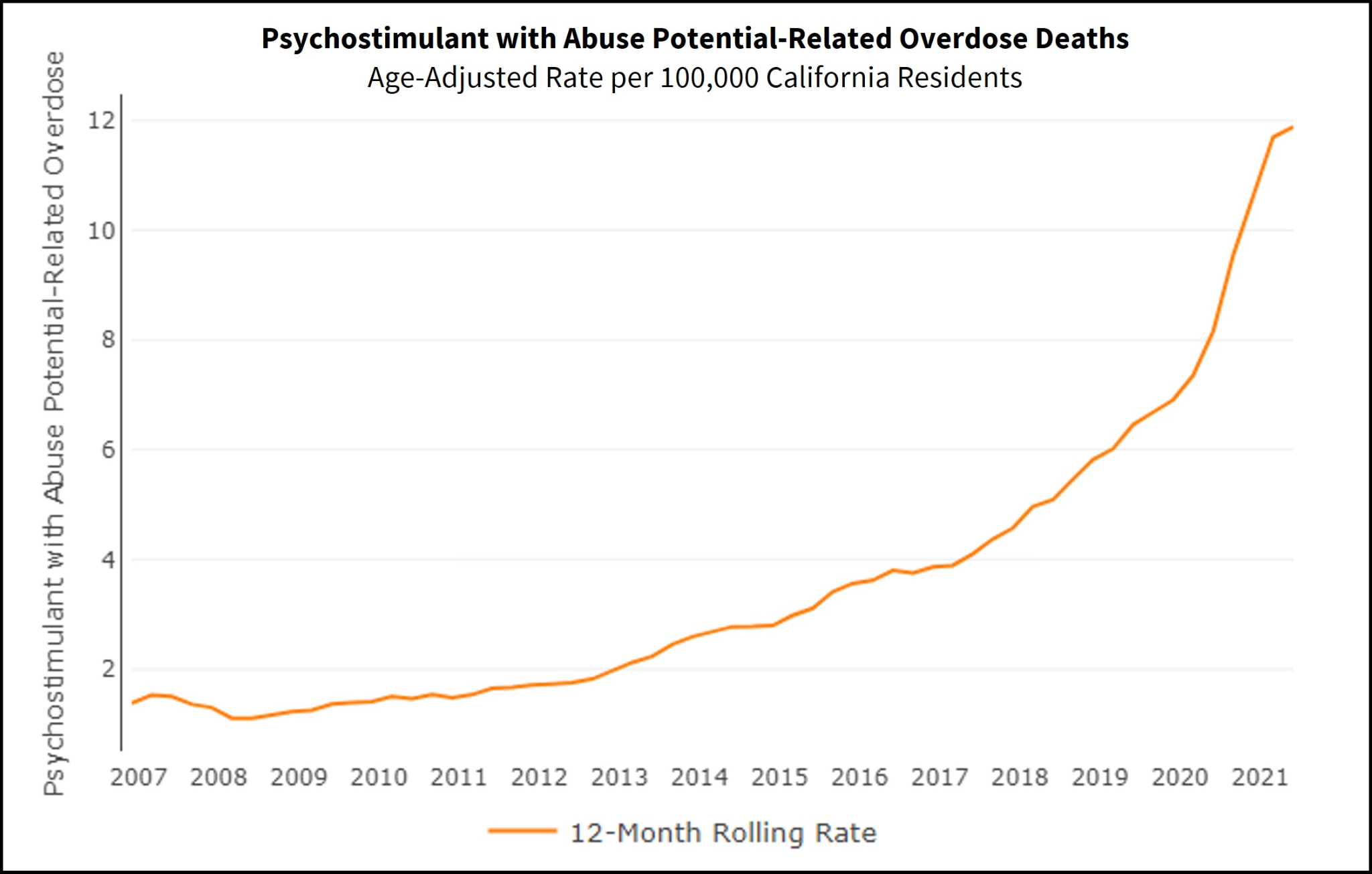
Did you know that amphetamine-type stimulants are the most widely used drugs in the world after cannabis?  Did you know that  between 2011 and 2016, overdoses from methamphetamine TRIPLED and that 1/4 of all overdoses in 2021 in the US were due to meth?

Methamphetamine use disorder can be seen all over the nation, but prevalence varies per region. Rates are highest in the West Coast and South. For example, prevalence of reported meth use in the past year in CA is reported at 1.04% of all adults, almost twice as much as most states in  the Northeast (see map below).
 
In California, non-fatal ED visits and overdose deaths have both risen over the last decade. In fact 32% of those in court-mandated substance use disorder treatment programs were there due to methamphetamine use. While the bulk of media and political attention is currently focused on opiates, one wonders, why aren't we talking more publically about methamphetamine?


What is methamphetamine?
Methamphetamine is an amphetamine derivative, notable for its additional methyl group; it enhances dopamine and norepinephrine in the synaptic cleft. Meth has a very long half life (12 hours cmpared to 90 minutes for cocaine). 

Why is meth bad? So many reasons. . . keep reading to understand a few of the major adverse effects. 

Cardiovascular toxicity

CV toxicity is the #1 cause of death in patients using methamphetamines, and risk of sudden cardiac death is increased by 27% with active meth use. CV toxicity includes a range of end-organ issues, including:
1) Hemorrhagic and ischemic strokes, due to vasoconstrictive effects and cerebral hypoperfusion
2) Very high rates of coronary artery disease (CAD) -- half of patients with regular meth use have CAD, despite lower rates of obesity and diabetes in these patients. This is thought to be directly related to the pro-inflammatory effects of meth. 
3) Angina, which does not respond well to nitroglycerin, is common, due to vasospasm
4) Pulmonary hypertension, especially with IV meth use, due to damage to pulmonary endothelial cells
5) Severe systolic dysfunction with LV dysfunction is another sequalae of meth use
6) Ventricular arrhythmias are notable

Neurotoxicity
Neurotoxicity is the #2 cause of morbidity and mortality in patients using meth. It rapidly crosses the blood brain barrier. It does a doozy on the brain, including disrupting pleasure centers, creating episodic memory issues, damaging executive function (2/3 of people with regular meth use show cognitive impairment, worse with older age and longer duration and frequency of use), disrupting motor function (including fine motor and choreas), and can lead to psychosis similar to schizophrenia (delusions of persecution, auditory hallucinations, and formication in almost half of people using). 

There is also a direct relationship between meth use and Parkinson's disease.

Dental effects
Serious dental effects include caries, tooth loss, tooth fractures -- all due to decreased saliva production (xerostomia), teeth grinding and jaw clenching that occurs with meth use.

Medication Assisted Therapy (MAT)?
Unfortunately, there are no FDA approved treatments for methamphetamine use disorder. A large meta-analysis of 43 RCTs with over 4000 patients found no clear evidence-based effective treatment. 

These included trials with mirtazapine (conflicting results), methylphenidate, bupropion, naltrexone and modafinil (limited evidence of benefit, no support for routine use). In addition, anticonvulsants, antidepressants, antipsychotics all low strength and insufficient evidence. Bummer. 

There was a small study that suggests that methylphenidate may be associated with decreased use over time: no difference at 30 days, but decreased in self reported use days at 10 weeks. 

Also, a small study of combination therapy --  IM naltrexone (380mg q3 weeks) PLUS PO bupropion (450mg daily) small treatment effect of 11% reduction in meth use. 

Hopefully, people will continue to investigate different agents for MAT and treatment of meth use disorder!

In conclusion, Dr. Freschl recommended that we use shared decision-making with patients when talking about trialing non-FDA approved treatment options. She reminded us to screen for CV and neurological sequelae of methamphetamine use. 

Let's Talk about Sex (MacArthur 5/4/2022)

 Big thanks to Dr. Sophie MacArthur for her excellent presentation on a topic that we could  ALL use a little education on-- Sex. And specifically how we talk about it with patients.

The recorded presentation is available HERE

Link to her slides is HERE

My notes:

  • The Sex Ed most of us had in school wasn't any good 
    • a meta-analysis of 48 different studies in 10 countries (including US) in BMJ found high school students believed their sex ed to be impractical, out of touch, sexist, heteronormative, and embarrassing
  • And. .. let's face it. Physicians aren't very good at talking about sex with patients. 
    • While 88% of primary care physicians say they take a sexual history, only 25% of charts have said history recorded
    • A study from the 1990s-- height of the AIDS epidemic-- found providers didn't take sexual history because they didn't feel it was relevant, didn't feel well-trained, and felt embarassed
    • We are inadequately trained
    • We tend to discuss sex only when patients ask
  • But. . .patients want to talk about sex! 
    • In one large study from Europe, 91% of patients want their physicians to ask about their sexual history and sexual health
    • Even of the 15% who would feel embarrassed talking about sex, 75% still wanted their doctor to ask
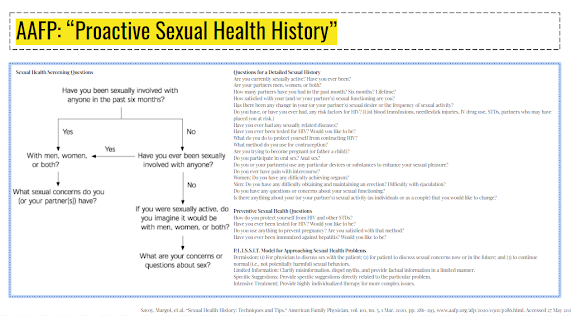
As part of sexual history and STI screening, many of us were trained to ask the following question: "Do you have sex with me, women or both?"

Dr. MacArthur asked us to consider a better question: "When you have sex, what parts of your body come in contact with what parts of someone else? And how?"


Two reasons this question is a better question than the men, women or both question:
  • it is not heteronormative
  • it allows us to screen people for STIs at appropriate sites (e.g. for rectal,  oral GC/CT)
There are several different ways we can approach the topic of discussing sex with our patients. All of them promote using open ended questions. 

3 options:
  • Permission ("May ask you a few questions about your sexual health and sexual practices?")
  • Partners ("Do you have any new partners in the last 12 months? How many? Do your partners have any risk factors?"
  • Practices ("When you have sex, what parts of your body come in contact with what parts of someone else? And how?")
  • Protection from STIs ("Do you and your partners discuss protection from STIs? "What methods do you use? How often do you use them?")
  • Past history STIs ("Have you ever been tested for STIs? Have you ever had an STI?")
  • Pregnancy intention ("Do you think you would like to have (more) children some day?")


3) Fenway Institute/Harvard: 6Ps + Guidance: Taking an Affirming Sexual History
  • Ask routinely, confidentially and free of assumptions
  • Do it often (you will get better at it)
  • Explain why it's important to know what you are asking
  • Ask about function and satisfaction (not just about STI risk)
  • Use open ended questions (e.g. "what types of sex do you have?"), at least initially
  • Normalize less desired responses (e.g. many people don't consistently use condoms; how often do you find yourself not using a condom?")
  • Mirror patient's language if possible 
  • Make the interaction as natural as possible (not robotic) 
  • Give patients the option to answer questions indirectly (e.g. I recommend screening for GC/CT in all the sites that may have been exposed; for example, the throat, the anus, the penis, the vagina. Which of these sites should you have tested today?)
  • Tone and rapport matter, at least as much as the questions 

Risk reduction is an important part of sexual history, but risk extends beyond our traditional view of STIs and unwanted pregnancy. 
Risk=anything that is not sexual health and/or sexual well-being

This can include non-consensual sex, painful sex, bad sex, legal repercussions of sexual behavior (e.g. consent is not sufficient to protect someone), nerve damage (S&M practices)


Risk reduction Resources

Surviving Residency: The Professional Socialization of Family Physicians (Addison 4/20/2022)

Many many thanks to Dr. Ritch Addison for his wonderful Grand Rounds this morning (and his 40+ years of teaching and mentorship at Santa Rosa Family Medicine Residency. It felt like a warm cup of perfectly brewed tea to sit and listen to Ritch share his observations from the professional socialization of family physicians. 

For those of you who missed it, the recorded presentation is available HERE and is definitely worth watching!

I have jotted down just a few notes. The talk is definitely best absorbed by listening/watching.

To start, Ritch asked us to consider what resonates with you?

  • How do physicians get trained?
  • How is residency a process of habit formation?
  • How is residency a "stress test" of emotional capacity?

A long time ago (40+ years) in a galaxy (not so) far far away, Dr. Ritch Addison followed nine family medicine interns around for three years-- "I wanted to see what they did." His notebook always in hand, Ritch took call with them, observed them delivering babies, suturing folks in the ER, race to clinic, etc. For three years, he watched them live and process their entire residency training experience.

Today's talk was a summary of observations and models derived from that research. Ritch highlighted a number of important themes:

Surviving residency involves  a TON of immediate issues that new R1s are confronted with

  • information overload
  • work overload
  • dying patients
  • control
  • time pressures
  • sleep deprivation
  • inexperience
  • responsibility

Working relationships are a complex piece of residency identify formation. Relationships with:

  • patients
  • nurses
  • providers
  • attendings
  • private doctors
  • faculty
  • other residents
  • AND. . . family (which often takes a back seat because residency can be totalizing)
Asking for help >> too late, too early
When?
Who?
How?

Learning the ropes>> equates to decoding local customs
where to sleep 
when to cry
who to ask
how to put in orders
how to write notes

Spheres of existence evolve over time

                                         work                                    education                        life outside

initial purpose/weight        take care of patient           learn family medicine    maintain some QOL

evolves into                        GET done                        do procedures                whatever is left


There is an inherent conflict and contradiction between a resident's ideals/goals/visions (expectations) and the everyday practices of being a resident. 

Ritch finished off with his assessment of the "modes of surviving" 

Over-reflecting: too much self reflection (favorite patient dies, yelled at by attending, make a mistake)

Covering over: using little self-reflection, so focused on what you are doing you cannot see what is happening to you 

Moving between these two takes wide movements and is extremely jarring. How do residents learn to move between these modes? Ritch said clearly that it's really NOT about finding the sweet spot of reflection, but rather being able to smooth out the space and integrate these two forms of being. 

Finally, Ritch introduced the birth of the Personal and Professional Development groups (P&PD) that really were birthed from the desire of residents to facilitate the movement between these two spaces-- to smooth it out. After all, everybody feels the same way. What happens when we talk about our experiences? We start to resolve the two modes. . . 

Ritch ended with an excerpt from The Heroes Walk, by Anita Rau Badami on the physician-patient relationship. Listen to him read it at the end of the recording. That is what family medicine is all about, right? The most meaningful way we can bring health to people. 

Eat Veg or Die: The Power of Plant Based Diets (Kohatsu, Naderi, Brown 7/7/2021)

Many thanks to our Integrative Medicine Fellow-- Dr. Tahereh Naderi-- and our Integrative Medicine Faculty-- Dr. Wendy Kohatsu and Dr. Ben Brown-- for their 3 Course presentation this week on the Power of the Plant-Based Diet. 

A video recording is available HERE

Did you know that 10.5% of the US population is diabetic? That $1 in every $7 of US healthcare dollars are spent on treating diabetes? That only 1 in 10 of American adults get enough fruits and veggies in their diet? 

As Dr. Naderi (and Hippocrates) started the presentation: "Let food be thy medicine and medicine by thy food".

What is a plant-based diet (PBD)? 

PBD are eating habits that avoid consumption of most or all of animal products, support high consumption of fruits, vegetables, legumes, seeds, whole grains, and nuts. This may include:

  • vegan
  • lacto-ovo vegetarians
  • pesceterian
  • flexitarian
  • Mediterranean diet
  • whole foods, plant-based, low fat

What are the benefits of a plant-based diet?

  • reduced body weight
  • lower blood pressure, cholesterol and blood sugar
  • lower risk of heart disease, diabetes, and cancer
  • linked to longer lifespan
  • improved joint pain/inflammation in certain autoimmune conditions
  • better for the environment

PBD are effective for weight loss. On average, a vegetarian diet reduces weight by 7.6 kg for men, 3.3 kg for women, and a 2 point lower BMI.Vegetarians tend to eat more nutrients and less total fat, and sadly, there is a positive association between meat consumption and obesity.

PBD are effective for both prevention and treatment of diabetes. Vegetarians have 1/2 risk of developing diabetes over their lifetime. In a RCT of low fat vegan diet based on a diet based on ADA guidelines, there was a reduction of a1c by 1.23% vs. 0.38% and reduction in medication need by 43% compared to 26% in ADA group. 

PBD are associated with improvement in psychological outcomes including improvements in depression and quality of life with patients with diabetes, as well as improvement in neuropathic pain.

PBDs appear to have anti-inflammatory properties, improving our gut microbiome, decreasing inflammation and joint pain, and improving symptoms by decreasing triggering foods (meats, egg, dairy)

If you are curious about the data on the above statements, check out the book The China Study (by T. Colon Campbell) or the documentary "Forks over Knives". Here is a quote from the authors of the China Study:  "People who eat the most animal based foods get the most chronic disease. People who ate the most plant-based foods were the healthiest"

Finally, PBD are better for the environment (see graphics from the Plantrician Project):


Of note, says Dr. Brown says there are many reasons why eating a PBD makes sense. In fact, diets high in animal proteins are associated with a

  •  75% increase in mortality
  • 400% increase in cancer risk
  • 500% increase in diabetes
  • significantly higher IGF-1 levels.
Red meats have been associated with chronic inflammation, and how you cook it might increase that risk (e.g. grilled meat containing heterocyclic amines) may be worse. However, if you combine grilled meat with anti-inflammatory foods (garlic, broccoli, lemon, cumin, hibiscus), it may mitigate some of those potential harms.

Whereas eating lots of fruits and veggies can be life-prolonging, it is important to consider how these foods are produced. Specific fruits and veggies are more likely to contain life-altering pesticides and should be eaten organically whenever possible (i.e. Dirty Dozen); others are less risky if eaten from conventional farms (i.e. Clean 15). See image below and consider putting it up on your fridge to help guide your purchasing habits.


Dr. Brown also shared with us the concept of the ORAC valueThe ORAC unit (Oxygen Radical Absorbance Capacity), ORAC value, or ORAC score is a method developed by scientists at the National Institute of Health and Aging (NIH) to measures the antioxidant capacity of different foods. He encouraged us to take a look at this list and eat preferentially foods with high ORAC values, including dark chocolate!

Don't forget choosing the right oil! It should be plant based and care with deep frying. FOr a simple resources, check out this article from the Cleveland Clinic.  And don't forget lots and lots of fiber!!

Dr. Kohatsu finished up the Grand Rounds with a slew of "Pro Tips" as our in house expert-physician-Chef. Here are 10 of Dr. Kohatsu's pro-tips: 

  1. Check out Good and Cheap by Leanne Brown, how to eat on <$4 a day, PDF with recipes available free via download.
  2. If you are worried about getting enough protein in your plant-based diet, change to plant-based proteins, including nuts, seeds and beans
  3. Easy beans/legumes to consider: brown beans, lentils, soy beans, chickpeas, black beans and pinto
  4. If you are worried about getting gas from beans, soak them overnight, choose newer beans, skim the foam off the top, add gas dissolving herbs and spices (cumin, epazote, fennel), chew well, and use digestive enzymes (e.g. Bean-O)
  5. Consider trying "Meatless Mondays" just one days per week. Recipes and ideas available here:
  6. To increase your nuts and seeds intake, put 1/4 cup of nuts in a bag to snack on during the day, add nuts to salads, use nut butters, and use tahini based dressing/sauces
  7. Keep your oil in small containers, dark bottles, in a cool area, avoid deep fat fryers and don't store right above your stove (it's too hot!)
  8. Try roasting your cruciferous veggies (kids love them)
  9. Cook at home (it's cheaper and almost always healthier!)
  10. Eat dark chocolate

Benzodiazepine-Sparing Alcohol Withdrawal (Maldonado, 2/10/2021)

Great thanks to Dr. Jose Maldonado, a Stanford psychiatrist and neuropsychiatrist, who literally wrote the benzodiazepine-sparing alcohol withdrawal protocols that we have been utilizing at SSRRH for the last few years. He gave us a deep dive into the science behind them this week! If you want to see the whole presentation, it is archived here: VIDEOBenzo Sparing Alcohol Withdrawal 

For those of you who prefer the written word, here is Dr. Maldonado's paper, and for those who prefer an abbreviated version, here are my notes from Grand Rounds:

Alcohol Use Disorder is extremely common in our society, particularly among hospitalized patients: 20-42%of hospitalized medical patients; ~7% are identified by physician. Check out these numbers:

    • 40% of ED patients
    • 43-81% surgical and head and neck patients
    • 42% of hospitalized veterans 
    • 59-67% of trauma patients
    • up to 44% elderly patients admitted to acute geriatric units

Remember that legal driving limit is a blood alcohol concentration (BAC) of 0.08. Alcohol follows zero order kinetic metabolism, which means there is nothing we can do to slow down or speed up its rate of metabolism.  Ethanol is metabolized at rate of 0.015% per hour,which means a  person with BAC of 0.15 (twice the legal driving limit) will have no measurable alcohol in the bloodstream after 10 hours. 

Alcohol Withdrawal Syndromes

This is something I did not really know before this presentation: alcohol withdrawal CAN present even if BAC is still quite elevated. In fact, signs and symptoms of withdrawal occur once a person's BAC drops by 30% from their usual level; this means that you don't have to be at a BAC of zero to have symptoms of alcohol withdrawal. In fact, you can be in DTs even with an extremely elevated BAC, if it is just lower than where you normally live.

Here is another pearl: 80% of patients withdrawing from alcohol do NOT require aggressive medical treatment; supportive management is enough. If we treat everyone who walks through the door for alcohol withdrawal, we will definitely over treat--> leading to respiratory depression, toxicity, falls, oversedation, etc.


There are FOUR unique alcohol withdrawal syndromes: 2 are dangerous/complicated, 2 are not

  1. Uncomplicated Alcohol Withdrawal ("The Shakes")
    • 80% of all patients
    • tremor, usually fine (but can be coarse)
    • GI distress, anxiety, difficulty sleeping/insomnia, violent and unpleasant dreams, mild sx of autonomic instability
    • sx decrease usually by day 5, more severe symptoms last 10-14 days
  2. Alcohol Withdrawal Seizures ("Rum Fits")--> complicated 
    • 5-15% of all patients
    • peaks quite early: 12-48 hours (much earlier than DTs)\
    • the greater the amount of alcohol consumed, the greater the risk of seizure
  3. Alcoholic Hallucinosis  ("The Horrors")
    • up to 30% of all patients
    • onset: ~8 hours, peak 24-96 hours
    • related to length and amount of alcohol exposure
    • auditory, visual, tactile hallucinations in context of CLEAR sensorium, stable VS
  4. Delirium Tremens ("DTs")--> complicated
    • ~5% of all patients
    • peak can be relatively late, up to 7 days after stopping alcohol
    • "autonomic storm"
    • 1% mortality in healthy person, but can be as high as 20% if elderly and multiple medical issues
What is the problem with benzodiazepines?  Well, you and I know that there are too many things to count. . . here are a few:
  1. Benzos have serious abuse liability; plus there is 29-76% concurrent alcohol and benzo use
  2. Benzo use may increase craving, early relapse to alcohol use, and increased alcohol consumption
  3. Benzos are CNS depressants and really prolong withdrawal rather than treat it
  4. Benzos cause psychomotor retardation, cognitive blunting, ataxia, poor balance, and decreased mobility
  5. Benzos disrupt circadian rhythms of melatonin release, interfering with sleep
  6. Benzos disrupt thalamic gating
  7. Benzos are associated with an increased risk of delirium (40% of the time)
The Neurotransmitter-imbalances of Alcohol Withdrawal
Alcohol withdrawal is a complicated cascade of neurotransmitter imbalances involving all kinds of brain chemistry (this takes me way back to my neuroscience degree from undergrad). For the purposes of the algorithm, key imbalances include: excess of norepinephrine (NE), glutamate, dopamine, as well as a defective GABA-ergic system

The very imbalances of these neurotransmitters is what is being addressed in the benzo-sparing protocol, aimed at evening things out.

1) Alpha 2 agonists are the basis of the benzo sparing protocol: taking you way back to pharmacology 101, the alpha 2 agonists work at the presynaptic receptor, preventing the release of massive amounts of NE and Glutamate that occurs in alcohol withdrawal--> this, in essence treats, rather than masks (in contrast, Beta blockers mask alcohol withdrawal (post synaptic), but patient will still seize)

There are three alpha-2 agonists (in order of efficacy)

  • clonidine: cheap, easy, readily available, comes in PO/IV/patch
  • dexmedetomidine (precedex): highly selective alpha 2>alpha 1: offers more anxiolysis, less hypotension and bradycardia. BUT it is only IV, and has to be administered in ICU/monitored bed (there are not great papers, but lots of good anecdotal evidence, intensivists use it all the time at SSRRH)
  • guanfacine: more highly selective than even dexmedetomidine, but has long half life (takes a bit to kick in)
There are at least 11 studies showing a benefit of alpha-2 agonists OVER  benzos (better in terms of withdrawal, anxiety, agitation, progression to DTs), Dr. Maldonado says these agents overall are about 3x better than benzos.

2) The other major component of the benzo-sparing protocol are the Antiglutamatergic agents/calcium channel modulators. These include carbamazepine, valproic acid (VPA), gabapentin, and pregabalin to name a few. Dr. Maldonado prefers pregabalin>gabapentin>VPA.
  • 13 studies: head to head, cbz, VPA are equal to or superior to benzos without all the problems benzos have
  • VPA (available PO/IV)
  • Gabapentin multiple studies showing equal to or superior to benzo
  • Pregabalin: same mechanism of action, but gabapentin only absorbed in small intestine, more gabapentin you give, the less you absorb. Pregabalin absorbed throughout entire GI tract, peak plasma concentration 1 hour (compared to 3-4 for gabapentin),

How do we distinguish which patients who will go through withdrawal need treatment?

To distinguish those 80% who only need supportive care from those who needs medical management, you can use the PAWSS Scoreclose to sens 100%, spec 100% to predict alcohol withdrawal

  • PAWSS<4, pt might withdraw but will not have complicated withdrawal
  • PAWSS>4: pt WILL have severe or complicated withdrawal
    • if already withdrawing, treat
    • if not, ppx arm


Summary of Stanford Benzo Sparing Protocol


A. Alpha 1 agonist: 0.1mg clonidine patch x 2 (#1 removed day 4, #2 removed day 7) PLUS 0.1mg PO/IV q 8 hours x 3 doses 
B. IF vital signs unable to tolerate alpha 2 effect OR patient has excess anxiety--> you can instead use high dose gabapentin (1200mg loading, 800mg TID w/taper) OR high dose pregabalin 150 mg loading (see here for protocol) OR VPA 250mg PO/IV BID + 500mg QHS
  • IF patients at extremely high risk for AWS (PASS>7 or BAL>300 on admission) USE both A+B
  • For adjunct medication: melatonin 10 mg PO qhs, hydroxyzine prn anxiety, doxylamine prn insomnia
  • benzos (PO lorazepam) should only be used if high breakthrough sx despite adequate treatment with A+ B (e.g. CIWA>15 or >20) 

Random pearls:

  • Electrolyte abnormalities are particularly common in patients with alcohol use disorder and alcohol withdrawal: watch K+ (QT prolongation), Mg
    • of note, hypomagnesemia is #1 electrolyte abnormality that predicts seizure in patients with withdrawal
  • Thiamine deficiency is also endemic patients with alcohol use disorder: all patients with AUD should get thiamine 500 mg IV/PO/Im TID x 3-5 days
  • Dr Maldonado says that they do discharge folks from their ER to home on these regimens with outpatient follow-up
In summary, per Dr. Maldonado, using a benzo-sparing protocol is safe and effective, decreases the risk of delirium as well as other adverse effects of benzodiazepines, decreases LOS, and ultimately hopefully helps the patient in the long-run. Go forth and get folks off their alcohol.

HIV Update for Primary Care (Toub 9/2/2020)

Dr. Danny Toub, our local HIV expert, gave an information-packed grand rounds presentation this week on HIV.  In the 1990s, HIV was the #1 cause of death among US persons ages 25-44. Great strides have been made over the last two decades. While HIV death rates continue to downtrend, there are still 1.17 million people living with HIV in the US. There are 149,500 people living with HIV in California and about 2,000 in Sonoma County. 

Unfortunately, rates of new infection are disproportionately highest in black and brown men who have sex with men (MSM). In fact, the lifetime risk of acquiring HIV for an African American MSM is 1 in 2!

The Basics:

CD4 counts are used to stage disease

  • normal CD4 >500
  • HIV (not AIDS) > 200
  • AIDS: <200 or Opportunistic infection (OI)/Cancer
HIV Viral Load is used to monitor response to antiviral therapy 
  • normal: undetectable
  • goal: unmeasurable
  • high: >200K
Take home point #1: Viral suppression is KEY KEY KEY in HIV management
  • 2018 viral suppression rates now reach 81-90% in most populations (lower in youth and patients with unstable housing, but much better than a decade ago)
  • The US Government has rolled out a program with the goal of reducing HIV new diagnoses by 75% in 5 years and 90% in 10 years using the FOUR Pillars of ending the HIV epidemic:
      • Diagnose all people with HIV as early as possible
      • Treat people with HIV rapidly and effectively to reach viral suppression
      • Prevent new HIV transmission by using PrEP and syringe services
      • Respond quickly to new HIV outbreaks
Take home point #2: There are so many HIV Resources for you to rely on for help. Here are Dr. Toub's recommendations
  • Team VIDA MD on call 707-583-8823 (24/7)
  • National HIV curriculum: www.hiv.uw.edu
  • CCC (Clinical Consultation Center): http://nccc.ucsf.edu
  • Pacific AETC Quick Guide (26 page): http://paetc.org/
  • Podcasts: https://thecurbsiders.com/tag/hiv
  • Crushing and Liquid formulations of ART: https:/hivclinic.ca

Take home point #3: Antiviral Therapies (ART) are so much simpler than they used to be. Many regimens are just one pill once a day!

  • Current ART Guidelines include an initial regimen of 2 NRTIs + INSTI (now available in combination forms)
    • Nucleoside Reverse Transcriptase Inhibitors (NRTIs) are in: abacavir, emtricitabine, lamivudine, and tenofovir (AF or DF)
    • Integrase inhibitors (INSTI) are in: bictegravir, dolutegravir, raltegravir
  • Protease inhibitors (PIs) are out
  • Boosters are out
Take home point #4: Start ART in anyone diagnosed with HIV as soon as possible (within 2 weeks in anyone with OI), call team VIDA for any questions.
  • HIV replication increases mortality
  • Benefits of early treatment outweighs risk (ACTG A5164 Study)
    • this is particularly true in PCP but also in cryptosporidiosis, microsporidiosis, PML, Kaposi's sarcoma and serious bacterial infections
      • possible exceptions: cryptococcal meningitis, TB, CNS toxoplasmosi
Take home point Point #5: Ambulatory Care of stable patient with HIV is much like care of all our patients with any chronic disease:
  • Chronic Disease 101 (a la Danny Toub)
    • Is the medicine you are taking effective? (--> viral load)
    • Are you able to take your medications? (access ($$, pharmacy issues), adherence, tolerance)
    • Can we do better? (i.e. side effects, pill burden, etc)
  • Routine labs (DHHS ART Guidelines table 3: www.aidsinfo.nih.gov/guidelines)
    • HIV Viral load and CMP q 6 months
    • HbA1C, lipids, urinalysis (if CKD), RPR, GC/CT (3 site),, +/- HCV, CBC (CD4)
  • Health Care Maintenance: www.hiv.uw.edu/go/basic-primary care
    • Vaccination
    • Cancer Screening
Take home point #6: Treatment=Prevention
  • "People who take ART daily as prescribed and achieve and maintain an undetectable viral load have effectively NO risk of sexually transmitting the virus to an HIV negative partner"
  • Undetectable= Untransmittable (U=U)         U=U taking off in 2017 - The Lancet HIV
Take home point #7: Pre-exposure prophylaxis (PreP) is an amazing and underutilized HIV biomedical prevention tool. If you do reproductive services in your primary care practice (i.e. birth control and STD testing), you should also be doing PrEP
  • PrEP is safe 
  • PrEP is effective 
    • if men take  >4x/week
    • if women take 6-7 times per week
  • PrEP is patient centered 
  • PrEP is paid for! (as a Grade A USPSTF recommendation
  • However, only 1% of African Americans and 3% of Latinos who would benefit are on PrEP
  • We should be offering PrEP to ALL:
    • Sexually active adults and adolescents who have had any anal or vaginal sex in the past 6 months AND 1) have an HIV+ sexual partner OR 2) Recent bacterial STI OR 3) Hx of inconsistent or no condom use with partners
    • Person who injects drugs AND has a HIV+ injecting partner OR shares drug prep or injection equipment
  • Just need negative HIV test before rx, no s/sx of acute infection, normal renal function, no contraindicated meds
  • Rx TDF/FTC OR TAF/FTC once daily
    • Monitoring visit q90 days: check HIV status, pregnancy test, renal function, STI screen, risk reduction counseling
  • Online Prep learning opportunities:
    • Quick HIV clinical guide
    • National HIV curriculum
    • HIV prevention Certified Provider ProgramPrEP4Love. One Pill. Once a Day. Protect Against HIV
And finally, my own personal reflections from working with Danny and listening to him speak:
be strength based
be non-judgemental
be kind
be there for patients ALWAYS


Diagnosis and Management of Osteoporosis (Hamann 7/23/2026)

 A recording of this presentation is available HERE .  *** Thanks so much to Dr. Kendal Hamann, SMGR Endocrinologist, for an outstanding Gra...