Showing posts with label trauma. Show all posts

Trauma Informed Care (Lund, 3/26/2025)

  A recording of this presentation is available HERE

Thanks so much to Dr. Erin Lund for a very impactful presentation this week on Trauma Informed Care. I have to confess that I have seen this presentation (or a previous version) before, but I DO need to hear and rehear and rehear this topic. 

If you remember nothing else, take pearl in: In our daily work should use "universal trauma principles" with ALL patients and then add "extra carefuly trauma informed care" with those whom we KNOW have had extra trauma. 

This includes things like asking for consent, empowering patients over their own bodies and histories, and resisting retraumatization.

I love/hate this image she shared, reminding us of the context of trauma that extends far beyond a person's individual experience. The medical trauma many of our patients have experienced primes them to respond in particular ways to our care provision, and we need to be prepared, but the collective and structural trauma is also ever present.

© Lewis-O’Connor, A. 2015 © Rittenberg, E 2015 © Grossman, S. 2015 UPDATED, April 2020, Feb 2022


Trauma abounds. 

Many of us are well-versed in the original Adverse Childhood Events (ACES) study, which found that 61.7% of CA adults had experienced at least one ACE, and 1 in 6 (16%) had experienced 4+ ACES. You can see the most common ACEs in the image below.

But trauma doesn't end in childhood. Adult traumatic experiences are also common; these include: intimate partner violence, gun violence, sexual assault, incarceration, birth trauma, accidents, racism, sudden loss of a loved one, and more. 

The actual "traumatic experience or incident" matters much less than how we respond to the trauma. What are our resources? Do we have resilience? What are our protective patterns? Do we have time to recover?

The image below is a schematic of a stress trigger, the natural response, and then what follows. Note the time of calming down, depletion and recentering. If we have the tools to pass through these stages, we can recover from the trigger. If not, we may not be able to. Traumatic experiences can lead to developing toxic stress physiology. And repeated stress can impact our neurodevelopment, interfering with executive function

www.dovetaillearning.org


Toxic Stress and Caring Adults - KABOOM!


A local non-profit does trainings/workshops to promote resilience. In their workshops, they teach us that our protective patterns, which we develop over time, can be helpful and keep us safe. But when overused or used in incorrect situations, they can be harmful, self-destructive, and inhibit connection with others. Those patterns are seen in the slide below:

SAMSHA (2021) says that to be trauma-informed we must 1) Realize the widespread impact of trauma and understand potential for recovery 2) Recognize the signs/symptoms of trauma 3) Respond by integrating this knowledge about trauma into policies and procedures and practices and 4) Seek to active Resist retraumatization. 

We can create a safe context, restore power, value individuals. We can use universal trauma precautions and stay patient-centered. Being trauma-informed in the medical setting involves empowering patients, giving choice when we can, collaborating, offering safety and trustworthiness. In addition, get curious, learn the back story, listen to patients' fears. Ask yourself and the patient, "How can we help you get through this?"

Resilience is protective. I very much recommend you listen to Dr. Lund's presentation, where she goes on to really talk about heartfelt listening, growing empathy to connect, not defining people by their trauma, and making a real difference through trauma-informed care. 

She ended her presentation with a seminal paper on Trauma informed care in the ED from Ashworth et al (2023). A link to that paper and very helpful tables is available HERE

Pediatric Trauma (Bellman, 12/8/2021)

 A big thanks to Dr. Lilly Bellman of CPMC Pediatric Emergency Medicine for her presentation on Pediatric Trauma this week.

A recording of her presentation is available HERE

We learned that trauma in children is different: remember KIDS ARE SQUISHY
    *many have internal injuries without much sign on the outside
    *children have bigger heads proportionally
    *their bodies are more flexible and their bones are less calcified
    *their abdominal organs are less protected and relatively larger, thus more susceptible to trauma

Clinical decision tools can help us determine risk and evaluation. They help us identify children that are at lower risk and in whom we can avoid imaging.
  • Head CT has 1:6,000 lifetime risk of fatal cancer
  • Abdominal CT has 1:1,000 lifetime risk of fatal cancer
The mechanism matters, for example in an MVA, how fast? restrained? rollover? need for extrication? Or a fall - from what height? onto what surface?
What is your clinical evaluation - are they acting normally? ambulatory? LOC? witnesses? Intoxicated? and of course - last Td? (if they are 10+ may not be protected)

Decision Tools: 

Nexus Criteria for neck injuries
In addition to Nexus, get a Neck CT if trauma + torticollis. Get Neck CT or XR if midline tenderness. Get MRI if abnormal neuro findings
Inline image

Blunt abdominal trauma algorithm: 
Inline image

and there are several other useful decision tools...

When to get imaging in children with head trauma 


Finally, don't forget about NAT (non-accidental trauma) any time there's a history and/or mechanism inconsistent with injuries or the child's development.

If they can't cruise, they can't bruise....

  • Sentinel injuries include: bruises (trunk, ears, neck) <4 yo, oral injuries in infants, or patterned bruises or burns
  • Evaluation: skeletal survey (<2 yo), screening labs for occult abdominal trauma (LFTs, lipase), have a low threshold for head CT, and consult CPS. 
  • Protocolized systems for NAT screening are helpful to reduce bias - remember to check your biases along with your suspicions!

Treating Opioid Use Disorder in the Hospital: A Trauma Informed Approach (Strickland, 11/17/2021)

Many thanks to Dr. Tiffani Strickland, who gave an action packed Grand Rounds this week on Treating Opioid Use Disorder in the Hospital. She covered a ton of ground on this important topic-- from opioid use trends to adverse child experiences to trauma informed care to  micro-dosing of buprenorphine in the hospital.

To see a full recording of Dr. Strickland's excellent presentation click HERE.

My notes:

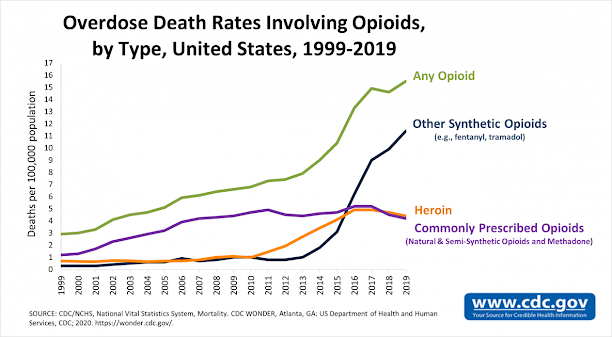
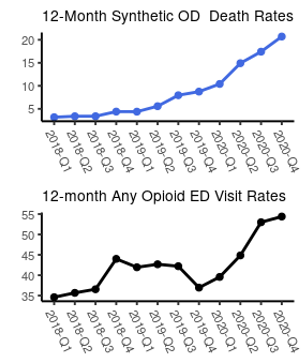
  • Overdose deaths from opioids are off the charts and continue to increase in the US and in our own Sonoma County (see graphs below, including local data)
  • If you only have 5 minutes, watch this video about our current understanding of addiction and social isolation: "Everything you know about addiction is wrong". It challenges our traditional framework for addiction and substance use disorder.
  • Also consider reading this book: Chasing the Scream (by Johann Hari)
SoCo DPH opioid overdose rates (Death and ED visits)

Racism and the opioid epidemic
  • Despite similar rates of drug use, Black Americans (who make up 13% of the population) make up 27% of drug arrests (2018)
  • Disparities in incarceration have affected generations of communities of color
  • African American and Hispanic Americans are 7.5 and 2.3 times more likely to have an incarcerated parent (than white children)
    • having an incarcerated parent puts children at increased risk for future substance use
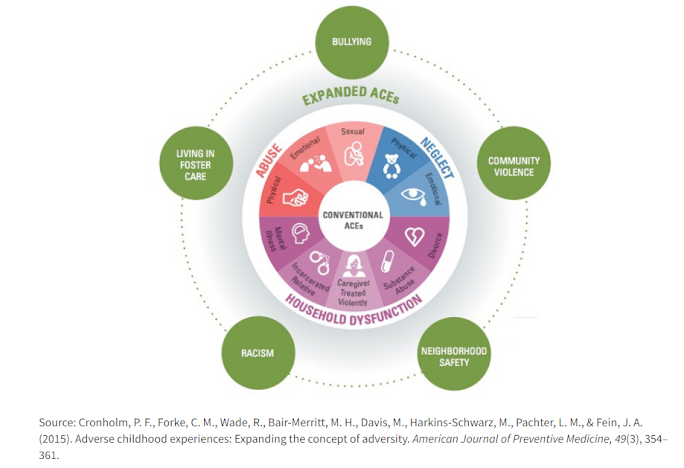
Adverse Childhood Events (ACES)
We know that ACES (childhood abuse, neglect and household dysfunction)are associated with risk for substance use disorder. I.e. the more ACES you have, the higher risk you have to have issues with substances, including IVDU.

Trauma Informed Care
  • It is our job to care for patients with a hx of trauma by influencing healthy coping mechanisms and helping patients build resiliency
  • The Substance Abuse and Mental Health Service Administration (SAMSHA) decribes 6 principles of a trauma-informed approach. These are SO important to consider in how to engage with all patients, but particularly those with high ACE scores
    1. Safety
    2. Trustworthiness and transparency
    3. Peer support
    4. Collaboration and mutuality
    5. Empowerment, voice and control
    6. Cultural, historical and gender issues
  • Again, providers should consider how to help patients focus on RESILIENCE and COPING
  • Examples of how to do this include
    • Openly discussing harm reduction methods (prevent dying and suffering)
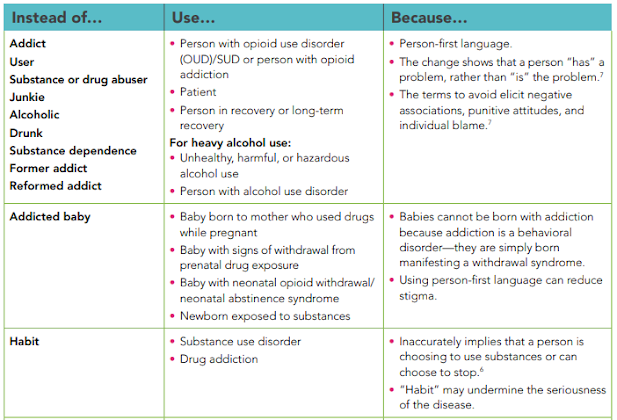
    • Person first language, welcoming, non-discriminatory, non stigmatizing language
      • i.e. person with substance use disorder, person in recovery
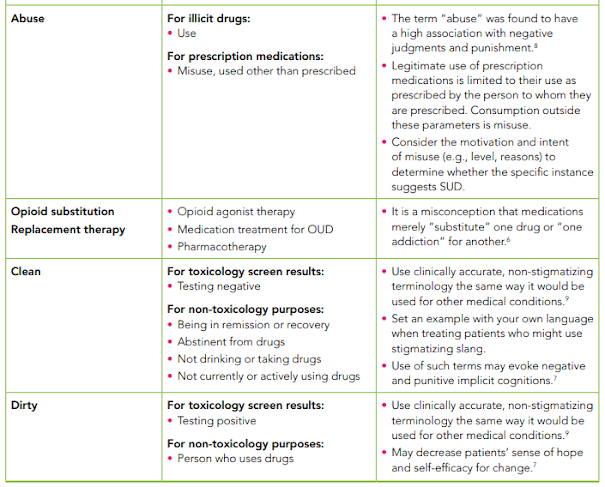
      • i.e. avoid "clean" and "dirty" when talking about drug screen results
    • Put up signage offering treatment for opioid use disorder in hospitals and clinics
Words Matter! Check out these tables to make sure that you are using language that is non-stigmatizing.

https://www.drugabuse.gov/sites/default/files/nidamed_wordsmatter3_508.pdf 


Treatment of acute pain and management of withdrawal 
  • If a patient is on BUP, don't STOP it when treating acute pain
    • patients can safely get acute pain meds on top of their BUP
    • you will only precipitate withdrawal at initiation of BUP
    • split dosing to BID for pain management in the acute setting
    • provide sense of calm and comfort (help patient feel safe and connected)
  • Also, schedule tylenol and/or ibuprofen (or toradol) in setting of acute pain
  • consider gabapentinoids, SSRI, TCA, regional block
  • can increase up to 32 mg/day for acute pain
    • add opioids with higher Mu affinity: morphine, hydromorphone, fentanyl
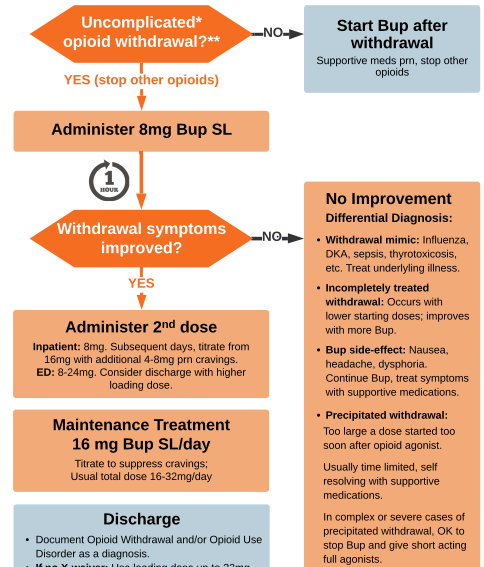
Buprenorphine (BUP) inductions in the hospital (simplified from CA Bridge: https://cabridge.org/tools/resources).
  • Very simple! For uncomplicated withdrawal (COWS>8), start with 8mg BUP SL, recheck in 1 hour, give second dose of 8mg
  • Subsequent days, titrate from 16mg with additional 4-8mg prn cravings
  • Labs to consider (but don't need results to start): UDOA, CBC, HIV, HCV, RPR, HCG, HAV and HBV immunity
  • Adjunctive medications: acetaminophen (pain, headache), clonidine (w/d symptoms), diphenhydramine (anxiety), loperamide (diarrhea), ondansetron (n/v), trazodone, melatonin (sleep)


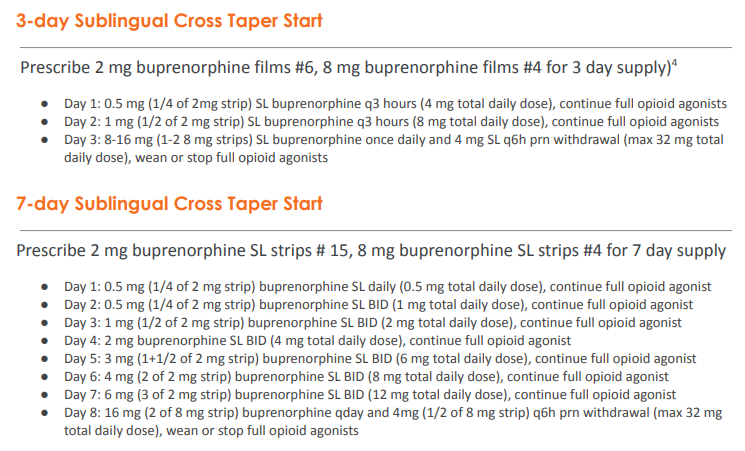
Microdose inductions of BUP
  • Very slow start of BUP to decrease or even eliminate withdrawal symptoms 
  • Consider: if patient taking methadone, history difficulty BUP start, transitioning from prescription opioids, intentionally taking fentanyl daily
  • Avoid: if already significant withdrawal (it's too slow), don't want to continue full opiate agonist, risk for respiratory depression/sedation, prefer rapid start
Harm reduction refers to a set of policies, programs and practices that aim to reduce health, social and economic consequences of drug and alcohol use. 
  • Reduce stigma by being a safe place, regardless of ongoing substance use
  • Offer clean needles (available at Face to Face, DAAC, but also on PHP formulary (see image below)
  • Always give Narcan Rx
  • Give Fentanyl test strips (available at Face to Face)
  • Resource support
  • If patient leaving AMA, give direct phone # to outpatient MAT care:
    • Marla Pfohl MAT program manager SRCH 707-890-0375
    • Erick Hill, Matt Clinic supervisor SRCH 707-867-8690
    • Never Use Alone phone # 800-484-3731
  • Connect to outpatient MAT, give bridge Rx to outpatient MAT (x-license no longer required)


Many thanks to Dr. Susan Milam Miller, who gave an excellent Grand Rounds this week titled "Caring for our Children, our Family, and Ourselves during COVID-19". Dr. Milam Miller covered a range of topics about our mental health in this pandemic-- from March 2020 as Alexander and the Terrible, Horrible, No Good Very Bad Day, to community and complex trauma, ambiguous loss, and unresolved grief, to trauma-informed care, and even a bit about the magic of a window into children's lives via video visits.


HERE is the recording of Dr. Milam Miller's presentation. 

Here are my notes:

Dr. Milam Miller reminded us that no child exists as as single entity-- children exist within their natural environment, including their families and their community. Listening between the lines to children and their attached adults is important. Knowing what their natural environment looks like is also key.

Clearly, here in Sonoma County, many children (and adults) have lived the trauma of several fire seasons and evacuations, compounded for the last year and a half by the COVID-19 Pandemic. These traumas have caused a tremendous amount of stress for many of us-- children are no exception. As such, we can expect to see signs of traumatic stress in our children.

Traumatic Stress manifests in a range of responses in adults and children:

  • Emotional: emotional dysregulation (sadness, fear), numbness, detachment
  • Physical: somatization (headaches, stomach aches insomnia), changes in brain function, hyperarousal
  • Cognitive: how we think about ourselves and others, triggers, re-experiencing, nightmares/daymares, dissociation, dampening of connection via thoughts and emotions
  • Behavioral: the way the mind directs the body: self harm, substances, avoidance (behaviors that are NOT adaptive over time, even if they help at first)
  • Interpersonal: pulling away from loved ones, difficulty trusting and forming trusting relationships
Identifying these "adaptive" behaviors that may not serve us over time is key to helping our patients and ourselves survive the trauma. 

Community Trauma  is a strong and powerful shaper of relationships and health
How does a community emerge from trauma? How do we recover and repair? How do healthcare providers care for their community in times of trauma but also for themselves? How do we model for our children and families what healthy coping with community trauma entails?

Complex Trauma describes both children's exposure to multiple traumatic events—often of an invasive, interpersonal nature—and the wide-ranging, long-term effects of this exposure. ... They usually occur early in life and can disrupt many aspects of the child's development and the formation of a sense of self. In COVID times, the list of multiple traumatic events may be long
  • what about medical trauma of repeated COVID testing?
  • what about shutting down schools?
  • what about losing church and extracurricular activities?
Ambiguous loss is a loss that occurs without closure or clear understanding. This kind of loss leaves a person searching for answers, and thus complicates and delays the process of grieving, and often results in unresolved grief. I personally found myself intrigued for the rest of the day by this notion of ambiguous loss-- classically a dear one who disappears on a hiking trip, never to be found again. What about these years of pandemic create ambiguous loss?
  • what does it mean to have never finished fourth grade because schools shut down in March 2020?
  • what does it mean not to have a graduation ceremony from high school?
  • what does it mean to go through puberty during pandemic times without community support?
Trauma Treatment classically has 3 stages:
  • Stage 1: Stabilization and establishment of safety (this may include psychotropic medications, DBT to help managing distress, relationship building)
  • Stage 2: Addressing and processing of trauma memories or related beliefs and/or grieving the losses inherent in trauma (this is somewhat controversial but has been standard of trauma treatment)
  • Stage 3: Restoring or creating connection between survivors and their communities by increased engagement in meaningful and positive activities and relationships
Unsurprisingly, in trauma healing, relationship building is key.
Trauma informed care
“Trauma-informed care is defined as practices that promote a culture of safety, empowerment, and healing. 
  • Safety
  • Trustworthiness and transparency
  • Peer support
  • Collaboration and mutuality
  • Empowerment, voice and choice
  • Culturally, historic and gender appropriate
Relationship and relational care is everything. Dr. Milam Miller says at some point, we expend WAY too much energy on individual treatments and interventions, really we need to consider community interventions, group treatments, and shared treatments. I love 

Closing questions to ponder from Dr. Milam Miller
1) Who is your buddy? (i.e. the person you call, lean on, ask for help)
2) What does healthy coping look like in these times?
3) Can you recognize the ambiguous loss of this COVID pandemic for the families you care for? Once recognized, how do we process our grief?

Concussion Management in Primary Care (Affleck, Ohkubo, Matthew 9/1/2021)

Many thanks to Dr. Monica Ohkubo,  Dr. Ty Affleck, Athletic Trainer Chelsea Matthew, and DNP Surani Kwon for a great interdisciplinary Grand Rounds presentation from the North Coast Concussion Management team on Concussion Management in Primary Care

A recording of their presentation is available HERE

Driven by increased attention on head injuries over the last decade, the standard of care for sport-related concussions has changed significantly from a general If you feel okay, it's okay, go back in and play mentality to a much more evidence-based stepwise management approach to concussion. 

  • In US, there are 1.3-3.8 million concussions annually, close to 300,000  ER visits (2010-2016)
  • In football alone, 7.7% NFL players experience concussion (this amounts to only about 130/year), but if 4-6% of high schoolers also experience concussion, this amounts to 1.2 million/year
  • People with history of concussion are more likely to have another
  • Hx migraine, depression, insomnia cognitive problems, visual abnormalities-->  concussion can unearth or exacerbate these conditions (learning disability can be activated, depression can represent or be exacerbated)
  • Many used to believe that most athletes recovered from concussion in 7-10 days with a few stragglers. . .new evidence has found that after 2 weeks less than 1/2 of athletes with concussion have fully recovered

Initial Concussion Care: "You don't know how bad it is until it's over" -Dr. Ohkubo

  • You cannot assign a time frame for recovery as soon as the concussion is recognized  (but by state law, it's always at least 7 days)

    • NO return to play in same game/practice
    • Monitor for deterioration over the first few hours after injury (s/sx bleed)
    • Early follow-up with someone trained
    • Physical rest
    • Mental rest: no phones, no school/shortened school
    • Per state law, any high school athlete with a concussion must follow up with physician trained in concussion management for medical clearance
    Best practices for Concussion Management

    Standardized Concussion Assessment Tool (SCAT5)

    The SCAT-5 is a validated tool to use for concussion evaluation. Includes several components: GCS, c-spine evaluation, symptom evaluation, cognitive tests, balance tests, memory, coordination, and 6 step return to play guidelines. The link above will take you to the full 8 page document.

    Of note, the symptom evaluation on the SCAT includes  22 symptoms: physical, emotional, mental, sleep. Different areas can be differentially affected
    Athletes also can cover up symptoms because they are used to pushing themselves, so pay attention to the individual answers

    Eye and Balance Test
    Balance testing (BESS): 20 second each feet together hands on the hip eyes closed, non-dominant leg, tandem stance with non dominant foot in the back

    Neurocognitive Testing
    Gold standard is baseline testing (pre injury) to be able to assess extent of injury if/when it occurs
    SRJC and SRCS are doing this for all athletes: Computerized neurocognitive baseline and f/u testing

    Athletic Trainers

     Athletic trainers are (board certified, link between healthcare provider and the athlete and parent) important resource to be able to be available to do concussion training/prevention as well as assist with assessment and return to play protocols

    • prevention and recognition of injury, referral, treatment rehabilitation
    • academic modification
    • objective assessment at sideline, retesting
    • referrals for physician, mental health support
    • facilitation of return to play protocol
    • day to day contact with athletes
    Treatment and Management of Concussion
    1. Cognitive and physical REST is huge. Academic accommodations have to be provided by doctors specific form that physicians need to fill out (e.g. half days at school, extra time on tests, reduced homework load, note taking, not on computer all the time)
    2. Diet: appetite changes after concussion (more/less hungry). Eat small things through the day
    3. Hydration: nausea, drinking small amount during the day
    4. Sleep: sleep patterns can change (more/less than normal, frequent waking). Don't wake a sleeping athlete. Sleep is important in recovery. Naps: not after 3pm
    5. Exertion: people recovering both physical and mental, though small sub-symptom exercise can help recovery. 
    6. Stress: interpersonal arguments, emotions can change post concussion, crying out of nowhere (not criers), lights/sound noise: bright lights, fluorescent lights, sunglasses (accommodation), loud sounds (e.g. PE class)
    7. Do NOT push the symptoms
    Return to Play Process (CA state law)
    • Anyone diagnosed with concussion, must go through the process that starts with a medical evaluation, and then start 7 day process
    • For contact sports, athletes must get a two step medical clearance
    • Each step MUST be separated by at least 24 hours
    • If symptoms return at any step, stop the activity, let rest for the rest of the day and return to the same step
    ***********************************************************
    Step#1      Rest until asymptomatic

    MEDICAL CLEARANCE

    Step#2:     Light aerobic activity (walk around track or football field)
    Step#3:     Sport specific exercise (running, swimming)
    Step#4:     Non contact training drills (shooting, serving, setting)

    MEDICAL CLEARANCE

    Step#5:     Contact practice
    Step#6:     Contact game

    ************************************************************

    It's important to note that concussion symptoms tend to cluster: "Concussion picks on everyone's weakness". 

    Someone may have minimal to no symptoms in one category but profound deficits in another. Directing your attention to where their symptoms are is a key take home. 
    • vestibular
    • cognitive/fatigue
    • ocular
    • post-traumatic migraine
    • anxiety/mood
    • cervical 
    Specialists can be helpful depending on the problem: concussion specialist, vestibular rehab, neuro opthamologist, neuropsychologist

    Use of neurocognitive tests
    Gold standard is to have a baseline and post-test injury test. That way you can compare the two. IF you don't have a baseline, there are standardized scores based on age/educational level that you can use to make your assessment.  
    Specifically, the computerized neurocognitive test ImPACT used at SRJC and SRCS (see image below for an example report)


    Other tools:
    • Vestibular and oculomotor testing (VOMS test)
    • A "Home SCAT test": ideally, athletic trainers are supporting the return to play process; however, if there is no athletic trainer to link to care, consider using parent to help athletes get through the process. Have the athlete go through above steps and have parent administer a variation on the SCAT (below)
    • Light aerobic exercise (in Dr. Affleck's words, "oxygen") can help speed recovery
    • Disrupted sleep? Consider melatonin


    Additional References/resources:
    CDC: www.cdc.gov/concussion/
    UPMC: www.upmcphysicianresources.com
    northcoast concussion.org 
    CIF physician letter to school: https://cifstate.org/sports-medicine/concussions/CIF_Physician_Letter_to_School_after_Concussion_Visit.pdf


    The Other "O" in Prescription Safety: Benz-O-diazepines (Threlfall, 12/2/2020)

    Many thanks to psychiatrist Dr. Alex Threlfall for a compelling and important Grand Rounds this week on Benzodiazepine Use Disorder, or as he aptly put it, The Other "O" in Prescription Safety. This is SUCH an important topic and one that hasn't gotten enough of our attention over the last decade of opiate deprescribing. 

    TAKE HOME POINT #1 Do NOT prescribe benzodiazepines. . .unless they are absolutely indicated. BZD role is limited, but there are some reasonable indications.

    Reasonable indications for a short course of BZD are very limited. They include: 

    1. crisis situations
    2. acute bipolar mania (for induction of sleep)
    3. alcohol withdrawal (maybe. . .but consider BZD sparing options) 
    4. seizure disorders 
    5. procedures 
    6. some phobias (e.g. VERY limited amount for airplane, not to be combined with alcohol)

    And if you do prescribe in any of the above scenarios:

    • Use the lowest effective dose
    • Avoid alprazolam
    • Restrict prescription to 2 weeks or less

    Here is why:

    • After opioids, BZD are the drug class most commonly involved in intentional and unintentional pharmaceutical overdoses (29.4%)
    • The overdose death rate involving BZD from 2011 to 2014 has increased five fold with opioids involved in 75% of these deaths (see diagram below from the NIH):

    Dr. Threlfall outlined for us SIX areas of high risk with regards to BZD prescription

    1. Mental health conditions associated with trauma (e.g. PTSD but also depression, anxiety, etc)
    2. History of substance use disorder
    3. Elderly
    4. Compromised pulmonary function (e.g. moderate to severe COPD)
    5. Women of child-bearing age
    6. Patients suffering from chronic pain with or w/o opioid use

    TAKE HOME POINT #2: Don't start any new prescriptions for BZD in anyone who meets any of the above criteria. 

    Trauma is an integral part of our daily interaction with patients.
    • physical or sexual abuse in childhood is reported by 20-50% of adults
    • up to 70% of patients with depression, IBS, chronic pain, substance use report childhood physical or sexual abuse
    There is NO evidence supporting the use of benzodiazepines in trauma. 
    • not only are they ineffective, but they can lead to adverse outcomes in PTSD
      • reducing efficacy of therapy
      • prone to misuse and development of substance use disorder
      • dangerous with substance use disorder often associated with trauma (ETOH, opioids)
    Physical and psychological dependence can establish itself rapidly, especially in vulnerable patient populations. 
    We should be very cautious and thoughtful about our use of BZD in the elderly-- in fact, we should really NOT be prescribing benzodiazepines
    • in one study of elderly patients on BZD , fewer than 1% had been referred for psychotherapy despite carrying mental health diagnoses
    • anxiety and insomnia are commonly diagnoses 
    • there has been a 32% increase in continuing BZD prescriptions for elderly
    BZD are associated with significant risks in the elderly
    • falls
    • hip fractures
    • sedation
    • cognitive impairment
    • motor vehicle crashes
    Department of Veteran Affairs- Benzodiazepine Educational Guide

    Anxiety and insomnia are the two principal indications for prescribing benzodiazepines, but BZD are NOT first line for either of these conditions. 

    Studies show that BZD are not effective for generalized anxiety disorder (GAD)
    • 1st line: SSRI/SNRI +/- psychotherapy, buspirone
    • 2nd line:  gabapentin, pregabalin, propranolol, clonidine*, amitriptyline/nortriptyline*, hydroxyzine, diphenhydramine (*indicates not for elderly)
    • BZD are THIRD line for anxiety.
    All professional organizations recommend against the use of benzodiazepines as first line therapy for insomnia

    All recommend Cognitive Behavioral Therapy for Insomnia (CBTi) as first line
    2nd line: melatonin, prazosin (if nightmare), trazodone>mirtazapine (at lower doses more effective for insomnia)>doxepin>amitriptyline/nortriptyline
    3rd line: hydroxyzine/diphenhydramine, non-benzo (zolpidem/Ambien)> ezoplicone>zalaplon
    BZD are FOURTH line for insomnia

    If you ARE going to start a bzd:
    • should be VERY rare
    • only for short term relief of acute anxiety/panic (2-4 weeks) and chronic insomnia (1-2 weeks)
    • get psychiatry consult to review chart
    • have explicit conversation with patient that this is very short term, discuss exit strategies
    • review risks with patient, including risk of dependence
    • only one prescriber, urine tox screen, CURES, contract
    • Recommended meds: lorazepam 2mg TDD, clonazepam 1.5mg TDD, diazepam 15mg TDD, temazepam 30mg TDD
    Dr. Threlfall didn't have time to to talk about the specifics of BZD tapering, but please contact me if you want those slides.

    He ended on the notion that direct patient education works. The 2014 EMPOWER study by Tennenbaum et al showed that simply informing patients of the risks of BZD motivates a significant percentage to initiate conversations about taper with their doctors AND successfully discontinue BZDs at 6 months (so cool!)

    TAKE HOME POINT #3: So, yes, final take home point: talk to your patients about the risks of BZD. Maybe they will even be able to convince YOU they want to stop them. 


    Hospital Care of the Patient with Super Obesity (Kirchner, 11/11/2020)

    Thanks to Dr. Julia Kirchner for a great Grand Rounds presentation this week on Super Obesity. Dr. Kirchner walked us through the myriad of ways in morbid and super obesity add physiological complexities to patient care and can seriously affect patient outcomes. The list of acute and chronic health implications of obesity is long, and the physiology is dense but also very interesting! In addition, don't forget the role that our explicit and implicit biases play into our care of obese patients.

    For clarity, definitions of obesity:

    Overweight: BMI >25-29.0

    Obesity: BMI >30

    Morbid or Extreme Obesity:  BMI >40

    Super Obesity: BMI >50

    • 9.2% of US population is severely obese
      • Super obese is the fastest growing subgroup (maybe up to 1% of the population)
    • Morbidly obese patients have increased ICU length of stay, with particularly well documented increased morbidity and mortality in obese trauma patients 
      • In obese trauma patients: OR 1.4 mortality OR 1.8 in hospital complications (pneumonia, ARDS, UTI)
    • Having a pulmonary diagnosis on admission increases with increasing BMI, and there is an increased need for non-invasive mechanical ventilation (NIMV)

    Transport and transfer issues:

    • stretchers with higher weight limits
    • bariatric wheelchairs
    • lift team
    • adequate O2 for transport
    • staff capability and training

    Hospital Capacity issues:
    • bariatric beds
    • room layouts (doorways, hallways)
    • bedside commodes, walkers
    • lift equipment
    • larger BP cuff (see Table 3), gowns, larger NIMV masks, longer needles
    • imaging capabilities
    • staff training

    Physical Exam of obese patients, can be challenging: including heart and lung auscultation, abdominal exam and skin survey

    Labs
    • Obese patient tend to have higher baseline CO2
    • We should use a higher BNP cutoff >54 (for BMI >40)
    • Be aware of possibly inaccurate SCr (consider using a GFR calculator)

    Imaging capabilities are often limited: 500lb weight max on CT scanner (30 inch maximum circumference), also higher rates of uninterpretable CXR (see image), challenges with ultrasound (difficult FAST exam, may need TEE)

    Medications may need dosing modifications based on several factors, including weight, type of medication distribution, and renal and hepatic metabolism. Here is a link to a calculator for body weight calculations: idea/actual body weight and this is a really great resource for medication dosing in obesity called ClinCalc.

    Okay, now for some serious physiology and pathophysiology

    Respiratory issues are a BIG deal in the care of morbidly obese patients. Predisposing factors that make obese patients at risk for respiratory distress include: underlying chronic respiratory failure (that is why that elevated baseline CO2), difficulty with airway maintenance, higher baseline oxygen consumption, impaired central response to hypercapnia and hypoxia, and disordered gas exchange. 
    • 42% of morbidly obese patients will require NIMV regardless of reason for admission
    • AVOID SUPINE position (exacerbates everything), consider HOB elevated vs. reverse trendelenberg
    • high PEEP may be indicated (starting 10, up to 20-25)
    • care with fluids


    Obesity hypoventilation is super common and important in our care of morbidly obese patients!
    • BMI>30
    • daytime hypercapnea (pCO2>45)
    • disordered breathing during sleep
    • all other dx excluded

    Cardiac complications and Renal complications are common. Often these are acute on chronic. Take home points:
    • Care with IV Fluids
      • Consider ADJUSTED weight based dosing of IV fluids
    • Have high suspicion for underlying renal and cardiac disease that may be undiagnosed but is very likely present. 
      • care with nephrotoxic drugs
      • low threshold for telemetry monitoring
    lCVD=cardiovascular disease, IAP=intra-abdominal pressure, RV=right ventricle, LV=Left ventricle,
    AKI=acute kidney injury, CO=carbon dioxide, AKI=acute kidney injury

    And finally, how we treat patients matters!

    Bias and Obesity:
    "Weight appears to be the last acceptable bias", Rita Rubin writes in JAMA, article available here. The general population AND physicians show very high anti-fat bias and there is clear evidence of bias and discrimination against obese patients. There is an intersectionality with race and racism in this country that we need to be aware of, as there are higher rates of obesity in Hispanic and Black populations.  


    T"Weightake home

    Structural Violence and Mayan People in Guatemala (Schirmer, 2/5/2020)


    Muchas gracias to Dr. Billy Schirmer who gave a compelling (and dense) Grand Rounds this week on Structural Violence and Mayan People in Guatemala—spanning from 1492 to the present. While some of us may be surprised to see such a topic at a hospital grand rounds, it was an excellent reminder that we are not caring for patients on an island in Santa Rosa—but rather in a complicated global, sociopolitical context. And that context matters.

    Dr. Schirmer reminded us right up front that current immigration from Guatemala (and really all of Central America) are directly related to a long and sordid history of structural violence**—violence that has been perpetrated continuously by the United States toward indigenous people as long as there has been foreign policy. 


    Dr. Schirmer challenged us to take the long view—Guatemalan people are not coming to the US simply because coffee prices have dropped or opium fields are being destroyed or gang violence is endemic. While all these individual things are true, the story is much more layered—full of centuries of war, classism, fear, racism and persecution.

    **structural violence: the imposition of unequal risk for disease, injury, and death by social, political, institutional and economic configurations and policies on identifiable population groups . This violence is structural because it results from durable systemic inequality produced by large scale social forces, including racism, gender inequality, poverty and harmful public policies rather than from isolated individual actions or serendipity (-definition from Dr. Paul Farmer, physician and medical anthropologist)

    Image may contain: 1 person, smiling

    Some stats:

    • There are 21 unique Mayan languages in Guatemala
    • 41% of Guatemalans identify as Mayan/indigenous
    • 79% of indigenous Guatemalans live in poverty
    • 40% live on less than $1.90/day
    • 90% of poor kids never graduate from high school
    • 33% of indigenous Guatemalans cannot read or write
    • Average educational attainment for indigenous women is 2 years
    • The number of Guatemalan people seeking asylum at the US-Mexico border continues to rise—surpassing Mexican nationals
    • 33% of those that apply for asylum without medical evaluation are granted asylum; 88% are granted asylum with a medical evaluation

    And some history (I cannot possibly cover it all here, check out the recording of his GR here if you want to hear in its entirety)

    • 1500s Pedro de Alvarado leads the Mayan conquest
    • After the Spanish conquest all of the land in Guatemala is divided amongst ruling class “encomienda system”--legal slavery of the indigenous people by the ruling class.
    • 1821 Guatemalan independence from Spain (not for the indigenous, who continue to be oppressed)
    • 1877 remaining land on which indigenous people are living is stolen and sold to private coffee growers, leaving most Mayans without land
    • Early 1900s, the United Fruit Company (a US company) establishes the banana industry. United Fruit owns (and controls) much of Guatemalan infrastructure (roads, trains, ports, radio, land) in the name of the banana industry. All supported by dictatorships who were supported by the US.
    • 1940s: Guatemalan spring: attempt at unionization of the United Fruit workers
    • Early 1950s, democratically elected President Arbenz implements Agrarian reform to reacquire land for the people of Guatemala
    • Soon thereafter (1954), President Eisenhower and other high level US officials (the Dulles brothers) create an uprising against Arbenz and force the democratically elected president out of office in the name of “anti-communism”
    • Over the next 40 years—during the Cold War—fear of communism drives horrible human rights abuses. Land is burned and taken from indigenous people, people in power abused people without power, and thousands of indigenous people were systematically murdered
    • The US supplied training and weapons to corrupt Guatemalan governments in the name of democracy. This training and weaponry has left footprints everywhere
    • 1970s and 80s: era of La Violencia under President Rios Montt: “scorched earth campaign”, 70-90% of indigenous communities are burnt to the ground by the Guatemalan government. President Reagan continues to send money and weapons to support Pres. Rios Montt
    • Rigoberta Menchu, Nobel Peace Prize 1992
    • 1999 Historical clarification commission: investigation of human rights abuses, “Memoria de Silencio”, highlights endemic racism contributing to violence and war in Guatemala

    And now fast forward to current reality:

    • International commission against Impunity under former President Jimmy Morales: In 2013, Guatemalan president Rios Montt was convicted in Guatemala of genocide, a week later that ruling was overturned on a technicality. He was never retried, and ultimately died in 2018 without punishment.
    • Ongoing rampant sexual violence in Guatemala: 50-80% have experienced intimate partner violence, a culture of silence
    • President Trump’s 2019 “Safe Third Party Agreement” with Guatemala, Honduras and El Salvador requires that any asylum seekers passing through Guatemala on the way to the US (from Honduras, El Salvador, etc) MUST apply for asylum in Guatemala before applying in the US. Though international experts agree that Guatemala has neither the infrastructure nor the resources to support such people, Trump threatened tariffs if Guatemala didn’t cooperate
    And SO what can we do as health care providers?


    • Create safe spaces in clinics and hospitals (be aware of chronic institutional distrust)
    • Know that trauma is ongoing; it doesn’t end when people arrive in the US. It has negative effects on people’s health and should be addressed sensitively
    • Don’t make assumptions about patients’ history or language of choice. Ask, humbly.
    • Don’t blame the victims.
    • And last, but not least, get trained to do asylum evaluations

    Methamphetamine Use Disorder (Nicholson, 1/8/2020)

    Thank you so much to Dr. Lisa Nicholson for her excellent presentation this week during Grand Rounds on Methamphetamine Use Disorder.

    Most of you are well aware that methamphetamine has some health effects and societal implications, but did you know that our very own health care system and pharmaceutical companies are responsible for introducing methamphetamine to our military pilots in WW2 (to keep them awake), to the general market OTC in 1939 (brand nameBenzedrine) and is still available even today with a prescription?
    Meth has been marketed for the treatment of depression, obesity, fatigue, low libido, inattentiveness, menopause, nasal congestion, asthma, and even the common cold. (Check out the ads to the Right) 

    Methamphetamine is typically smoked, inhaled, or ingested. In California, the majority of people who use meth smoke it, but in Texas, the majority inject it.
    ·        1.2% of Californians have used meth in the last year
    ·        6% of Sonoma County 11th graders have tried meth (yikes!)
    ·        Meth is the most common illicit substance used worldwide (after MJ)
    ·        In Sonoma County, meth is by far the most commonly used substance in families involved with the Sonoma County court system implicated in the abuse or neglect of children (second to alcohol)

    This is MIND-BLOWING! Meth is the most addictive substance that exists: 47% of people will become addicted after first use, 60% after second use

    Medical implications of meth use:
    ·        Acute intoxication: malignant hypertension, stroke, cardiac arrest, meth psychosis
    ·        Post-meth: altered mental status, irritability, violence
    ·        Long term: meth cardiomyopathy, dental problems, cerebral atrophy, mood disorders

    A bit on Meth psychosis. . .
    ·        Up to 40% of users get meth psychosis, it is dose dependent, on average 1 week duration, but users with >5 years of use can have prolonged psychosis (>1 month).
    o  If a patient has experience meth psychosis in the past, they are “sensitized” and more likely to experience it again in the future
    ·        Meth psychosis can mimic other mental illness: mania, schizophrenia, mood disorders.
    o  At Zuckerberg SFGH inpatient psych facility estimates 47% of patients admitted to the inpatient ward are not mentally ill—they are high/coming down from meth (2019 study)
    ·        To distinguish primary psychosis from meth induced: you must have meth use BEFORE psychosis, and abstaining from meth likely will improve/make recede the psychosis
    ·        There is limited evidence on the use of atypical antipsychotics for thetx of meth psychosis: generally olanzapine, quetiapine. There is also evidence for the use of benzodiazepines for the treatment of meth withdrawal

    A bit on hypertension. . .
    Severe hypertension of meth should be treated with BETA BLOCKERS: labetolol. Tachycardia can be treated with  metoprolol (correct the catecholamine flood)
    Patients with severe hypertension and chest pain are at risk for acute MI, dissection, and/or aortic aneurysm. Get a head CT if you cannot examine them thoroughly.

    Meth cardiomyopathy very common (usually dilated non-ischemic, VERY low EF ~10%).
    A 2017 German study found that with meth abstinence average EF increased from 20% to 43%, so STOPPING METH can improve cardiac function markedly!!!

    There are no FDA approved treatments for meth use disorder. Mixed evidence for:
    ·        Bupropion (Wellbutrin): blocks dopamine reuptake, can help in early abstinence, modest evidence, not recommended after 4 weeks abstinence (can be triggering)
    ·        Mirtazapine: helps with sleep, appetite, modest reduction in meth use
    ·        Naltrexone: appears to decrease meth high and cravings, mixed results
    ·        Modafinil (Provigil): some evidence in cocaine use disorder, 2010 RCT said no better than placebo for meth
    ·        Adderall/Ritalin: jury still out

          
    Psychosocial approaches:
    Best evidence in non-pharm management of patient is for contingency management (=monetary or other tangible short term rewards for abstinence)PLUS Community reinforcement (healthy restructuring of social environment)
    Not great evidence for 12-step, CPT or supportive therapy. Hmmm. No one in Sonoma County appears to currently be using contingency management—MediCal does Not cover it

    Don’t forget harm reduction in patients with meth use disorder:
    1)     Condoms 2) PrEP 3) Needle exchange (when appropriate) 4) Dental Care 5) Clinic structures that don’t punish people for no-shows, tending more to drop-in

    Diagnosis and Management of Osteoporosis (Hamann 7/23/2026)

     A recording of this presentation is available HERE .  *** Thanks so much to Dr. Kendal Hamann, SMGR Endocrinologist, for an outstanding Gra...