Showing posts with label inflammation. Show all posts

Rheumatoid Arthritis Part 2: The Immunology of RA (Kremer, 8/26/2020)

This week, Dr. Lisa Kremer, a local Sutter Medical Group of the Redwood's Rheumatologist, gave Part 2 of her Grand Rounds presentation on Rheumatoid Arthritis (Part 1 from 2/26/2020 is available on this blog here)-- this one on the Immunology of Rheumatoid Arthritis (RA).

Dr. Kremer reminded us that RA is a symmetrical, poly-articular inflammatory process of small and medium joints on more than one occasion over more than six weeks (with supporting lab and/or x-ray findings and the absence of an alternative diagnosis).

  • Of note, RA does NOT involve the low back or SI joints (can sometimes include the hips, shoulders and upper cervical spine)
RA has 3 phases (see image below):
  • Pre-clinical
  • Early "clinically evident: disease
  • Chronic established disease
Immunopathogenesis of Rheumatoid Arthritis - ScienceDirect
Source: https://www.sciencedirect.com/science/article/pii/S1074761317300419

RA has its roots in an environment of autoimmunity
  • lung exposure: e.g. tobacco, silica, and textile dust (risk is increased with greater pack year, declines at 10 years after quitting tobacco
  • increased citrillination of peptides
  • oral mucosa: chronic gingivitis (inflammation)
  • GI tract: microbiome, including inflammatory diets
RA is environment PLUS genetics
  • production of antibodies recognizing citrillinated peptides that differentiates individuals at risk for developing RA
  • monozygotic twins share RA 12-15% of the time
  • fraternal twins and other 1st degree relatives share RA dx 2-5% of the time
  • 40% of genetic influence is in MHC class IIa-DR4 alleles
  • more than 90% of patients with RA express "susceptibility isotopes" on the DRB chain that are associated with increased disease severity
As RA moves from a pre-clinical to early RA, multiple autoimmune conditions are precipitated:
  • macrophages in the synovium are activated
  • cytokines are released, activating T cells and creating a positive feedback loop that leads to more cytokine and chemokine release
  • T cells release inflammatory cytokines (TNFa, IL1, IL6)
  • Fibroblast-like synoviocytes (FLS) and macrophages make up the thickened synovium of early RA
    • FLS drive erosive bone damage
Our current therapeutics have been created in direct response to this immunology. Treatments for RA are named for their immune targets. Note that methotrexate is still mainstay treatment for RA and steroids should only ever be given for short-term management.
  • Antimetabolites: Methotrexate, Leflunomide
  • TNF: Adalimumab, Etanercept, Infliximab
  • IL-6: Tociluzimab
  • Co-stimulation (CD28-CD80/86): Abatacept
  • B cell depletion (anti-CD20): Rituximab
  • JAK inhibitors: Tofacitinib, Baricitinib
  • IL-1: Anakinra
Untreated, RA shortens life by 5-10 years. Aggressive RA therapy decreased mortality due to CV disease, lung, alanto-axial subluxation, and drug toxicity (e.g. steroids, NSAIDs). Treatment reduces the need for joint replacements by 50%

Lifestyle matters!
  • diet, exercise weight management
  • tobacco cessation and limited alcohol
  • stress management

Rheumatoid Arthritis Part 1 (Kremer, 2/26/2020)

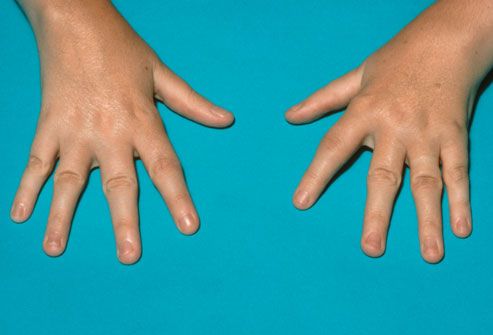
Image result for rheumatoid arthritis hands
Dr. Lisa Kremer gave a wonderful Grand Rounds this week on Rheumatoid Arthritis. To be clear, RA is not a topic that normally gets me out of bed in the morning. But Dr. Kremer's presentation was so good that I found myself wishing for it not to end. Or for Part 2 to follow asap.  And even several hours later, in the chaos of a busy day in the hospital, I found myself considering this strange disease-- rarely seen before the 1600s, now quite common, terribly disabling, and brought about by a "perfect storm" of genetics, environment, and stress.


RA is characterized by symmetrical polyarticular swelling of the small and medium joints on more than one occasion, over more than six weeks, supported by lab and/or xray and absence of other diagnosis. Exact causes are unknown. Multiple triggers.

Dr. Kremer described RA as an autoimmune condition, with some genetic susceptibilities (e.g. HLA DR4), for which smoking doubles the risk. RA can be precipitated by infections, environmental toxins, social and physical stresses, and hormonal triggers.

  • 1% of the the adult world has RA (1.5 million people in the US)-- the most common chronic inflammatory arthritis
  • 4:1 female to male
  • Peak age onset 40-60 years (but anytime after puberty is possible)
  • All races and geographic areas are affected
  • Specific populations with higher incidence (Native Americans, particularly: up to 10% of Sioux, Algonquian, Pima, Yakima, and Inuit peoples)

Image result for renoir portrait bezille
And while Dr. Kremer presented us with these data and more, she also presented the case of Pierre Aguste-Renoir (1841-1919), a French artist and a leading painter in the impressionist movement. She described him as a joyous and radical young man, struck by RA around age 50. His RA seems to have been precipitated by a fall from a bicycle and a resulting arm fracture. From which he never really recovered. And yet Renoir continued to paint long into his illness-- even designing his own wheelchair and equipment to be able to reach up to his large canvass painting surface. 

Dr. Kremer espouses that Renoir is a particularly excellent painter of hands. Perhaps he spent a lot of time thinking about hands. And looking at them. . .

Laboratory testing in RA is helpful but pretest probability determines the benefit of the test. 

  • Rheumatoid factor (RF) is not specific
  • Anti-CCP is more specific (can actually be positive a few years prior to onset of symptoms, but not always)
  • ANA can be positive
  • ESR and CRP really convey inflammatory cascade
RA vs. OA (from PPM here): 
Image result for table V differentiating rheumatoid RA from generalized osteo
Extra-articular complications of RA only occur only in seropositive patients (i.e. +RF ):

  • fever and weight loss (can look like cancer)
  • nodules (can be anywhere: eyes, heart, etc)
  • interstitial lung disease
  • pleuro-pericarditis
  • CAD
  • malignancy (specifically mymphoma)
  • infections (like pneumonia)
  • a variety of hematologic abnormalities (anemia, thrombocytopenia)
  • osteoporosis
Prognosis:
Untreated RA shortens life by 5-10 years. Aggressive RA therapy decreases mortality risk due to CV disease, lung disease, and more (more on this next time). Treatment reduces need for joint replacement byup to 50%.

Disability:
Over 33% of RA patients working at the time of diagnosis will leave workforce within 5 years
Fatigue and unpredictable joint symptoms are frequently the most disabling issues

And finally, here are Dr. Kremer's pearls of wisdom:
Image result for renoir wheel chair
  • Deformity does not equal disability
  • RA does not cause back pain
  • Never order tests if you don't know what you are looking for
  • Low SES is associated with onset and severity of RA
  • Smoking DOUBLES the risk and worsens the progression
  • RA is "soft and spongy" (not hard and bony like osteoarthritis)
  • A positive RF is not diagnostic, it should prompt you to keep looking for a diagnosis
  • DIP joints are almost always spared
  • If after careful exam and lab testing, you suspect RA, refer early to rheum!
Stay tuned: Dr. Kremer will present Part 2 (Rheumatoid Arthritis: Treatment) in July or August of 2020. Keep your eyes out! And don't miss it.

Diagnosis and Management of Osteoporosis (Hamann 7/23/2026)

 A recording of this presentation is available HERE .  *** Thanks so much to Dr. Kendal Hamann, SMGR Endocrinologist, for an outstanding Gra...