Showing posts with label COVID. Show all posts

Long COVID (Siqueiros, 1/8/25)

A recording of this presentation is available HERE.

***

This week's Grand Rounds on Long COVID was a practice-changing presentation! If you are caring for patients in a primary care setting or know someone who is suffering from Long COVID, I highly recommend you watch the entire presentation by Dr. Marcos Siqueiros, of KP Santa Clara. Dr. Siqueiros covered a TON of material, including what is known about Long COVID's epidemiology, risk factors, pathophysiology, and both medication and lifestyle/behavioral recommendations for management of Long COVID. 

Here are my notes:

Unfortunately, there are a number of different definitions of Long COVID

  • CDC: symptoms persist >4 weeks after COVID (live virus no longer detectable)
  • WHO: symptoms present >3 months after acute COVID illness, lasting at least 2 months
  • National Academies of Science: infection-associated chronic conditions after SARS-COV2 infection, present for at least 3 months as either continuous, relapsing/remitting or progressive, affecting one or more organ systems.
  • PASC: Post-Acute Sequalae of COVID, lasting 4 weeks or longer


Epidemiology
17-18% of all US adults reported having long COVID at some point since 2020, ~7% having ongoing symptoms
20 million adults in US, 2 million adults in CA are experiencing Long COVID today
Long COVID numbers have declined, but rate has been consistent 6-7%

Characteristics of  those who develop Long COVID
-higher rates of comorbid/preexisting health conditions, tend to have experienced more severe COVID illness or were hospitalized
-unvaccinated, greater # of infections PRIOR to vaccination increases risk of Long COVID
-adult population slightly lower (3x rate for people in 50s compared to 80s)
-higher rates in Females, Latinx/Hispanic
-increased rates in white Americans, rural regions, lower income households
-bisexual/transgender more likely to report Long COVID sx

Economic costs of Long COVID
-2-4 million people in US out of work due to disability to due Long COVID
-$168 billion/year, revised to $3.7 trillion/year

Clinical Manifestations
Long COVID symptoms can lingers weeks, months, longer. Severity and type can vary. Most patients will experience resolution of their symptoms by 1 year. Patience is key.
>200 symptoms under the Long-COVID umbrella, extremely non-specific, hard to categorize broadly
Symptoms tend to wax and wane, can be linked to any severity of acute infection (most people now only get mild COVID)
Symptoms vary according to variant

Pathophysiology
A complete understanding of pathophysiology is not established, but basic science is working to understand mechanism/pathways that can explain symptoms. 
-Direct AND indirect mechanisms
-ACE2 receptors ubiquitous and expressed in various tissues in the body (heart, lungs, GI), involved in breaking down Angiotensin 2 to promote homeostasis, also downregulates inflammation. If left unchecked/unregulated, can get uncontrolled/chronic inflammation. When COVID infects the host, binds to ACE2 receptor sites, which makes it less available to break down Angiotensin 2>> release of cytokines and inflammatory mediators>> immune dysregulation and chronic inflammation

Clinical management 3 common conditions:

1) Chronic Fatigue is the MOST common symptom reported with Long COVID, can last weeks/months/years. Lingers the longest. This is profound and unusual persistent sense of exhaustion after simplest of activities, including ADLs. By definition, Chronic Fatigue must be present >6 months, otherwise it is called Long-COVID with prolonged post-viral fatigue. 

Post-Exertional Malaise (PEM) commonly expressed by people with Long COVID. Can be induced by either physical or cognitive activities. Sudden drop of energy and profound fatigue that leads to struggle to complete activities for the day. Can be hours to days. Creates frustration, discouragement and fear. 

A small observational 2023 study from Amsterdam found that abnormalities due to PEM are due to significant defects in skeletal muscle due to exercise-induced myopathy with infiltration of immune t cells and amyloid deposits. Also severe reduction of mitochondrial enzyme activity>> premature lactic acid buildup in skeletal muscles. This explains marked reduction in exercise capacity. 

Treatment/Management for Long-COVID associated Chronic Fatigue
Medication
Low dose naltrexone (LDN), non selective opioid antagonist, seems to help with chronic fatigue. Well tolerated, reduced CNS inflammation, upregulates endorphins.
Dosed at bedtime 0.5mg-4.5mg (start low go slow, increase q2-3 weeks)
Side effects: vivid dreams, insomnia, GI upset (mild). If sleep disturbances, can give earlier in day
Anecdotally, about 1/2 of people that try LDN report some improvement in fatigue and brain fog

Lifestyle 
Stress relief, sleep, nutrition 
People able to reduce sugar and caffeine intake demonstrate less fatigue
Avoiding dehydration is key
Review meds and others substances that can worsen fatigue
Control comorbid chronic conditions that also exacerbate fatigue (DM, OSA)
Pacing is a mindset of learning to conserve energy balancing time spent on activity vs. time spent on rest with goal to increase participation in activities. Deliberate self-management strategy. Has evidence in Long COVID to improve energy and endurance


2) Brain fog is an umbrella term used to describe cognitive dysfunction associated with Long COVID. It is vague. No way to distinguish. Areas of cognition impacted: memory (working memory), attention (conversation details, following complex stories, multi-tasking), fluency (word finding), executive function (step by step actions, organizing or performing cognitive tasks). 

Possible mechanisms of brain fog: 
Direct: COVID enters CNS by retrograde transport along olfactory nerves, virus can cause direct toxic injury
Indirect: disrupted blood brain barrier, more permeable and porous. Disruption of BBB allows entry of inflammatory mediators to enter the CNS, disrupting cognitive function (2023 study in Nature Neuroscience found elevated biomarkers in people with long COVID and brain fog similar to TBI patients). Further study needed.

Off label Medications
  • Guanfacine (old drug used for hypertension, selective alpha 2 receptor agonist, thought to improve working memory, improved attention. Used in TBI, ADD). Can drop BP. Protocol out of Yale combine guanfacine with NAC. (see below)
  • Also SSRI/SNRI, stimulants (care w/habituation, tolerance, should be used rarely), amantadine (influenza anti-viral) increases dopamine release and prevents reuptake (used in TBI and CFS, 100mg BID)
  • LDN (see above)

Lifestyle 
Stress reduction, screening for and management of anxiety/depression
Reduce neuroinflammation with healthier eating (low in carbs, simple sugar, low in caffeine)
Avoid neurotoxic substances: ETOH, cannabis, other drugs
Limit screen time (neuro-stressor), too much screen time can overtax brain and worsen brain fog
Quantity/quality of sleep: sleep hygiene rests nervous system, reduces neuroinflammation (turn off electronic devices)


3) Orthostatic Intolerance (OI) and Postural orthostatic tachycardia syndrome (POTS)

OI: uncomfortable symptoms that arise when moving to an upright position (faint, dizzy, palpitations, chest pain, SOB, blurry vision, coat-hanger headache). Often patients with OI need to lay down or sit to make symptoms to stop.

POTS: Same symptoms of OI, accompanied by HR increases >30 bpm within 10 minutes of standing

OI and POTS are both due to dysregulation of Sympathetic and Parasympathetic balance, probably involves Vagus nerve. Need to r/o underlying cardiac conditions! 

NASA lean test can distinguish OI vs. POTS
Three pillars of management of OI/POTS:
  1. Hydration: ultra hydration, drink at least 2L of fluid/day, wake up and hydrate first thing int he AM, hydrate every 2-3 hours
  2. Salt Loading: increase sodium intake to at least 3000mg/day, can go as high as 10,000mg/day (very high), add salt or sodium tablets
  3. Compression: compression garments in lower limbs, torso
                    mid-thigh/waste-high compression stocking (20-30mmHg compression)
                    belly/abdominal binders
                   commercial body shapewear (e.g. Spanx)

Also, discourage people from laying around in bed for prolonged time, can worsen symptoms in the long run. If rest needed, avoid resting flat (HOB up by 6-10 inches) to minimize orthostasis. Get up slowly, give CNS chance to accommodate posture

Avoid anything that worsens dehydration: alcohol, caffeine, hot temperature (stream baths, hot day)

Medications (see image below)
Non-selective BB, e.g. propranolol
Flourinef (BP)
Midodrine
Ivabradine
IV saline boluses

Additional Notes:
-Paxlovid not shown to treat or prevent Long COVID
-Vaccines do prevent Long COVID, if shots tolerated, they are probably beneficial (large multi-national studies). The more boosters you get prior to getting COVID, less likely you are to get Long-COVID. For some people, vaccination improved Long COVID symptoms. However, vaccination (and reinfection) can also aggravate long COVID symptoms. Shared decision-making needed. Reasonable to pursue vaccination even in setting of long COVID. 
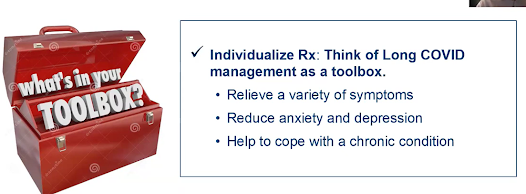
Be holistic, flexible, tailor to patient's individual needs.
Multidisciplinary approach is key, including PT/OT/SLT, nutrition, health education, mental health services
Advocate for patients. Validation and support are important. Bring patients in office for in person exam (no later than 3 months after symptoms started, rule out other chronic conditions)
There are no biomarkers to identify Long COVID, it's a clinical diagnosis
Look for red flag conditions (e.g. heart disease, metabolic/endocrine, etc) and optimize underlying chronic conditions.
Patience is key.


Pandemic Pearls and Pivots: A Public Health Perspective (Drs. Mase & Shende, 5/25/2022)

Many thanks to our SoCo Public Health Officer, Dr. Sundari Mase and our SoCo Vaccine Chief, Dr. Urmila Shende for an excellent Grand Rounds this week on Pandemic Pearls and Pivots: A Public Health Perspective.

A recording of their presentation is available HERE

As we all know, COVID-19 has taken a great toll on our world, our nation, and our county. As of this week,  there have been 6.28 million deaths worldwide (probably an underestimate), >1 million US deaths (more have died from COVID-19 than HIV/AIDS, the 1918 influenza pandemic), 90,000 deaths in California, and 491 deaths in Sonoma County. This has led to the largest drop in life expectancy since WWII. And we know that there have been disproportionate numbers of cases, hospitalizations, and death among people of color.

Key SoCo public health interventions during the COVID-19 Pandemic
  • Building Public Health testing capacity
    • SoCo regional lab has done 206,000 (of 1.6 million PCRs total) to date in SoCo
  • State of California and FQHC partnerships
  • Focus on equity
    • bilingual messaging
    • pop up testing sites (using local data to determine neighborhoods for sites)
    • bilingual/bicultural testing/contact tracing
  • With increase in Ag testing (no longer have a denominator), we are beginning to pivot toward wastewater surveillance
Public Health Mitigation Measures
  • Communication campaigns, outreach, press conferences
    • re. masking, hygiene, social distancing, gathering size limitations
    • reaching so many different sectors, subgroups was VERY challenging (e.g. reaching the elderly: age, transportation, low tech)
    • local radio, social media: FB, instagram, etc, flyers
    • work with community based organizations, promotoras essential
  • Shelter in place (averted huge surge/disaster early on)
  • Alternate care site/non-congregate site (for people with unstable housing, served thousands of people, SSU>>hotels)
  • State, local and Bay Area health orders to protect vulnerable populations 
  • Vaccines
Disproportionate impacts of COVID
  • Magnification of underlying/pre-existing disparities
  • Latinx  residents: largely essential workers, hardest hit
    • 27% of our population is Latinx, accounted 45% of all cases
    • at one point, case rate was 9X higher for Latinx
    • In 2020, life expectancy decreased by 2.1 years in Latinx population (compared to 0.7 years in White SoCo population)
  • Addressing these inequities, THE PUBLIC HEALTH CHALLENGE of this pandemic
  • Health Equity Working Group helped get services to vulnerable population
    • trusted messengers (community health workers, promotoras)
    • vaccines, masks/PPE, rental assistance
    • CURA: important partner to reach community, ensuring financial assistance provided to people who needed it ($8 million)
  • FQHC network for collaboration--> 13 different vaccine sites to prioritized populations
  • Special shoutout to Dr. Jenny Fish and Dr. Panna Lossy for uplifting the voices of vulnerable communities
COVID-19 Deaths
  • 75% of SoCo deaths were in people >65
  • residents of skilled nursing facilities were particularly vulnerable prior to the introduction of vaccines
Vaccine Rollout
  • SoCo PH chose to prioritize the most vulnerable residents for vaccine roll out
    • older adults (65+, 75+)
    • SNF and residential care facility patients (RCF)
    • Essential workers and marginalized communities (health workers, farm workers, food service workers, homeless)
  • We have very high degree of vaccination in our elders: 93% of those >65 are fully vaccinated
  • Vaccination of vulnerable elders reduced deaths at SNFs and RCFsVaccines work!  The reduce infection, hospitalization, and deaths.
  • from https://socoemergency.org/
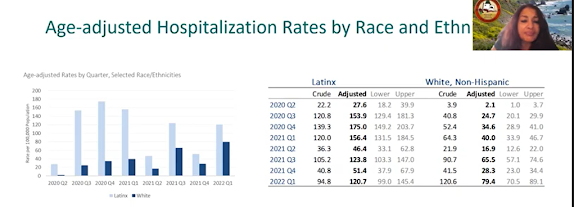
SoCo has the 9th highest vaccination rate (of 58 counties in CA), which is amazing! 78.7% of the total population fully vaccinated (this includes under 5 year olds); 82% of eligible population are fully vaccinated. We have a lower than expected unvaccinated rate (11% compared to 15% in all of CA). Boosters are catching up (66% of those eligible). Vaccination rates for our BIPOC population are high, particularly for our Black population (lots of education, outreach, webinars, presentations, etc). Latinx population while lagging is close. BUT, disparities still exist (see image below) and SoCo Public Health continues to work on this to encourage everyone to get boosted
  

In summary, Drs. Mase and Shende highlighted this list of pearls in public health management of this pandemic: data-driven decision making, constant pivoting, expanded communication, collaboration with all the health care entities in SoCo, importance of community outreach and trusted messengers, and ultimately active listening.

Is it Vaccine Hesitancy? (Thompson 9/22/2021)

Many thanks to Dr. Cherriese Thompson for a thought-provoking Grand Rounds this week titled "Is it Vaccine Hesitancy?" in which she explored the historical and present day impediments that make it challenging for BIPOC to accept and receive the COVID-19 vaccine and discussed ways to mitigate barriers to vaccine admin and acceptance. 

Dr. Thompson defined vaccine hesitancy as: "a delay in acceptance of refusal of vaccines despite availability of vaccine services". This definition, Dr. Thompson, told us, assumes a level of complacency, convenience and confidence. We may want to question these assumptions. 

A recording of her presentation is available HERE.

Here are my notes:

We all know that COVID-19 disproportionately affected BIPOC in the US with increased rates of hospitalizations and death over population levels (see image below)


Racial breakdown of vaccine trials: while these vaccine trials have been praised for inclusion and diversity, there is still much work to be done to be sure they are reflective of the population


Rates of vaccination by race/ethnicity (updated 9/21/2021):


Concerns about COVID-19 vaccination in communities of color include medical and structural racism, as well as historical and present day trauma

For Black/African American people
  • Centuries-long history of experience of discrimination in health care, being ignored or dismissed: "if you haven't cared about me in the past, why should I believe you care about me now?
    • slave ships in Middle passage: sick slaves thrown overboard or forced treatment
    • medical experimentation on black women's bodies
    • withholding medical treatment for slaves
    • 1973: yellow fever outbreak, one physician believed black people were immune and didn't give treatment
    • 1932-1972 Tuskegee study, knowingly withheld treatment to 400 black men for syphilis to watch the progression (100+ died) 
  • Concerns about vaccine incentives: lack of trust in governmental organizations 
  • "Medical racism: The New Apartheid" antivax organization, film specifically targets black communities, weaponized history of experience of black people, "should you really get this vaccine?", false claims regarding potential vaccine harm
  • Social media: misinformation on Twitter and FB, e.g. Nicki Minaj (famous rapper) on Twitter:

For Hispanic/Latinx people
  • concerns about female fertility
  • concerns that the vaccine contains stem cells, ethical to take vaccine if prolife?
  • worries that the vaccine itself may give you COVID
  • Spanish language information (on Whatsapp and Telegram channels) discuss ineffectiveness of masks, vaccine ineffective
  • Vaccine being used to track down immigrants and deport them
For Native American/Indigenous
  • historical trauma leading to skepticism
    • 1970: Family Planning Act: sterilization of more than 25% Native American women without consent
    • 1989 Havasupai Tribe asked for assistance from John Martin, anthropologist to understand diabetes in their community; blood samples provided were used without their consent to study schizophrenia, alcoholism, inbreeding and origins and migrations of their people
  • concern people might be injected with COVID from the vaccines
  • huge concern about speed of manufacture
  • historical distrust: "Am I willing to gamble that they care this time?"
  • lack of involvement of their own populations in clinical trials
And, unfortunately, this is not just about historical trauma, but ongoing/current lived experiences for BIPOC
Reframe. This is NOT hesitancy. There are real impediments, many impediments. 
  • Among the impediments: skepticism, lack of accurate information, actual vaccination access, including online only signups, issues with appointment scheduling transportation
  • Having the time to be vaccinated: working multiple jobs
  • Valid concerns about being unable to get vaccinated due to vaccine side effects and not be able to take time off work, or because you are caring for others
  • Pharmacy Deserts (residents living >1/2 mile from a pharmacy), many exist in communities of color. A lot of these communities lack reliable transportation to get/to from pharmacies to get vaccines. CVS, Rite Aid, Walgreens, local pharmacies may not have capacity to carry and administer these vaccines 
Okay, what can we do?

1) Get more BIPOC included in clinical trials
  • recruitment of diverse populations, particularly Native American communities-- working with sovereign government and respecting data sovereignty
  • FDA: Enhancing the Diversity of Clinical Trials, ideas include reducing visit frequency, provide flexibility, using electronic communication if possible
  • PhRMA's Equity Initiative
    • building trust and acknowledging mistrust
    • reducing barriers to clinical trials access
    • utilizing real world data
    • boost info of diversity and inclusion in clinical trial participation

2) Increase access to trusted information
  • There is so much misinformation/disinformation out there, more accessible
  • meet people where they are: go into the community, being present to answer questions
  • being a resource to isolated populations
  • Empower individuals to question info they see on social media, question the source, question the validity
  • Provide trusted information: Voto Latino partnered with another organization to provider accurate info to Latinx (they also partnered with Uber/Lyft to transport Latinx to vaccination)
  • CDC: information on vaccine equity, increasing uptake in racial/ethnic communities, communication toolkits, printed resources and posters in multiple languages

3) Improve access to vaccination sites
  •     mobile vaccination units
  •     reach places where access to healthcare is already a problem (rural and urban)
  •     targeting opening vaccination sites within vulnerable communities (i.e. Roseland Library)
  •     pop up vaccination sites
  •     home vaccination (to the most vulnerable)
  •     clinics and pharmacies providing access

4) Foster trust and utilize empathy
  • creating a space for patients in the room
  • take the power away, ask the patient "Can I talk to you about the COVID vaccine? What are your concerns? What have you heard about it? How has it affected you?"
  • Create open dialogue to explore skepticism
  • foster continued discussion
  • provide accurate information
  • show empathy: patients often will trust their doctor over time, if they felt heard/held

5) Shift the blame
  • there will be skepticism; don't blame the individual patient for their skepticism
  • relieve the blame to foster an environment of trust and open dialogue

6) Increase BIPOC pipelines in healthcare
  • more funding and access for BIPOC in healthcare
  • "Because I am black, and I have been vaccinated. . .and I hear your concerns. . .Here is what I experienced." That means so much to a lot of my black patients
7) Dismantle structures of racism inherent in medicine

Dismantling the Healthcare Hero (Carmen 8/25/2021)

Many thanks to Dr. Desiree Carmen for an evocative Grand Rounds presentation this week entitled Dismantling the Healthcare Hero. A recording of her presentation-- definitely worth your time and attention-- is available HERE

Dr. Carmen took the hour to explore the notion of heroism as it applies to medicine. She asked us to question why we liked being called heroes at the start of the pandemic and why that may not feel so good right now-- a year and a half later. And she challenged us to propose alternative narratives to support the systemic change that so many of us wish to see.

Dr. Carmen showed us now-familiar images of healthcare workers as masked altruistic protagonists. As the world shut down in March 2020, she began, we felt the love from companies-- free vacations, discounted goods. . . stories of NYC meeting at 7am to clap for healthcare workers. It felt pretty good to be healthcare hero. 

Our egos, after all, were not averse to the notion that we could be heroes. We signed up for this! For physicians, we took the Hippocratic oath; for nurses, the Nightingale pledge. We adhere solidly to notions of altruism, beneficence, justice, non-abandonment and solidarity. And we want to serve.

But, she explained, I wanted to know why society wanted us to be heroes.

Dr. Carmen showed us 3 hero archetypes that Americans particularly admire:

  • The Everyman Hero: this is the person with no special skills, one for whom life has thrown an adventure at them, asked to do heroic deeds 
  • The Classical Hero: someone with special abilities and/or skills that puts them above others in the society and grants them their positionality as hero due to those skills
  • The Epic Hero: the person with a noble birth story, larger than life
Which do you identify with? Why?

Dr. Carmen segued from these hero archetypes into the work of James Opie Ursom, a mid-century philosopher who wrote about the supererogatory: that is, morally excellent actions that go beyond the duty of the agent-- more than is asked for. All heroic actions are supererogatory, but not all supererogatory actions are heroic. Heroism involves known involvement with risk. i.e. we must CHOOSE the risk. Well, did we?

Risk has not been in short supply during this pandemic. 

But PPE has. 

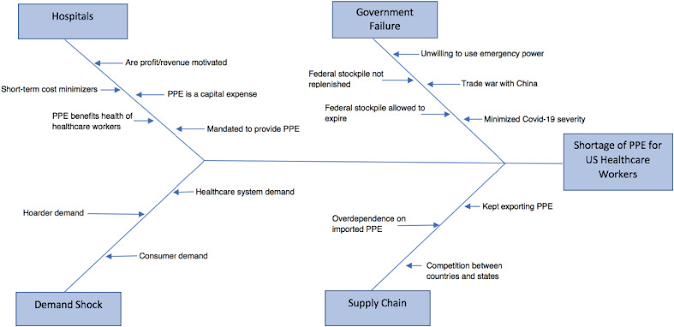
PPE Shortages: We all are well aware of the experience of working without a feeling that we had adequate PPE (e.g. reusing N95s, gowns, etc). This is not unique to this pandemic; it has, unsurprisingly, been  experienced in epidemics prior to this (including ebola, SARS, H1N1)

And this predictable lack of PPE is due to a well known multitude of forces that are not aligned to ensure health care workers are guaranteed protection. 

Recreated Figure 1 from Cohen J, Rodgers YVM. Contributing factors to personal protective equipment shortages during the COVID-19 pandemic. Prev Med. 2020;141:106263. doi:10.1016/j.ypmed.2020.106263


Of note, 
  • Hospitals: work off a budget (profit) model; administrators make short term decisions, rather than long-term vision and goals. PPE is not charged/billed to patients or insurance companies. It is simply a cost to hospitals. Therefore they have no motivation to have updated stockpile.
  • Demand shock: common during pandemics, leading to hoarding affected PPE, increased cost
  • Government: Trump admin in trade war with China, slow to enact defense production act, federal stockpile inadequate (3 million masks, if 30% of population sick we would have needed 3.5 billion masks). Noted, expired federal stockpile, not restocked by prior administrations
  • Supply Chain: US is an exporter of health goods, importer of goods from China. Cost 6x Nn5, gowns doubled cost

Duty to care
Healthcare workers have a great social contract with the public: we have a duty to care. 

But it's not that simple. The Joint Centre for Bioethics Pandemic Work group states, "The Healthcare worker enters into a broad social contract that not only creates their duty to care, but places obligations on society to keep them as safe as possible" 

In this instance society did not keep us safe. And as this social contract disintegratedour duty to care was undermined.

Race in medicine, racism in medicine. 
Of note, Dr. Carmen points out, there were so many people not cared for during the pandemic. 
We all remember the widespread demonstrations around the world after the murders of George Floyd and Breonna Taylor-- due to ongoing police violence toward people of color. 

There is the reality that medical education and training and medical practice are ripe with racism. Examples Dr. Carmen provided:
  • Medical schools continue teach racial inferiority theories-- leading to inequitable management of HF, kidney disease, VBAC. For more information, see this NEJM paper. 
  • There is the widely-known Tuskegee Syphilis study and its repercussions, where respected clinicians and scientists intentionally harmed black bodies. 
  • Pediatric ED study from 2019, in which providers less likely to order tests/admissions for Latinx and Black children
  • And widely held beliefs amongst medical students and resident trainees measured in 2016 that black people  literally have thicker skin than white people and therefore feel less pain. 
Race and COVID
Physicians of color are more likely to care for patients of color. They are also more likely to experience discrimination during patient care, have limited financial safety nets for themselves. And, of course, be more impacted by COVID-- both personally and professionally-- during this pandemic. 

There is the plain fact that COVID disproportionately affected Latinx and Black people all over the US. This applied to our local cases as well.  Physicians of color-- our own trainees here at SRFMR struggled in the winter with their own sense of transference and countertransference as patients of color died before their eyes (see quote below).


Global Inequity
And inequities abound, including in distribution of these highly effective vaccines against COVID-19. Much of the world is anxiously still awaiting access to a vaccine that many Americans are outright rejecting.
What about reciprocity?
In return for accepting personal risk in fulfilling our duty to treat, healthcare workers expected reciprocal social obligations. We wanted people to be careful: to social distance, to wear masks, to limit travel and parties. These obligations would demonstrate support and acknowledge our work in difficult conditions. Unfortunately, however, many in our society-- many of our own beloved patients, in some cases our beloved family members-- have not done a great job of reciprocity. 

In fact, basic public health orders: social distancing, masks, and vaccine recommendation have been flaunted. And, yet again, as people have chosen to not be compliant with public health orders, we healthcare workers watch these numbers rise again. And we continue to go to work and care for our patients. 

This lack of reciprocity leads us to compassion fatigue. Many of us care for patients all the time who make poor decisions-- watching those intentionally make the decision to NOT get vaccinated adds insult to injury. At this point in the pandemic, it makes us tired. Tired of caring for those who are choosing not to care for themselves.

And, then there is the notion of  moral injury, defined as psychological harm caused by transgressing one's deeply held values (altruism, do no harm). We are literally living an allostatic load (getting hit over and over), moments of harm that cause neurologic changes to our brain and, for some, will cause PTSD. Physicians already have higher rates of suicide than general population. We already stink at searching out help. Covid adds to these risks-- making us more socially isolated, reducing our access to support (families and friends) in a profession that does little to seek mental health services

Those of us in Sonoma County who lived through the Tubbs Fire of 2017 and the fires that have since ensued, recognize deeply this graphic on the phases of collective trauma: a sudden impact--> heroic phase--> disillusionment (where we see limitations)--> restoring/rebuilding phase--> wiser living phase.

But, Dr. Carmen points us, COVID feels more like this. Like we might never get to the wiser living phase and are maybe stuck in the disillusionment phase forever. . .


So, says Dr. Carmen, the hero narrative isn't enough. It leaves us feeling let down because it
  • fails to address limitations of budget centered hospital model
  • is a poor reflection of government inaction
  • removes a sense of reciprocity and their responsibility during a global crisis
  • centers discussions of racial inequality on individual patients and not institutional change
  • did not protect our public health initiatives
  • only superficially addresses the mental health efforts of providers 
And so, Dr. Carmen proposes, we need to reject the narrative of the healthcare hero and consider one of  the rhetorical triangle-- a NEW narrative in which we use our physician experience, our facts and our credibility to share our stories about COVID-19 about healthcare about social inequities and push toward institutional and systems change. here's how:
  • Logos: dissect our fact to convince our audience
    • public health over profit: with regards to PPE, remove profit motive. Strengthen local and state government to have stockpiles, Change industry policy to less foreign alliance, innovative/reusable PPE. Increase physician training pipelines. Change the way we deliver healthcare (e.g. concierge for safety net, wraparound services), explore models of innovative healthcare
  • Ethos: build on ethics, sense of credibility
    • Address racism in medicine. Redesign curriculum to eliminate race-based science, support physicians of color, all healthcare workers of color. Support public health initiatives that use community-based participatory tools to target racial inequality (e.g. Promotora models)
  • Pathos: being vulnerable with our emotions
    • Work collectively to build resilience. Support unionized healthcare workers who are most vulnerable (RNs, EVS, resident physicians), build a stronger telemedicine curriculum, normalize time to access mental health resources (encourage healthcare workers to go to those mental health visits), pay appropriately for work/hazard we have experienced. CA AB650 Retention Bonus (hazard pay), and more.
Can we?
Can you?

Yes, Doctors Can Cry Too: Addressing Physician Grief and Moral Injury (Pedraza, 5/26/2021)

Muchas Gracias to Dr. Ruth Pedraza for an important presentation this week on Physician Grief and Moral Injury. Dr. Pedraza was the chief resident in charge of the inpatient adult medicine service at SSRRH during the peak of the COVID-19 pandemic in Sonoma County (mid December through mid January of this year). She lead her team with grace.  Please take the time to watch a recording of her wonderful and relevant presentation HERE.

For the readers, here are my notes, but first my personal take home: we health care providers, need to acknowledge that this job is HARD, that the pandemic made a hard job harder, and we all have tons of unprocessed grief that we need to address. It doesn't matter if we are just at the beginning of our career or winding down, or somewhere in between. The weight is real.

As Dr. Pedraza said at the start, "The culture of medicine is so so rushed, and sometimes it can deny us the right to stop, to process, and to grieve. I did not feel prepared to support my team for such a traumatic cycle. I did not know how to honor our patients, I did not know what was appropriate."


Each flame in this image represents a patient death on the Adult Medicine Service during a four week cycle 7, mid Dec 2020-mid Jan 2021 (75% from COVID)

Physician grief

What is grief? An emotional and physical response to a loss. That loss can be death, but other losses can also provoke grief, including a divorce, losing a friend, losing a job. This has been a year of losses. Emotional grief reactions may include anger, guilt, anxiety, sadness, despair. Physical grief reactions may include trouble sleeping, changes in appetite, physical problems, or even illness. Grief and mourning are different, though we often conflate the two; grief is internal, mourning is an external expression (e.g. crying, art, music, prayer, journaling, etc).

How do you grieve? 

Dr. Pedraza reminded us of the 5 stages of grief, outlined by. Dr Elizabeth Kubler Ross (Swiss psychiatrist), based on her work with terminally ill patients (see image below). Initially it was thought that everyone experiences these stages in a linear fashion, but now we know some people may skip some, never experience some, get stuck in certain stages, etc. The truth is that people's responses to grief are very different.


Many physicians witness death in our professional lives, but we have very little training, acknowledgement, and inadequate space in the medical culture to process our own grief appropriately. Physicians experience emotional exhaustion, isolation, shame and guilt. Unprocessed grief leads to trauma. In some ways, our profession punishes doctors for grieving. 

We know that physicians can engage in negative coping mechanisms, which can be dangerous for our patients AND our personal lives and families. These may include alcohol, drugs, even firearms

Do doctors grieve when their patients die? Dr. Pedraza cited a powerful study by Granek et al from Canada, interviewing 20 oncologists varying in age, sex, ethnicity and years of experience. She found that oncologists struggle to manage their feelings of grief with the detachment they felt necessary to do their job. More than half cited feelings of failure, self doubt, sadness and powerlessness. 

She also found that grief in the medical context is considered shameful and unprofessional. Even though doctors wrestle with experience of grief, they often hide their feelings because it is considered professional weakness. The single most consistent finding in these oncologists was the description of compartmentalization with regards to patient loss. 

Compartmentalization is a pretty natural impact of continual loss. Denial, disassociation to describe death of a patient-- leading to unacknowledged grief. Leading to distractedness, inattentiveness, irritability, emotional exhaustion and burnout. They also admitted that this would lead them to provide more aggressive chemo, referral for clinical trial or suggest surgery when actually palliative care would have been a better option for that patient. Also impacting ability to communicate with patients about end of life discussions. Half admitted distancing themselves from dying patients, less overall effort toward the dying patient.

Do you compartmentalize? How does that manifest in your care of patients? What about your care of loved ones?

What is the physician culture about crying and expressing grief? We all express sadness in different ways; there exist generational differences, gender differences, and specialty differences. What about crying in front of patients? Is it acceptable? Is it unprofessional? The prevailing belief in medicine is that physicians should be composed and calm. While it is expected that it may happen, it's expected to occur in a private place. 2009 study noted that 69% of students, 74% of residents self reported crying due to patient losses

viral photo (and words) Southern California ER MD after 19 year old patient died


The truth is that patients desire care from doctors who are connected and feel their emotions deeply.

Have you cried with a patient? How did that go? Have you tried not to cry with a patient? Why?

Moral Injury

Reframing clinical distress. There is an increasing awareness of working in medicine, critical care, and terminal illness

Burnout--a constellation of symptoms (malaise, fatigue, frustration, cynicism inefficacy) that arise from making excessive demands on energy, strength or resources in the workplace-- is an important notion in medicine, and more than half of physicians experience these symptoms. However, many clinicians have resisted this characterization because it doesn't quite encapsulate what many physicians feel. 

In 2018, Drs. Talbot and Dean wrote an article on the Moral injury; it was titled Physicians aren't "burning out". They are suffering from moral injury. You can find that paper here

The notion of moral injury is most often described in Vietnam Vets, returning from a war they didn't believe in. 

Moral injury occurs when we perpetrate, bear witness to, or fail to prevent an act that transgresses our deeply held moral beliefs. In healthcare, this equates to systems issues that prevent us from putting our patients first.This is an oat that is the core of our working lives. As clinicians we are increasingly forced to consider other demands: EHR, documentation, insurance company, hospital administration. Every time we make a decision that conflicts with our patient's best interest, we feel a sting of moral injustice. The cumulative effect is moral injury.

Whereas the treatment for burnout is affirming individual coping skills (e.g. yoga, mindfulness, wellness retreats, and meditation practice); the treatment for moral injury is aligning the system's goals with the physician's goals. It is absurd to believe that yoga will solve the problem of treating patients who cannot get the correct medical care, having 12 minutes to discuss huge life choices with patients. The moral injury of healthcare is being unable to provide high quality care and healing in the face of our system. So many parts of our medical system prevent us from spending time with patients, fear of litigation causes us to overtest and overtreat, patient satisfaction scores can silence physicians from providing necessary (but unwelcome) advice to patients.

Does the notion of moral injury resonate with you? How so?

The COVID Burden and Unanticipated Grief

The pandemic has brought grief to a different level for many of us. 

ICU Physician Perspective. Consider reading  this reflection by Dr. Thanh Naville (UCLA ER physician) titled "I am an ICU Doctor. I am haunted by what I've seen during the recent COVID-19 surge."  She speaks to the notion of how COVID-19 made it impossible to fulfill her own mission statement: help people. How her sense of defeat has been palpable. 

Let's not forget the disproportionate effect of COVID on poor communities and communities of color. This also was palpable this year at SSRRH.

And, lest we forget, the outpatient providers were also impacted tremendously. As quoted one outpatient family physician: "I may not have the acute wound of watching people die of COVID in the hospital, but I have a chronic wound. . the space of holding for death of family members."

What are your wounds from this pandemic? How can you help yourself heal these wounds?

And it's not just health care workers. Our entire communities are grieving loss of jobs, contact, community, travel, etc. We need to grieve as a community. It is okay to cry. Allow ourselves the space to rest and heal.

How can we address Physician Grief?

We may all grieve differently, but grieve we must. For our own good and the good of our patients. Different ideas: death talks, professional grief support, didactic preparation for med students and residents, death rounds (for trainees), personal awareness, writing of clinical obituaries. Many other ways. Each of us must determine most effective personal style for resolving patient loss.

If you need help, here are some resources for physicians, compiled by Dr. Pedraza.


2020 Year in Review (Jimenez, Green 2/24/2021)

Great thanks to Dr. Douglas Jimenez and Dr. Cherie Green for their Grand Rounds 2020 Year in Review. Much of the presentation focused on-- you guessed it-- COVID (that is basically what ALL our lives revolve around these days), with select bonus points on a few other hot topics. Dr. DJ covered the latest and greatest on COVID in OB and Dr. Green did a potpourri of COVID in kids. 

The COVID literature is evolving literally day by day, so please take this summary as a point in time update. Our understanding of the disease will continue to evolve as we get more data/studies/literature on these topics. For a video recording of this presentation, click here: VIDEO.

Here are my summary points from this presentation:

COVID OB Management in 2020:

  • Pregnant women appear to be at higher risk for severe COVID illness and death
    • 5-6% of pregnant women with COVID are hospitalized
    • 3x risk ICU, 2.9x risk intubation, 1.7x risk of death

  • Pregnant women with severe/critical COVID disease also appear to be at increased risk for preterm birth and pregnancy loss
    • 10-25% preterm delivery (induced + spontaneous)
    • 60% preterm delivery in critical illness
  • Per SMFM, a history of COVID disease is NOT itself an indication for antenatal testing
    • use routine indications for antenatal testing
    • however, a 32 week growth ultrasound may be considered
  • Is COVID an indication for delivery?
    • asymptomatic/mild infection: COVID is not an indication for delivery, though can consider delivery if >39 weeks
    • severe/critical illness: it is reasonable to consider delivery but mechanical ventilation alone is not an indication for delivery
      • if EGA< 32 weeks and considering delivery, also consider proning, ECMO, etc
  • Is COVID vaccination recommended in pregnancy?
    • Due to lack of data in vaccine trials, the WHO has been "lukewarm" about recommending COVID vaccine, recently adjusting their recommendation to recommend vaccinating women at high risk (e.g. healthcare workers) and those with comorbidities that put them aat increase risk for severe illness (e.g. diabetes, obesity).
    • However, it is important to note that the Maternal Immunizations Task Force (which includes many large and reputable organizations including: ACOG, AAFP, IDSA, AAFP) specifically recommend that COVID-19 vaccine be made available to all pregnant women
      • they say it is unethical to not offer vaccine knowing that pregnancy is a risk factor for more severe COVID illness
      • this should be a shared decision-making conversation with provider on risk vs, lack of safety data
  • What about Breastfeeding and COVID?
    • CDC recommends ALL women with active COVID continue to breastfeed-- no evidence of COVID in breast milk, benefits>>risks
    • should use face mask and hand hygiene with every feed
  • Labor support and COVID
    • Policies surrounding limitation of support people in labor disproportionately harm women of low SES and women of color, who are also disproportionately affected by COVID-19
      • less labor support--> more operative delivery, longer labors, etc
    • We should be mindful of these policies and do our best to weigh risks/benefits in our advocacy work
Bonus Pearl: Alcohol in pregnancy. Dr. DJ reviewed a paper from Australia  (Association of Perinatal Alcohol Exposure with Psychological, Behavioral, and Neurodevelopmental Outcomes in Children from the ABCD Study, American Journal of Psychiatry  2020), which found a dose-dependent correlation between ANY alcohol use in pregnancy and psychological/emotional problems and behavioral problems. 
  • 25% increased likelihood of an ADHD in children exposed to heavier levels of alcohol (approximately 36 drinks) in the first 6-7 weeks of pregnancy.
  • Heavier alcohol use during early pregnancy also associated with rule breaking behavior and aggression, 30% higher risk of the child being diagnosed with oppositional defiant disorder

COVID + kids 2020:

Dr. Green reviewed several studies on the impact of COVID on our children. Here are her pearls:
  • 2020 study out of China, 123,000 children looking at myopic changes with a 5 month lock down
    • in children ages 6-8 years, significant number of children had a clinically significant myopic shift (-0.3 diopters) with higher prevalence of myopia in children compared to previous years
    • this was not true in older children (ages 9-12)
    • conclusion: home confinement seemed to have a significant effect on vision and myopia rates in children ages 6-8, perhaps because this is a more critical developmental period for this problem
    • Clinical pearl: every 20 minutes, have children look up and way from the screen for at least 20 seconds, 20 feet away
  • Mental health in children during the Pandemic
    • Clark County, Nevada: 19 deaths by suicide
    • Riley Hospital, Philadelphia: 250% increase in hospitalization for childhood suicide attempts
    • CHO: double rate of childhood suicide attempts compared to 1 year ago
    • CDC reports increase in mental health ED visits, sustained since March 2020 (see image)
      • 25% increase in children 5-11, 31% in children 12-17, compared to the same period one year prior
    • Clinical pearl: Ask ALL children how there mental health is doing during the pandemic. Particularly for teens, consider the use of APPS: including CALM, headspace, COVID coach
  • The Safety of School Reopening 
    • SARS-CoV-2 infection and transmission in educational settings: a prospective, cross-sectional analysis of infection clusters and outbreaks in England Ismail et al, Lancet December

      • prospective study, strict infection control precautions, small groups, low community prevalence
      • 1,000,000 students, 500K staff--> 343 total cases of COVID (130 in children, 213 in staff)
        • 55 total outbreaks (outbreak defined as more than 1 person, most involved just 2), probable staff to staff in 26 of those outbreaks
        • no children hospitalized, 3 adults hospitalized, 1 adult died (contracted from home)
        • Summary: SARS-CoV-2 infections and outbreaks were uncommon in educational settings during the summer half-term in England. The strong association with regional COVID-19 incidence emphasises the importance of controlling community transmission to protect educational settings. Interventions should focus on reducing transmission in and among staff”
    • Incidence and Secondary Transmission of SARS-CoV-2 Infections in Schools

      Zimmerman et al, Pediatrics 2021
      • 11 districts in North Carolina, 100K students x 9 weeks
      • 32 additional cases of COVID via school transmission
      • No instances of child to adult transmission
      • Summary:
        • In the first 9 weeks of in-person instruction in NC schools, secondary transmission of SARS-CoV-2 was extremely low overall, and only involved staff to staff transmission. “Our data support the concept that schools can stay open safely in communities with widespread community transmission.”

With mitigation in place (distancing, handwashing, ventilation) schools do not appear to be contributing widely to the spread of COVID in the community. They CAN be reopened safely and prevent some of the unfortunate other unsafe conditions for children, particularly our most vulnerable children.


Mental Health Disparities in Latinx (Flores, 7/29/2020)

A big thanks to CEDAWG and Dr. Yvette Flores, clinical psychologist and professor of Chicano/a studies at UC Davis, who gave a powerful and heartfelt Grand Rounds presentation this week on how to consider and approach the mental health of marginalized groups, particularly Latinx , in this time of COVID. Again, it is hard for me to give her words justice in summary, but the following is my attempt.

Dr. Flores started with "stating the obvious": 1) That racism, sexism, homophobia and other forms of discrimination affect the mental health of those who experience them, 2) That stress affects well-being and 3) That yes, in fact, we are all in this together.

If I don't wear a mask, I affect you.
If my grandchildren don't wear a mask, it affects me.
We are all a little anxious, depressed, and experiencing past traumas as we live this pandemic.
We all need to be in this together, including in mental health.

Dr. Flores spent some time reviewing the important effects of stress on mental health.

Social stress: stress is produced not only by personal events but also by the social conditions that surround us-- and for all our patients, their intersectional identities (gender, class, nativity, immigration status, length of residence in the US). 

Minority stress: high levels of stress faced by members of stigmatized minority groups (race, gender, sexuality, linguistic ability, physical/mental abilities), including:
  • lacking proper social supports
  • socioeconomic status (SES)
  • interpersonal discrimination
Marginalized status affects physical and mental health.

Good stress vs. bad stress: a little stress has been found to improve performance, but a lot of stress can become problematic. In what ways is minority stress a risk factor? And how may minority stress also be a protective factor?

I love considering the possibility that the very minority stress our patients are experiencing may make them simultaneously vulnerable and resilient. 

What has COVID-19 Revealed?
1) Health disparities have been made more visible
2) Xenophobia and hate crimes against Asian Americans
3) Disregard for these disparities from politicians at the highest levels
4) People of color disproportionately work in front line jobs
5) Disproportionate unemployment rates for Latinx and African Americans
6) Ageism (are old people important enough?)

How can we translate scientific data in a way that people can understand?
How do we frame the message?

"There is no one to blame here, but we all have responsibility."

Role of Gender: For the working class, life and work are often synonymous. How does unemployment affect men? How does unemployment impact women who are single parents and have to work? People of  color will often go to work despite the risk because of their gender or cultural mandate that it is their obligation to provide. But this is also a class issue (always need to think intersectionally).

What are the protective factors in communities of color that might mitigate the crisis?
  1. Resilience: Immigrants are tremendously resilient. It takes incredible courage to make the journey that many immigrants (particularly undocumented immigrants) make.
  2. Stoicism:  coping, "it's alright, I am fine", challenging for healthcare professionals to care for someone who says they are fine (when they clearly aren't). Dr. Flores' rec: Bring in partner if there is one/
  3. Religious faith: "Si Dios quiere" God willing. Can be frustrating because seems fatalistic but is also protective. How can we leverage this?
  4. Networks of support:  Overcrowded and/or Multi-generational households, which make them more vulnerable are also the very support structures that allow people to survive. How do we mobilize the 
  5. Positive ethnic, racial and gender identity: reaffirm their identification (whatever they may be). Call them what they want us to call them. 

Remember that mediational factors may ADD to minority stress
  • Internalized racism
  • Controlling images (often propagated in the media-- more serious and perverse than stereotypes), many are gender specific (angry black woman, loud Latino, Latino male as criminal or rapist). How does this affect internalized perception of people of color?  How are people in power speaking about these controlling images?
  • We must uphold the identities of the people with whom we work: we need to counter these controlling images (mental health workers)

And finally, on coping: how to potentiate coping, so we can be better healthcare providers and caretakers. 

Dr. Flores called this digging into our ancestral well: we have all learned lessons from our family that can help us to serve our patients. In times of crises, we can draw from the stories/legacies that the elders and ancestors have shared with us (and with each of our patients), which can help transform our fears into opportunities

Where do you draw your strength to continue to care for your patients?

Self care is essential during COVID-19:
It is important for us to promote self-care and resilience as we do this work.
Gendered expectations (nurture ourselves in order to refill the well)
Remember to check out and disconnect in order to connect to ourselves 
Cultural traditions can offer balancing and healing: including prayers, smudging, meditation, mindfulness, exercise, baking, cooking

Preparing for Passover during a Plague:

Diagnosis and Management of Osteoporosis (Hamann 7/23/2026)

 A recording of this presentation is available HERE .  *** Thanks so much to Dr. Kendal Hamann, SMGR Endocrinologist, for an outstanding Gra...