Showing posts with label shared decision-making. Show all posts

Prenatal Genetic Screening (Mullin, 4/10/2024)

 A recording of this presentation is available HERE

***

Many thanks to Dr. Briga Mullin for an excellent presentation this week on Prenatal Genetic Testing. Dr. Mullin reminded us from the get go -- that all patients have the right to accept or decline testing after counseling. Then she proceeded to update us on current prenatal genetic screening recommendations available to prenatal care providers and to pregnant patients. 

This topic is ever-changing, as genetic screening tools become increasingly sophisticated. If you want to watch the entire presentation, please see the link above. Here are my notes.

It is important to make the distinction for patients and ourselves between SCREENING and DIAGNOSTIC tests. As we know, screening tests are those designed to "pick up" disease in patients who are otherwise well-appearing; in the case of prenatal genetic screening, they are designed to assess a pregnancy for the risk of certain congenital conditions. Diagnostic tests are designed to confirm a specific diagnosis. 

In the world of prenatal genetic testing, current screening tests available to pregnant patients include: carriers testing, cell free DNA (cfDNA), AFP, early 1st tri and 2nd trimester ultrasound. The two currently available prenatal diagnostic tests are chorionic villous sampling -- CVS-- (10-13 weeks) and amniocentesis (>15 weeks).

Carrier Screening

Carrier screening looks for autosomal recessive and x-linked conditions in maternal DNA.  There is a huge range of options for carrier testing -- patients can be tested for up to 400 conditions, depending on the assay. ACOG currently recommends universal carrier screening for three conditions: 1) spinal muscular atrophy (SMA), 2) cystic fibrosis (CF), and 3) hemoglobinopathies. ACOG additionally recommends carrier screening for specific populations: Fragile X if a family history of intellectual disabilities and Tay Sachs disease for people who identify as Ashkenazi Jews, French Canadians and people of Cajun descent.

Sutter/CPMC currently offers a 112 gene expanded carrier screening panel (called "Horizon" by Natera). In contrast, SRCH -- via Quest labs -- offers a 3-condition carrier panel, which includes CF, Fragile X and SMA. 

Of note, it is only necessary to screen maternal serum once in a lifetime, ideally before pregnancy. If a patient screens positive for any of these conditions, the partner should be offered carrier testing as a follow-up. If BOTH parents screen positive, diagnostic testing via CVS, amniocentesis or even IVF with embryo testing are options.

Cell Free DNA (cfDNA)

cfDNA tests look for placental DNA in maternal serum. Typically, cfDNA screens for three trisomies - Trisomy 18 (Edwards Syndrome), 21 (Down Syndrome) and 13 (Patau Syndrome).  cfDNA is 98% sensitive in detecting these three trisomies. The gender of the fetus can also be identified with cfDNA. Testing is ideally done after 9-10 weeks gestational age because enough placental DNA is present at this time in the maternal serum to reliably detect and test. Of note, placental mosaicism does exist and can lead to a false positive screening test with cfDNA.

The California Genetic Disease Screening Program (GDSP) currently offers statewide cfDNA through their prenatal screen program to all patients with Medi-Cal. Their test detects Trisomy 18, 21, and 13 and gives gender  as well. As of 4/1/2024, the GDSP program will also test for chromosomal aneuploidies.   

Natera's Panorama screen, available to some privately insured patients, screens for for additional conditions. These tests cost between $170 and $300 out of pocket if not covered by insurance.

Early Anatomy Ultrasound (previously called nuchal translucency or NT ultrasound)

This ultrasound is generally performed at 10-13 weeks and is offered to detect severe structural anomalies (e.g. anencephaly). Given that it is only 70% sensitive for Down Syndrome, NT should no longer be used for screening over cfDNA. Arguments for doing an early anatomy ultrasound is to allow women to be able to terminate a pregnancy with severe structural anomalies as early as possible. 

Maternal Serum Alpha Feto Protein (MSAFP)

For many of us in practice, this OG of prenatal genetic screening tests. It is a maternal serum test done between 15-20 weeks EGA and still has utility in the detection of neural tube defects (e.g. spina bifida) and abdominal wall defects (e.g. omphalocele and gastroschisis). Recommendations are evolving but it does screen for defects that are not otherwise picked up on cfDNA and can be done prior to a second trimester ultrasound, and so some guidelines encourage using it in addition to cfDNA for this reason, particularly for higher risk patients (e.g. family history, maternal age, etc).

Second Trimester Ultrasound (Anatomy survey)

This is another screening tool that has a decently long history -- usually an ultrasound performed between 17-21 weeks EGA to look at the fetal anatomy. In actuality, there are two versions of this ultrasound: the original Level 1 ultrasound, performed by a radiology tech with static images interpreted by a radiologist and Level 2 ultrasound, performed by a maternal-fetal-medicine (MFM) physician. Level 1 ultrasounds have historically been considered adequate for "low risk" pregnancies, but local practice has evolved such that most pregnant women in Santa Rosa are offered a Level 2 ultrasound as the screening test of choice. This is, of note, not a current ACOG recommendation. Some argue that Level 2 ultrasounds have less false positive findings because of the skill of the technician performing the study. 

***

Regardless of which modality of prenatal genetic screening you are discussing with patients, the concept of shared decision-making is absolutely central to the practice of prenatal care. Shared decision making with pregnant patients should be 1) clear 2) objective and 3) non-directive. This can be challenging at times and take time to elicit a patient's values and goals as part of this discussion. 

There are patients for whom knowledge will absolutely change the way they experience their pregnancy. Some who might terminate or choose to deliver in a different setting based on the findings. There are others for whom the anxiety of choosing a screening modality that could return a false positive result is not worth it. See the slide image below to consider ways in which shared decision making can be considered for different types of patients. 


Remember that a positive screening test is not the same as a positive diagnostic test. The follow-up for most positive prenatal screens is either a CVS or amniocentesis. 

Positive Predictive Value

Also remember that positive predictive value of any test depends on the prevalence of that disease in the population, and in pregnancy, this is extremely dependent on maternal age. So, a positive cfDNA in a 40 year pregnant patient has very different implications than a positive cfDNA in a 20 year old patient. Dr. Mullin recommends the use of the prenatal screen calculator to help you help your patients understand their positive screening test.
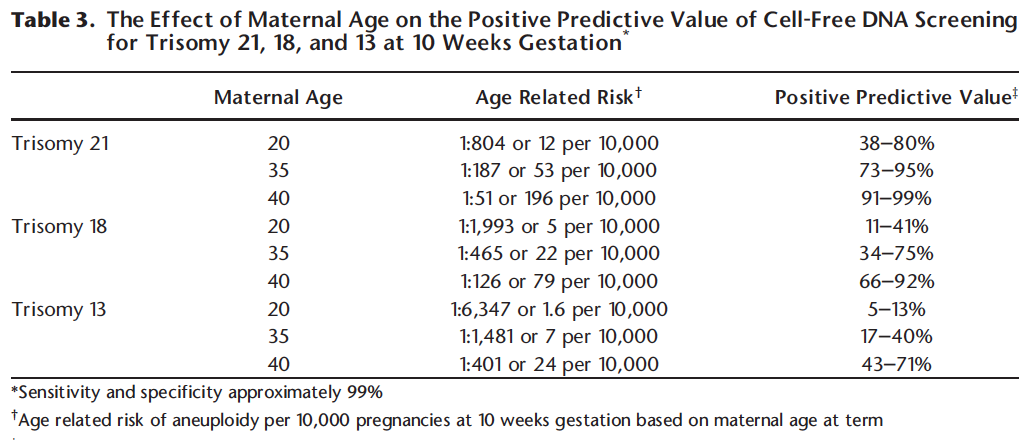


That calculator is available here: NIPT Predictive Value Calculator      (https://ppv.geneticsupportfoundation.org/). See the images below to understand how a very highly sensitive screening test still gives very different PPV based on baseline risk. For example, note that a positive screen for Trisomy 21 in a 20 year old woman is still only going to turn out to be a true Trisomy 21 50% of the time. In contrast, a positive screen in a 39 year old woman will be true 91% of the time.
There is local help!
If you have a patient with a positive prenatal genetic screening test, our local MFM consultants are available to help you. Here's how to contact them: CPMC Sonoma Ave number: 707-569-7366 to reach on call Genetic Counselor and or MFM 

Understanding Methamphetamine Use Disorder (Freschl 8/9/23)

Many, many thanks to Dr. Guille Freschl, who gave Grand Rounds this week titled Understanding Methamphetamine Use Disorder: A Deep Dive.  This was our first R3 Grand Rounds Presentation of the academic year, and Dr. Freschl knocked it out of the park. The link to a video recording of her presentation is available here. Below find my notes.   

A recording of this presentation can be viewed HERE.

***

Dr. Freschl was motivated to present on this topic by a longstanding interest in substance use disorders coupled with curiosity and concern about the oft uttered "Oh, it's probably because of the meth" that she heard from the mouths of her teachers. She was left wondering where the science meets the bias.

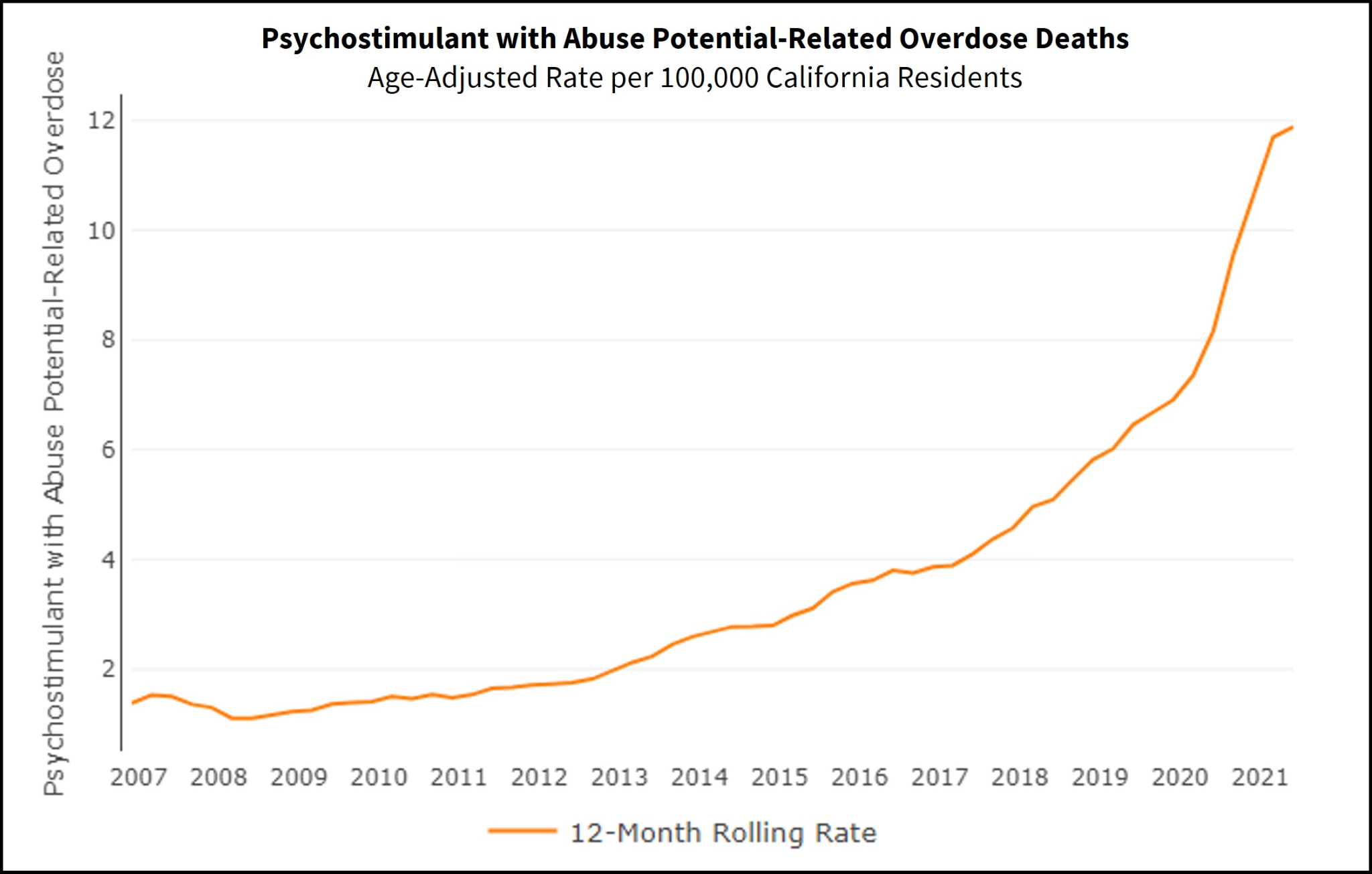
Did you know that amphetamine-type stimulants are the most widely used drugs in the world after cannabis?  Did you know that  between 2011 and 2016, overdoses from methamphetamine TRIPLED and that 1/4 of all overdoses in 2021 in the US were due to meth?

Methamphetamine use disorder can be seen all over the nation, but prevalence varies per region. Rates are highest in the West Coast and South. For example, prevalence of reported meth use in the past year in CA is reported at 1.04% of all adults, almost twice as much as most states in  the Northeast (see map below).
 
In California, non-fatal ED visits and overdose deaths have both risen over the last decade. In fact 32% of those in court-mandated substance use disorder treatment programs were there due to methamphetamine use. While the bulk of media and political attention is currently focused on opiates, one wonders, why aren't we talking more publically about methamphetamine?


What is methamphetamine?
Methamphetamine is an amphetamine derivative, notable for its additional methyl group; it enhances dopamine and norepinephrine in the synaptic cleft. Meth has a very long half life (12 hours cmpared to 90 minutes for cocaine). 

Why is meth bad? So many reasons. . . keep reading to understand a few of the major adverse effects. 

Cardiovascular toxicity

CV toxicity is the #1 cause of death in patients using methamphetamines, and risk of sudden cardiac death is increased by 27% with active meth use. CV toxicity includes a range of end-organ issues, including:
1) Hemorrhagic and ischemic strokes, due to vasoconstrictive effects and cerebral hypoperfusion
2) Very high rates of coronary artery disease (CAD) -- half of patients with regular meth use have CAD, despite lower rates of obesity and diabetes in these patients. This is thought to be directly related to the pro-inflammatory effects of meth. 
3) Angina, which does not respond well to nitroglycerin, is common, due to vasospasm
4) Pulmonary hypertension, especially with IV meth use, due to damage to pulmonary endothelial cells
5) Severe systolic dysfunction with LV dysfunction is another sequalae of meth use
6) Ventricular arrhythmias are notable

Neurotoxicity
Neurotoxicity is the #2 cause of morbidity and mortality in patients using meth. It rapidly crosses the blood brain barrier. It does a doozy on the brain, including disrupting pleasure centers, creating episodic memory issues, damaging executive function (2/3 of people with regular meth use show cognitive impairment, worse with older age and longer duration and frequency of use), disrupting motor function (including fine motor and choreas), and can lead to psychosis similar to schizophrenia (delusions of persecution, auditory hallucinations, and formication in almost half of people using). 

There is also a direct relationship between meth use and Parkinson's disease.

Dental effects
Serious dental effects include caries, tooth loss, tooth fractures -- all due to decreased saliva production (xerostomia), teeth grinding and jaw clenching that occurs with meth use.

Medication Assisted Therapy (MAT)?
Unfortunately, there are no FDA approved treatments for methamphetamine use disorder. A large meta-analysis of 43 RCTs with over 4000 patients found no clear evidence-based effective treatment. 

These included trials with mirtazapine (conflicting results), methylphenidate, bupropion, naltrexone and modafinil (limited evidence of benefit, no support for routine use). In addition, anticonvulsants, antidepressants, antipsychotics all low strength and insufficient evidence. Bummer. 

There was a small study that suggests that methylphenidate may be associated with decreased use over time: no difference at 30 days, but decreased in self reported use days at 10 weeks. 

Also, a small study of combination therapy --  IM naltrexone (380mg q3 weeks) PLUS PO bupropion (450mg daily) small treatment effect of 11% reduction in meth use. 

Hopefully, people will continue to investigate different agents for MAT and treatment of meth use disorder!

In conclusion, Dr. Freschl recommended that we use shared decision-making with patients when talking about trialing non-FDA approved treatment options. She reminded us to screen for CV and neurological sequelae of methamphetamine use. 

 A great big thank you for years of ethics support in the hospital AND for a great Grand Rounds on How to Mitigate Moral Distress among Providers by our very own Sutter Senior Bioethicist, Dr.Shilpa Shashidhara. 

A recording of her presentation is available HERE. Please watch it if you can!

And here are my notes:

What is moral distress? 

Moral Distress was first defined by Dr. Andrew Jameton (1984) as a natural response to violation of one's core values. In healthcare, it is a feeling of uncomfortableness that arise when providers are unable to do the thing they believe is the "right" thing to do. It is an inability to act within our individual and/or professional values. 

These are ethically challenging situations, where providers feel powerless. 

Moral Distress can lead to disengagement and burnout, can have negative impact on patient care. Prevalent in high stress environments (e.g. ICU: critically ill patients, family members in distress, etc). Has been magnified by the pandemic: challenging clinical situations, managing really ill patients, not having PPE, concerns about allocating resources in stressed healthcare system

  • "I don't know if this is the right thing to do"
  • "I feel stuck"
  • "Both options are equally bad"
  • "I feel like I am causing harm to someone"

If not addressed, moral distress takes toll on personal and professional well-being

3 areas that cause moral distress

  • clinical situations (e.g. non-beneficial treatments that family is requesting, sense false hope with discordant prognosis by different providers, unrepresented patients that cannot make decisions for self and we don't know their values and acceptable quality of life)
  • internal constraints (e.g. fear of speaking up, self doubt, anxiety, wish to not cause conflict, lack of confidence, feeling "stuck" in the middle)
  • external constraints (e.g. power imbalance: RN vs. MD, resident vs. attending; fear of legal action,  poor communication)


Moral distress is a root cause of burnout. 

  • 42% physicians experience burnout (long hours, overwhelming workload, lack of support)
  • 54% of nurses experience moderate burnout with emotional exhaustion,28% high burnout
  • significant role of burnout in organizational turnover
How do we mitigate moral distress to best support providers to reduce burnout?
Identify the problem--> Express a concern

Use debriefing sessions, specifically interdisciplinary debriefing sessions
  • mitigate negative effects
  • normalize and validate experience of negative emotions
  • supports providers
  • uncovers gaps
  • promotes team cohesion
  • opportunity to explore systemic problems
Debriefing sessions: goal is NOT just venting session, but also action planning. Both together are more effective
Part 1: Preparatory: identify needs of healthcare provider, gather relevant information, set goals, plan logistics
Part 2: Implemental: 8 step method

4 As to Rise Above Moral Distress (Developed by the American Academy of Critical Care Nurses)
Can be done as individual or ina group

What else can we do?
Targeted education training for providers, promoting provider ethical decision-making. What is appropriate in a complex situation?
Communication skills and practice
Don't forget to take concerns to hospital/clinic administration to be sure they understand what is happening and look at systems-based solutions


Serious Illness Communication (Sanders, 6/2/2021)

Many thanks to Dr. Justin Sanders for a really important Grand Rounds presentation this week on Serious Illness Communication. Dr. Sanders is a family physician, a palliative care specialist and a researcher in Dr. Atul Gawande's think tank, Ariadne Labs. He has a particular interest in disparities and inequities in end of life care.

A recording of his Grand Rounds can be found HERE.

What is serious illness communication, you ask? 

Serious Illness Communication is a framework for how health care providers can engage with patients with advanced illness to elicit their goals and values, share their prognosis, and explore key topics for their end of life care-- all essential components of advanced care planning as well as the physician-patient relationship. 

Dr. Sanders (and the serious illness care model) ask us to proactively identify patients with severe illness so that we can prioritize and systematize important conversations. The goal?  Improved communication with our patients and "goal-concordant care"-- that is, to be sure that the care a patient receives at the end of their life is concordant with the life they want to live.

Take a moment to consider your patient panel, or if that feels overwhelming, take a look at your patient schedule for today and ask yourself this question: which of my patients would I not be surprised if they died in the next year? 

This is called "the surprise question" and has been validated in palliative care studies. Maybe you are thinking about a patient with chronic heart disease, lung disease, cancer, or  maybe one who has been hospitalized several times in the last year; perhaps it's someone with decreasing mobility, or even one that you hear a lot from their caretaker. It may be helpful to extend that time to 1-2 years so you capture as many patients is possible.

Now, the next question: is there a way your system can help plan the time, space, and opportunity to have these important conversations? Maybe an EHR prompt? An extended visit? A dedicated visit?

Once the space is set, the serious illness communication can begin-- guided by the serious illness communication guide (SICG) cut and paste below. 

The work is big: Have you asked them who their surrogate decision-maker should be in their stead? Do they have an Advanced Care Plan? Do they have a POLST? But perhaps more importantly:



 Here are the key SICG questions:

  • What are YOUR goals?
  • What are YOUR fears and worries if your health deteriorates or your illness progresses?
  • What are your strengths?
  • What abilities are important for you in your life?
  • What might you be willing to go through for the sake of more time?
These are such a powerful set of questions-- of course, the very questions I would want someone to ask me if my time was short-- and turns out the very questions patients want to be asked. 

He also spent some time talking about framing prognosis and encouraged us to use a framework for how we present this information. An original viewpoint co-authored in JAMA by Dr. Sanders and colleagues is linked here for your own reading.

The short take is this: prognosis communication is super challenging, many of us struggle with how to provide this type of information in a useful way that doesn't allow for hope. The article argues that prognosis may be communicated in three different approaches: time-based, function-based, and reasonable-uncertainty based. Exploring with a patient for his/her preferences to guide the discussion will help providers give the patient the most useful information.

Time: how much time do you think I Have
Function: what will my function look like
Reasonable uncertainty: remember our goal is not to be right; it's to help patients have the information they need to reach their goals.

And then, finally Dr. Sanders said, you (the provider) should take the information gleaned from this rich conversation with your patient, apply the prognosis information you have, and make a recommendation (patients want a recommendation from you!), using language like this: "I have heard you say_________________and based on what you said, I am going to recommend ________________________."

Voila. Hard stuff. Thanks for the work you do.


Myths and Truths in Hospital Ethics (Shashidhara, 7/1/2020)

Thanks so much to Dr. Shilpa Shashidhara for kicking off our new season of Grand Rounds for 2020-2021! I have heard Dr. Shashidhara speak on these topics many times, and there is still so much to learn. . .so much to consider. As I sit listening to Shilpa, I cannot help but flash back on all the challenging ethical questions we face in medicine-- unrepresented patients, surrogate decision-makers, autonomy, futility, beneficence, literally life and death. This. Is. Really. Hard. Stuff.

For your review (and enjoyment), here is a summary of Dr Shashidhara’s Top 10 Bioethical Myths and Truths:
1. Consent for an unrepresented patient: If a patient is unable to make decisions on their own AND they don’t have a surrogate decision-maker, the ethics team should be formally involved to help facilitate discovery of a decision-maker and if unable to do so, to implement Sutter’s Unrepresented Patient Policy. 
2. Capacity determination: Per California law, a capacity determination is the responsibility of the attending physician. Attendings can consult other services (e.g. psychiatry) for help, but the attending physician makes the ultimate determination. 
3. Designating a decision-maker: Even patients with questionable capacity who cannot comprehend complex medical concepts can demonstrate the ability to designate a surrogate. Consistency is the key!
4. Withholding vs. withdrawing care: Although it may feel different to stop treatments that have already started, it is ethically the same as not starting the treatments at all. Patient’s wishes should be respected. 5. Patients demanding treatment: If treatments are deemed medically non-beneficial, the medical team has no obligation to provide them, even when requested. 
6. Hierarchy of decision-makers: There is NO hierarchy of decision-makers in California. As long as the person is aware of the patient’s wishes and is willing to act according to their best interests, anyone can be an appropriate surrogate. This is different than a legally appointed decision-maker (DPOA) named on an Advanced Directive. 
7. On leaving AMA: Insurance companies may decline to pay for a hospitalization for a patient who leaves AMA. Physicians shouldn’t use this possibility to influence a patient’s actions. 
8. Involuntary Holds: There is technically no such thing as a medical hold in California, but a 1799 Hold gives us 24 hours to re-evaluate the clinical situation and determine next steps for a patient who may not want to stay in the hospital but is not safe to go home. 5150 and 5250 holds are only valid in LPS facilities (which we are not). 
9. Code status during surgery: By default, all patients are “full code” during the perioperative period, but exceptions can be made on a case-by-case basis. Ethics is happy to get involved if a patient really wants to remain DNR during a surgery. 
10. Sensitive Services: When a patient is unable to participate in care, family members do not have the right to know the results of sensitive testing (HIV and drug testing) with exception of the surrogate decision-maker, who may need to be made aware of such results to help facilitate decisions.

Evidence-Based Management of the Second Stage of Labor (Guerrero 4/1/2020)

Muchas Gracias to Dr. Kiana Guerrero, who delivered our second shelter-in-place zoom Grand Rounds at SSRRH. She did so with great grace and great thought-- as she does most things. The topic was Evidence-Based Management of the Second Stage of Labor.

Some definitions:
    Pushing During Labor: More Isn't Better | Parents
  • Second stage of labor: full cervical dilation (10cm) to delivery
  • Spontaneous vaginal delivery: delivery that occurs without the use of forceps, vacuum, or cesarean delivery
  • Delayed pushing: delay after full cervical dilation to allow for spontaneous decent. Patient starts pushing on average 60 mins – 180 mins after complete dilation
  • Immediate pushing: patient would start pushing on average 15 mins after complete dilation
  • Spontaneous pushing/physiological pushing: pushing after full dilation without instructions; may push with an open glottis and vocalization or use an intermittent
  • Directed pushing/Valsalva pushing: pushing after full dilation against a closed glottis


Question 1: Should we encourage patients with an epidural to "labor down"?
Answer: Probably not.

In a 2018 Randomized Control Trial of  2414 nulliparous women, >37 weeks, all with an epidural, randomized to immediate pushing vs. delayed pushing
  • There was NO difference in normal spontaneous spontaneous delivery and NO difference in rates of c-section in the two groups
  • However, there were differences in postpartum hemorrhage (PPH), chorio, newborn outcomes, and other potentially important secondary outcomes
    • The immediate pushing group  had shorter total duration of second stage, lower risk of  PPH and lower risk of chorioamnionitis, as well as  a lower likelihood of neonatal acidemia and suspected neonatal sepsis
    • The delayed pushing group had shorter mean duration of active pushing (by about 9 minutes) and a lower likelihood of third degree laceration
(Reference: Cahill, Alison G., et al. Effect of Immediate vs Delayed Pushing on Rates of Spontaneous Vaginal Delivery Among Nulliparous Women Receiving Neuraxial Analgesia.)

After reviewing this study, Dr. Guerrero was left with more questions: 
  • Would even more time for laboring down (i.e. >60 minutes) be better?
  • Would the outcomes be different for multiparous women?
Dr. Guerrero used a 2012 Systematic Review  Tuuli, et al, to answer these questions. This review featured 12 RCTs (~1500 patients in each group: immediate vs. delayed), with primary outcome spontaneous vaginal delivery. There was variable quality and mixed results, but here are Dr. Guerrero's take home points:

Answer 1a: Longer isn't better. Largest study showed that maternal fever was nearly two-fold higher among women who delayed pushing. Risk of maternal fever increased in a dose–response fashion
  • RR 1.14, 95% CI 0.54–2.38 for delayed less than 1 hour
  • RR 1.73, 95% CI 1.10 –2.72, for delay of 1–2 hours
  • RR 2.33, 95% CI 1.54 –3.51 for delay greater than 2 hours
Answer 1b: There isn't enough data specifically for multiparous women; the studies that have been done with multips are of poor quality.


(Reference: Tuuli, et al, Immediate Compared with Delayed Pushing in the Second Stage of Labor: A Systematic Review and Meta-Analysis, Obstetrics and Gynecology, September 2012, Voume 120, Issue 3, 660-668)

Question 2: Should we control how a woman pushes during the second stage?
Answer: Probably not.

Dr. Guerrero cited a Cochrane Review (see reference) of 8 trials, including 884 women. The largest study in the meta-analysis found the following:

  • NO clear difference in spontaneous vaginal delivery comparing spontaneous pushing and directed pushing groups
  • Spontaneous pushing may decrease the duration of pushing by about 10 minutes
  • No difference in rates of perineal tears (3rd and 4th degree), risk of episiotomy, admission to NICU or 5 minute APGAR <7

(Reference: Lemos, Andrea, et al. Pushing/Bearing down Methods for the Second Stage of Labour. Cochrane Database of Systematic Reviews, 2017)

Question 3: Is there a "best" position for women to be in during second stage?
Answer: We don't know.

Dr. Guerrero gave us a quick peek at two recent studies asking whether a woman's position affects the birth outcomes: a 2017 Cochrane meta-analysis and a 2017 BUMPES RCT (comparing upright vs lying down)
  • A 2017 Cochrane Review found that for nulliparous women without an epidural, the upright position showed a reduction in rates of episiotomy, assisted vaginal delivery and a very small reduction of duration of second stage 
    • BUT upright position was associated with an increase risk of 2nd degree tears and blood loss >500mL
  • The 2017 BUMPES RCT concluded that for nulliparous women with low-does epidural, the lying down position results in more spontaneous vaginal delivery
  • Hmmm. . . .
(References:  Gupta et al, Position in the second Stage of Labor for Women without Epidural Anesthesia, Cochrane Systematic Review, 25 May 2017 and  
Brocklehurst et al, Upright versus lying down position in second stage of labour in nulliparous women with low dose epidural: BUMPES randomized controlled trial, BMJ 2017). 

Grand Rounds often one leaves with more questions than answers. See you next time!


Diagnosis and Management of Osteoporosis (Hamann 7/23/2026)

 A recording of this presentation is available HERE .  *** Thanks so much to Dr. Kendal Hamann, SMGR Endocrinologist, for an outstanding Gra...