Showing posts with label community. Show all posts

Northern California Center for Well Being: HeartWorks Cardiac Rehabilitation Program (Roosen, 3/25/26)

A recording of this presentation is available HERE.

Thanks so much to Erin Roosen, program manager for our local Center for Well-Being's Cardiac Rehabilitation Program, HeartWorks, located at 500 Doyle Park Drive, Santa Rosa 95405. She gave an inspiring presentation on the value of Cardiac Rehabilitation. She certainly inspired me to give a more robust bedside recommendation for my cardiac patients. 

Cardiac Rehabilitation is an evidence-based intervention that literally saves lives. . .

HeartWorks offers: 

  • A 3 month focused exercise program for patients with heart failure, any cardiac procedure (valve replacement or repair, stent, CABG), and recent STEMI/NSTEMI
  • Cardiac rehab
    • decreases need for hospitalization by 25%
    • helps people increase activity level
    • improve quality of life (65% improvement on PHQ9)
    • improves diet
    • decreases mortality (47% decrease in mortality if you complete the program, compared to attending only 1 session)
  • Cardiac rehab includes pre and post exercise vitals and 3 lead EKG monitoring
  • Phase II is 36 sessions (2-3 days/ per week, depending on availability): goal is to improve aerobic capacity (by increasing the 6 minute walk test and/or improve MET levels). This is generally covered by Medicare insurance
  • Phase III is an additional 3 month non-monitored program paid for by participants (24 sessions, 2/week)
  • Once participants complete cardiac rehab, they are offered a 3 month voucher for our local YMCA
What was most moving about Erin's presentation was the improvement of patients' quality of life and mental health, as well as a recognition that decreasing loneliness (we are in an epidemic) improves mortality as well. 

We are working with HeartWorks to ensure more of our patients complete cardiac rehab with a special personal focus on our Spanish speaking patients (Erin said they have both a Spanish speaking MA and physiotherapist).

Of note, referrals must be done through a patient's cardiologist!


Tradition to Transition: Dietary Shifts in Immigrant Patients (Rayas, 8/7/2024)

Muchas gracias to Dr. Lourdes "Lulu" Rayas for a wonderful presentation this week on food customs and Habits in our Mexican immigrant patient population. She titled the presentation, From Traditional to Transitional: Dietary Shifts with Immigration.  

A recording of her wonderful (and tasty) presentation is available HERE

***

My notes:

16% of our population in Sonoma County is foreign born.

Chronic disease is more prevalent  in the Latinx population. In fact, compared to non-Hispanic whites,

  • Hispanic adults 70% more likely be diagnosed with DM2
  • Hispanics are 1.3x more likely to die from diabetes 
  • Hispanics have 2x risk of being hospitalized with ESRD
Of note, the immigrant paradox is a statistical pattern that shows first-generation immigrants may have better health outcomes than native-born people of the same age, race, and gender, even if they have lower socioeconomic status. This pattern has been observed for cardiovascular disease, mental health, and mortality. However, recent research suggests that immigrants may experience a decline in cardiovascular health over time. 

Some of this paradox may be explained by dietary acculturation-- the notion that, over time, immigrants gradually abandon eating habits from their native countries, ultimately increasing fats, sugary beverages, and decreasing fruits and vegetables. 


Children of immigrants have also been noted to have less physical activity (than native born children) and less healthy diets. 

In a study of Latinx immigrants, people were asked to share the pros and cons of their eating habits and food access in their country of origin as compared to the USA. You can see these lists in the images below. I was most struck by the notion that many immigrants literally do not have the time to cook like they did when they lived in their country of origin -- this is likely due to long work hours and less flexible home schedules. Also note, that people report eating more legumes (and less meat) in their country of origin. 


So what can we do as primary care providers? 
Dr. Lulu encouraged us to adhere to three principles: 1) have a culturally competent approach to nutrition 2) help patients find a community that shares valued and traditions, and 3) connect patients to food access resources. 

Culturally competent nutrition
Traditional Mexican cooking, Dr. Rayas, pointed out, contains tons of fresh fruits and vegetables and very little processed foods. We can encourage our patients to carry forward traditional family  menus and discourage processed foods. Commonly used foods used in Mexican cooking have well-documented health benefits:
  • tomato (jitomate) has evidence that it lowers lipids, decreases blood pressure and general inflammation
  • peppers (chiles) help with glucose metabolism 
  • avocado (aguacate) decreases CVD, cancer, and works on the GLP system
  • corn (elote) has been shown to be anti-inflammatory, anti-angiogenesis properties, and anti-carciongenic. (And, btw, corn is the foundation of the Mexican diet). 
  • cactus (nopales) also has anti-inflammatory properties, hypoglycemic (one study showed 85gm of nopales daily demonstrated a 20% reduction in glucose levels), and anti-microbial. 
  • hibiscus (jamaica) can decrease blood pressure (in one study from 134 to 112 SBP it drunk BID x 1 month)

Help patients find community
Many of our immigrants patients are isolated and need help accessing community services and opportunities. Don't forget about some of our amazing community resources, including:
  • Bayer Farms: a community garden space, sponsored by Land Paths, they offer garden space, herbal medicine classes, and a great park/playground
  • The Botanical Bus: featuring bilingual health promotoras bringing a mobile herb clinic all around Sonoma County
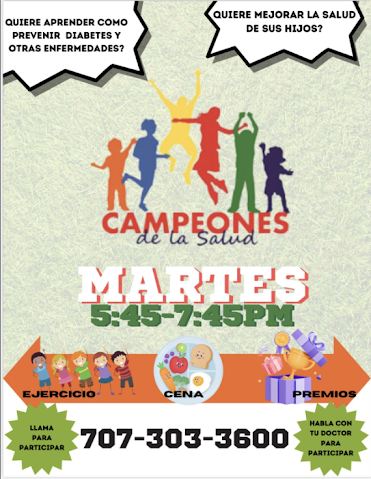
  • Campeones de Salud, a 6 week program run by SRCH for families to improve healthy eating and exercise (SRCH referral SA260 Dutton)
  • Center for Well-Being, which offers nutrition classes in English and Spanish (SRCH providers can refer via EpiC)
Connecting patients with food access resources, including:
  • WIC, a food supplementation program for pregnant women, post partum and breastfeeding, and children up to age 5.  
  • Ceres Community Project, free medically tailored meals for patients with chronic illness, including heart failure, cancer, and diabetes. 
  • Redwood Empire Food Bank, which comes to Vista Clinic every Monday from 11am-12pm. 
A poster with text and images of children jumping

Description automatically generated

Public Health in Congregate Living (Phares, 7/17/2024)

We welcomed our new-ish Sonoma County Public Health Officer (PHO), Dr. Tanya Phares, this week to give the first Grand Rounds of the 2024-2025 Academic Year, titled Public Health Perspectives , Communicable Disease and Congregate Settings. An internist by training, Dr. Phares joined our public health department in November of 2023, replacing our former PHO, Dr. Mase. Before coming to SoCo, Dr. Phares was working in Reno, NV, but she is a California girl at heart (and by training) and is excited to be back in California.

In her presentation, Dr. Phares gave us an introduction to Public Health, including reportable vs. notifiable illnesses, congregate settings, and how clinicians can and should consider public health in their daily clinical interactions. 

A recording of the Grand Rounds is available HERE

My notes: 

Title 17 is the California Code of Regulations that defines reportable disease, and describes our duty to report to the PHO. The list of what diseases needs to be reported in CA is long and is available HERE for your reading enjoyment. This same list specifies how urgent you must report each disease. Basically everyone working in clinical settings, including laboratory, clinicians, hospitals, etc. are required to report these disease. Dr. Phares encouraged us to "double report" reportable illnesses; that is, don't be worried about reporting results that the laboratory may also be reporting. The double coverage ensures a better public health.

For SoCo public health reporting, go here: https://sonomacounty.ca.gov/health-and-human-services/health-services/divisions/public-health/disease-control/disease-reporting

Any questions about reporting can also be directed to phnurse@sonoma-county.org, an email that is monitored daily.


The Public Health Officer in California is required by law to be a physician--  for every county in CA-- appointed by the County board of supervisors. Her job is to investigate disease outbreaks, issue isolation and quarantine orders, and can declare local emergencies. 

Communication tools at the disposal of the Public Health Department include: 

  • The California Health Alert Network -- CAHAN--the official statewide public health alerting and notification system
  • SoCo Health Alerts, including recent alerts about rising rates of pertussis in the county as well as recent norovirus outbreaks
  • Health Advisories, including issues like air quality and heat advisories.
  • PHO also meets with organizations like the community health centers, hospital leadership, etc.
***
A congregate setting is any environment in which people gather and share space for a period of time. This includes, but is not limited to, jails, shelters, schools, workplaces, prisons, nursing homes, etc. 

Patterns of congregation determine if and how a disease can spread. It can influence and create risk factors for communicable and other disease in communities. It can also influence the ability and scope of a disease to spread via various modes of transmission (e.g. airborne, foodborne, waterborne, vectorborne, and person to person).


An important part of public health's role is, once disease is identified in an individual, to prevent introduction of disease to a congregate setting. This, then, limits outbreak and disease spread. This is particularly important in vulnerable populations.

***
Three real life examples:

Tuberculosis: 46 year old man with ESRD (on HD), distant history of incarceration (20+ years) and distant hx immigration from Mexico (20+ years) with pulmonary TB
  • TB rates have been increasing in CA (24% increase since 2020!)
  • TB incidence in CA is 5.4/100K persons
  • This may be due to temporary reduction in transmission and detection during the pandemic, followed by increased travel and migration, as well as return to seeking healthcare
  • LTBI may not have been sufficiently identified and treated during the pandemic
  • 85% of TB cases are due to progression of LTBI
    • risk of progression is increased by comorbidities: DM, ESRD, HIV, HC
  • Rate of TB is 13X higher among foreign-born compared to US born
      • among those born outside the us, about half occurred 20 years after arrival to US
Pertussis: 15 year old high schooler with non-productive cough x 7 days, post-tussive emesis, friend with similar symptoms. Attends large public high school. Has 5 month old baby brother at home. Lives in house with pregnant aunt.

  • Pertussis ebbs and flows q3-5 years, unknown reasons
  • Case reports of pertussis have increased in 2024 across the US and CDC expects the trend to increased in both vaccinated and unvaccinated
  • Vaccine loses effectiveness over time
  • Per WHO, Pertussis is a leading cause of vaccine-preventable deaths worldwide
  • CA 2024 YTD 734 cases (compared to 172 in 2023), SoCo 2024 23 cases YTD
  • Most pertussis deaths occur in infants, either unvaccinated or incompletely vaccinated
  • Post-exposure prophylaxis (PEP): antibiotics should be given to ALL asymptomatic household contacts within 21 days of onset of cough in index patients
    • special attention with PEP to infants < 1 year of age and their contacts
Shigella: 52 year old woman with schizophrenia, unhoused, living in homeless encampment presents with 3 days nausea/vomiting/diarrhea

  • Increased risk of shigella infection in children <5, travelers (especially to places with poor sanitation and unsafe water), MSM, people experiencing homelessness
    • spreads rapidly where there is crowding, limited access to clean water and toilets
  • Shigella can shed in stool for up to 2 weeks after symptoms resolve
  • Shigella is a reportable disease
  • CDC has found increasing drug resistance

Random Public Health pearls from Dr. Phares:
  • Rabies: low threshold for PEP if contact with animal saliva or for whom contact with the animal's saliva cannot be ruled out
  • Suspect measles? Isolate patient ASAP, measles can live for up to 2 hours in airspace after an infected person leaves the area
  • Botulism? report immediately CDPH is available 24/7 to release botulinum antitoxin (which is stored at CDC quarantine stations, NOT available at ER)
Useful links:


An Integrative Approach to Substance Use Disorder (Adachi Serrano, 12/13/2023)

 A recording of this presentation is available HERE

***

Many many thanks to Dr. Katya Adachi Serrano, SRFMR Alumna class of 2014 and Integrative Medicine Fellow (2015) on An Integrative Approach to Substance Use Disorders. Dr. Adachi Serrano blends her family medicine background with training in herbal and integrative medicine, plus a board certification in addiction medicine. In so doing, she spoke thoughtfully on topics from buprenorphine  induction to  herbal supplements for SUD to spiritual support. This is definitely a presentation worth watching! The link is above.

For those of you who prefer the written word, my notes below:

Dr. Adachi Serrano took us through the case of a young man suffering from alcohol use disorder (AUD) and repeated episodes of alcohol withdrawal syndrome (AWS). She started by grounding us in the concept of the tribal MAT Echo Clinic Wellness Wheel (see below): consideration of the mind, body, spirit, and community, as a means to think about the care of patients with SUD. 

Tribal MAT Echo Clinic "Wellness Wheel"

The Body

Medication assisted treatment -- or medication for addiction treatment (MAT)-- is the gold standard for treatment of patients with many SUD. SUD is just like any other chronic disease, Dr. Adachi Serrano argues: SUD has a gradual onset, affects all races/ethnicities/SES, it relapses and remits, is partially relieved by lifestyle changes. And so, we should approach SUD like any other chronic disease.


AWS; Typical treatment for acute alcohol withdrawal involve either long-acting benzodiazepines (chlordiazepoxide or diazepam), or gaba-ergic meds (e.g. gabapentin) tapered by either dosing interval or amount daily. See these patients daily, says Dr. Adachi Serrano.

AUD: The best medication option we have for chronic management of AUD is naltrexone, which decreases cravings and suppresses the pleasure people get from drinking ETOH. This can be dosed 25-50mg qhs, Precaution with: acute hepatitis, liver enzymes 3-5x normal, decompensated cirrhosis, active opioid use. Common adverse events include headache, nausea, drowsiness. Some people also experience anhedonia. 

Another option is long-acting naltrexone (aka vivitrol), which is an IM injection 380mg given q4 weeks (after a 4 day PO trial of naltrexone oral). An alternative maintenance medication is acamprosate, which is dosed 666mg TID (2 tabs of 333 TID). Side effects include diarrhea and adherence. A third option is Gabapentin 100-300mg daily to TID.

OUD: Standard treatment or opiate withdrawal syndrome (OWS) is supportive measures (e.g. clonidine, hydroxyzine, trazodone, ondansetron). Maintenance for OUD is either suboxone or methadone, usually dosed 2-4mg q2-4 hours, max 8mg on D#1. Sublocade, a long-acting injectable buprenorphine, may be available to better-insured patients, dosed at 300mg SQ x 1-2 doses, then 100mg q28 days. Finally, naltrexone is a third maintenance option, but you must be opioid free for minimum of 5 days (ideally 7-10 days). This is idea for patients who do not use opioids. Clonidine is often used as an adjunct during the withdrawal phase 0.1-0.3mg q1 hour. 

Dr. Adachi went on to talk about the value of herbal supplements for SUD, as an adjunct to the standard allopathic medications. Three main categories of herbs: adaptogens, nervine, and nutritive. 

1) Adaptogens help the body to adapt to stress, "normalizing influence on physiology". They tend to be derived from the roots of plants that grow in hardy environments and rugged terrain, and their effect is thought to be due to the hormones the plants themselves have generated in these rugged environments.

  • Ashwagandha, dosed 400-500mg BID helps to normalize GABA activity in the body. This can be helpful in all forms of SUD. Precautions: nightshade allergy, hyperthyroid
  • Rhodiola, derived from arctic regions, is very stimulating. Dosed 100-200mg. Caution: can sometimes be too stimulating, especially in stimulant use, w/d and recovery. Thought to "get the fire burning again"
  • Eleutero aka Siberian Ginseng, increased dopamine, thereby increasing energy levels
  • Licorice also can be helpful, sweet and easy to take
2) Nervines: have a direct effect on the nervous system. The following nervines are considered "calming nervines" which can be helpful in recovery:
  • Skull cap, a GABA agonist, 850-1200mg daily in tincture (very concentrated)
  • Valerian, another GABA agonist
  • Lavender, 1-2 tsp in 8 oz of water
3) The last category are the Nutritives, which are nutrient rich and thought to support the body. One of Dr. Adachi's favorite is milky oats extract, which is nourishing to the nervous system and also increases dopamine. 

The Mind

Mental health treatment should be considered an essential part of MAT. All patients with SUD should be screened for underlying mood disorders (including anxiety, complex PTSD), learning disabilities, and ADHD. These underlying disorders should be treated with both medications and therapy.

Trauma: 90% of patients with OUD report a history of trauma, 80% have child sexual abuse, emotional abuse, or violent trauma. We should see SUD as a marker of trauma and work to normalize  in a therapeutic way. Here Dr. Adachi Serrano used the image of a record playing in our ear-- "our early experiences teach us messages, like a record playing in our mind" that we may not even know is playing. 


This is where mindfulness practice comes in, also CBT. Introduce the concept of brief CBT for a non-therapist (for those of working in primary care practices where mental health services can be hard to come by). Dr. Adachi Serrano took us through brief CBT (see image) and reminded us that the goal is to rewrite the core message, overwrite the music playing in our head: "I am valuable. I am loved. I matter. I am safe"


She encouraged us to teach residents to cultivate their own dopamine -- "give yourself a high five and do a little dance". But in order to prevent burnout in primary care, really important to use motivational interviewing techniques and meet patients where they are at-- know the stages of change and tailor your intervention to the patient's stage, not your desired outcome.

The Spirit

This leads us to spiritual and somatic treatments. Often in patients with SUD there is a temporal disconnect between what the body is experiencing and the present, i.e. the spirit is not living within themselves. This is categorized in different cultures with different words, including susto, soul wound, etc.

EMDR and somatic experiencing may be helpful treatment modalities.

In addition, there are many other spiritual treatments: sweat lodges, talking circles, spiritual counseling, limpiezas.

Meaning is important, and looking for ways to experience normal emotions  -- a safe space to feel both sadness and JOY. To look for one's core values, to recognize safety.

The Community

Healing community is necessary to support recovery. Patients need to ask if their community is supportive to recovery? Is their current community a barrier to recovery? Dr. Adachi Serrano described a person in recovery as being in a "bubble". When you are early in recovery, you are cleaning up your space, trying to keep your bubble strong. If your bubble doesn't have a thick shell, you don't want to be in an environment that is going to stress or test that bubble. You also need the community to provide support around that bubble, to protect the individual while they are vulnerable. This involves tending to the community, offering community -- in whatever healthy forms are available.

Group settings for SUD include: NA, AA, SMART Recovery groups, Talking circles, spiritual communities, etc. Creating connection to community, culture, family. Find space for new identity to grow. We may need to help patients guide them through a change of identity, friends/support circles to see the opportunities that are there.

Thriving or Surviving: The Connection Between Chronic Stress, Chronic Disease, and Social Determinants of Health (Deol - 9/6/23)

 A recording of this presentation can be viewed HERE

***

Thank you to Dr. Navi Deol, PGY3, who gave an excellent presentation this week titled Thriving or Surviving: the intersection between chronic stress, chronic disease, and the social determinants of health. Each of the items in the subtitle is a HUGE topic, and Dr. Deol was able to weave them together beautifully and powerfully. I encourage you to watch yourself.

Image from https://www.glasbergen.com/stress-management-cartoons/cartoons/page/3

If you prefer the written word, see my notes:

  • stress: how certain stimuli (stressors) affect a person's mind, body and spirit
  • stress response: how our body reacts normal, a normal physiologic and psychologic response to stressors
  • some stressors evoke positive emotions and can be beneficial (eustress); some evoke negative emotions and cause problems (distress)
A certain amount of stress is important and necessary to generate optimum productivity and performance, but too much stress can lead to anxiety, overload, and burnout (see image below of the Yerke's-Dodson Law).
Yerke's-Dodson Law, image fromhttps://stock.adobe.com/

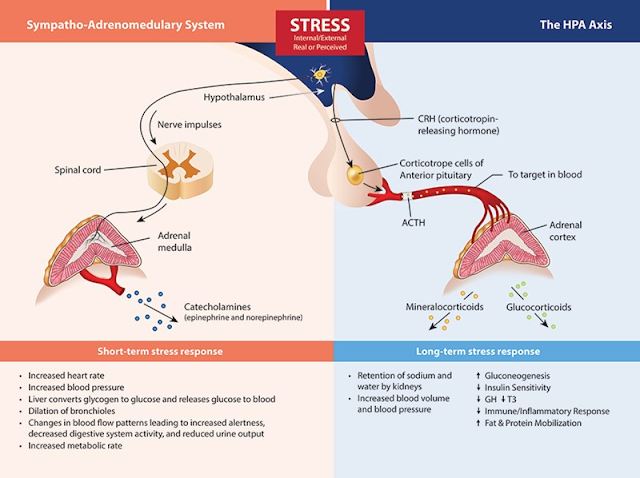
Stress causes physiologic changes in our bodies. We are all familiar with the autonomic nervous system, which responds to acute stress with the sympathetic "fight or flight" and the balancing parasympathetic "rest and digest", but what happens when the stress response is constantly being activated? 

Image from: https://www.backtothebooknutrition.com/adrenal-fatigue-hpa-axis-dysregulation/


The answer is that our long-term stress response leads to a cascade of responses that make us more vulnerable to chronic diseases.

A 2019 study published in the Journal of ACC looked at the link between SES factors such as low income and higher crime on MACEs (cardiac death, myocardial infarction, unstable angina, cerebrovascular accident, peripheral artery disease with revascularization, or heart failure). This study suggests that a biological pathway contributes to this link, involving, in series, higher amygdala activation, increased activation of the bone marrow (with release of inflammatory cells), which in turn leads to increased atherosclerotic inflammation and its atherothrombotic manifestations


Patients were categorized according to quartiles of their neighborhood median income and neighborhood crime rates.  Amygdalar activity (A) and arterial inflammation (B) were lower as neighborhood median income increased. Amygdalar activity was higher (C) and arterial inflammation trended toward an increase (D) as neighborhood crime rate increased. One image from that study is seen below. For more information, click the link above or see the study link below the image.

https://www.jacc.org/doi/10.1016/j.jacc.2019.04.042


Chronic diseases are non-communicable illnesses that persist for long periods of time and result from a combination of genetic, environmental, and psychological factors. These include cardiovascular disease (e.g. hypertension, coronary artery disease, and strokes), metabolic disorders (e.g. type 2 diabetes and obesity), mental health issues (e.g. depression, generalized anxiety disorder), and substance use disorders.

We know that inflammatory cascades play an important (and damaging role) in the onset and progression of chronic disease. While acute inflammation is technically "good" for us because it cleans up disease states in our body, chronic inflammation is bad bad bad.

Financial stress

Are you aware that money (finances and inflation) is a tremendous source of chronic stress for a shocking number of US adults. A 2022 survey found that 57% of US adults reported not having enough money to pay for essential items; 43% reported that they are not saving enough, and 56% had to make different choices due to their lack of money. 

Violent stress

Mass shootings, gun violence, and crime are also sources of tremendous chronic stress, particularly for people living in poverty and disproportionately for BIPOC people. 

Social Determinants

This leads us directly into a discussion of the importance of the Social determinants of health (SDOH), the conditions into which individuals are born, grow, live, work and age. There is an unsurprising link between chronic stress and the SDOH. These include your neighborhood and built environment, healthcare, education, economic stability, and social and community context. 

image from Healthy People 2030

If this is news to you, check out this video about how zip codes influences an individual's health: A Tale of Two Zip codes.

And for something even closer to home, check our our local Sonoma County data on how the SDOH vary based on zip code in the report titled A Portrait of Sonoma County 2021 Update, available here:  https://upstreaminvestments.org/impact-make-a-change/portrait-of-sonoma-county

https://upstreaminvestments.org/impact-make-a-change/portrait-of-sonoma-county


What can we do about all this stress?
Dr. Deol encouraged us to take a deep breath and realize that we cannot tackle these complex issues alone. First, we must acknowledge the deep-rooted history of structural and systemic racism, oppression, and discrimination that have led to health inequities that require interventions at multiple levels to reduce disparities. 

When caring for individuals, we should be careful about using the term "non-compliance" and better recognize the daily barriers our patients face due to their own SDOH. In our communities, we should be screening for SDOH and get to know and refer to appropriate community services. And at the state level, she encouraged us to support CAFP Bill AB85, which requires SDOH screening and provides resources and education for providers in referring to community health workers. 

More information for AB85 can be found HERE


Many thanks to Dr. Susan Milam Miller, who gave an excellent Grand Rounds this week titled "Caring for our Children, our Family, and Ourselves during COVID-19". Dr. Milam Miller covered a range of topics about our mental health in this pandemic-- from March 2020 as Alexander and the Terrible, Horrible, No Good Very Bad Day, to community and complex trauma, ambiguous loss, and unresolved grief, to trauma-informed care, and even a bit about the magic of a window into children's lives via video visits.


HERE is the recording of Dr. Milam Miller's presentation. 

Here are my notes:

Dr. Milam Miller reminded us that no child exists as as single entity-- children exist within their natural environment, including their families and their community. Listening between the lines to children and their attached adults is important. Knowing what their natural environment looks like is also key.

Clearly, here in Sonoma County, many children (and adults) have lived the trauma of several fire seasons and evacuations, compounded for the last year and a half by the COVID-19 Pandemic. These traumas have caused a tremendous amount of stress for many of us-- children are no exception. As such, we can expect to see signs of traumatic stress in our children.

Traumatic Stress manifests in a range of responses in adults and children:

  • Emotional: emotional dysregulation (sadness, fear), numbness, detachment
  • Physical: somatization (headaches, stomach aches insomnia), changes in brain function, hyperarousal
  • Cognitive: how we think about ourselves and others, triggers, re-experiencing, nightmares/daymares, dissociation, dampening of connection via thoughts and emotions
  • Behavioral: the way the mind directs the body: self harm, substances, avoidance (behaviors that are NOT adaptive over time, even if they help at first)
  • Interpersonal: pulling away from loved ones, difficulty trusting and forming trusting relationships
Identifying these "adaptive" behaviors that may not serve us over time is key to helping our patients and ourselves survive the trauma. 

Community Trauma  is a strong and powerful shaper of relationships and health
How does a community emerge from trauma? How do we recover and repair? How do healthcare providers care for their community in times of trauma but also for themselves? How do we model for our children and families what healthy coping with community trauma entails?

Complex Trauma describes both children's exposure to multiple traumatic events—often of an invasive, interpersonal nature—and the wide-ranging, long-term effects of this exposure. ... They usually occur early in life and can disrupt many aspects of the child's development and the formation of a sense of self. In COVID times, the list of multiple traumatic events may be long
  • what about medical trauma of repeated COVID testing?
  • what about shutting down schools?
  • what about losing church and extracurricular activities?
Ambiguous loss is a loss that occurs without closure or clear understanding. This kind of loss leaves a person searching for answers, and thus complicates and delays the process of grieving, and often results in unresolved grief. I personally found myself intrigued for the rest of the day by this notion of ambiguous loss-- classically a dear one who disappears on a hiking trip, never to be found again. What about these years of pandemic create ambiguous loss?
  • what does it mean to have never finished fourth grade because schools shut down in March 2020?
  • what does it mean not to have a graduation ceremony from high school?
  • what does it mean to go through puberty during pandemic times without community support?
Trauma Treatment classically has 3 stages:
  • Stage 1: Stabilization and establishment of safety (this may include psychotropic medications, DBT to help managing distress, relationship building)
  • Stage 2: Addressing and processing of trauma memories or related beliefs and/or grieving the losses inherent in trauma (this is somewhat controversial but has been standard of trauma treatment)
  • Stage 3: Restoring or creating connection between survivors and their communities by increased engagement in meaningful and positive activities and relationships
Unsurprisingly, in trauma healing, relationship building is key.
Trauma informed care
“Trauma-informed care is defined as practices that promote a culture of safety, empowerment, and healing. 
  • Safety
  • Trustworthiness and transparency
  • Peer support
  • Collaboration and mutuality
  • Empowerment, voice and choice
  • Culturally, historic and gender appropriate
Relationship and relational care is everything. Dr. Milam Miller says at some point, we expend WAY too much energy on individual treatments and interventions, really we need to consider community interventions, group treatments, and shared treatments. I love 

Closing questions to ponder from Dr. Milam Miller
1) Who is your buddy? (i.e. the person you call, lean on, ask for help)
2) What does healthy coping look like in these times?
3) Can you recognize the ambiguous loss of this COVID pandemic for the families you care for? Once recognized, how do we process our grief?

Dismantling the Healthcare Hero (Carmen 8/25/2021)

Many thanks to Dr. Desiree Carmen for an evocative Grand Rounds presentation this week entitled Dismantling the Healthcare Hero. A recording of her presentation-- definitely worth your time and attention-- is available HERE

Dr. Carmen took the hour to explore the notion of heroism as it applies to medicine. She asked us to question why we liked being called heroes at the start of the pandemic and why that may not feel so good right now-- a year and a half later. And she challenged us to propose alternative narratives to support the systemic change that so many of us wish to see.

Dr. Carmen showed us now-familiar images of healthcare workers as masked altruistic protagonists. As the world shut down in March 2020, she began, we felt the love from companies-- free vacations, discounted goods. . . stories of NYC meeting at 7am to clap for healthcare workers. It felt pretty good to be healthcare hero. 

Our egos, after all, were not averse to the notion that we could be heroes. We signed up for this! For physicians, we took the Hippocratic oath; for nurses, the Nightingale pledge. We adhere solidly to notions of altruism, beneficence, justice, non-abandonment and solidarity. And we want to serve.

But, she explained, I wanted to know why society wanted us to be heroes.

Dr. Carmen showed us 3 hero archetypes that Americans particularly admire:

  • The Everyman Hero: this is the person with no special skills, one for whom life has thrown an adventure at them, asked to do heroic deeds 
  • The Classical Hero: someone with special abilities and/or skills that puts them above others in the society and grants them their positionality as hero due to those skills
  • The Epic Hero: the person with a noble birth story, larger than life
Which do you identify with? Why?

Dr. Carmen segued from these hero archetypes into the work of James Opie Ursom, a mid-century philosopher who wrote about the supererogatory: that is, morally excellent actions that go beyond the duty of the agent-- more than is asked for. All heroic actions are supererogatory, but not all supererogatory actions are heroic. Heroism involves known involvement with risk. i.e. we must CHOOSE the risk. Well, did we?

Risk has not been in short supply during this pandemic. 

But PPE has. 

PPE Shortages: We all are well aware of the experience of working without a feeling that we had adequate PPE (e.g. reusing N95s, gowns, etc). This is not unique to this pandemic; it has, unsurprisingly, been  experienced in epidemics prior to this (including ebola, SARS, H1N1)

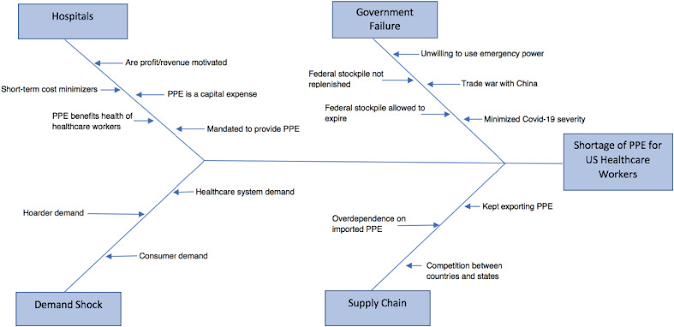
And this predictable lack of PPE is due to a well known multitude of forces that are not aligned to ensure health care workers are guaranteed protection. 

Recreated Figure 1 from Cohen J, Rodgers YVM. Contributing factors to personal protective equipment shortages during the COVID-19 pandemic. Prev Med. 2020;141:106263. doi:10.1016/j.ypmed.2020.106263


Of note, 
  • Hospitals: work off a budget (profit) model; administrators make short term decisions, rather than long-term vision and goals. PPE is not charged/billed to patients or insurance companies. It is simply a cost to hospitals. Therefore they have no motivation to have updated stockpile.
  • Demand shock: common during pandemics, leading to hoarding affected PPE, increased cost
  • Government: Trump admin in trade war with China, slow to enact defense production act, federal stockpile inadequate (3 million masks, if 30% of population sick we would have needed 3.5 billion masks). Noted, expired federal stockpile, not restocked by prior administrations
  • Supply Chain: US is an exporter of health goods, importer of goods from China. Cost 6x Nn5, gowns doubled cost

Duty to care
Healthcare workers have a great social contract with the public: we have a duty to care. 

But it's not that simple. The Joint Centre for Bioethics Pandemic Work group states, "The Healthcare worker enters into a broad social contract that not only creates their duty to care, but places obligations on society to keep them as safe as possible" 

In this instance society did not keep us safe. And as this social contract disintegratedour duty to care was undermined.

Race in medicine, racism in medicine. 
Of note, Dr. Carmen points out, there were so many people not cared for during the pandemic. 
We all remember the widespread demonstrations around the world after the murders of George Floyd and Breonna Taylor-- due to ongoing police violence toward people of color. 

There is the reality that medical education and training and medical practice are ripe with racism. Examples Dr. Carmen provided:
  • Medical schools continue teach racial inferiority theories-- leading to inequitable management of HF, kidney disease, VBAC. For more information, see this NEJM paper. 
  • There is the widely-known Tuskegee Syphilis study and its repercussions, where respected clinicians and scientists intentionally harmed black bodies. 
  • Pediatric ED study from 2019, in which providers less likely to order tests/admissions for Latinx and Black children
  • And widely held beliefs amongst medical students and resident trainees measured in 2016 that black people  literally have thicker skin than white people and therefore feel less pain. 
Race and COVID
Physicians of color are more likely to care for patients of color. They are also more likely to experience discrimination during patient care, have limited financial safety nets for themselves. And, of course, be more impacted by COVID-- both personally and professionally-- during this pandemic. 

There is the plain fact that COVID disproportionately affected Latinx and Black people all over the US. This applied to our local cases as well.  Physicians of color-- our own trainees here at SRFMR struggled in the winter with their own sense of transference and countertransference as patients of color died before their eyes (see quote below).


Global Inequity
And inequities abound, including in distribution of these highly effective vaccines against COVID-19. Much of the world is anxiously still awaiting access to a vaccine that many Americans are outright rejecting.
What about reciprocity?
In return for accepting personal risk in fulfilling our duty to treat, healthcare workers expected reciprocal social obligations. We wanted people to be careful: to social distance, to wear masks, to limit travel and parties. These obligations would demonstrate support and acknowledge our work in difficult conditions. Unfortunately, however, many in our society-- many of our own beloved patients, in some cases our beloved family members-- have not done a great job of reciprocity. 

In fact, basic public health orders: social distancing, masks, and vaccine recommendation have been flaunted. And, yet again, as people have chosen to not be compliant with public health orders, we healthcare workers watch these numbers rise again. And we continue to go to work and care for our patients. 

This lack of reciprocity leads us to compassion fatigue. Many of us care for patients all the time who make poor decisions-- watching those intentionally make the decision to NOT get vaccinated adds insult to injury. At this point in the pandemic, it makes us tired. Tired of caring for those who are choosing not to care for themselves.

And, then there is the notion of  moral injury, defined as psychological harm caused by transgressing one's deeply held values (altruism, do no harm). We are literally living an allostatic load (getting hit over and over), moments of harm that cause neurologic changes to our brain and, for some, will cause PTSD. Physicians already have higher rates of suicide than general population. We already stink at searching out help. Covid adds to these risks-- making us more socially isolated, reducing our access to support (families and friends) in a profession that does little to seek mental health services

Those of us in Sonoma County who lived through the Tubbs Fire of 2017 and the fires that have since ensued, recognize deeply this graphic on the phases of collective trauma: a sudden impact--> heroic phase--> disillusionment (where we see limitations)--> restoring/rebuilding phase--> wiser living phase.

But, Dr. Carmen points us, COVID feels more like this. Like we might never get to the wiser living phase and are maybe stuck in the disillusionment phase forever. . .


So, says Dr. Carmen, the hero narrative isn't enough. It leaves us feeling let down because it
  • fails to address limitations of budget centered hospital model
  • is a poor reflection of government inaction
  • removes a sense of reciprocity and their responsibility during a global crisis
  • centers discussions of racial inequality on individual patients and not institutional change
  • did not protect our public health initiatives
  • only superficially addresses the mental health efforts of providers 
And so, Dr. Carmen proposes, we need to reject the narrative of the healthcare hero and consider one of  the rhetorical triangle-- a NEW narrative in which we use our physician experience, our facts and our credibility to share our stories about COVID-19 about healthcare about social inequities and push toward institutional and systems change. here's how:
  • Logos: dissect our fact to convince our audience
    • public health over profit: with regards to PPE, remove profit motive. Strengthen local and state government to have stockpiles, Change industry policy to less foreign alliance, innovative/reusable PPE. Increase physician training pipelines. Change the way we deliver healthcare (e.g. concierge for safety net, wraparound services), explore models of innovative healthcare
  • Ethos: build on ethics, sense of credibility
    • Address racism in medicine. Redesign curriculum to eliminate race-based science, support physicians of color, all healthcare workers of color. Support public health initiatives that use community-based participatory tools to target racial inequality (e.g. Promotora models)
  • Pathos: being vulnerable with our emotions
    • Work collectively to build resilience. Support unionized healthcare workers who are most vulnerable (RNs, EVS, resident physicians), build a stronger telemedicine curriculum, normalize time to access mental health resources (encourage healthcare workers to go to those mental health visits), pay appropriately for work/hazard we have experienced. CA AB650 Retention Bonus (hazard pay), and more.
Can we?
Can you?

Elimination of TB in the US: 2021 Updates (Toub, 8/4//2021)

Many thanks to Dr. Danny Toub, a family physician, teacher, and public health professional-- who so often bridges the impossible gaps that exist between individual patient care conundrums and public health. While this bridge may seem intuitive, it is often rickety and not always clear how to begin to build it-- look to Dr. Toub, though, he always shows us the way. 

A recording of his presentation is available HERE. 

This week's topic was Tuberculosis (TB), a global behemoth; the original and ever-present airborne illness that still kills 1.4 million people worldwide per year, more than HIV/AIDS While we sit in the middle of a harrowing COVID-19 Pandemic and the words N-95 have become every day jargon, TB is still global problem. And while we have made great progress in the US with TB eradication, TB still unnecessarily killed 542 Americans in 2018, 200 of which were right here in California.

TB, much like COVID, disproportionately affects people who are living in poverty, people of color, and those who have less access to stable housing and health care services.


What is our responsibility as primary care providers?

  • Screen ALL patients for TB Risk
  • Screen HIGH RISK patients with a Tuberculin Skin test (TST) or interferon gamma release assay (IGRA)
  • Treat Latent TB infections (LTBI)
  • Report to Public Health any active TB cases and/or any LTBI in children or recent converters (<2 years)
  • Oh, and don't forget to have TB on your ddx for other acute/subacute illness presentations!
If we break that down,
1) Screen ALL patients for TB Risk using the California TB Risk Assessment Tool which can be found HERE and is pictured below as well. 

Remember to AVOID testing low risk folks for LTBI (this form alone counts as a screen!) and if you have limited resources, prioritize those who are most likely to convert from LTBI to active TB. Key risk factors include being foreign born/immigrant from certain regions, immunosuppression, and those who have been in close contact with someone with TB. 

Important additional risk factors include, recent conversion, substance use disorder, patients with DM, patients with CKD, those with autoimmune conditions, people who smoke, people with cancer, and more. 

The point of screening is to prevent a future conversion to active TB by treating people before they get sick. Low risk patients have ~10% lifetime risk of converting. Higher risk (e.g. people with diabetes) have ~ 30% lifetime risk, and highest risk folks (e.g. HIV + LTBI) have a 7-10% per year risk of converting. 

2) Screen HIGH risk patients with TST or IGRA. The best TB test depends on your pretest probability. Here is a good cheat sheet.
#Note that the CDC no longer recommends annual TB testing for healthcare workers!! Official recommendations released in 2019 are available here and recommend a risk based technique. Maybe that means YOU don't need that annual TST!

*TST: tuberculin skin test, **IGRA: interferon gamma release assay (often referred to as quantiferon gold). There is limited data in IGRA in children <5. IGRA are more specific than TST in pts with a history of a BCG vaccine.

+Remember, a negative IGRA or TST does NOT rule out active TB (you need sputum!)

3) Treat LTBI infection. Treatment for LTBI has been shortened and simplified over the last decade. It does not involve routine lab work (except in high risk folks) or directly observed therapy (DOT). 


Dr. Toub recommends this handy LTBI pocket card to help simplify your decision-making and treatment regimen planning. The image below to too small to actually read, but follow the link for specifics on indications, completion criteria, considerations, etc. 

Briefly, prior to initiating LTBI treatment, you want to be sure to r/o pregnancy, check for pre-existing peripheral neuropathy (which can be a side effect of tx), screen for liver disease risk factors (e.g. alcohol use disorder, NASH, HCV). 

Baseline LFTs are only indicated for patients with HIV, known liver disease, regular alcohol use, pregnancy or < 3 months postpartum, and other risks for liver disease.


And, Dr. Toub reminded us to remind your patients that EVERYthing will be orange (sweat, tears, and urine). Also be sure to check for drug drug interactions on any tool that you use for this purpose, as there are many. 

4) Report to SoCo Public Health any active TB cases and/or any LTBI in children or recent converters (<2 years). 

5) Oh, and don't forget to have TB on your ddx for other acute/subacute illness presentations! Remember TB can show up just about anywhere. 

For local assistance, you can utilize the Sonoma County TB Control Guidelines, which you can find at the bottom of this webpage. And if you ever have any TB questions, reach out to our local TB Control program at 707-565-4567.

And, finally, a list of trusted resources from Dr. Toub:


Human Trafficking (Lisa Fatu, 4/7/2021)

Thanks to Lisa Fatu, director of Youth Crisis Services at Social Advocates for Youth (SAY), who spoke to us this week about Human Trafficking. A video recording of her presentation is available HERE

Human trafficking is the use of force, fraud or coercion to obtain some type of labor or commercial sex act; it is a multi-billion dollar international industry. Human trafficking can occur in any industry, including agriculture, construction, domestic service (housekeeper, nanny), restaurants, salons, commercial sex work, massage parlors, and small businesses. 

Between 2011 and 2018, the Sonoma County District Attorney pursued over 200 cases of human trafficking-- it is certain that many more were events were not reported. SAY provides crisis intervention, food, shelter, trauma-informed counseling, and much more. 

Lisa's goal for Grand Rounds was to teach health care providers how to keep our eyes out for victims of human trafficking-- recognizing that health care settings may be the only outside place where victims are allowed to be seen by their perpetrators. 

Things to look out for that may be indicative of a human trafficking situation:

  • 80% of people trafficked are under 23 years old; average age 14
  • Most victims are women, but men can also be trafficked
  • Be suspicious if you see a young person with another female/male companion who is doing all the talking
  • A trafficking victim may have their head down, make poor eye contact, make minimal interaction
  • They may not know there address or have a PO Box (many traffickers take victims to clinics away from their home)
  • They may not agree to be seen alone, don't want to be left in a room alone
  • They may have bruises, burn markings, small cuts on the inner arm/feet (not generally visible without a full exam)
  • They may have "branding tattoos" (e.g. behind ear, on neck)
  • A victim may be coming only for a vaginal exam, but merit further questioning e.g. "Are you eating?"
  • Victims may be particularly scare of needles
Lisa acknowledged that many of these "red flags" have overlap with insecure youth, youth who are inflicting their own self harm, a young person with poor self esteem, mail away brides, etc. Providers must use your judgement if you suspect the situation is not right, and take the next steps.

Things to consider:
  • Educate your front desk employees (they are most likely to see who a patient arrives with, notice that they do not know their address, act oddly, etc)
  • Always ask for a few moments alone with the patient, have their companion leave the room
  • Consider having the patient leave a urine sample so you can see the patient away from the people that accompany him/her
  • Have a game plan if you identify someone who you think is being trafficked
  • Make relationships with local law enforcement (SRPD, SoCo sheriff's)
  • Always make a follow-up appointment to give victim another chance to be offered services
  • Consider having "nail cards" that have fake nail ad on them but actually have a phone # where help can be available
Aftercare

Unfortunately, 40% of human trafficking victims will return to their trafficker without intense intervention. Victims need therapy, safe living situations, wraparound services, money (they are used to having things paid for) and family education/services (consistency, monitoring relationships, internet activity, clothing)

Did you know SoCo has a multidisciplinary Human Trafficking Task Force?

For more information, contact lisa at: 707-546-3432 or lfatu@saysc.org
Or see SAY's website: https://www.saysc.org/

Nursing leadership at Sutter Santa Rosa Regional Hospital are currently working on a program to educate employees on Human Trafficking in our community. Let me know if you have questions/ideas. Thanks!


Diagnosis and Management of Osteoporosis (Hamann 7/23/2026)

 A recording of this presentation is available HERE .  *** Thanks so much to Dr. Kendal Hamann, SMGR Endocrinologist, for an outstanding Gra...