Showing posts with label public health. Show all posts

Primary Care for Recent Immigrants (Kasten-Arias 4/2025)

A recording of this presentation is available HERE.

***

Many thanks to Dr. Cassandra Kasten-Arias, who gave our final Senior Resident presentation of the academic year. Don't worry, we still have a few more weeks of Grand Rounds before we take a summer break. Dr. Kasten-Arias gave an important and timely presentation on Primary Care in Recent Immigrants. 

The first part of her talk featured the medical indications for specific screening tests for refugees and/or recent immigrants; the second half focused on recent executive policy changes and what clinicians need to know to reassure patients about their rights and to respond to the presence of immigration officials in clinic and hospital spaces. I recommend watching!

For those of you who prefer notes:

Those of us who work in community health are aware of the immigrant populations we currently care for in our particular communities. As seen in the images below, the largest share of immigrants in the US are from Mexico, followed by India and China. In contrast, the largest number of refugees in the US currently are from China, Afghanistan and El Salvador. 


Whereas there are guidelines from the CDC for clinicians caring for refugees, most undocumented immigrants will present to our healthcare facilities having received little to no standardized health screening. 


Dr. Kasten-Arias encouraged us to refer to these guidelines-- found here -- when caring for all recent immigrants. 

When caring for recent immigrants, there are specific areas to pay attention to, including vaccination history, travel history, environmental exposure, infectious disease screening, mental health, and sexual health screening.

Vaccination 
  • Verify the validity of vaccine records (criteria for validity: name of vaccine, month and year of administration, recommended timeline)
  • Which vaccines are due or need revaccination
  • When records are missing, favor administration over serologic testing (risk of repeat is low)

Travel History
  • country of origin
  • countries along immigration journey
  • any other recent travel
Environmental Exposures
  • Lead screening recommended by CDC for all newly arrived refugees/immigrants
  • special attention to lead (>3.5ug/dl) due to high prevalence among refugees, who may have increased risk due to nutritional deficiencies of iron/calcium/zinc
  • special attention to young children, pregnant and breastfeeding patients
  • common lead sources in immigrants: car batteries (used to keep warm during journey), glazed pottery, industrial emissions, lead paint, herbal supplements, gasoline, candies (esp tamarind)


Infectious Disease Screening
  • HIV (age 13-64, AND children <13 if high risk and/or unknown maternal status)
  • TB -- 85% of US cases is reactivation of latent TB in immigrants-- screen with TST/IGRA for all children over 2 and TST for <2
  • Intestinal parasites: almost all immigrants, regardless of country of origin, are at risk for stronglyoides infection. Check O+P for anyone with unexplained eosinophilia on CBC
  • Viral Hepatitis
    • HBV, highest risk from specific geographic areas, including SE Asia, West Africa, some parts of Sub-Saharan Africa
      • CDC recommends screening ALL adults for HBV if not previously screening, children <18 if not completely vaccinated and no previous testing, all pregnant people regardless of previous vaccination
      • Offer HBV vaccine to unvaccinated
    • HCV screening for all adults, consider for unaccompanied minors and children w/risk factors

An excellent resource for refugees/recent immigrants is CareRef (from Minnesota): https://careref.web.health.state.mn.us/, which compiles CDC recommendations into an easy to use form and helps clinicians guide screening assessments. 


Mental health screening tool for refugees/newly arrived immigrants: https://www.cdc.gov/immigrant-refugee-health/hcp/domestic-guidance/mental-health.html

Sexual Health screening: 60% of women/girls experience sexual assault on journey to the border (Amnesty International 2010)
  • CDC recommends contraception counseling, STI screening, family planning services
  • pregnancy test for all refugees
  • inform patients of confidential services for teens (>12 in CA)
  • female genital cutting: https://www.cdc.gov/immigrant-refugee-health/hcp/domestic-guidance/sexual-and-reproductive-health.html

Screening Labs for initial visit:

Political Context and Advocacy Resources
We are all aware of the current political context with direct attacks by the federal administration on immigrant populations. In January 2025, the administration removed historical protections that protected immigration enforcement in hospitals, clinics, schools and places of worship.

 In March of 2025, The Physicians for Human Rights (PHR) released a document specifically for healthcare providers titled Health Care and US Immigration Enforcement: What Providers Need to Know


What can we do as healthcare providers?
  • Proactively reassure patients
  • Do not ask about immigration status unless required (we are NOT required in California)
    • in states where you are required, you can inform patients that while we are required to ask, they are not required to respond
  • Monitor and address rumors
  • Share Know Your Rights information
    • regardless of status, all patients have right to privacy, emergency care, and equal protection
  • Ensure institutional preparedness protections against immigration enforcement
    • right to remain silent (while immigration officials can enter any public space and question anyone, those being questioned have the right to remain silent and not respond to those questions)
    • plain view: officers can have access to anything in plain view BUT cannot move things to get information (e.g. keep health records out of sight)
    • warrants must be signed by a judge, have an individual's name on it, state the site at which it will served and accurate dates
    • we are permitted to document and/or video any encounter with immigration officials

Northbay Rapid Response Network: https://www.northbayop.org/nbrrn


Additional resources:


Chagas Disease: Why a Neglected Tropical Disease Matters for US Clinicians (Heindel, 3/5/25)

 A recording of this presentation is available HERE

Dr. Leah Heindel gave a wonderful Grand Rounds presentation this week on Chagas Disease. Perhaps the most important moment of the presentation was this slide:

"Look," Dr. Heindel, urged, "look at how this little "kissing bug" (aka triatomine) creates a cascade that has impact on immigrant health justice, reproductive health, whole-family care, global health, and how we think of screening and prevention in the US in 2025. This is family medicine."

Family medicine, indeed, is all of these.

Epidemiology and Disease Burden

Chagas Disease, which infects 7-8 million people worldwide, mostly in Latin America, presents a health burden seven times higher than malaria in the Western Hemisphere. There are an estimated 300,000 people living in the US with Chagas disease, many of whom are immigrants from Mexico, El Salvador, Guatemala, and Honduras. Unfortunately, only about 1% of those have been identified. Both vector and vertical transmission occurs in the US (22-100 cases congenital chagas in the annually).


Chagas disease has both an acute and indolent phase. The overwhelming majority of people infected with Chagas disease (90%) will be asymptomatic in the acute phase, but chronic impacts (especially GI, cardiac) typically appear 20-30 years after initial infection. 
Seroprevalence in immigrants from endemic countries is believed to be about 1% in the general population, though it varies widely depending on how these estimates are made. For example, you can see in the table below from the IDSA that there is a MUCH higher seroprevalence in immigrant patients from endemic areas with otherwise unexplained non-ischemic cardiomyopathy (13-19%). 

Vertical transmission occurs in 2-13% of cases, most congenital infection is asymptomatic, but Chagas has been associated with preterm delivery, low birthweight and low APGAR scores. 
Clinical manifestations
Chagas disease is generally spread via the bite of the "kissing bug", usually on the neck and face at night while people are sleeping; the same bug defecates close to that area, then the disease is transferred to the bloodstream via scratching at the site and introduction of bug feces to the broken skin. The acute phase of Chagas (only in about 10% of people infected) presents as a non-specific viral syndrome, including fever malaise, and anorexia. One pathognomonic sign of acute Chagas is RomaƱa's sign, pronounced swelling of the eyelid (as seen in image below). Domesticated and farm animals serve as reservoirs of the disease, and thatched roofs are a known risk factor in endemic areas.


After decades long latency, most common manifestations include cardiac (sudden cardiac death as #1 cause of death from Chagas, 55-60% of people, also HFrEF (25-30%) and embolic disease (10-15%). It seems that the parasite has a particular predilection for the electrical and conducting system. 

GI effects are also well-documented and occur in 10-21% of people with chronic Chagas, including both esophageal and colonic manifestations. In the esophagus, dysphagia and regurgitation are common; in the colon sigmoid rectal dilatation and progressive constipation. 

Neurologic effects including peripheral neuropathy and even dementia have been suggested. In addition there is a reactivation syndrome that can affect people with transplant or other immunosuppression.

Screening and Diagnosis 
The earlier Chagas is detected, the better the outcomes. Once someone has chronic cardiac or GI effects, treatment has shown to be unhelpful.

Diagnosis is done via is a serum IgG test with reflex to confirmation (goes to CDC), which is available through most laboratories. 

Both the CDC and IDSA recommend targeting screening based on risk factors, in particular being born in or lived in endemic areas, having a family member with Chagas Disease. 

Screening during pregnancy has been shown to be cost effective and may be something we should be integrating locally in our at-risk population-- more on this to come. Options for pregnancy-screening include pre-pregnancy screening (this MOST preferred because cannot treat during pregnancy) vs. routine OB screening vs. L&D serum IgG vs. newborn cord blood or PCR and even the possibility of universal newborn screening.

Diagnostic testing is warranted in patients who come from endemic areas AND present with electrocardiogram abnormalities (wide range, including 1st degree AV block, afib, PVCs, RBB, low voltage), thromboembolic phenomenon, HFrEF otherwise unexplained, and megacolon or megaesophagus.

Treatment
There are two approved treatments for Chagas Disease, both for extended duration (see image below for dosing)
1) Benznidazole x 60 days
2) Nifurtimox 90 days
Both treatments have high side effect profiles (GI, CNS, marrow suppression). They are contraindicated in pregnancy, though safe in lactation, and contraindicated in severe hepatic and renal dysfunction. These medications also may be hard to come by locally.

The IDSA offers guidelines for who should and should NOT be treated. On the list for who should be treated includes: anyone with acute Chagas, all children with acute/chronic infection, reproductive age women, and people with impending immunosuppression. On the list of people NOT to treat, includes adults with advance cardiac and/or GI manifestations (treatment doesn't reverse these), unless people have impending immunosuppression. Also, not during pregnancy and not in severe hepatic or renal dysfunction. 

Finally, Dr. Heindel recommends this book, The Kissing Bug, written by a first generation immigrant journalist and author, whose family was directly impacted by this disease and who follows the socio and geopolitical forces that influence the management of Chagas in the US immigrant population today.


Methadone in Hospitalized Patients (Bowen & Aguilar 11/6/2025)

 A recording of this presentation is available HERE

Deep gratitude for our two Addiction Medicine Fellows, Drs. Bianka Aguilar and Anna Bowen, for an important and concrete presentation this week on Methadone in Hospitalized patients. They will be back in the spring with another Addiction Medicine presentation!

Here are my favorite pearls:

1) Starting methadone in the hospital decreases self-directed (AMA) discharges (30% vs. 59.6%), reduces all-cause readmission rates (27% vs. 41%), and decreases risk of endocarditis, osteomyelitis, and septic arthritis. I was taught that we should be "cautious" in the hospital about starting methadone if there wasn't a long-term plan for follow-up, but this is no longer true. If a patient is motivated to start methadone and it is indicated, we should do it. There are many new algorithms that can cross taper people easily from methadone to buprenorphine IF they are unable to get methadone through an outpatient treatment center.

2) Fentanyl in our drug supply has changed the treatment of opioid use disorder (OUD).  Recent studies are showing the methadone may be superior to buprenorphine in terms of treating OUD in fentanyl users. Methadone for OUD also appears to have higher retention rates. 


3) Traditional methadone induction involved weeks of up titrating doses until methadone was at therapeutic levels; newer studies, particularly in the fentanyl era, have found that quick starts--  higher starting doses, 30-40mg on D#1, and quicker up-titrating, increasing by 10-15mg, per day is safe and effective.

4) While methadone is known to lengthen the QT interval, not everyone on methadone needs serial or even baseline EKG monitoring. Most guidelines recommend an EKG at initiation of methadone only for patients with other cardiac risk factors (e.g. known prolonged QT, CAD, CHF, etc.)  AND once methadone doses near 100mg daily. This is a dose response side effect. We should remember to look at other medications that can also prolong QTc to see if those can be altered/discontinued. A QTc of >500 is not an absolute contraindication to treating with methadone, but the clinical scenario merits review (e.g. medication review)

4) Some people are "rapid metabolizers", meaning that single daily dose of methadone may be insufficient to help with cravings and treat their opiate use disorder. This is known to be true in pregnancy, but can also occur in some patients. Rapid metabolizing most often manifest as someone who appears appropriately treated by a certain methadone dose by 2-4 hours after their dose (maybe even a little sedated), but then 12 hours later is experiencing s/sx of withdrawal or cravings. We can potentially help their case to receive methadone BID by checking "peak" (2-4 hours after the dose) and "trough" (right BEFORE their dose) serum level of methadone.


Practical tips for methadone in hospitalized patients:

  • Consult the addiction medicine fellows (on call schedule on Epic)
  • Document a 1 year history of OUD
  • Use the COWS score to monitor s/sx of withdrawal
  • We have 2 Methadone clinics in Santa Rosa: DAAC and SRTP. When initiating methadone, contact one of these clinics ASAP to arrange intake.
  • There is a federal 3 day exception for patients being discharged from the hospital, to whom we can prescribe methadone. Current local help is available via Creekside Pharmacy vs. SSRRH ER.
  • Offer all patients naloxone on discharge. 
  • Use the California Bridge website for help, including guidelines and algorithms.


  • Keep your eye out for newer studies showing quick start algorithms
  • Toronto Perinatal Addiction Medicine Team


Farmworkers’ experiences working during wildfires and impacts on health (Hyland and Gordon, 10/16/24)

This week, in commemoration of the 2017 Tubbs Fire, which destroyed over 5,000 homes in Santa Rosa, we had a really special presentation by two researchers from the Berkeley School of Public Health and Berkeley Law School on the impact of the Ag Pass program and wildfire smoke on Sonoma County farm worker health.  


If you can, please watch their presentation. A recording is available HERE.

It was both fascinating and disturbing to hear two researchers talk about the place we live and practice medicine-- and where thousands of vulnerable farm workers face dangers from our local policies during fire season.
  • AB1103: California law that established a "Livestock pass" in 2021, work authorization program, allowing workers back into evacuation zones during natural disasters
  • Counties have interpreted this law as permitting them to allow workers into evacuation zones
  • Unfortunately, no occupational health analysis (by Cal-OSHA) was done in the passing of this law
  • From 2017-2022, such passes were handed out in an Ad-Hoc manner by the Ag Commissioner, often based on personal contacts and phone calls
In 2022, the Sonoma County Board of Supervisors (BOS) passed their own version of the Ag Pass, which allows farmworkers back into an evacuation zones for "critical activities". The SoCo Sheriff decides when Ag Pass is activated.

In 2023, the local law was amended to include "grape harvest" as a "critical activity"

SoCo Ag Pass has three components:
1) Fire safety training (4 hours, no smoke or other exposure training required)
2) Apply through the SoCo Ag Commissioner
3) Go to the SoCo Sheriff's office to obtain the Ag Pass card
(this requires photo identification, address, phone number)

***
We have data from Sonoma County on the health impacts of wildfires on local health: 
  • 25% increase in ED visits for respiratory symptoms
  • 33% increase in hospitalizations for respiratory illnesses
  • 18.7% increase in asthma prescriptions
  • Disparities based on race and SES
This project was a collaboration between the Human Rights Center and Berkeley Public Health. Goal to examine health, physical safety, economic security, and data privacy

Law and policy analysis, health survey with overall goals to provide recommendations to Sonoma County and the State of California to improve health and safety of farm workers working in fire evacuation zones. 

Recruited local farm workers and trusted figures
Recruited farm workers: gain understanding of AgPass, their experience working previously in fire conditions (and symptoms), what information they need if they are working in wildfire conditions again, economic concerns related to wildfires.

1000+ workers from all over the county, 60% male, ~41 median age, 13 years on average experience working in agriculture
Experiences working during wildfires:
  • 75% reported having worked during wildfire
  • 64% received some protective equipment from employer
    • many had to reuse
    • many given surgical mask (rather than N95)
  • 70% reported short term health impacts
  • 36% who had health impacts indicated they lingered over time
  • Mental health impacts
Barriers to accessing health care
  • >50% reported no health insurance
  • 39% difficult to get appointment at clinic (hours, days open, etc)
Gaps seen in the Ag Pass program as it relates specifically to health: 1) No consideration of short or long-term health effects to workers when Sheriff activates Ag Pass 2) Lack of criteria when Ag Pass can be activated (e.g. AQI level) 3) No health monitoring during/after wildfire events

Very real tension in this population between health and economic security. At baseline 75% are spending 50-75% of monthly income on rent (recommendation is 33%). If there is fire/flood/extreme heat, and farm workers cannot work and do not get paid, they cannot make their basic needs. Even though people are worried about health impacts of wildfire, even more are worried about financial impacts. 58% continued to work despite feeling sick because they needed income and were worried to lose the job. 

Most farm workers are most worried about paying for rent, groceries, gas, medicine/healthcare

Physical Safety Results
  • There is no process to communicate with individuals who are reentering an evacuation zone.
    • Currently employers are responsible to ensure workers leave in time
  • The sheriff could request the information but no system at the county level to ensure this happens safely for workers. 
  • No method for county agencies to communicate directly with pass holders. All communication is via employers.
The research team is holding local forums and events to disseminate these results directly to farm workers, two forums open to the public.

Recommendations:
  • Recommending consolidating the AgPass application under one department (e.g. under Ag Commissioner) to make process more clear, streamlined, address concerns identified with signing up via the Sheriff's office (considering largely undocumented workforce)
  • Support additional research: survey H2A workers inside evacuation zones, specific needs of indigenous language speakers in the county (current offerings only available in Eng/Spanish), understanding air pollutant exposures (increased monitoring), financial literacy needs (long-term planning in changing climate and extreme weather, likelihood this will only get worse)
  • Health focused recommendations to SoCo BOS:
    • Public Health and Health officials should be included in decisions to activate the Ag Pass, specifically tracking air quality and heat levels inside evacuation zones
    • Increased air monitors across the county (hyper-local info needed in rural areas)
    • Increase collaboration and support with Sonoma County Community Organizations Active in Disaster (COAD), 80 organizations across the county who have infrastructure to provider training and information to farm workers
      • $$ support for health and safety training
      • PPE to COAD that could be distributed BEFORE fire season in places that are comfortable
    • Safety kids: N95, info about wildfire smoke, Cal-OSHA
    • Training for employers and how to protect self and 
    • Require sufficient stockpile of N95 for workers
    • Increase hours of FQHCs across the county, expanded mobile health services, expanded monitoring 
      • FQHC collecting farmworker employment
  • Health focus recommendations for State of CA
    • Update Cal-OSHA smoke standards (AQI >150, PPE needs to be available but not mandatory until AQI >500, no level which is considered unsafe to work)
    • Need more monitoring of AQI levels during fire event
    • Need requirements employers to communicate AQI levels
    • Decrease barriers to reporting concerns to Cal OSHA
  • Recommendation for Safety
    • Use current active SoCo Alert system, require Ag Pass holders to sign up for these alerts, sign up all farm workers for these alerts
    • Develop new alerts: e.g. Ag Pass activated, Deactivated, AQI levels
  • Recommendations for economic improvements
    • Interconnection of health/economic security
    • Comprehensive disaster pay program; create meaningful choice for workers (e.g. hazard pay, disaster insurance, unemployment, paid sick leave)
    • Enforcement of retaliation protection so workers don't lose job after choosing not to work for health and safety reasons
It is our duty as family physicians, particularly those of us working in the safety net, to pay attention to local policy and politic and to advocate for safer working conditions for our most vulnerable patients. Please help out where you can!

Public Health in Congregate Living (Phares, 7/17/2024)

We welcomed our new-ish Sonoma County Public Health Officer (PHO), Dr. Tanya Phares, this week to give the first Grand Rounds of the 2024-2025 Academic Year, titled Public Health Perspectives , Communicable Disease and Congregate Settings. An internist by training, Dr. Phares joined our public health department in November of 2023, replacing our former PHO, Dr. Mase. Before coming to SoCo, Dr. Phares was working in Reno, NV, but she is a California girl at heart (and by training) and is excited to be back in California.

In her presentation, Dr. Phares gave us an introduction to Public Health, including reportable vs. notifiable illnesses, congregate settings, and how clinicians can and should consider public health in their daily clinical interactions. 

A recording of the Grand Rounds is available HERE

My notes: 

Title 17 is the California Code of Regulations that defines reportable disease, and describes our duty to report to the PHO. The list of what diseases needs to be reported in CA is long and is available HERE for your reading enjoyment. This same list specifies how urgent you must report each disease. Basically everyone working in clinical settings, including laboratory, clinicians, hospitals, etc. are required to report these disease. Dr. Phares encouraged us to "double report" reportable illnesses; that is, don't be worried about reporting results that the laboratory may also be reporting. The double coverage ensures a better public health.

For SoCo public health reporting, go here: https://sonomacounty.ca.gov/health-and-human-services/health-services/divisions/public-health/disease-control/disease-reporting

Any questions about reporting can also be directed to phnurse@sonoma-county.org, an email that is monitored daily.


The Public Health Officer in California is required by law to be a physician--  for every county in CA-- appointed by the County board of supervisors. Her job is to investigate disease outbreaks, issue isolation and quarantine orders, and can declare local emergencies. 

Communication tools at the disposal of the Public Health Department include: 

  • The California Health Alert Network -- CAHAN--the official statewide public health alerting and notification system
  • SoCo Health Alerts, including recent alerts about rising rates of pertussis in the county as well as recent norovirus outbreaks
  • Health Advisories, including issues like air quality and heat advisories.
  • PHO also meets with organizations like the community health centers, hospital leadership, etc.
***
A congregate setting is any environment in which people gather and share space for a period of time. This includes, but is not limited to, jails, shelters, schools, workplaces, prisons, nursing homes, etc. 

Patterns of congregation determine if and how a disease can spread. It can influence and create risk factors for communicable and other disease in communities. It can also influence the ability and scope of a disease to spread via various modes of transmission (e.g. airborne, foodborne, waterborne, vectorborne, and person to person).


An important part of public health's role is, once disease is identified in an individual, to prevent introduction of disease to a congregate setting. This, then, limits outbreak and disease spread. This is particularly important in vulnerable populations.

***
Three real life examples:

Tuberculosis: 46 year old man with ESRD (on HD), distant history of incarceration (20+ years) and distant hx immigration from Mexico (20+ years) with pulmonary TB
  • TB rates have been increasing in CA (24% increase since 2020!)
  • TB incidence in CA is 5.4/100K persons
  • This may be due to temporary reduction in transmission and detection during the pandemic, followed by increased travel and migration, as well as return to seeking healthcare
  • LTBI may not have been sufficiently identified and treated during the pandemic
  • 85% of TB cases are due to progression of LTBI
    • risk of progression is increased by comorbidities: DM, ESRD, HIV, HC
  • Rate of TB is 13X higher among foreign-born compared to US born
      • among those born outside the us, about half occurred 20 years after arrival to US
Pertussis: 15 year old high schooler with non-productive cough x 7 days, post-tussive emesis, friend with similar symptoms. Attends large public high school. Has 5 month old baby brother at home. Lives in house with pregnant aunt.

  • Pertussis ebbs and flows q3-5 years, unknown reasons
  • Case reports of pertussis have increased in 2024 across the US and CDC expects the trend to increased in both vaccinated and unvaccinated
  • Vaccine loses effectiveness over time
  • Per WHO, Pertussis is a leading cause of vaccine-preventable deaths worldwide
  • CA 2024 YTD 734 cases (compared to 172 in 2023), SoCo 2024 23 cases YTD
  • Most pertussis deaths occur in infants, either unvaccinated or incompletely vaccinated
  • Post-exposure prophylaxis (PEP): antibiotics should be given to ALL asymptomatic household contacts within 21 days of onset of cough in index patients
    • special attention with PEP to infants < 1 year of age and their contacts
Shigella: 52 year old woman with schizophrenia, unhoused, living in homeless encampment presents with 3 days nausea/vomiting/diarrhea

  • Increased risk of shigella infection in children <5, travelers (especially to places with poor sanitation and unsafe water), MSM, people experiencing homelessness
    • spreads rapidly where there is crowding, limited access to clean water and toilets
  • Shigella can shed in stool for up to 2 weeks after symptoms resolve
  • Shigella is a reportable disease
  • CDC has found increasing drug resistance

Random Public Health pearls from Dr. Phares:
  • Rabies: low threshold for PEP if contact with animal saliva or for whom contact with the animal's saliva cannot be ruled out
  • Suspect measles? Isolate patient ASAP, measles can live for up to 2 hours in airspace after an infected person leaves the area
  • Botulism? report immediately CDPH is available 24/7 to release botulinum antitoxin (which is stored at CDC quarantine stations, NOT available at ER)
Useful links:


RSV Vaccines (Teng - 9/20/23)

 A recording of this presentation can be viewed HERE.

***

Many thanks to Dr. Angelica Teng for a breaking-news Grand Rounds presentation on the brand new RSV vaccines that are rolling out just in time for the 2023-24 RSV season. A recording  of her presentation is available at the link above. 

My written notes below:

RSV, as you may already know, is an RNA virus that infects the lungs and leads to lower respiratory tract infections (LRTIs). It is the most common cause of LRTIs in infants and toddlers, leading to 2.1 million clinic visits per year in children <5 years old. RSV has less impact on adults, but does lead to 60-160K hospitalizations per year in adults >65.

Here is the link to an excellent video demonstrating classic findings in RSV bronchiolitis: https://www.youtube.com/watch?v=oOrty5PfhTY

RSV tends to be seasonal, with a typical RSV illnesses  starting in early fall (usually November in CA), peaking in winter (February), and then tapering off in early spring. It spreads mostly via droplets (cough) and can live up to six hours on hard surfaces
source: CDC

Here is the good news!

There are THREE new RSV vaccines approved in 2023
Abrysvo 
Arexvy
Nirsevimab 

There are THREE groups of patients we should consider for the new RSV vaccinations
1) Adults over 60 (Abrysvo or Arexvy)
2) Infants <8 months (Nirsevimab)
3) Pregnant women between 32-36 weeks EGA (Abrysvo)

Adults > 60: Abrysvo and Arexvy are recombinant vaccinations, each made slightly differently with inactivated proteins. Both were FDA approved in May 2023 for adults over 60. In RCTs, both vaccines were found to reduce the risk of RSV-lower respiratory tract infection by 82-89% in older adults in the first year after receiving the vaccine.  They are similar to one another, except for the inclusion of an adjuvant in Abrysvo formulation.

Infants < 8 months: In July 2023, the FDA approved a new monoclonal antibody called Nirsevimab for infants ages 1 week to 8 months during RSV season. Monoclonal antibody therapy is not technically a vaccine but can provide an infusion of prefabricated antibodies, giving temporary protection for up to five months to newly developing pediatric immune systems. In a clinical trial, nirsevimab was ~77effective against both hospitalizations and cases of RSV requiring a doctor’s visit. The CDC is  recommending that all infants <8 months during RSV season  receive Nirsevimab and additionally children ages 8-24 months with high risk conditions (e.g. prematurity, congenital heart disease, cystic fibrosis, neuromuscular disorders).

Pregnant patients 32-36 weeks: Finally, in August of 2023, the FDA approved Abrysvo as the first-ever maternal vaccine intended to help protect newborns against RSV. It was studied in late third trimester (32-36 week EGA) with the idea that protective IgG from the RSV vaccine moves across the placenta and grant protection for newborn infants.  The vaccine was found to be 82% effective at protecting infants from severe illness during the three months after birth and waned to 69effective over six months during a double-blind study. Of note, ACOG has not yet put out a formal statement about this vaccine. This is expected by late October.

A few key notes to consider:
1) Unlike a more traditional age-based recommendation for vaccination in adults >60, the CDC recommends for Abrexvy and Abrysvo that the decision to vaccinate be a shared decision between the physician and the patient. Consideration should be based on risk, and certain conditions are associated with higher risk of severe disease (e.g. lung disease, renal disease, nursing home and long term care facility residency). 
2) The RSV for pregnant woman is in no way intended to protect the mom from RSV infection and complications. It is purely meant for the infant.
3) There was a non-statistically significant outcome of low birth weight in women who received vaccination in the third trimester.
4) While there is no official statement, it is believed that guidelines will ultimately recommend that parents choose between the maternal vaccine at 32-36 weeks and the nirsevimab for infants. There is no current belief that children will need both. But this could change.
5) The only absolute contraindication to vaccination with Abrexvy or Abrysvo is anaphylaxis to any of its components.
6) It is okay to administer the RSV vaccine at the same time as either the flu or the COVID vaccine (local recommendation is to do 2 but not all 3 at the same time)
7) It is okay to administer the RSV vaccine when someone has mild cold symptoms
8) The monoclonal antibody nirsevimab is though to have a 5 month protective duration
9) It is unclear when/whether nirsevimab will replace palivizumab (synagis), the old very expensive monthly monoclonal ab that is currently used to treat high risk preemie babies during RSV season. It is likely that a single dose of nirsevimab will be more cost effective.
summary chart, source: A Teng


Pandemic Pearls and Pivots: A Public Health Perspective (Drs. Mase & Shende, 5/25/2022)

Many thanks to our SoCo Public Health Officer, Dr. Sundari Mase and our SoCo Vaccine Chief, Dr. Urmila Shende for an excellent Grand Rounds this week on Pandemic Pearls and Pivots: A Public Health Perspective.

A recording of their presentation is available HERE

As we all know, COVID-19 has taken a great toll on our world, our nation, and our county. As of this week,  there have been 6.28 million deaths worldwide (probably an underestimate), >1 million US deaths (more have died from COVID-19 than HIV/AIDS, the 1918 influenza pandemic), 90,000 deaths in California, and 491 deaths in Sonoma County. This has led to the largest drop in life expectancy since WWII. And we know that there have been disproportionate numbers of cases, hospitalizations, and death among people of color.

Key SoCo public health interventions during the COVID-19 Pandemic
  • Building Public Health testing capacity
    • SoCo regional lab has done 206,000 (of 1.6 million PCRs total) to date in SoCo
  • State of California and FQHC partnerships
  • Focus on equity
    • bilingual messaging
    • pop up testing sites (using local data to determine neighborhoods for sites)
    • bilingual/bicultural testing/contact tracing
  • With increase in Ag testing (no longer have a denominator), we are beginning to pivot toward wastewater surveillance
Public Health Mitigation Measures
  • Communication campaigns, outreach, press conferences
    • re. masking, hygiene, social distancing, gathering size limitations
    • reaching so many different sectors, subgroups was VERY challenging (e.g. reaching the elderly: age, transportation, low tech)
    • local radio, social media: FB, instagram, etc, flyers
    • work with community based organizations, promotoras essential
  • Shelter in place (averted huge surge/disaster early on)
  • Alternate care site/non-congregate site (for people with unstable housing, served thousands of people, SSU>>hotels)
  • State, local and Bay Area health orders to protect vulnerable populations 
  • Vaccines
Disproportionate impacts of COVID
  • Magnification of underlying/pre-existing disparities
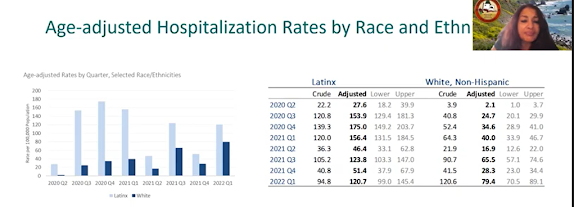
  • Latinx  residents: largely essential workers, hardest hit
    • 27% of our population is Latinx, accounted 45% of all cases
    • at one point, case rate was 9X higher for Latinx
    • In 2020, life expectancy decreased by 2.1 years in Latinx population (compared to 0.7 years in White SoCo population)
  • Addressing these inequities, THE PUBLIC HEALTH CHALLENGE of this pandemic
  • Health Equity Working Group helped get services to vulnerable population
    • trusted messengers (community health workers, promotoras)
    • vaccines, masks/PPE, rental assistance
    • CURA: important partner to reach community, ensuring financial assistance provided to people who needed it ($8 million)
  • FQHC network for collaboration--> 13 different vaccine sites to prioritized populations
  • Special shoutout to Dr. Jenny Fish and Dr. Panna Lossy for uplifting the voices of vulnerable communities
COVID-19 Deaths
  • 75% of SoCo deaths were in people >65
  • residents of skilled nursing facilities were particularly vulnerable prior to the introduction of vaccines
Vaccine Rollout
  • SoCo PH chose to prioritize the most vulnerable residents for vaccine roll out
    • older adults (65+, 75+)
    • SNF and residential care facility patients (RCF)
    • Essential workers and marginalized communities (health workers, farm workers, food service workers, homeless)
  • We have very high degree of vaccination in our elders: 93% of those >65 are fully vaccinated
  • Vaccination of vulnerable elders reduced deaths at SNFs and RCFsVaccines work!  The reduce infection, hospitalization, and deaths.
  • from https://socoemergency.org/
SoCo has the 9th highest vaccination rate (of 58 counties in CA), which is amazing! 78.7% of the total population fully vaccinated (this includes under 5 year olds); 82% of eligible population are fully vaccinated. We have a lower than expected unvaccinated rate (11% compared to 15% in all of CA). Boosters are catching up (66% of those eligible). Vaccination rates for our BIPOC population are high, particularly for our Black population (lots of education, outreach, webinars, presentations, etc). Latinx population while lagging is close. BUT, disparities still exist (see image below) and SoCo Public Health continues to work on this to encourage everyone to get boosted
  

In summary, Drs. Mase and Shende highlighted this list of pearls in public health management of this pandemic: data-driven decision making, constant pivoting, expanded communication, collaboration with all the health care entities in SoCo, importance of community outreach and trusted messengers, and ultimately active listening.

Abortion in the US in 2022: What is at Stake? (Wallace 2/2/2022)

Many thanks to Dr. Robin Wallace for a really poignant and timely Grand Rounds this week on Abortion in the US: What is at stake in 2022. As we await the Supreme Court decision regarding Dobbs vs. Jackson in Mississippi-- decision expected in June 2022-- it is tremendously important for the medical community to know what is at stake if Roe is overturned.

Dr. Wallace graduated from the Santa Rosa Family Medicine Residency in 2007 and completed the to UCSF Family Planning Fellowship after residency. She worked for 8 years at a family planning clinic in Dallas, Texas and now lives and works in North Carolina. 

A link to a recording of her presentation is available HERE

With increased access to effective contraception, abortions have decreased steadily since the early 1980s

  • However, abortions are still common-- in 2017 in the US, 862,320 abortions were performed 
    • Most abortions occur at less than 8 weeks, 89% occur in the first 12 weeks
    • 10% happen in 2nd and 3rd trimesters: this is a critical and important health care service 
The US unintended pregnancy rates has also been going down, dropping below the intended pregnancy rate (since the ACA went into effect and required coverage of contraception)

There is evolving literature on "pregnancy ambivalence". It is not easy to classify intentions. There are plenty of nuances that exist on a spectrum

Abortion restriction disproportionately impacts low income women of color


While overall abortion numbers of declined, the proportion of medication abortions (MAB) have increased, generally up through 11 weeks. 

In some settings well over 50% are MAB.

2018 Comprehensive Review of Abortion Safety and Quality

  • There was a clear and dramatic drop in abortion related deaths after Roe vs. Wade (1973) 
  • This 2018 Comprehensive Review of Abortion Safety and Quality concluded withat abortion is a safe procedure.
  • It also refuted any association between abortion and breast cancer, future infertility, and depression/mental illness.
  • Abortions have a mortality rate of 0.7/100K-- this compared to a shot of penicillin which has a mortality rate of 2/100K, and giving birth a mortality rate of 8.8/100K.
  • increased mortality as gestational age increases, as the physiology gets more complex 
  • 20% of abortion related deaths are among those for whom pregnancy threatens their life 
  • abortion mortality rate higher in black women (1.1/100K)
  • "Legal abortions in the US are safe, but the likelihood that women will receive the type of abortion services that best meet their needs varies considerably depending on where they live."

  • Legal restrictions impact abortion care

    Many states have created barriers to safe, effective, patient centered, timely, efficient, and equitable abortion services.

    • Targeted restrictions of abortion providers (TRAP laws): specifically target the practice of medicine related to abortion care
    • "undue burden" standard established (Casey, 1994)
    • Example of TRAP laws (in North Carolina) include: mandatory ultrasound, mandatory waiting periods, telemedicine ban on abortion care, "physician only" procedure (no midwives, nurse practitioners), Medicaid restriction on coverage, State health plan restriction

    Texas Senate Bill 8 (went into effect 9/2021)
    • Restricts abortion after 6 weeks 
    • Enforcement intentionally crafted to circumvent the usual pathways of enforcement (the state) through private civil actions
      • Anyone can file lawsuit against someone who has violated the law (including those performing abortions, as well as those who aid and abet those procedures)
      • This has created enormous fear in counselors, medical assistants, uber drivers
      • If a person who sues is found in court to be in the right, they are awarded &10K for each abortion in violation
    • In a study from Texas in 2018, even though 58% of people <6 weeks, only 16% were <6 weeks when they had their actual abortion appointment
    • Texas SB8 has faced many challenges (abortion providers, ACLU, etc)
      • in the past federal district court has consistently blocked these laws from going into effect, but the 5th circuit court of appeals
      • Supreme Court denied emergency request to block the law
      • DOJ filed separate lawsuit (US vs. Texas), US Supreme Court heard these arguments 11/1, have not blocked enforcement despite having had several opportunities to do so (e.g. 1/20, denied plaintiff's request to return to be heard)
      • Sonia Sotomayor, "This case is a total disaster for the rule of law."
    We know from prior attempts by Texas legislators to restrict abortion what TRAP laws do to abortion access
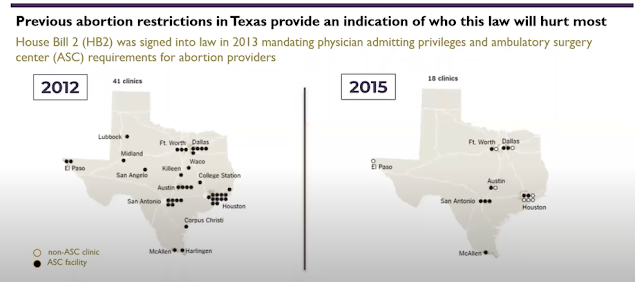
    • HB2 (2013): Governor Rick Perry, admitting privileges law requiring any abortion provider have hospital admitting privileges within 30 miles of where they are providing abortions
    • Shut down >1/2 of abortion clinics, severely reducing access to Texans
    • Disproportionate effect on Latinx patients, rural patients, and those traveling for care
    • Increase in 2nd trimester abortions (therefore increasing complication rates)
      • especially black patients, low income, patients who had to travel far
    • Though the US Supreme Court nullified HB2 in 2016, having been enforced for 3 years had lasting impact
      • clinics, once closed, were not reopened


    The Turnaway Study is a really elegant longitudinal UCSF study examining the effects of unwanted pregnancy on women's lives in 1000 women who were denied abortions compared to women who were granted abortions. When patients are denied the abortions they want, families are significantly affected
    • financial instability, poverty
    • staying in violent relationships
    • resulting children not meeting developmental milestones
    Dobbs vs. Jackson (Mississippi), currently being considered at US Supreme Court
    • bans abortion in Mississippi after 15 weeks
    • decision expected June 2022
    • many experts are expecting the Supreme Court to uphold this law, which would essentially nullify Roe and permit states to limit abortion access based on gestational age
    • What would happen if Roe falls?
      • there are few states (blue, e/g/ CA, WA, OR, NY) with expanded access to abortion
      • other states (e.g. Florida) with protections that are currently in place but can be revoked easily by politicians
      • lots of states where abortion will not be protected in any way
    https://reproductiverights.org/maps/what-if-roe-fell/

    Dr. Wallace's Recommended Resources:
    https://liberalarts.utexas.edu/txpep/
    https://reproductiverights.org/
    https://txabortionaccessnetwork.org/
    https://www.guttmacher.org/
    https://prh.org/
    https://rhedi.org/
    https://www.reproductiveaccess.org/


    Diagnosis and Management of Osteoporosis (Hamann 7/23/2026)

     A recording of this presentation is available HERE .  *** Thanks so much to Dr. Kendal Hamann, SMGR Endocrinologist, for an outstanding Gra...