COVID-19 in Pregnancy (Mason, 8/18/2020)

Many thanks to Dr. Antoinette Mason for her excellent review of the emerging literature on COVID-19 in Pregnancy. As Dr. Mason explained at the start of her presentation, much of the information regarding COVID in pregnancy is based on observational data with recommendations that are expert opinion at best. But as we continue to increase our understanding of this disease, we are gaining a better understanding of its impact on pregnant women and infants. I consider Dr. Mason one of our local experts-- herself having cared for several of our first OB patients with COVID locally this past month. With that, I will do my best to summarize Dr. Mason's key learning points.

Epidemiology

  • In the US to date, there have been 16,798 documented cases of COVID-19 in pregnancy, 4,262 hospitalizations, and 37 deaths
  • Here at SSRRH, we have had 9 total OB patients with COVID ( some only triaged, others admitted). In these patients:
    • Gestational age ranged from 22-39 weeks
    • 5 have delivered (2 returned later with PROM)
    • 2 were picked up by admission screening (asymptomatic)

Is pregnancy a risk factor for COVID-19? Answer: We don't really know. 

The incidence of COVID-19 in pregnancy is similar to that of the general population. Several studies suggest that pregnancy and childbirth do not increase the risk of acquiring COVID-19. There is mixed data on whether or not pregnancy worsens the course of the disease. An MMWR from the CDC June 2020 showed the following: pregnant women were 5.4 times more likely to be hospitalized, 1.5 times more likely to be admitted to the ICU, 1.7 times more likely to receive mechanical ventilation, but no increased risk of death. (Reference: https://www.cdc.gov/mmwr/volumes/69/wr/mm6925a1.htm). Some of these stats are likely impacted by providers being more likely to admit and act more conservatively with sick pregnant women, but it is hard to see that in this data.

What is the clinical presentation of COVID-19 in pregnancy? Answer: The same as the general population

1/3-1/2 of OB patients with COVID-19 are asymptomatic

How to assess severity of disease in pregnant women? Answer: Oxygen saturation, consideration of comorbidities and close follow-up are key

  • Oxygen saturation should be >95% on RA for pregnant women. This is a different standard than for non pregnant COVID patients (>92%). Also consider tachypnea (RR>30bpm).  
  • Outpatient management is appropriate for pregnant women with COVID-19 with mild symptoms, but women should be monitored  (at least once within 1-2 weeks of diagnosis)
    • should have home pulse oximeter if possible
    • should have easy access to care if needed
    • antenatal testing should be done as per standard recommendations
  • Inpatient management: pregnant patients with moderate or severe disease (O2 sat <95% on room air, refractory T>39 despite antipyretics) and/or significant comorbidity (e.g. DM, CKD, immunosuppresion) should be managed in the hospital
  • See diagrams below from ACOG and SMFM. Top diagram is indications for testing, bottom diagram is for triage in known COVID disease.

What are the maternal and fetal outcomes in COVID-19?    Answer: we don't really know.

From case reports, observational studies, and some reviews, there is concern that COVID may be associated with an increase in preterm birth, PPROM, cesarean delivery, and stillbirths. We do know that severe viral illnesses (e.g. influenza) have been associated with these outcomes.

One systematic review found aere possible increase in preterm delivery, including spontaneously and medically indicated preterm birth and c-section in pregnant women with confirmed COVID-19 infections. (Reference: https://www.thelancet.com/journals/eclinm/article/PIIS2589-5370(20)30190-5/fulltext). A UK study looking at outcomes pre and post pandemic preterm found a higher rates of still births-- the authors speculated that outcomes had more to do with access to care and comorbidities directly related to the virus rather than the virus itself.

Is there vertical transmission of COVID-19? Answer: Probably not.

While there is a theoretical risk of vertical transmission, most studies with significant number of cases have demonstrated no evidence of vertical transmission: looking at placenta, cord blood, amniotic fluid, and NP samples. There are a couple of case reports that call question to this, but the data is very limited. In addition, we have little to no data on the effect of COVID-19 infection on the first and second trimesters of pregnancy.

What is appropriate management of COVID-19 pregnant patients? Answer: Treatment for COVID-19 in pregnant women mirrors treatment of COVID-19 in non-pregnant women with slight modifications

  • Remdesivir is considered safe in pregnancy (no known fetal toxicity, recommended by SMFM when indicated)
  • Convalescent plasma is considered safe (currently under investigation for benefit)
  • Steroids if indicated (NIH recommends for "patients needing oxygen")
  • COVID-19 infection is NOT an indication for delivery;  mechanical ventilation is NOT an indication for delivery
    • For severe disease, risks/benefits should be weighed
  • Caution with magnesium sulfate because can increase risks of respiratory compromise (weigh risks/benefits depending on comorbidities)
  • Most standard obstetrical management is safe: internal monitors, amniotomy, forceps/vacuum
  • Might consider early epidural if symptomatic patient to mitigate risks of gen anesthesia for emergent c-section
  • Nitrous oxide: not recommended for PUI/COVID+ patients (because of risk of aerosolization) but nitrous is okay to use in women who test COVID negative.

Does COVID-19 in combination with pregnancy increase risk of VTE? Answer: Yes, probably.

While there are only a few case reports of VTE in COVID in pregnancy, both COVID and pregnancy are hypercoagulable states and separately increase risk of VTE. Thus current recommendations for VTE prophylaxis: 

  • All pregnant women admitted with COVID-19 should receive enoxaparin unless delivery is anticipated in <12 hours. 
  • Also all hospitalized pregnant women should be 10 days of VTE prophylaxis after hospital discharge.

How should COVID-19 couplets be managed postpartum? 

  • Moms with COVID-19 are prone to hypervolemia (keep strict Ins/Outs, watch respiratory status)
  • Infants of COVID moms should be bathed after birth
  • Breastfeeding should be encouraged!! 
  • Separation of mother and infant is NOT recommended (likelihood of testing positive is the same if separated or kept together, if precautions maintained)
    • infant should be tested once at 24 hours of life (no retest indicated)
    • mom should use mask/hand hygiene
    • baby should be in isolette when not breastfeeding

What about mental health in COVID in pregnancy? Answer: Ah, so much to say. . .

  • Social isolation is associated with increased risk of depression and anxiety. Screen and ask!
  • PTSD  has been recognized for those who are isolated/quarantined--> be sure to check in with new moms about the impact this may have on their postpartum period

Care of Patients with Intellectual and Developmental Disorders (French, 8/11/2020)

Many thanks to Dr. Anne French, who gave us a jam packed 45-minute mini-fellowship in the Care of Patients with Intellectual and Developmental Disorders (IDD) this week. I learned so much! But also am left feeling like I have so much more to learn. Her 11 years of experience as a family doctor at the Sonoma Developmental Center (SDC) and her sharing about her personal care of own brother with Down Syndrome make her an invaluable community resource. If you or someone you know is caring for someone with IDD and needs consultation, keep Dr. French in mind!

Risks: patients with IDD are at higher risk for neglect, abuse, poverty, substandard medical and dental care

  • ~46% of patients with IDD are on psychotropic medications 
    • 3/4 haven't seen a psychiatrist, 1/3 don't have a psychiatric diagnosis
  • Many folks with IDD have untreated hearing and/or vision deficits
  • High rates of obesity (sedentary lifestyle, poor diet)
  • Despite high rates of diabetes and hypertension, most are under-treated and under-screened
  • Very high rates of dental caries
  • (Dr. French recommends 3 sided toothbrush to prevent caries)
Cultural competency: caring for patients with IDD requires a special cultural competency
  • learn their language
  • "listen with the ears of your heart"
    • how do you get a patient to relax in the clinical environment?
    • how does illness present differently in this population?
    • see them as a fully aware human being
  • develop trust
  • be willing to abandon your own agenda
  • use "people first" language (eg. person with spastic quadriplegia, person with autism)
  • understand disability etiquette
Consent and Conservatorship: who speaks for the patient? (remember to document this in the chart)
  • Conservator: the legally appointed person to manage financial, legal, and medical affairs of an adults who is unable to do so (requires $$ and court)
  • Consenter:  typically family member but also can be a friend (without papers) who demonstrates consistent involvement, recognized in California as valid
  • North Bay Regional Center: if there is no conservator and no family involvement, NBRC signs and acts on behalf of their clients if they are clients of the NBRC
  • Some patients with mild IDD consent for themselves
Vital signs: interpretation of vital signs can be challenging
  • Temp: use infrared thermometer when possible
  • BP: consider wrist BP cuffs (more comfortable)
    • don't assume an elevated BP is correct in setting of agitation/anxiety
    • home BP checks may be more accurate
  • Weights: getting accurate weights (especially for wheelchair bound) can be challenging, use table weights if available (they have at Dutton)
***
Dr. French spent some time talking about the Fatal Four: SBO, Aspiration, Sepsis and Seizures. These are the Top 4 Preventable Causes of Death in patients with IDD. This section was particularly compelling to me because it brought forth many memories of previous patients I have cared for (in clinic and the hospital) presenting with one or more of the following challenges:

SBO
  • Pts with IDD tend to be on multiple meds with constipating side effects (antipsychotics, seizure meds). They also may have poor PO intake, low fiber diet, sedentary lifestyle
  • Underrecognized and undertreated chronic constipation 
  • Some people with IDD have neuromuscular dysfunction due to their underlying condition (e.g. CP)
  • What should you do about it?
    • Ask patients and caregivers about stooling at every visit
    • Insist upon daily bowel care (not PRN only)
    • If unclear, get KUB to assess stool burden
Aspiration
  • pts with IDD often have dysphagia secondary to neurological impairment (e.g. CP) or medications (depakote, antipsychotics)
  • neuromusclar disorders also include motility disorders, leading to more GERD/reflux
  • some people with IDD have postural issues
  • recurrent aspiration PNA causes scarring with reduce lung volumes, actually leading to a special type of COPD
  • feeding tubes do NOT prevent all aspiration
  • What should you do about it?
    • instruct patients and caregivers to keep people sitting up after eating
    • care with volume/quantity of feeding tube feeds
      • hold formula, use pedialyte instead when sick with URI Sx (x48 of hte worst symptoms)
    • use beta agonists nebs aggressively after aspiration sx
    • consider ABI vests (if can tolerate)
    • can use guaifenisin to thin secretions if aspiration event
Sepsis
  • early warning signs are key: know the patient (e.g. "quieter than usual", decreased appetite, "just not themselves", weakness may show up as exaggerated baseline neuro issues
  • understand patient hx and risk factors (e.g. recurrent aspiration, UTIs, gallstones, SBO)
Seizures
  • uncontrolled seizures can lead to sudden epilepsy death, aspiration PNA, other injury
  • epilepsy: there is in epilepsy specialist (for IDD and not) at Dutton
  • many new seizure meds that have less monitoring and less toxicity (e.g. keppra, pharmaceutical grade CBD=Epidolex)
  • Vagal Nerve Stimulators (VNS) can improve qol, especially after 2-3 unsuccessful seizure meds

Additional pearls:
  • Slow medicine: use serial exams, don't try to get it all done at once
  • Train caregivers to look out for signs of illness
  • Agitation may be a sign of communication or physical distress (e.g. pain)
    • don't forget neurogenic bladder, BPH in older men!
    • consider emotional sources: frustration, inability to communicate, abuse
  • Dual diagnosis is common (depression, anxiety, psychosis, ADHD)
  • Dementia (particularly in DS) very high incidence
  • Always send dislodged J tube to ER
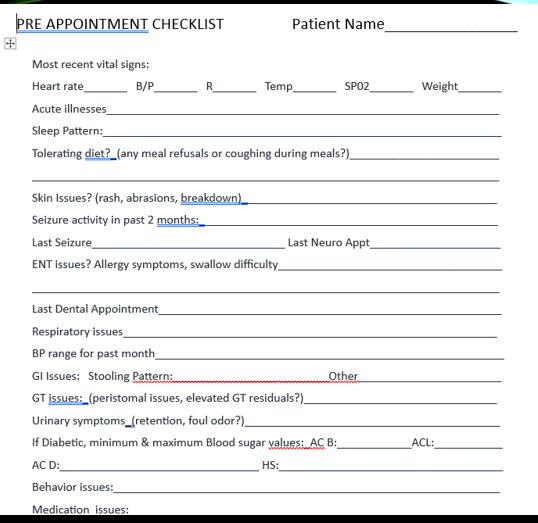
  • Health passport and pre-appointment checklist available on IDD orderset in ECW at SRCH (see images below)


Special Services available at Dutton Clinic (SRCH)
  • primary care IDD co-management (Dr. French, Dr. Camarata, Brittney English FNP)
  • dental care (including sedation)
  • podiatry
  • neurology/epilepsy (Dr. Rowena Korobkin)
  • general surgery (Dr. Michael Bozuk)
  • psych, behavioral health, including psych tech (Dr, Tract Jones, Mark Hecker PT)
Resources recommended by Dr. French:
American Academy of Developmental Medicine and Dentistry (https://www.aadmd.org/)
IDD order set (ECW)
IDD tab on SRCH intranet


Knee and Hip Osteoarthritis (Smith, 8/5/2020)

I am always grateful to Sutter Medical Group's Dr. Briant Smith for his orthopedics teaching, and this week's Grand Rounds was no exception. Dr. Smith reviewed the basics of non-surgical evaluation, diagnosis and treatment of osteoarthritis of the hip and knee, definitely very common conditions seen in primary care! 

Here are Dr. Smith's tips:

Examination of the patient with knee pain 
  • Gait: ask patient to walk across the room and back (look for flat feet, among other things)
  • Alignment: look at legs standing (varus=bow-legged, valgus= knock-kneed)
  • Range of motion: looking for difference in joint ROM compared to the OTHER knee
  • Joint line tenderness
  • Effusion?
  • Check hips (seated internal rotation-- this is to be sure you are not missing a primary hip problem)


Imaging for a patient with knee pain

  • X-ray is the imaging modality of choice for osteoarthritis 
    • For knees, always get standing AP views of BOTH knees, lateral view of BOTH knees
    • For hips, always get images of BOTH hips
    • Remember, sometimes the xray may be incongruent with the patient's symptoms (e.g. both hips look severe, but patient only has pain on one side)
    • X-knee - Startradiology
  • If you look at the x-ray (ideally look at the image WITH the patient), you are looking to characterize mild-moderate arthritis (some joint space narrowing, small spurs) vs moderate-severe changes (bone on bone, bone sclerosis, sub-chondral cysts)
Inflammatory Arthritis of the Hip - OrthoInfo - AAOS
  • Do NOT order an MRI before an xray because. . .guess what?
    • If there is evidence of DJD on the xrays, you don't actually NEED an MRI! 
    • You have made the diagnosis and can start the treatment.
What about arthritis and meniscus tears?
  • All knees with arthritis have meniscus tears
  • The pain is almost always due to the arthritis, and arthroscopy (meniscectomy) doesn't help, with very rare exception
Treatment of knee and hip arthritis
  • Don't forget to explain the diagnosis: "you have arthritis in the right knee""
    • Make the distinction between mild-moderate and mod-severe "You have severe arthritis in your right knee"
    • Dr. Smith recommends this analogy: The protective coating on the ends of the bones has worn away, like the tread on a tire. You are now on the steel belt (mild-mod arthritis) or the rim (mod-severe arthritis)
    • Are Worn Out Tires Dangerous? What to Know - Fix Auto USA
What can patients do?
  • Relative rest/modified activity: many patients love to walk and run, but probably best to switch to swimming and/or stationary cycling (then they can keep up their aerobic exercise)
  • OTC meds: NSAIDs (if not contraindicated, be sure to check labs, particularly for SCr), acetaminophen, glucosamine, fish oil, CBD. Avoid opiates.
  • Physical therapy,  (it's good idea to do some PT before knee or hip replacement, but remember Medicare only covers 18 visits/year, don't use them all up if a patient is going to get surgery)
  • Steroid injection: if the injection works and lasts a few months, okay to repeat (up to 4 times/year) for severe pain, but if only helps for a week, then probably not worth it
    • hips done by radiology at the hospital 
  • Not great evidence for hyaluronic acide injections (costs $500-1000, usually cash)
  • Knee bracing not indicated, some patients feel more comfortable/supported in a neoprene knee sleeve. This isn't helpful but if it makes them feel better is fine
When is a patient ready for surgery ?
  • When they are ready.
  • When you might consider them ready?
    • If they are having sleep issues due to pain
    • If they have significantly modified their activity and are missing out on things they would normally enjoy because of their pain
  • There is no lower or upper limit of age for hip or knee replacements. It's really the severity of the arthritis and their degree of illness/wellness.
Surgical Preoperative Optimization
  • Anemia, goal Hb>12 reduces transfusion risk (perioperative transfusions actually increase the risk of infection and LOS)
  • Smoking, goal quit at least 6 weeks before surgery, including ALL nicotine products (nicotine affects wound healing and infection risk)
  • Diabetes, goal <7.5 (infection risk)
  • Obesity, goal BMI <30, most surgeons won't operate if BMI>40
  • Malnutrition (albumin >3,5)
  • And more! 
    • immune status, hypothyroid, low vitamin D, CV disease, ASA class, opiates, CKD, sleep apnea, psychiatric illness, social factors, deconditioning

Understanding Hospice Care (Saeed, 9/30/26)

A recording of this presentation is available  HERE .