Many thanks to Dr. Susan Milam Miller, who gave an excellent Grand Rounds this week titled "Caring for our Children, our Family, and Ourselves during COVID-19". Dr. Milam Miller covered a range of topics about our mental health in this pandemic-- from March 2020 as Alexander and the Terrible, Horrible, No Good Very Bad Day, to community and complex trauma, ambiguous loss, and unresolved grief, to trauma-informed care, and even a bit about the magic of a window into children's lives via video visits.


HERE is the recording of Dr. Milam Miller's presentation. 

Here are my notes:

Dr. Milam Miller reminded us that no child exists as as single entity-- children exist within their natural environment, including their families and their community. Listening between the lines to children and their attached adults is important. Knowing what their natural environment looks like is also key.

Clearly, here in Sonoma County, many children (and adults) have lived the trauma of several fire seasons and evacuations, compounded for the last year and a half by the COVID-19 Pandemic. These traumas have caused a tremendous amount of stress for many of us-- children are no exception. As such, we can expect to see signs of traumatic stress in our children.

Traumatic Stress manifests in a range of responses in adults and children:

  • Emotional: emotional dysregulation (sadness, fear), numbness, detachment
  • Physical: somatization (headaches, stomach aches insomnia), changes in brain function, hyperarousal
  • Cognitive: how we think about ourselves and others, triggers, re-experiencing, nightmares/daymares, dissociation, dampening of connection via thoughts and emotions
  • Behavioral: the way the mind directs the body: self harm, substances, avoidance (behaviors that are NOT adaptive over time, even if they help at first)
  • Interpersonal: pulling away from loved ones, difficulty trusting and forming trusting relationships
Identifying these "adaptive" behaviors that may not serve us over time is key to helping our patients and ourselves survive the trauma. 

Community Trauma  is a strong and powerful shaper of relationships and health
How does a community emerge from trauma? How do we recover and repair? How do healthcare providers care for their community in times of trauma but also for themselves? How do we model for our children and families what healthy coping with community trauma entails?

Complex Trauma describes both children's exposure to multiple traumatic events—often of an invasive, interpersonal nature—and the wide-ranging, long-term effects of this exposure. ... They usually occur early in life and can disrupt many aspects of the child's development and the formation of a sense of self. In COVID times, the list of multiple traumatic events may be long
  • what about medical trauma of repeated COVID testing?
  • what about shutting down schools?
  • what about losing church and extracurricular activities?
Ambiguous loss is a loss that occurs without closure or clear understanding. This kind of loss leaves a person searching for answers, and thus complicates and delays the process of grieving, and often results in unresolved grief. I personally found myself intrigued for the rest of the day by this notion of ambiguous loss-- classically a dear one who disappears on a hiking trip, never to be found again. What about these years of pandemic create ambiguous loss?
  • what does it mean to have never finished fourth grade because schools shut down in March 2020?
  • what does it mean not to have a graduation ceremony from high school?
  • what does it mean to go through puberty during pandemic times without community support?
Trauma Treatment classically has 3 stages:
  • Stage 1: Stabilization and establishment of safety (this may include psychotropic medications, DBT to help managing distress, relationship building)
  • Stage 2: Addressing and processing of trauma memories or related beliefs and/or grieving the losses inherent in trauma (this is somewhat controversial but has been standard of trauma treatment)
  • Stage 3: Restoring or creating connection between survivors and their communities by increased engagement in meaningful and positive activities and relationships
Unsurprisingly, in trauma healing, relationship building is key.
Trauma informed care
“Trauma-informed care is defined as practices that promote a culture of safety, empowerment, and healing. 
  • Safety
  • Trustworthiness and transparency
  • Peer support
  • Collaboration and mutuality
  • Empowerment, voice and choice
  • Culturally, historic and gender appropriate
Relationship and relational care is everything. Dr. Milam Miller says at some point, we expend WAY too much energy on individual treatments and interventions, really we need to consider community interventions, group treatments, and shared treatments. I love 

Closing questions to ponder from Dr. Milam Miller
1) Who is your buddy? (i.e. the person you call, lean on, ask for help)
2) What does healthy coping look like in these times?
3) Can you recognize the ambiguous loss of this COVID pandemic for the families you care for? Once recognized, how do we process our grief?

Birth Equity (Jimenez, Lund, Bacon 9/8/2021)

Many thanks to Drs. Jimenez, Lund and Bacon for an important presentation on Addressing maternal health disparities and birth equity this week. A full recording of their excellent presentation is available HERE.

https://youtu.be/Y2uJEZyT1ZE

My notes:

What is birth equity? Birth equity is the assurance of the conditions of optimal births for all people with a willingness to address racial and social inequities in a sustained effort  

https://www.cmqcc.org

Dr. Jimenez led off with a review the concept of race. 

  • The notion of race is a social construct designed to divide people into groups ranked as superior and inferior. Societies use race to establish and justify systems of power, privilege, disenfranchisement and oppression
  • Scientific consensus: race has no biological basis (we are all one race)
  • In a racialized society like the US, we are all assigned a racial identity, whether we are aware of it or not
  • Geographic ancestry (which does have genetic importance) is not the same thing as race (which does not)
  • 1700s, Carl Linnaeus, father of modern taxonomy, classified our own species into races based on reports from explorers and conquerors 
    • Americanus, Africanus, Europaeus, Asiaticus, Monstrosus
    • Western concept of race is based on a classification system that emerged from, and in support of, European colonialism
He followed with a review of racism and bias
  • Racism is an organized system premised on the categorization and ranking of social groups into races, and devalues, disempowers, and differentially allocates desireable societal opportunities to racial groups regarded as inferior (Bonilla-Silva 1996)
  • Racism often leads to the development of negative attitudes (prejudice) and beliefs (stereotypes) toward non-dominant stigmatized racial groups and differential treatment (discrimination) of these groups by both individuals and social institutions 
  • Bias is a decision we make so quickly that it simply occurs to us as data; we don't even rela
Dr. Jimenez finished his section with real life examples of racism in maternity care (past and present) and an encouragement that we must begin to come to terms with our own past
  • The 2018 story of tennis star Serena William's emergency c-section, complicated by PEs and failure of her physicians to listen to her and diagnose her quickly
  • Slave-holding surgeon (Francois Marie Prevost) pioneered c-section surgeries on American enslaved women's bodies through repeated experimentation
  • In the 1840s, J Marion Sims, father of modern gynecology, was a plantation physician and then gynecological surgeon in Alabama--> experimental surgeries on enslaved women for vesico-vaginal fistulas. Did not use anesthesia, despite it being readily available. Got rich and famous from his work.
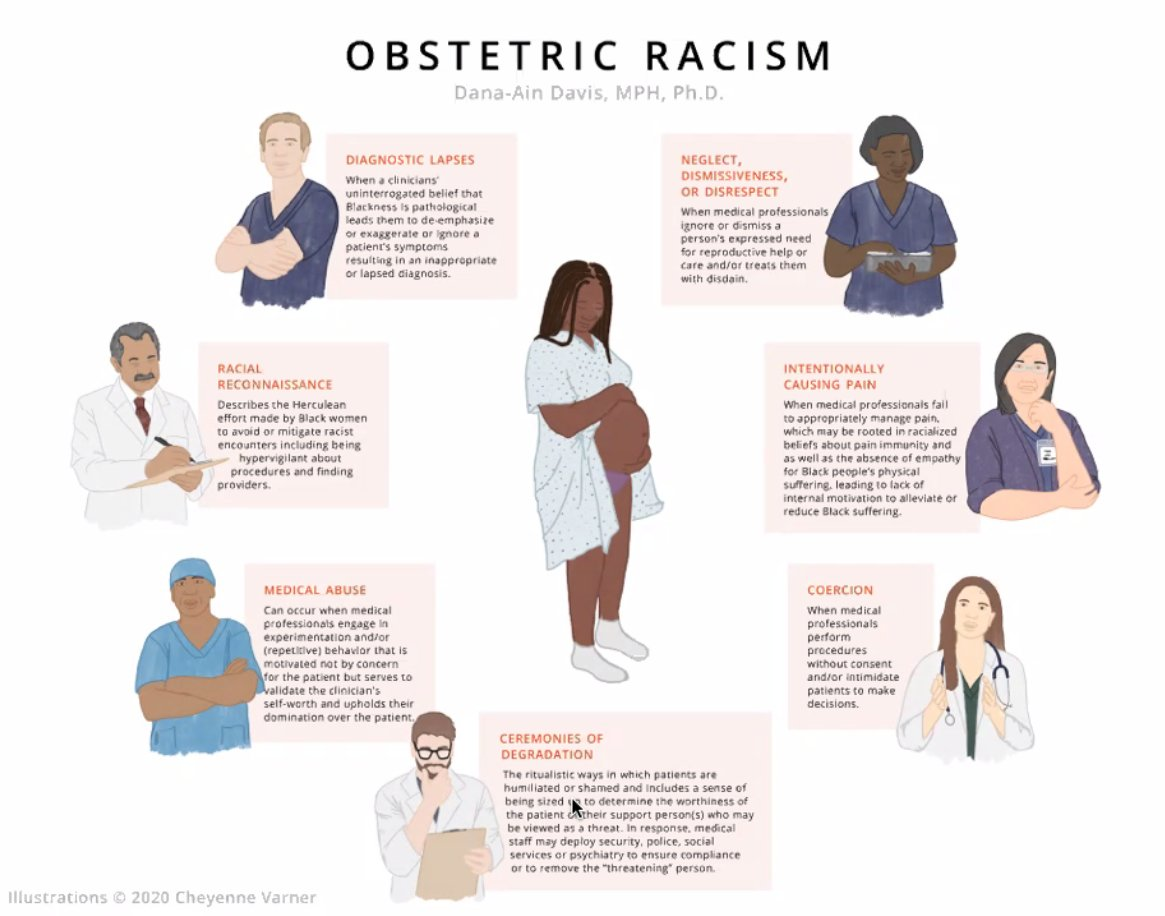
  • Consider reviewing the image below to understand how racism impacts obstetric care
Dr. Lund took part 2 of the presentation to review disparities in maternity care in the US
  • Black women experience far worse outcomes than any other racial or ethnic group. Black women:
    • are 3-4x more likely to die than their white counterparts
    • comprise 13.5% of live births, but 35.5% of pregnancy-related deaths
    • have higher preterm delivery (13.4% vs. 9%)
    • have higher c-section rate (RR 1.23)
    • have higher PPH rates (3% vs. 1.6%)
    • have higher peripartum infection (4.9% vs. 4.1%)
  • Pre-E, diabetes, and and unintended pregnancy are also higher for black women
  • American Indian/Alaskan Natives (AI/AN) are also at risk for adverse outcomes
  • Black and AI/AN infants are more likely to die in their first year of life
    • black infants diet at greater than 2x rate of white infants (11.4 vs. 5.2 per 1000 live births)
California has been working hard since 2006 to reduce our maternal mortality rates, and it's working!
(this graph below shows a decline by 55% 2006 to 2013)
However, despite tons of successful work to reduce maternal mortality, the disparity ratio (black women vs. white women) remains unchanged (see image below):
Dr. Lund also shared some of our local stats at SSRRH
  • ~50% of our deliveries are to Hispanic patients (~ 20% US-born and 30% foreign born)

  • Another 37.5% of our deliveries are to non-Hispanic White identified Patients
  • 4.5% of births to Asian or Pacific Islander patients
  • <2% of our deliveries to non-Hispanic Black identified Patients
  • About 2% “other” which primarily represent American Indian/Alaskan Native patients
  • A full 6% were race/ethnicity “unknown”
Dr. Lund shared important outcomes for our maternity patients, including NTSV c-section rates, maternal morbidity, preterm birth rates, unexpected newborn complications, and exclusive breastfeeding at discharge:
  • Hispanic born US rates of pLTCS are the lowers of all, much lower than state average
  • Non-Hispanic black patient cesarean rates are about 4% higher than almost all others but lower than state average. 
  • Our “other” category (largely AI/AN) exceptionally high NTSV c-section rate. Total # of patients in the “other” category higher than for non-hispanic black but still only about 145 patients over 5 years. 


And for preterm birth:

  • Non-Hispanic Black preterm birth rate is similar to others at our facility and lower than state average, however note that #’s are quite small so should continue to trend over time 11 patients out of 124 patients total in 5 years. 
  • Rate of PTB among white patients higher than the rest of CA
  • “Other” preterm birth rate is quite high, mostly represented by AI/AN individuals, numbers still low 28 patients out of 144 over 5 years. 


What can be done?

Dr. Bacon capped off this week's Grand Rounds presentation with a series of recommendations of how you might engage in local advocacy and beyond to work on birth equity:

  • Individual work: if you are unsure where to begin and/or unsure about what you think about this information, individual work is the place for you
    • consider reading and/or listening to podcasts, listening to the experiences of others (particularly BIPOC), assessing your own personal unconscious bias, and work on retraining your brain on these biases
    • Listen to Dr. Camara Jones
    • Visit Project Implicit
    • I personally recommend Seeing White on Scene On Radio as a good place to start (we have been listening to this as a faculty for our anti-racism work)
  • Institutional work
    • there are lots of robust toolkits and trainings to help guide institutions
    • these might help you help guide YOUR institution
    • try: CMQQ, ACOG/SMFM, https://blackmamasmatter.org/, CDC's Hear Her campaign
    • Locally, attend CEDAWG grand rounds, September 22 Foundations for Health Equity Workshop, UCSF Differences Matter, Trauma informed care trainings
    • Check out the SSRRH Labor Culture Committee (LCC) at SSRRH (inquire with Julie Barajas or 
  • Community Work
    • Workforce development, pipelines
    • Community health workers
    • Doulas
    • Black midwifery
    • Centering pregnancy
  • Statewide and National work
    • Pay attention to what is happening in politics and policy:
      • SB65: a bill that creates a committee to investigate maternal deaths, examines adding a doula benefit to medi-cal funding, and helps low income communities have access to midwifery care
      • California AB4: removing documentation status for Medi-cal benefits
      • Governor Newsom's 2022 budget, which includes California extension of OB Medi-cal to 1 year postpartum
    • Also take a look at commonwealthfund.org Maternal mortality and maternity care project

And more resources:

Jenee Desmond-Harris: Implicit bias means we're all probably at least a little bit racist. https://www.vox.com/2014/12/26/7443979/racism-implicit-racial-bias

Eric Deggans: 'Not Racist' Is Not Enough: Putting In The Work To Be Anti-Racist. https://www.npr.org/2020/08/24/905515398/not-racist-is-not-enough-putting-in-the-work-to-be-anti-racist

Camara Phyllis Jones, MD, MPH, PhD: 


https://www.projectimplicit.net/

CDC Hear Her campaign: https://www.cdc.gov/hearher/resources/download-share/warning-signs-poster.html

ACOG Health Equity Curriculum: https://www.acog.org/education-and-events/creog/curriculum-resources/additional-curricular-resources/health-equity

ACOG CO 649 (2015): Racial and Ethnic Disparities in Obstetrics and Gynecology https://www.acog.org/-/media/project/acog/acogorg/clinical/files/committee-opinion/articles/2015/12/racial-and-ethnic-disparities-in-obstetrics-and-gynecology.pdf

Black Mamas Matter Alliance Toolkit: https://blackmamasmatter.org/resources/toolkits/


Concussion Management in Primary Care (Affleck, Ohkubo, Matthew 9/1/2021)

Many thanks to Dr. Monica Ohkubo,  Dr. Ty Affleck, Athletic Trainer Chelsea Matthew, and DNP Surani Kwon for a great interdisciplinary Grand Rounds presentation from the North Coast Concussion Management team on Concussion Management in Primary Care. 

A recording of their presentation is available HERE. 

Driven by increased attention on head injuries over the last decade, the standard of care for sport-related concussions has changed significantly from a general If you feel okay, it's okay, go back in and play mentality to a much more evidence-based stepwise management approach to concussion. 

  • In US, there are 1.3-3.8 million concussions annually, close to 300,000  ER visits (2010-2016)
  • In football alone, 7.7% NFL players experience concussion (this amounts to only about 130/year), but if 4-6% of high schoolers also experience concussion, this amounts to 1.2 million/year
  • People with history of concussion are more likely to have another
  • Hx migraine, depression, insomnia cognitive problems, visual abnormalities-->  concussion can unearth or exacerbate these conditions (learning disability can be activated, depression can represent or be exacerbated)
  • Many used to believe that most athletes recovered from concussion in 7-10 days with a few stragglers. . .new evidence has found that after 2 weeks less than 1/2 of athletes with concussion have fully recovered

Initial Concussion Care: "You don't know how bad it is until it's over" -Dr. Ohkubo

  • You cannot assign a time frame for recovery as soon as the concussion is recognized  (but by state law, it's always at least 7 days)

    • NO return to play in same game/practice
    • Monitor for deterioration over the first few hours after injury (s/sx bleed)
    • Early follow-up with someone trained
    • Physical rest
    • Mental rest: no phones, no school/shortened school
    • Per state law, any high school athlete with a concussion must follow up with physician trained in concussion management for medical clearance
    Best practices for Concussion Management

    Standardized Concussion Assessment Tool (SCAT5)

    The SCAT-5 is a validated tool to use for concussion evaluation. Includes several components: GCS, c-spine evaluation, symptom evaluation, cognitive tests, balance tests, memory, coordination, and 6 step return to play guidelines. The link above will take you to the full 8 page document.

    Of note, the symptom evaluation on the SCAT includes  22 symptoms: physical, emotional, mental, sleep. Different areas can be differentially affected
    Athletes also can cover up symptoms because they are used to pushing themselves, so pay attention to the individual answers

    Eye and Balance Test
    Balance testing (BESS): 20 second each feet together hands on the hip eyes closed, non-dominant leg, tandem stance with non dominant foot in the back

    Neurocognitive Testing
    Gold standard is baseline testing (pre injury) to be able to assess extent of injury if/when it occurs
    SRJC and SRCS are doing this for all athletes: Computerized neurocognitive baseline and f/u testing

    Athletic Trainers

     Athletic trainers are (board certified, link between healthcare provider and the athlete and parent) important resource to be able to be available to do concussion training/prevention as well as assist with assessment and return to play protocols

    • prevention and recognition of injury, referral, treatment rehabilitation
    • academic modification
    • objective assessment at sideline, retesting
    • referrals for physician, mental health support
    • facilitation of return to play protocol
    • day to day contact with athletes
    Treatment and Management of Concussion
    1. Cognitive and physical REST is huge. Academic accommodations have to be provided by doctors specific form that physicians need to fill out (e.g. half days at school, extra time on tests, reduced homework load, note taking, not on computer all the time)
    2. Diet: appetite changes after concussion (more/less hungry). Eat small things through the day
    3. Hydration: nausea, drinking small amount during the day
    4. Sleep: sleep patterns can change (more/less than normal, frequent waking). Don't wake a sleeping athlete. Sleep is important in recovery. Naps: not after 3pm
    5. Exertion: people recovering both physical and mental, though small sub-symptom exercise can help recovery. 
    6. Stress: interpersonal arguments, emotions can change post concussion, crying out of nowhere (not criers), lights/sound noise: bright lights, fluorescent lights, sunglasses (accommodation), loud sounds (e.g. PE class)
    7. Do NOT push the symptoms
    Return to Play Process (CA state law)
    • Anyone diagnosed with concussion, must go through the process that starts with a medical evaluation, and then start 7 day process
    • For contact sports, athletes must get a two step medical clearance
    • Each step MUST be separated by at least 24 hours
    • If symptoms return at any step, stop the activity, let rest for the rest of the day and return to the same step
    ***********************************************************
    Step#1      Rest until asymptomatic

    MEDICAL CLEARANCE

    Step#2:     Light aerobic activity (walk around track or football field)
    Step#3:     Sport specific exercise (running, swimming)
    Step#4:     Non contact training drills (shooting, serving, setting)

    MEDICAL CLEARANCE

    Step#5:     Contact practice
    Step#6:     Contact game

    ************************************************************

    It's important to note that concussion symptoms tend to cluster: "Concussion picks on everyone's weakness". 

    Someone may have minimal to no symptoms in one category but profound deficits in another. Directing your attention to where their symptoms are is a key take home. 
    • vestibular
    • cognitive/fatigue
    • ocular
    • post-traumatic migraine
    • anxiety/mood
    • cervical 
    Specialists can be helpful depending on the problem: concussion specialist, vestibular rehab, neuro opthamologist, neuropsychologist

    Use of neurocognitive tests
    Gold standard is to have a baseline and post-test injury test. That way you can compare the two. IF you don't have a baseline, there are standardized scores based on age/educational level that you can use to make your assessment.  
    Specifically, the computerized neurocognitive test ImPACT used at SRJC and SRCS (see image below for an example report)


    Other tools:
    • Vestibular and oculomotor testing (VOMS test)
    • A "Home SCAT test": ideally, athletic trainers are supporting the return to play process; however, if there is no athletic trainer to link to care, consider using parent to help athletes get through the process. Have the athlete go through above steps and have parent administer a variation on the SCAT (below)
    • Light aerobic exercise (in Dr. Affleck's words, "oxygen") can help speed recovery
    • Disrupted sleep? Consider melatonin


    Additional References/resources:
    CDC: www.cdc.gov/concussion/
    UPMC: www.upmcphysicianresources.com
    northcoast concussion.org 
    CIF physician letter to school: https://cifstate.org/sports-medicine/concussions/CIF_Physician_Letter_to_School_after_Concussion_Visit.pdf


    Dismantling the Healthcare Hero (Carmen 8/25/2021)

    Many thanks to Dr. Desiree Carmen for an evocative Grand Rounds presentation this week entitled Dismantling the Healthcare Hero. A recording of her presentation-- definitely worth your time and attention-- is available HERE. 

    Dr. Carmen took the hour to explore the notion of heroism as it applies to medicine. She asked us to question why we liked being called heroes at the start of the pandemic and why that may not feel so good right now-- a year and a half later. And she challenged us to propose alternative narratives to support the systemic change that so many of us wish to see.

    Dr. Carmen showed us now-familiar images of healthcare workers as masked altruistic protagonists. As the world shut down in March 2020, she began, we felt the love from companies-- free vacations, discounted goods. . . stories of NYC meeting at 7am to clap for healthcare workers. It felt pretty good to be healthcare hero. 

    Our egos, after all, were not averse to the notion that we could be heroes. We signed up for this! For physicians, we took the Hippocratic oath; for nurses, the Nightingale pledge. We adhere solidly to notions of altruism, beneficence, justice, non-abandonment and solidarity. And we want to serve.

    But, she explained, I wanted to know why society wanted us to be heroes.

    Dr. Carmen showed us 3 hero archetypes that Americans particularly admire:

    • The Everyman Hero: this is the person with no special skills, one for whom life has thrown an adventure at them, asked to do heroic deeds 
    • The Classical Hero: someone with special abilities and/or skills that puts them above others in the society and grants them their positionality as hero due to those skills
    • The Epic Hero: the person with a noble birth story, larger than life
    Which do you identify with? Why?

    Dr. Carmen segued from these hero archetypes into the work of James Opie Ursom, a mid-century philosopher who wrote about the supererogatory: that is, morally excellent actions that go beyond the duty of the agent-- more than is asked for. All heroic actions are supererogatory, but not all supererogatory actions are heroic. Heroism involves known involvement with risk. i.e. we must CHOOSE the risk. Well, did we?

    Risk has not been in short supply during this pandemic. 

    But PPE has. 

    PPE Shortages: We all are well aware of the experience of working without a feeling that we had adequate PPE (e.g. reusing N95s, gowns, etc). This is not unique to this pandemic; it has, unsurprisingly, been  experienced in epidemics prior to this (including ebola, SARS, H1N1)

    And this predictable lack of PPE is due to a well known multitude of forces that are not aligned to ensure health care workers are guaranteed protection. 
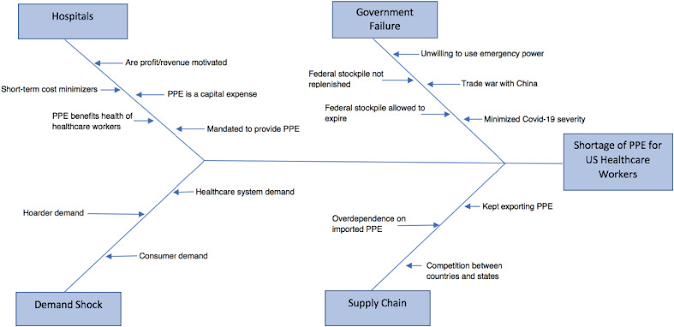
    Recreated Figure 1 from Cohen J, Rodgers YVM. Contributing factors to personal protective equipment shortages during the COVID-19 pandemic. Prev Med. 2020;141:106263. doi:10.1016/j.ypmed.2020.106263


    Of note, 
    • Hospitals: work off a budget (profit) model; administrators make short term decisions, rather than long-term vision and goals. PPE is not charged/billed to patients or insurance companies. It is simply a cost to hospitals. Therefore they have no motivation to have updated stockpile.
    • Demand shock: common during pandemics, leading to hoarding affected PPE, increased cost
    • Government: Trump admin in trade war with China, slow to enact defense production act, federal stockpile inadequate (3 million masks, if 30% of population sick we would have needed 3.5 billion masks). Noted, expired federal stockpile, not restocked by prior administrations
    • Supply Chain: US is an exporter of health goods, importer of goods from China. Cost 6x Nn5, gowns doubled cost

    Duty to care
    Healthcare workers have a great social contract with the public: we have a duty to care. 

    But it's not that simple. The Joint Centre for Bioethics Pandemic Work group states, "The Healthcare worker enters into a broad social contract that not only creates their duty to care, but places obligations on society to keep them as safe as possible" 

    In this instance society did not keep us safe. And as this social contract disintegrated, our duty to care was undermined.

    Race in medicine, racism in medicine. 
    Of note, Dr. Carmen points out, there were so many people not cared for during the pandemic. 
    We all remember the widespread demonstrations around the world after the murders of George Floyd and Breonna Taylor-- due to ongoing police violence toward people of color. 

    There is the reality that medical education and training and medical practice are ripe with racism. Examples Dr. Carmen provided:
    • Medical schools continue teach racial inferiority theories-- leading to inequitable management of HF, kidney disease, VBAC. For more information, see this NEJM paper. 
    • There is the widely-known Tuskegee Syphilis study and its repercussions, where respected clinicians and scientists intentionally harmed black bodies. 
    • Pediatric ED study from 2019, in which providers less likely to order tests/admissions for Latinx and Black children
    • And widely held beliefs amongst medical students and resident trainees measured in 2016 that black people  literally have thicker skin than white people and therefore feel less pain. 
    Race and COVID
    Physicians of color are more likely to care for patients of color. They are also more likely to experience discrimination during patient care, have limited financial safety nets for themselves. And, of course, be more impacted by COVID-- both personally and professionally-- during this pandemic. 

    There is the plain fact that COVID disproportionately affected Latinx and Black people all over the US. This applied to our local cases as well.  Physicians of color-- our own trainees here at SRFMR struggled in the winter with their own sense of transference and countertransference as patients of color died before their eyes (see quote below).


    Global Inequity
    And inequities abound, including in distribution of these highly effective vaccines against COVID-19. Much of the world is anxiously still awaiting access to a vaccine that many Americans are outright rejecting.
    What about reciprocity?
    In return for accepting personal risk in fulfilling our duty to treat, healthcare workers expected reciprocal social obligations. We wanted people to be careful: to social distance, to wear masks, to limit travel and parties. These obligations would demonstrate support and acknowledge our work in difficult conditions. Unfortunately, however, many in our society-- many of our own beloved patients, in some cases our beloved family members-- have not done a great job of reciprocity. 

    In fact, basic public health orders: social distancing, masks, and vaccine recommendation have been flaunted. And, yet again, as people have chosen to not be compliant with public health orders, we healthcare workers watch these numbers rise again. And we continue to go to work and care for our patients. 

    This lack of reciprocity leads us to compassion fatigue. Many of us care for patients all the time who make poor decisions-- watching those intentionally make the decision to NOT get vaccinated adds insult to injury. At this point in the pandemic, it makes us tired. Tired of caring for those who are choosing not to care for themselves.

    And, then there is the notion of  moral injury, defined as psychological harm caused by transgressing one's deeply held values (altruism, do no harm). We are literally living an allostatic load (getting hit over and over), moments of harm that cause neurologic changes to our brain and, for some, will cause PTSD. Physicians already have higher rates of suicide than general population. We already stink at searching out help. Covid adds to these risks-- making us more socially isolated, reducing our access to support (families and friends) in a profession that does little to seek mental health services

    Those of us in Sonoma County who lived through the Tubbs Fire of 2017 and the fires that have since ensued, recognize deeply this graphic on the phases of collective trauma: a sudden impact--> heroic phase--> disillusionment (where we see limitations)--> restoring/rebuilding phase--> wiser living phase.

    But, Dr. Carmen points us, COVID feels more like this. Like we might never get to the wiser living phase and are maybe stuck in the disillusionment phase forever. . .


    So, says Dr. Carmen, the hero narrative isn't enough. It leaves us feeling let down because it
    • fails to address limitations of budget centered hospital model
    • is a poor reflection of government inaction
    • removes a sense of reciprocity and their responsibility during a global crisis
    • centers discussions of racial inequality on individual patients and not institutional change
    • did not protect our public health initiatives
    • only superficially addresses the mental health efforts of providers 
    And so, Dr. Carmen proposes, we need to reject the narrative of the healthcare hero and consider one of  the rhetorical triangle-- a NEW narrative in which we use our physician experience, our facts and our credibility to share our stories about COVID-19 about healthcare about social inequities and push toward institutional and systems change. here's how:
    • Logos: dissect our fact to convince our audience
      • public health over profit: with regards to PPE, remove profit motive. Strengthen local and state government to have stockpiles, Change industry policy to less foreign alliance, innovative/reusable PPE. Increase physician training pipelines. Change the way we deliver healthcare (e.g. concierge for safety net, wraparound services), explore models of innovative healthcare
    • Ethos: build on ethics, sense of credibility. 
      • Address racism in medicine. Redesign curriculum to eliminate race-based science, support physicians of color, all healthcare workers of color. Support public health initiatives that use community-based participatory tools to target racial inequality (e.g. Promotora models)
    • Pathos: being vulnerable with our emotions. 
      • Work collectively to build resilience. Support unionized healthcare workers who are most vulnerable (RNs, EVS, resident physicians), build a stronger telemedicine curriculum, normalize time to access mental health resources (encourage healthcare workers to go to those mental health visits), pay appropriately for work/hazard we have experienced. CA AB650 Retention Bonus (hazard pay), and more.
    Can we?
    Can you?

    Type 2 Diabetes Management: What is new in 2021? (Magnotti, 8/18/2021)

    SMGR Endocrinologist, Dr. Michael Magnotti, gave an information-packed review of the latest and greatest in DM2 management at Grand Rounds this week. It was fast and furious and full of really great info on updated management of DM2. A video recording of Dr. Magnotti's presentation is available HERE .

    Here are my take home points up front:

    1) Goals for DM management should include: achieving a specific a1c goal (based on age, risk factors, etc), avoiding hypoglycemia, avoiding weight gain (promoting weight loss if possible), minimizing side effects, and decreasing CV events. Insulin, unfortunately, doesn't accomplish many of these goals.

    2) SO. . .first line, old school for DM management, is still metformin AND comprehensive lifestyle changes (including weight loss and physical activity)

    3) Second line meds should be GLP-1 receptor agonist OR an SGLT-2 inhibitor for ALL diabetics. This is because these meds reduce a1c, do not cause hypoglycemia (unlike sulfonylureas), promote weight loss, and decrease CV events. This is even true if a1c is at goal (see ADA guidelines below)

    4) SGLT-2 and GLP-1 have additional indications for which we might consider them regardless of DM; with established ASCVD, and heart failure (HFrEF and HFpEF), and chronic kidney disease with GFR>30 and/or proteinuria. There is rapidly evolving evidence that even in the absence of DM2 (or DM with good control), these medications can improve outcomes. More and more, the are be covered by insurance for these indications alone

    5) GLP-1 agonists have the most potent a1c lowering and weight loss effects. They also clearly reduce CVD risk.

    6) In addition to CVD risk reduction, SGLT-2 have evidence for improved outcomes in heart failure and CKD. This is a class effect. Don't get caught up on individual indications for which med. All SGLT-2 except ertugliflozin, the oldest and cheapest) impact all three conditions.

    ***

    Dr. Magnotti showed us this image of the Ominous Octet-- the eight pathways through which hyperglycemia occurs with DM2. You can see which mechanisms are in effect with the GLP-1 and SGLT2 medications. 

    This, too, for your reference is the most updated graphic version of the 2020 ADA guidelines. Note the two LEFT columns, we are to consider the addition of meds for ASCVD, HF and CKD independently of a1c. The RIGHT two thirds of the page direct us to consider medications based on a1c not being at goal.

    https://care.diabetesjournals.org/content/diacare/43/Supplement_1/S98/F1.large.jpg

    For the life of me, I cannot EVER remember their names of these newish classes of meds and which is which. I think I am getting old. So for your reference and mine:

    GLP-1 Analogs: semaglutide (Ozempic injectable, *newer oral form Rybelsus), liraglutide (Victoza), dulaglutide (Trulicity), and exenatide (Byetta)

    SGLT-2 Inhibitors: canagliflozin (Invokana), dapagliflozin (Farxiga), empagliflozin (Jardiance), ertugliflozin (Steglaro)

    Okay, so let's recap the key points on both these categories of meds. 

    First GLP-1:

    • GLP-1 agonists begin working as soon as food hits the mouth--> hormonal disruption leading to decreased glucagon production and increased insulin, early satiety, and slowed gastric emptying (which is why they help with weight loss)
      • if patients complain of nausea with GLP-1 it's probably because they are eating too much, need to cut back on food intake and nausea may improve
    • GLP-1 agonists have been shown:
      • 1-1.8% reduction in a1c
      • 4-13 pounds weight loss
      • NO hypoglycemia
      • CV risk reduction
    • Side effects: nausea/vomiting/constipation/Headache/injection site reaction/hypoglycemia (only if combined with insulin or sulfonylurea), and unclear link with pancreatitis
    • Absolute contraindication: black box for animal studies showing association with medullary thyroid cancer and MEN2
    • Relative contraindications: CrCl<30 (except exenatide, which has no SCr cutoff and okay in HD). There is a warning of AKI, which is a result of volume depletion
    • GLP-1 Agonists that are HUMAN GLP-1 based: semaglutide, liraglutide, and dulaglutide (all of them EXCEPT exenatide) have CV risk reduction
    • Oral semaglutide has no CVD reduction data (trials ongoing)
    What's new about GLP-1 medications in 2021?
      • Higher doses of dulaglutide (Trulicity (3.0 and 4.5mg)) have new data showing even more improvements in Hba1c, increased weight loss, but also more nausea (makes sense). 
        • Titration can happen weekly, starting with 0.75mg--> 1.5mg--> 3--> 4.5 as tolerated
      • Newish oral semaglutide MUST be taken on a completely empty stomach (with no other meds and <4 oz of water) to be effective. Otherwise it doesn't work
      • Injectable dulaglutide now how has primary prevention data for CVD 
        • consider rx'ing for patients with high CV risk
      • Injectable semaglutide at high doses (2.4 mg vs. normal 1.0mg dose) has shown promise for even more weight loss 10-16% of body weight, with over 50% of patients losing 15% of their body weight
    Okay, onto SLGT-2: 
    • SGLT-2 meds block reabsorption of some (not all) of glucose from the tubules, causing glucosuria and urination, essentially a diuretic effect. They also have a Na effect on urine
    • You can consider their positive impacts as a class effect, except ertugliflozin. You can use most of these interchangeably for CV risk reduction
    • SGLT-2 studies show:
      • A1c reduction 0.8-1.2% (little less than GLP-1)
      • BP reduction of about 5mm Hg
      • Weight loss 2-4% of body weight
      • Renal protection (DM or CKD without DM)
      • CV mortality risk reduction
      • HF reduction (diagnosis and exacerbation, HFrEF and HFpEF)
      • 3 point MACE reduction
    • Contraindications to SGLT2: renal insufficiency (GFR<30, though data evolving), caution in advanced age (risk of orthostasis, volume depletion)
    • Side effects: yeast infection (women>>> men, okay to treat through the first yeast infection, but if recurs, should stop), polyuria, volume depletion and transient decrease in GFR, orthostasis, small bump in LDL, hypoglycemia when combined with insulin/sulfonylureas, DKA with minimally elevated blood sugar, fournier's gangrene
    What is new in SGLT-2 in 2021?
    • Renal protection data (in BOTH diabetic and non-diabetic CKD)
      • Canagliflozin RCT in pts with DM2 w/CKD with proteinuria--> decreased doubling of SCr, ESRD, renal death
      • Empagliflozin in pts with DM2 with or without CKD--> reduced rates of doubling creatinine, progression to proteinuria, initiation of RRT, and renal death
      • Dapagliflozin in pts with CKD GFR 25-75 and proteinuria (+/- DM)--> decreased doubling SCr, end stage renal disease, renal death (almost 50% risk reduction)
    • HF risk reduction data (also presence/absence of DM)
      • studies found decreased exacerbation of HF as well as diagnosis of HF in patients on SGLT-2 medications
      • 30% reduction in hospitalization 
      • Full data on HFpEF coming out this month. Stay tuned
    • CV risk reduction data
      • empagliflozin study found 38% reduction in CV mortality after 3 years of treatment (this is the most dramatic result)
      • canagliflozin showed 0.86 reduction in 3 point MACE, liraglutide 0.87 reduction, semaglutide 0.74 reduction


    Diverticular Disease (Sawyer, 8/11/2021)

    Diverticulitis is. . . 

    • the 3rd most common cause of GI illness requiring hospitalization
    • the leading cause of elective colon surgery
    • a bit unpredictable but often managed medically
      • 15% of cases ultimately require surgery 
      • surgical indications: medical therapy failure (or not amenable)
    Medical management
    Medical/conservative treatment of uncomplicated diverticulitis generally involves antibiotics x 7-10 days
    Note: there is NO high quality evidence regarding the ideal duration of antibiotics and which abx are superior
    Good abx choices include: bactrim DS/flagyl (favorite of Dr. Sawyer), cipro/flagyl, levo/flagyl augmentin, and more

    Diet
    There is NO high quality evidence for specific dietary management of diverticulitis
    Older surgeons prefer clear liquids x72 hours, advancing as tolerated after that (the rationale for this is really about possibility of surgery-- to be better prepared for a bowel prep if a surgery becomes necessary)
    Of note, more recently trained surgeons will often let patients eat as tolerated (i.e. ad lib)
    Of note, avoiding nuts, popcorn, seeds, corn, tomatoes, strawberries, etc is NOT evidence based and not necessary (JAMA 2008 paper). Do NOT tell patients to avoid these foods to prevent diverticulitis.

    Known complications of diverticulitis:
    • Perforation
    • Fistula
    • Obstruction
    Perforations that are very small are characterized as microperforations: conservative treatment with abx (oral/IV) is appropriate for microperforations; of note,19% of microperforations go on to form abscesses. Random pearl: diverticulitis as seen on CT often looks "worse" than the patient. 

    Classification of perforation
    • Microperforation (not included in Hinchey classification system)
    • Hinchey I pericolic or mesenteric
    • Hinchey II walled off pelvic abscess
    • Hinchey III purulent ascites
    • Hinchey IV feculent ascites
    Hinchey I and II can be managed non-operatively, III and IV should be managed with surgery

    4cm abscess is used as the cutoff for IR drain placement
    <4 cm diameter, abx alone usually sufficient 
    >4cm diameter, IR drain + abx
    if an abscess is exactly 4cm, it's at the discretion of the interventionalist/location of the abscess that determines best practice for management

    What if it doesn't work?

    If patients fail to improve after 48-72 hours of abx (usually repeat imaging is done), the next step is  a bowel preparation (if pt can tolerate it) and a surgical anastomosis. Of note, a "contaminated" peritoneum may require a diversion.

    Surgical options:
    colon resection w/primary anastomosis: one step, requires well-vascularized, non-edematous bowel, good nutritional status, good immune state (not immunocompromised)
    colon resection w/proximal diversion
    Hartman's procedure
    open vs. minimally invasive: MIS preferred if feasible, shorter hospitalization/ileus and less pain. Long term, outcomes are about equal

    Goal of surgical management of diverticulitis:
    1. Source control: remove the perforated segment
    2. Restore intestinal continuity-- depends on hemodynamics of the patient, degree of contamination, and surgeon preference/comfort
    Free perforation (in an unstable patient) requires urgent damage control, which involves limited resection (if possible), peritoneal lavage, and usually a temporary abdominal closure. Alternative is a "Hartman's Procedure" with a limited resection, peritoneal lavage, end colostomy, and temporary closure.
    • in a study of 58 patients with generalized peritonitis and perforated diverticulitis, 9% mortality (5 patients). OF the 53 survivors, 44 were stoma free at 2 years (pretty good!)
    Stable patient with feculent peritonitis (Hinchey IV) generally requires Hartman's procedure.
    • these can be difficult to close (only 50-60% have closure)
    • need to wait 6 months to 1 year for all the inflammation to resolve before rehooking


    Of note, BOTH require a second look (return to the OR) at 24-48 hours

    Fistulas can occur:
    colo-vesicular 65%
    colo-vaginal 25%
    colo-enteric 7%
    colo-uterine 3%

    Obstruction: if diverticulitis is leading to obstruction, you MUST rule out cancer. Stenting-- while can be helpful in cancer-- is not helpful in diverticulitis

    And, finally, the SSRRH Diverticulitis PROTOCOL
    • admit with IV abx
    • re-image at day 2-3
    • if improved on imaging--> abx management (7-14 days)
    • if imaging stable OR worse--> 
      • if drainable abscess, then IR drain, followed by surgery in 6-8 weeks,
      • if abscess NOT drainable, then mechanical bowel prep with surgery in 1-3 days

    Elimination of TB in the US: 2021 Updates (Toub, 8/4//2021)

    Many thanks to Dr. Danny Toub, a family physician, teacher, and public health professional-- who so often bridges the impossible gaps that exist between individual patient care conundrums and public health. While this bridge may seem intuitive, it is often rickety and not always clear how to begin to build it-- look to Dr. Toub, though, he always shows us the way. 

    A recording of his presentation is available HERE. 

    This week's topic was Tuberculosis (TB), a global behemoth; the original and ever-present airborne illness that still kills 1.4 million people worldwide per year, more than HIV/AIDS While we sit in the middle of a harrowing COVID-19 Pandemic and the words N-95 have become every day jargon, TB is still global problem. And while we have made great progress in the US with TB eradication, TB still unnecessarily killed 542 Americans in 2018, 200 of which were right here in California.

    TB, much like COVID, disproportionately affects people who are living in poverty, people of color, and those who have less access to stable housing and health care services.


    What is our responsibility as primary care providers?

    • Screen ALL patients for TB Risk
    • Screen HIGH RISK patients with a Tuberculin Skin test (TST) or interferon gamma release assay (IGRA)
    • Treat Latent TB infections (LTBI)
    • Report to Public Health any active TB cases and/or any LTBI in children or recent converters (<2 years)
    • Oh, and don't forget to have TB on your ddx for other acute/subacute illness presentations!
    If we break that down,
    1) Screen ALL patients for TB Risk using the California TB Risk Assessment Tool which can be found HERE and is pictured below as well. 

    Remember to AVOID testing low risk folks for LTBI (this form alone counts as a screen!) and if you have limited resources, prioritize those who are most likely to convert from LTBI to active TB. Key risk factors include being foreign born/immigrant from certain regions, immunosuppression, and those who have been in close contact with someone with TB. 

    Important additional risk factors include, recent conversion, substance use disorder, patients with DM, patients with CKD, those with autoimmune conditions, people who smoke, people with cancer, and more. 

    The point of screening is to prevent a future conversion to active TB by treating people before they get sick. Low risk patients have ~10% lifetime risk of converting. Higher risk (e.g. people with diabetes) have ~ 30% lifetime risk, and highest risk folks (e.g. HIV + LTBI) have a 7-10% per year risk of converting. 

    2) Screen HIGH risk patients with TST or IGRA. The best TB test depends on your pretest probability. Here is a good cheat sheet.
    #Note that the CDC no longer recommends annual TB testing for healthcare workers!! Official recommendations released in 2019 are available here and recommend a risk based technique. Maybe that means YOU don't need that annual TST!

    *TST: tuberculin skin test, **IGRA: interferon gamma release assay (often referred to as quantiferon gold). There is limited data in IGRA in children <5. IGRA are more specific than TST in pts with a history of a BCG vaccine.

    +Remember, a negative IGRA or TST does NOT rule out active TB (you need sputum!)

    3) Treat LTBI infection. Treatment for LTBI has been shortened and simplified over the last decade. It does not involve routine lab work (except in high risk folks) or directly observed therapy (DOT). 


    Dr. Toub recommends this handy LTBI pocket card to help simplify your decision-making and treatment regimen planning. The image below to too small to actually read, but follow the link for specifics on indications, completion criteria, considerations, etc. 

    Briefly, prior to initiating LTBI treatment, you want to be sure to r/o pregnancy, check for pre-existing peripheral neuropathy (which can be a side effect of tx), screen for liver disease risk factors (e.g. alcohol use disorder, NASH, HCV). 

    Baseline LFTs are only indicated for patients with HIV, known liver disease, regular alcohol use, pregnancy or < 3 months postpartum, and other risks for liver disease.


    And, Dr. Toub reminded us to remind your patients that EVERYthing will be orange (sweat, tears, and urine). Also be sure to check for drug drug interactions on any tool that you use for this purpose, as there are many. 

    4) Report to SoCo Public Health any active TB cases and/or any LTBI in children or recent converters (<2 years). 

    5) Oh, and don't forget to have TB on your ddx for other acute/subacute illness presentations! Remember TB can show up just about anywhere. 

    For local assistance, you can utilize the Sonoma County TB Control Guidelines, which you can find at the bottom of this webpage. And if you ever have any TB questions, reach out to our local TB Control program at 707-565-4567.

    And, finally, a list of trusted resources from Dr. Toub:


    Calm in the Chaos: An Approach to Rapid Responses (Bamidele, 7/28/2021)

    Kudos to Dr. Stephanie Bamidele, who delivered our very first R3 Grand Rounds of the Academic year. Her topic? Calm in the Chaos: An Approach to Rapid Responses.

    A recording of her excellent presentation is available HERE for your viewing. 

    And here are my notes:

    Anyone who has worked in a hospital knows that rapid responses occur frequently in the hospital. But it hasn't always been that way! The concept of Rapid Response Teams emerged in the 1990s, modelled after Code Teams (which originated in the 1960s), as a standardized group of people expected to respond to a call for help before a patient requires a Code Team's assistance. The RRT goal is to intervene and respond to prevent major adverse events. And then make systems changes that allow for the next response to be even more effective. 

    Anyone can activate an RRT.

    RRT may be activated for a number of reasons: vital sign abnormalities, nurse or family detection of clinical deterioration, a change in mental status, and more.

    Specific clinical criteria may be used to designate a RR present minutes to hours before a serious adverse event:
    • HR <40 or >130
    • SBP <90
    • Respiratory Rate <8 or >28
    • Oxygen saturation <90%
    • Change in level of consciousness
    • Change in urine output (<100ml/4 hours)
    Like a Code, any Rapid Response starts with the basics: A (airway), B (breathing), C (circulation) and goes from there. See these images for a very clear description of events that should occur in the first five minutes of a RR: 

    A

    • AIRWAY

    • Assistance (call for help)

    • Activate RRT

    • Annunciate when providing key information

    • Acquire Data

    • Attend to patient until RRT arrives

    • Access (IV)

    • Assist as directed by team leader

    B

    • BREATHING

    • Bed (away from wall)

    • Backboard if pulseless for CPR

    • Blood glucose if altered mental status


    C

    • CIRCULATION: check pulse and BP

    • CPR

    • Crash Cart

    • Connect IVF

    • Clear the Room

    • Communicate to RRT

    D

    • Defibrillate if Vfib or pVT

    • Document vitals at time RRT was called

    E

    • Explain (S-BAR) to team leader.

      • Situation, Background, Assessment/Action, Recommendation/Report


    As in all parts of life, communication is everything! 

    Dr. Bamidele reminded us that a standard way of communicating (in this case, following the hospital ISBAR model) is the best way to go. Doing so, ensures that all people present at a RR, have a clear understanding of what is happening and what is being recommended.
     
    Okay, doctors, so, you are the leaders of the RRT, right? What do you actually do then to be an effective leader? Here are key steps, as outlined by Dr. Bamidele:

    1. Identify team members and roles: who is the leader? what are the roles? Does everyone need to be here. Start with a simple, "I am Dr. ____, and I am leading this RR"
    2. Crowd control: limit to 8-9 people max, including the leader (doctor), ICU charge RN, bedside/flor RN, respiratory therapist, and any necessary techs (lab, xray, etc). Send everyone else back to work.
    3. Set a calm and assertive and inclusive tone. Be respectful, willing to ask for help.
    4. Promote a flattened hierarchy: think aloud, step back, voice specific findings (e.g. glucose, x ray findings, response to narcan_, ask for suggestions and/or feedback
    5. Gather info via parallel processing (this is hard!): visual assessment, forming a plan, proposing an intervention
    6. Have situational awareness: don't miss the forest through the trees, integrate evolving information in real time, reinforce plan, gather suggestions
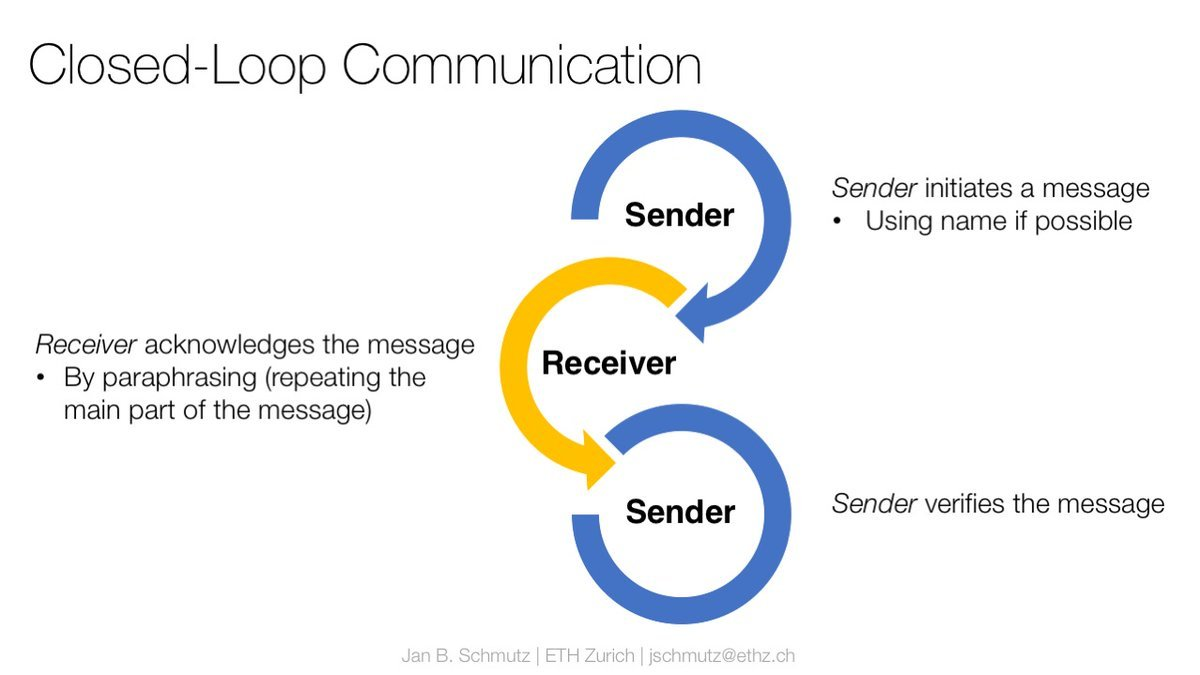
    7. Use closed loop communication: call out--> check back--> verification

    Dr. Bamidele also gave us specific advice about the role of the Family Liaison during a rapid response or a Code event. There is mixed data on the harm/benefit of a family's presence at the bedside during these acute events, and so it is generally recommended that staff give the family the option of being present or leaving (without judgement). If the family is present, a designated staff person (RN, junior resident, etc) should be designated as the Family Liaison. That person should introduce themself, explain what is going on, stay by the family member's side (regardless of whether they stay or go), and provide that person an opportunity to ask questions. 

    The aftermath
    Once the Rapid response is done, it is super important to debrief, says Dr. Bamidele-- for two main reasons: first, because a Rapid Response often occurs in intense situations that may have a lasting impact on the team and that may require emotional processing and reflection. Second, reflecting on the process will hopefully allow you to do a better job next time. 

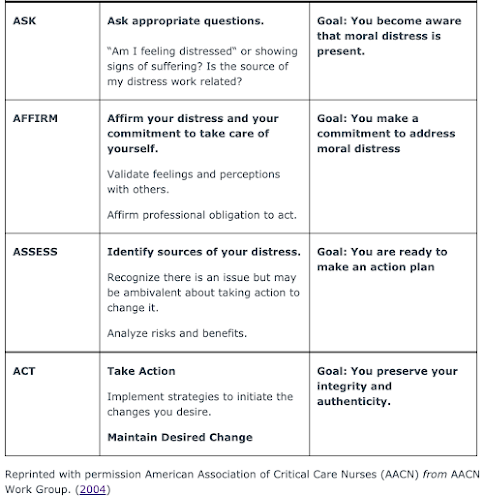
    To address possible moral distress occurring in this context, consider the model of the 4As from the American Association of Critical Care Nurses (in graphic below)

    Understanding Hospice Care (Saeed, 9/30/26)

    A recording of this presentation is available  HERE .