Ketamine Assisted Psychotherapy (Tamar-Mattis 5/29/2024)

 The link for the recording of this session is HERE.

***

Many thanks to Dr. Suegee Tamar-Mattis and Celeste Monette, LCSW for a really interesting Grand Rounds this week on the use of Ketamine Assisted Psychotherapy. Those of us in primary care know too well that our tools for managing mental illness -- treatment-resistant depression, suicidality, and PTSD, for example -- are terribly limited. Dr. Tamar-Mattis encouraged us to consider psychedelics as a powerful and increasingly evidence-based tool that may change patients' brains and lives. The use of psychedelics for mental health is not new, but it is quickly evolving.  It strikes me that was once considered "fringe" is now moving into the mainstream. 

As someone who has been practicing for over 15 years, one's willingness to take on something new is such an interesting concept in  medicine. Are you an early adopter? Or do you wait for the evidence to be convincing? Do you feel comfortable with experimentation? Or do you prefer engaging only in the "standard of care"? Why? Why not? 

My notes:

Dr. Tamar-Mattis opened their presentation with the new hope of psychedelic medicine -- this is not just prescribing medications, but the combination of psychedelics and therapy. That is, the use of ketamine to offer patients a novel window into their mental health that then allows them to engage in therapy in a productive way, thereby offering hope in an area that can otherwise feel hopeless.

The Best Desk Toy Is This Snow Globe 2017 | The Strategist

Psychedelics have been shown to have impact on both neurogenesis and neuroplasticity in the brain, and it is their effects on neurons that may be key to why they work. In essence, psychedelics allows patients with deep neural pathways to rewire them and/or alter them by acting directly on the neuronal networks. This concept is often referred to as "the snow globe effect" -- that is, for many people with severe mental health issues, the neuronal pathways are fixed and, therefore, deeply carved in the metaphysical snow; thus, it is virtually impossible for patients to forge a new path. BUT, with the use of psychedelics, the snow globe (neuronal networks) is virtually "shaken up" and the fixed pathway is then uncarved, opening the possibility for patients to create a new pathway, a healthier one. 

I love this concept for patients -- particularly for those who seem so stuck. And it is the very stuck patients that get most frustrated with us (providers and healthcare system) and are most frustrating to their clinicians.
***
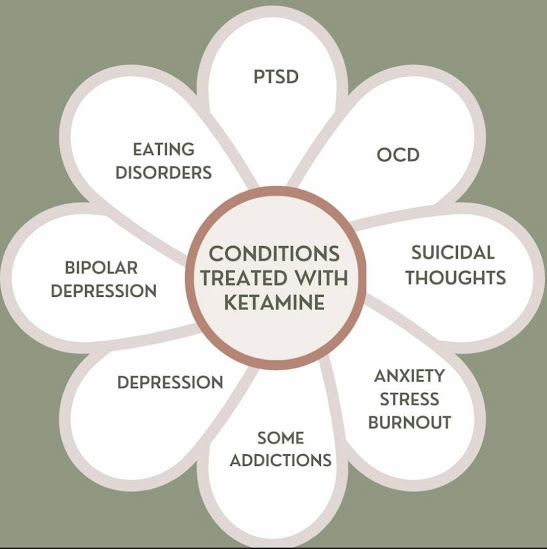
Ketamine is the only legal psychedelic at the federal level. There is evidence it works to improve mental health, even for patients who are already on SSRIs. It has a rapid anti-depressant effect and a rapid anti-suicidal effect. There is increasing evidence -- albeit small studies-- that it can positively impact PTSD, OCD, eating disorders, anxiety, some addiction, treatment-resistant depression and suicidality. In addition, there has been some use in developmental trauma and end of life issues. 

For specific studies and data on the use of ketamine for psychiatric disease, see the reference list below**, which was compiled by Dr. Tamar Mattis.

Psychiatric contraindications: active mania in Bipolar I disorder, psychotic disorders, some personality disorders (particularly if very rigid or very unorganized)

Medical contraindications: heart disease (particularly recent MI or new CAD), uncontrolled hypertension, liver disease (ketamine is metabolized in the liver), pregnancy, increased intra-cranial pressure, and oxygen dependence (due to risk of respiratory depression). 

Side effects: regularly elevates BP 10-20mm Hg, nausea and vomiting (can pre-treat with ondansetron), respiratory depression (rare at doses used for treatment).

***
Ketamine cannot be absorbed orally. But can be delivered via 

  • Lozenges/troches
  • Nasal spray
  • IV
  • Injection (subcutaneous)
The most controlled way to administer ketamine is via subcutaneous injections (starting doses in their clinic is 0.5-1.5 mg/kg (sometimes as high as 2.0 mg/kg), well below the anesthetic dosage ranges, which begin at 6mg/kg). Ketamine's acute effect lasts between 30-45 minutes. As used by Dr. Tamar-Mattis in the clinic, these visits are generally 2.5 hours long, allowing for time to recover from acute effects as well as concomitant psychotherapy. Patients wear masks, and music is played. A typical treatment time is 6 sessions (or 2 months total), again well-below standard years of psychotherapy for intractable mental illness.

It is believed that completing therapy in the altered state allows a shift from intellectual ideas (e.g. suicidality, severe depression) to a "felt-experience". Also, while ketamine is considered a dissociative anesthetic, this is not a dissociated psychological experience. It is more in the body. The work is labor intensive not because of the drug-administration but rather due to the psychotherapist constant presence during the entire session-- which is costly.

Group ketamine-assisted psychotherapy, which the clinic is currently experimenting with, offers the possibility of increased connection, community, and lower cost -- making it more affordable to the wider audience, particularly to vulnerable populations.

As Dr. Tamar-Mattis herself expressed, "We are living in the Wild West of Ketamine right now"-- patients can even order ketamine online to self-administer. She cautioned against the use of ketamine without the assistance of trained providers, mostly to help support patients through the important work of the therapy. Most of their patients have outside therapists, and they consider the work they do at the clinic an adjunct to the psychotherapy patients are already undergoing. Barriers to care include cost: there is not insurance coverage for this type of treatment, and a full course of treatment can cost between $6000-8000 out of pocket, as well as stigma. 

Dr. Tamar-Matti's clinic, Liminal Medicine, in Sebastopol is offering a one-time experiential class for healthcare providers (including physicians, mental health providers) on Saturday June 22, as well as a 5-week caregiver group, titled "Helping the Helpers". See below for details.

 **
References
Grunebaum MF, Galfalvy HC, Choo TH, Keilp JG, Moitra VK, Parris MS, Marver JE, Burke AK, Milak MS, Sublette ME, Oquendo MA, Mann JJ. Ketamine for Rapid Reduction of Suicidal Thoughts in Major Depression: A Midazolam-Controlled Randomized Clinical Trial. Am J Psychiatry. April 1, 2018 https://pubmed.ncbi.nlm.nih.gov/29202655/

Ballard ED, Yarrington JS, Farmer CA, Richards E, Machado-Vieira R, Kadriu B, Niciu MJ, Yuan P, Park L, Zarate CA Jr. Characterizing the course of suicidal ideation response to ketamine. J Affect Disord. December 1, 2018 https://pubmed.ncbi.nlm.nih.gov/30099268/

McInnes, L. A., Qian, J. J., Gargeya, R. S., DeBattista, C; Heifets, B. D. (2022, January 11). A retrospective analysis of ketamine intravenous therapy for depression in real-world care settings. Journal of Affective Disorders. Retrieved May 10, 2022, from https://www.sciencedirect.com/science/article/pii/S0165032721014142#sec0007

Witt K, Potts J, Hubers A, Grunebaum MF, Murrough JW, Loo C, Cipriani A, Hawton K. Ketamine for suicidal ideation in adults with psychiatric disorders: A systematic review and meta-analysis of treatment trials. Aust N Z J Psychiatry. May 14, 2020 https://pubmed.ncbi.nlm.nih.gov/31729893/

John G. Keilp, PhD; Sean P. Madden,; Julia E. Marver, PhD; Abigail Frawley, PhD; Ainsley K. Burke, PhD; Mohammad M. Herzallah, PhD Mark Gluck, PhD; J. John Mann, MD; and Michael F. Grunebaum: Effects of Ketamine Versus Midazolam on Neurocognition at 24 Hours in Depressed Patients With Suicidal Ideation. The Journal of Clinical Psychiatry. November 2, 2021.
https://www.psychiatrist.com/jcp/depression/ketamine-neurocognition-patients-with-suicidal-ideation/

The Effect of a Single Dose of Intravenous Ketamine on Suicidal Ideation: A Systematic Review and Individual Participant Data Meta-Analysis
Samuel T. Wilkinson, M.D., Elizabeth D. Ballard, Ph.D., Michael H. Bloch, M.D., M.S., Sanjay J. Mathew, M.D., James W. Murrough, M.D., Ph.D., Adriana Feder, M.D., Peter Sos, M.D., Ph.D., Gang Wang, M.D., Carlos A. Zarate Jr., M.D., Gerard Sanacora, M.D., Ph.D. Published Online:3 Oct 2017https://doi.org/10.1176/appi.ajp.2017.17040472

Jollant F, Colle R, Nguyen TML, et al. Ketamine and esketamine in suicidal thoughts and behaviors: a systematic review. Therapeutic Advances in Psychopharmacology. 2023;13. doi:10.1177/20451253231151327 https://journals.sagepub.com/doi/10.1177/0004867419883341

Anzolin AP, Goularte JF, Pinto JV, Belmonte-de-Abreu P, Cruz LN, Cordova VHS, Magalhaes LS, Rosa AR, Cereser KM, Kauer-Sant'Anna M. Ketamine study: Protocol for naturalistic prospective multicenter study on subcutaneous ketamine infusion in depressed patients with active suicidal ideation. Front Psychiatry. 2023 Mar 9;14:1147298. doi: 10.3389/fpsyt.2023.1147298. PMID: 36970275; PMCID: PMC10033666.

Ahmed GK, Elserogy YM, Elfadl GMA, Ghada Abdelsalam K, Ali MA. Antidepressant and anti-suicidal effects of ketamine in treatment-resistant depression associated with psychiatric and personality comorbidities: A double-blind randomized trial. J Affect Disord. 2023 Mar 15;325:127-134. doi: 10.1016/j.jad.2023.01.005. Epub 2023 Jan 7. PMID: 36623562.

Chen, C. C., Zhou, N., Hu, N., Feng, J. G., & Wang, X. B. (2023). Acute Effects of Intravenous Sub-Anesthetic Doses of Ketamine and Intranasal Inhaled Esketamine on Suicidal Ideation: A Systematic Review and Meta-Analysis. Neuropsychiatric Disease and Treatment, 19, 587–599. https://doi.org/10.2147/NDT.S401032

Gender Affirming Care (Beal, 5/15/2024)

Due to concerns about safety, there is not a public recording of this session. If you would like a private link to view the session, please email Veronica Jordan at jordanv@sutterhealth.org. The link will be good for about 6-8 weeks. 

***

My notes:

  • Flatten the power dynamic, flip the power
    • "You can call me Dr. Beal, Dr. Crystal, or Crystal. I use they/them pronouns. What would you like me to call you?"
  • Be person-centered, trauma informed and culturally humble
  • Ask patients what they want for their body
    • Gender identity should not be conflated with goals of care
    • Individualize gender affirming care based on what the patient wants/needs (see image of the table patients pre-fill out prior to visits).
Now, onto the nitty gritty:

1) If a patient wants limited physical changes and/or more of an emotional experience. . . consider simply low dose hormones (estradiol 0.5mg daily to start, very low dose for someone desiring more estrogen, testosterone 5-10mg IM weekly, also very low). If for some reason, low dose hormones are not desirable, you can also consider anti-androgens only or selective estrogen modifiers (SERMS) only. 

2) If a patient wants hair loss treatment, reduction or prevention. . .particularly in someone with a family history down the maternal line OR someone who has anxiety about potential hair loss with hormone treatment -- consider low-dose oral minoxidil (LDOM) 2.5-5mg/day. This is well tolerated, can cause more body hair in other places. Of note, topical minoxidil is toxic to pets. Finasteride has been associated with SI and can slow changes from testosterone so may be a less desirable. Estrogen protects head hair, so don't have to worry about this in patients on systemic estrogen. Other options include tattoos, make up. Of note, a lot of patients take biotin (a supplement which is thought to strengthen and increase hair growth); unfortunately, biotin can artificially elevate estrogen, so have patients stop 72 hours before having their labs drawn.

3) If a patient wants more/thicker facial hair. . .first, set reasonable expectations. It will take at least 6 months to notice change and maybe up to 10 years (!!!). Facial hair growth is a slow, gradual process. And depending on your family history, you may not be able to grow a ton. Topical minoxidil may speed the transition from peach fuzz to a full beard, but it's still low. Remember, it's toxic to pets. Also, it can be irritating to skin, so patients should try to apply daily but may need to space out depending on skin irritation side effect. Also consider micro-needling with ink and make up as alternate options.

4) If a patient wants bottom growth (i.e. clitoral enlargement). . .DHT (dihydrotestosterone) is not available in the US. Practitioners in the US tend to use 10% testosterone cream (compounded) daily at first, then weekly x 6 months. Dr. Beal notes that topical testosterone is always transdermal (i.e. some portion is absorbed).Alternatively, can use testosterone oil for injection>> it comes in 1ml supply, can apply 0.05 to 0.1ml topical to genitals. Of note, topical hormones can definitely transfer to partners and should be washed off prior to contact.  Androgel should not be used on the genitals because it contains alcohol and can significantly burn genitals. 

5) If a patient has a uterus and/or breasts and wants to prevent menses and/or slow/stop breast development. . .consider SERMS, specifically Raloxifene is the SERM of choice (tamoxifen is another option but has more side effects and probably less safe over time). Raloxifene rx is 60-120 mg/day. Can be taken indefinitely. Does also have bone marrow density protection. 

6) If a patient wants to optimize breast development. . .again, important to set realistic expectations. Most trans people will not achieve larger than an A cup. There is some evidence for transdermal progesterone cream compounded 25mg/ml 1/2 ml pump daily. Some patients love it and feel like it makes a big difference, others do not. Of note, when starting estrogen, lower and slower estrogen dosing tends to help boost breast development. Of second note, there is a theoretical increase in breast cancer risk with progesterone, no data to support or refute that at this time.

7) If a patient has persistent bleeding. . .consider depo provera injections.

8) If a patient has painful erections. . .If the goal is to have continued erections (but make them less painful), you can use tadalafil or TD testosterone. If goal is to prevent erections, use more aggressive testosterone dosing/supplementation. 

Common gender affirming procedures
  • filler injections
  • botox injections 
Both are temporary and can make changes to brow, jaw, cheeks, lips. Allow people to experiment with changes before opting for something more permanent (surgery). 
  • Hair removal
  • Liposuction/lipo-sculpting
  • Implants
In response to an audience question, Dr. Beal spoke a bit about the unique experience of each individual's response to medical interventions. It is very personal and unique. For many people, hormonal treatment have some emotional effects. These effects may or may not be desirable for each patients. With testosterone, people describe their emotional experience as "more simple", less crying, more irritability and impatience, less access to empathy. With estrogen, people tend to describe the opposite set of effects: a more complex emotional experience with increased lability, increased crying frequency and even increased access to empathy.

In summary, Dr. Beal recommends whenever you are initiating treatment, starting low and going slow. Allow the patient to guide you in their experience of the intervention and have some power over next steps. 

There are tons of resources on Dr. Beal's clinic website: https://www.queercme.com/blog
Specifically a blog post on testosterone and singing: https://www.queercme.com/blog/testosterone-and-singing

Medical ethics of AI (Feldman 5/8/2024)

 You tube link HERE.

A summary of this presentation is forthcoming. Please check back. 

To understand and to be understood: language interpretation in medicine (Slater, 5/1/2034)

Many thanks to Dr. Allison Slater, our final resident from the class of 2024 to give her senior Grand Rounds presentation this week. She gave a really important and thought-provoking presentation on language and language interpretation in medicine. It was titled "To Understand and be Understood", a title she borrowed from a March 2017 AMA Journal of Ethics that focused on language, literacy and hierarchy in medicine.  

A recording of her presentation can be found HERE.

My notes:

Dr. Slater began with a review of words:

  • interpretation: spoken language being repeated in an alternate language
  • translation: written language being repeated in an alternate language
The distinction between the two is important because trained interpreters have special training and skill in being able to perform live and capture the meaning of the discussion, whereas written translators have the tincture of time and the ability to be more precise. In the healthcare setting, we are generally using live interpretation with patients during patient encounters, though document translation is also important issue, particularly with regards to clinic after visit summaries and hospital discharge summaries.
  • limited English proficiency (LEP): US Census distinction based on an individual's response to the question: "How well do you speak/read/write English".  LEP is considered anyone who responds anything other than "very well"
  • Non-English language preference: upon closer examination, the term LEP is a "deficit-oriented" distinction and in no way recognizes a person's proficiency in languages other than English. Thus, this may be the preferred term. 
Professional interpretation in the healthcare setting is the law. 
This legal protection comes through various acts and executive orders, but which has not always been accepted:
  • 1964: Civil Rights Act codifies "national" origin as a protected class for all programs or activities receiving federal funds
  • 2000: President Bill Clinton signs an executive order designed to improve access to services for patients with limited English proficiency (LEP) from all federally-funded agencies
  • 2003: AMA president makes public statement that he sees "no need for professional interpreters"
  • 2010: The Affordable Care Act (aka ACA/Obamacare) added protections for patients, including regulation around signage in 15 top languages for each state
  • 2019: Trump rolls back and narrows protection
  • April 26, 2024 (last week!): a federal appeals court reinstates the 2010 ACA protections that had been repealed in 2019
Despite the regulation requiring healthcare institutions to provide no-cost language interpretation for patients with non-English preference (and the real risk of malpractice vulnerability) we are al aware that what happens in real life is not always what should happen. Many healthcare providers "get by" with inadequate language skills, physicians in particular are well-documented to overestimate their language skills, and patients with LEP are known to have more adverse outcomes, longer hospital length of stay, have more tests, higher rates of readmission, and feel discriminated against in the places they are receiving health care.

Unfortunately, ad hoc or informal interpretation is often used -- including patient family members and/or non-trained staff. Ad-hoc interpreters -- i.e. anyone who isn't trained and certified-- introduce a range of possible challenges: the potential for role confusion, may not have adequate language abilities for the content, insufficient attention and recall, not following standard interpretation protocols, subjectivity and biased interpretation, breach of confidentiality, missed conversations, and the possibility of limited scope of inquiry (e.g. intimate sexual issues). In fact, one study found that 1/4 to 1/2 of questions asked by a clinician were misinterpreted or omitted by ad hoc interpreters

While "routine conversation" between LEP patients and clinicians who self-identify as being language proficient may be acceptable, clinicians should really be subject to a proficiency certification to ensure that vital medical conversations (e.g. diagnosis, surgery plans, medical treatment plans, procedural consents, and discharge plans) are correctly communicated. Medical communication requires precision -- and this is even more important with sensitive topics, e.g. mental health, options counseling, substance abuse, trauma, and sexual assault. 

In addition, official interpreter roles can include exploration and explanation of culturally relevant features of a conversation. 

Okay, deep breath. As I myself said at the end of her presentation, there are many ways in which much of what Dr. Slater shared has me feeling bad about myself. Even as someone who considers herself a champion for the best care for our patients with LEP, I often find myself acting badly: acting as an interpreter (myself without formal training), using family members for interpretation (twice in the last 2 weeks, interpreters in patient's preferred language were not readily available), failing to give an interpreter context, not ensuring that every person in the room has access to the same information.

Let's do better!
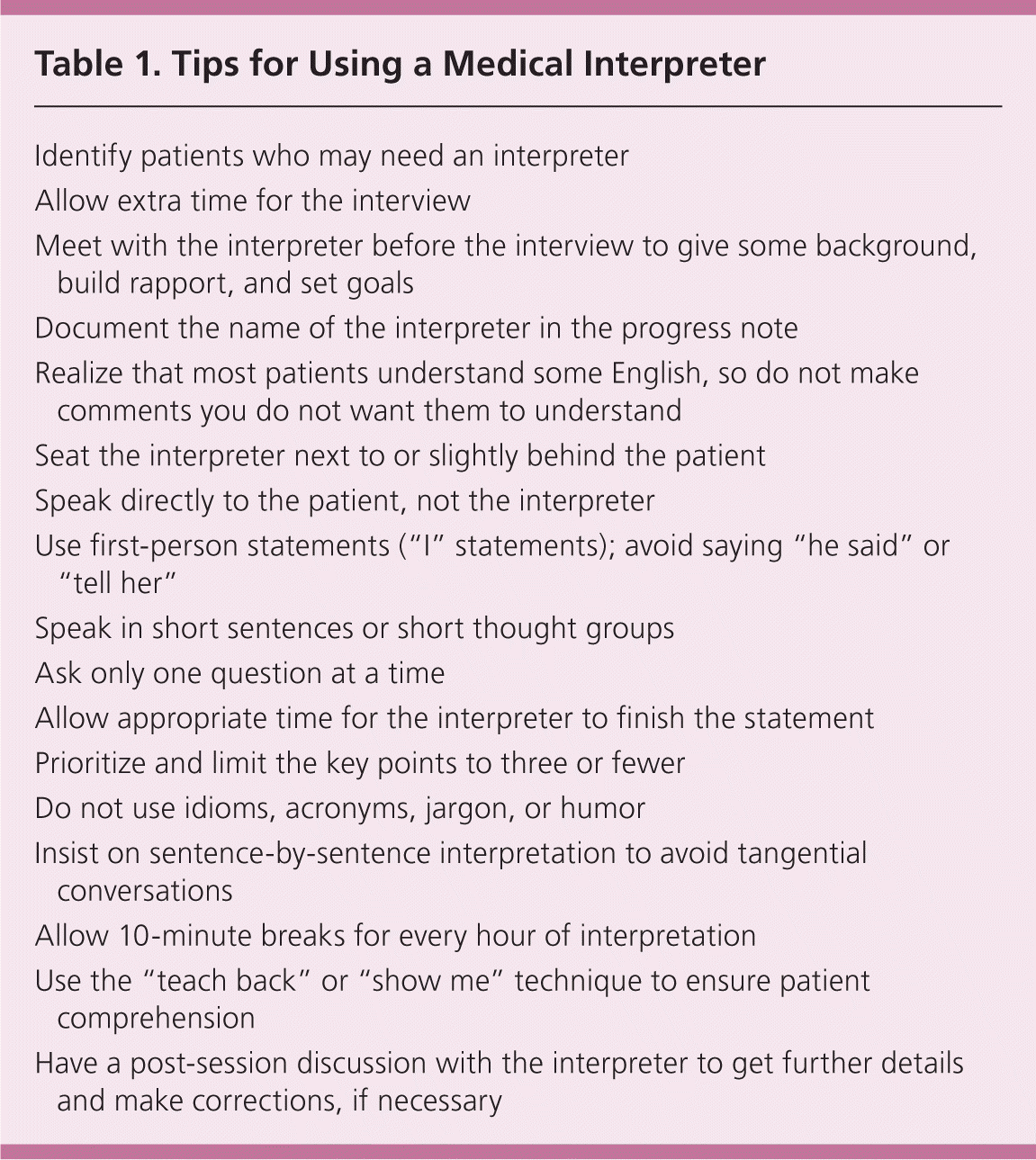
Best practices, my favorites: 1) Make sure you allow extra time 2) Always write down the ID# of the interpreter you are using 3) huddle with the interpreter before the conversation whenever possible 4) look for red flags (e.g. confusing answers, confusing questions, long statements that are not being appropriately interpreted) and 5) if you don't use an interpreter, document why. For more, see the Table below from the 2014 AAFP article, Appropriate Use of Medical Interpreters

Climate Change in Medicine (Murphy, 4/24/2024)

Thanks so much for a wonderful Grand Rounds this week -- a somber and thought provoking and hopeful presentation-- from SRFMR Alumnus Dr. Sarah Murphy on Climate Change in Medicine. A recording of the presentation can be found HERE

My notes:

Dr. Murphy began her presentation with the concept of Planetary Health and the question What if the planet were our patient? As family doctors, we can definitely all understand this question because anyone, really anyone, can be our patient, and the interconnectedness of the health of families and communities and our world are central to the work we do every day. 

Consider these thought-provoking statements about the relationship between human health, our planet's health, and health professionals' role:

  • “Human health and the health of our planet are inextricably linked, and our civilization depends on human health, flourishing natural systems, and the wise stewardship of natural resources.” (2015 Rockefeller Foundation-Lancet Commission on Planetary Health)
  • “Health professionals have an essential role in the achievement of planetary health: working across sectors to integrate policies that advance health and environmental sustainability, tackling health inequities, reducing the environmental impacts of health systems, and increasing the resilience of health systems and populations to environmental change.”
Climate change in 10 words, From Yale Program on Climate Change

Scientists agree.
It's real.
It's us.
It's bad.
. . . There's hope.

Climate change has a direct impact on human health across many different domains. Here are just a few concrete examples:
  1. Extreme heat>>dehydration, heat stress (particularly children, elders), MI/CVA, altered mental status, food insecurity, higher food costs, etc.
  2. Outdoor air quality>>smoke, high pollen counts, short and long-term health effects (including small and large particles that can cause acute disease, but also smaller particles that cross alveoli and can lead to long-term impacts on IQ, heart disease, obesity, etc. And then there's indoor air quality. . .
  3. Flooding>>rising sea levels, more intense precipitation, hurricanes, leading to displacement, water-borne diseases, drowning, etc.
  4. Vector born infection>>rising temperatures change the range of vectors, increasing Lyme disease distribution, mosquito-born illness (e.g. dengue) and increasing risk particularly for children, who are outside playing close to the earth often at dawn and dusk
  5. Food born infection>> toxic algae blooms, increase rates of campylobacter, cholera crypto. Increased diarrheal disease
  6. Mental health. Dr. Murphy introduced the idea of "eco-anxiety" or "eco-grief" that has three components: 1) acute or past physical ecological loss, 2) the loss of environmental knowledge and 3) anticipated future loss.
Ecological grief and anxiety
What kind of ecological grief do you see around you? What kind of climate change (aka eco-anxiety) do you personally experience or see in your clinical practice? How do we support patients in dealing with this kind of grief?

Participants at Grand Rounds shared their own grief and anxiety after the 2017 Tubb's wildfire, concerns about family lands destroyed by flooding in India, loss of salmon runs in Alaska. And more. We all have stories.

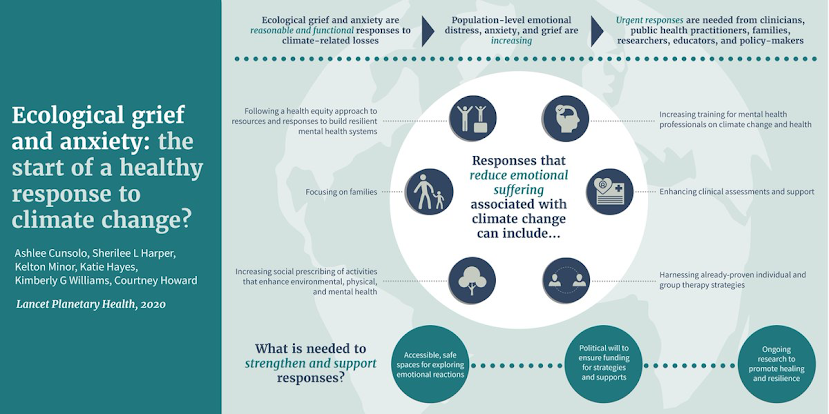
Graphic with text saying ecological grief and anxiety are reasonable and functional responses to climate-related losses, and that population level distress, anxiety and grief are increasing, thus urged responses are needed from clinicians, public health practitioners, families, researches, educators, and policy-makers. Responses that reduce emtotional suffering could include: 
Focus on Families
Increase social prescribing of activities that enhance physical, environmental and mental health
Use individual and group therapy strategies
Enhance clinical assessments/support
Increase training for mental health professionals on climate change and health
Follow a health equity approach to resources and responses.
Graphic from paper: Ecological grief and anxiety: the start of a healthy response to climate change?

Dr. Murphy urged us rather than think about these responses as pathological, perhaps we reframe them as reasonable and functional responses. The key is what do we do with these feelings? Do we acknowledge them in ourselves? Do we ask patients about them? Do we have outlets to build community and affect change driving by the need to respond to these emotions? 

Climate change, health disparities and inequities
Unsurprising to those of us who practice in the safety net, there is intersection between social determinants of health and social vulnerability. Our most vulnerable populations suffer the greatest health impacts of climate change. 


For more information, check out the CDC+UCSF Pediatric Environmental Toolkit available at:  https://www.atsdr.cdc.gov/emes/health_professionals/pediatrics.html

https://peht.ucsf.edu/index.php


There is a subset of the toolkit that focuses on environmental exposures linked to climate change and gives providers key information and good tips on anticipatory guidance in well-child checks

The healthcare system's direct impact on Planetary Health Don't forget that the healthcare industry, in general, and hospitals, specifically, contribute a tremendous amount of waste and greenhouse gases that only compound climate change. 8.5% of US total waste is healthcare sector waste. If healthcare were our own nation, we would rank 13th in greenhouse gas emissions. This also doesn't take into account supply chain waste, single use waste, water and sanitation issues.

And yet, even still there is hope.
Hope you say?
Yes.

Yet among this crisis we have an opportunity: Our best science tells us that the The severity of climate-related health risks is highly dependent on how well health systems can protect people.

With timely, proactive and effective adaptation many risks for human health and wellbeing can be reduced and some potentially avoided (very high confidence) 


Read this article from UW: Hope Health and the Climate Crisis (Frumkin, 2022). Frumkin tells s that hopeful people feel better, hope leads to action, and hope is empirically justified.
What can healthcare providers do?
  • We can vote with our wallet (spend money where it matters and buy things that are good for the planet)
  • OR Buy LESS (se second hand, repurporse)
  • Talk with patients about the health impact, their actions, and their eco-grief
  • Enjoy the outdoors -- having a relationship with our planet will help us protect our planet
  • Join a group that is doing advocacy

Take the examples of Dr. Plastic Picker (a Kaiser pediatrician in southern CA who is modeling beach cleanup and climate change action), Climate Health Now (Drs. McLure and Millstein, CA advocacy group) or anesthesiologists who are advocating to decresae their use of gases.

Looking for more resources. Here are a TON!!

Global Consortium on Climate and Health Education:
https://www.publichealth.columbia.edu/research/global-consortium-climate-and-health-education

Medical Society Consortium on Climate and Health
https://medsocietiesforclimatehealth.org/

Healthcare Without Harm Physician & Nurse Network
https://noharm-uscanada.org/HealthyClimate

Practice Greenhealth
https://practicegreenhealth.org/topics/climate-and-health/climate-and-health

Health Care Climate Challenge – for hospitals & health systems

Climate Resources for Health Educ - https://climatehealthed.org/

U of CO Climate & Health Program – diplomat/fellowship
https://medschool.cuanschutz.edu/climateandhealth

Citizens’ Climate Lobby
Project Drawdown: The World’s Leading Resource for Climate Solutions

Films/videos/books
Solving for Zero
Braiding Sweetgrass – Robin Wall Kimmerer
This Changes Everything - Documentary
Talking about Climate Change: https://ourclimateourfuture.org/video/secret-talking-climate-change/
Katharine Hayhoe TED Talk: The Most Important thing you can do about Climate Change? Talk about it!

Thyroid Hormonal Disease (Magnotti, 4/17/2024)

 A recording of this presentation is available HERE.

***

Thanks to Dr. Mike Magnotti, SMGR Endocrinologist, for an excellent presentation on Hypo and Hyperthyroid. This was a jam-packed presentation. Check out the link above or my notes below.

Hypothyroidism

Hypothyroidism is characterized by non-specific and relatively common constellation of symptoms, including fatigue, weight gain, mental cloudiness, cold intolerance, etc. Plenty of people with these symptoms believe they have thyroid disease (and will even feel better on thyroid replacement), but this doesn't mean they actually have thyroid disease. 

Of note, weight gain is a known symptom of hypothyroidism, but obesity is not generally caused by hypothyroidism. Treating a patient's hypothyroidism can help mood, mental acuity, and focus but likely little (if any) weight loss.

Also of note, alopecia 2/2 hypothyroid takes a very LONG time to get better -- 6 months to 1 year, even with normalization thyroid hormone. Patients need to either be patient or use another med (e.g. Rogaine) in the meantime.

The only test you need to diagnose hypothyroidism is TSH. A normal TSH range is 0.5 to about 5 and excludes thyroid disease (except in very rare cases). Always want to check twice (there are lots of transient highs that can self-resolve), on repeat TSH, also check FT4, consider thyroid antibodies (not recommended in guidelines). Ft4 distinguishes between subclinical and clinical hypothyroidism. Antibody results do NOT change treatment, but can be helpful to patients to know WHY they have hypothyroid. No need to monitor antibodies -- levels change due to immune system activity and do not indicate illness state. 

High TSH, low FT4--> overt hypothyroidism, treat with levothyroxine

High TSH, normal FT4--> subclinical hypothyroidism, consider treatment**

If thyroid antibodies are elevated, dx is most likely Hashimoto's thyroiditis

TSH increases with age. A TSH of 6-8 may be normal in patients >70 years old; TSH can also be low in younger people (0.3-0.5 can be normal in young).

**Treat patients with subclinical hypothyroidism if they have symptoms, if TSH>10 (even no symptoms because of reduced risk CAD), TSH 7-10 if under 65. Only treat elderly patient <7 if you really believe they are symptomatic. 

Note: Biotin supplements alter the ability of the assay to detect thyroid hormones (it doesn't change actual thyroid hormone). Must be high dose biotin-- e.g. those in hair and nail formulations. Should avoid products with biotin 3 days before the assay. Biotin generally makes people look hyperthyroid (Low TSH, high FT4)

Treatment of hypothyroidism

Treatment of hypothyroidism is Levothyroxine (T4)

1.6 mcg/kg/day is the FULL replacement dose of thyroid hormone (patients with NO thyroid will need this full dose)

    • If older patient, start slow to avoid cardiac issues, arrhythmia
    • Younger person with a very HIGH TSH probably needs most of the high replacement dose right up front. If they have a lower TSH, can start with 1/2 the dose
  • take 30 minutes before food, 4 hours before calcium/iron/vitamin (absorption). 
  • brand does NOT matter unless someone has intolerance to fillers/dyes in a certain brand
    • Tirosint brand is a gel cap formulation with no filler, also liquid version, theoretically has least likelihood of having adverse reaction, but very expensive
    • For rare patients who are super sensitive to batch variations, use the same brand to maintain consistent
  • Only use TSH to monitor (goal is anywhere in the normal range), titrate to patient's feeling about how they feel
    • no need to monitor T3 levels, which vary more with stress and illness (helpful in hyperthyroidism)
  • Never use T3 alone! Our system has no way to regulate T3 levels in our body. T3 is the more active form. There is internal regulation of conversion T4>T3 (e.g. hospitalized patients have inhibition of conversion, normal stress response), but T3 is unregulated.
T3/T4 combination not generally recommended as first line treatment because most people feel fine on T4 alone. T3 is converted to T4 via deiiodinase. There are some (rare) patients with reduced ability to convert T4 to T3 (no ability is not compatible with life). Most people feel better on T3 because it gives them more energy. T3 makes people feel better like caffeine makes people feel better. 
  • Most trials adding T3 to T4 show no benefit, though a few studies show some benefit. Hard to quantify symptoms energy, focus, sleep. Some people feel a rush when they take T3. 
  • Consider adding T3 if patients are not better on T4 (but not an excessive amount)
  • T3 has a very short half-life (needs to be taken am/pm, e.g. 7am, 3pm)
  • Armour thyroid formulation (pig and cow thyroid) contains more T3 than normal human (4:1 ratio T4:T3 in Armour, humans generally have T4: T3, 13-16:1)
    • if you check T3 levels, you will see relatively high T3, low T4 and normal TSH
    • more variability from batch to batch (higher risk over-replacement)
    • Dr. Magnotti generally does not recommend Armour, unless a patient is stable on it and you are just continuing it
  • If you want to give T3, should dose separately
    • T4 is 4x potent as T3
    • Goal is maintain ratio T4/T3 13-16:1, e.g. 5mcg T3, 75mcg T4
    • T3 only comes as 5mcg and 25 mcg. Generally don't use 25mcg pills
  • Do NOT use T3 in pregnancy (doesn't cross placenta, so mom can be euthyroid and baby can be hypothyroid)
  • Only monitor via TSH, symptoms
Secondary hypothyroidism is VERY rare. Unlikely to be de novo or surprising diagnosis. Patients with known pituitary tumor, history of pituitary or sella radiation, other pituitary hormone deficits (prolactin, LH, FSH). In these rare patients, TSH is useless. You treat using FT4 to monitor, goal mid normal.

Hypothyroid in pregnancy
  • As soon as woman is pregnant, increase the dose up front 20-30% (right away) because risk of hypothyroidism on the fetus is WAY higher than hyperthyroidism 
  • Check TSH q4 weeks (up through the second trimester)
  • No T3 alone in pregnancy 
  • Current goal in pregnancy is TSH<2.5
  • Immediately after delivery, back to usual delivery
  • Recheck TSH 8-12 weeks post partum (not too soon) because lots of women have post partum thyroiditis, which can confuse things and make you worried they have levothyroxine too high
  • Let patient symptom guide 
If patient diagnosed with hypothyroidism during pregnancy. Guidelines vary about screening. 
BUT . . .
If TSH>4, treat
If TSH <2.5, no treatment
If between 2.5-4, check TPO, especially if recurrent miscarriage.
Starting dose based on level of TSH. If above 15-20, be more aggressive
Recheck 4 weeks even though not fully equilibrated.

***
Hyperthyroidism can definitely be more complex than hypothyroidism; there are more causes to consider, and the treatment is more nuanced.

Best first test for hyperthyroidism is TSH.
  • If TSH is LOW, check BOTH FT4 and FT3 (elevations in either can cause overt disease),
    • Also check TSI and/or TRAB (same test, different assay). 
    • If Ab positive, your patient almost certainly has Grave's disease.
  • If TSH is LOW, but BOTH FT4 and FT3 are normal>> this is by definition, subclinical hyperthyroid. 
    • Treat subclinical hyperthyroidism if TSH<0.1 (or <0.3 if older, atrial fibrillation).
    • CV risks of hyperthyroidism are definitely increased when TSH<0.1.
  • If TSH is NORMAL with elevations in FT4 or FT3, this either secondary hyperthyroidism (VERY very very rare) OR T4 resistance (genetic)
    • Refer to endocrine.
Additional lab findings: isolated elevation in alk phos is common with significant hyperthyroidism, will go down when treated. Transaminitis can be caused by methimazole but sometimes is also seen in hyperthyroidism.

Causes of hyperthyroidism
Grave's disease is by far the main cause of hyperthyroidism (75-80%, especially in younger patients), toxic multinodular goiter relatively more common in older population, also single functional nodule. Knowing the cause of hyperthyroidism doesn't impact who needs to be treated but can influence treatment decisions. 
  • +TSI and no palpable nodules on exam (usually sizeable on exam, 2-4 cm) >> patient almost certainly has Grave's disease (no scan needed)
  • -TSI and/or no nodules on exam >> need uptake scan (to r/o functional nodule)
  • If palpable nodule>> need both ultrasound and uptake scan
    • Toxic multinodular goiter usually is HUGE, nodular on exam

NOTE: If TSH is NOT close zero, the radioactive uptake scan is not reliable (even at 0.2 or 0.3, scan will generally be normal). If you cannot get uptake scan, ultrasound can be helpful (even without nodules). they evaluate blood flow. If blood flow is low, likely thyroiditis. High blood flow, likely Grave's. 

If no uptake>> likely dx thyroiditis (unless people taking iodine supplements, kelp, seaweed, or recent contrast in last 3 months. Amiodarone can also cause no uptake, even 3 months after taking it.
If normal or increased uptake>> dx Grave's
If uptake in single nodule>> dx toxic solitary nodule
Patchy uptake all around >> toxic multinodular goiter

Treatment of hyperthyroidism
3 options: methimazole, iodine (I-131), thyroidectomy. Beta blocker for symptom management

Methimazole is first line for most causes. 

Methimazole 10 mg/day, 20 mg/day, 40 mg/day for mild (<2x ULN), mod (2x ULN), severe (>2x ULN) disease, respectively. Taper down to 5-15mg (usual maintenance dose). Leave people on methimazole for 1-2 years before stopping. Want to be sure to have negative TSI (antibody) if they have positive to begin with. Don't stop methimazole in anyone who still has antibody at the receptor (+TSI is causing the hyperthyroidism).

There are some exceptions.
  • Iodine should be considered for young women who desire pregnancy and people without eye disease
    • Younger women who desire pregnancy may benefit from treatment with iodine treatment because methimazole can take years to get into remission. 
    • Can get pregnant 6-9 months, need normal TSH (with levothyroxine). 
    • Even after 3-4 years, with methimazole may not be in remission. Delays childbearing.
  • Iodine is also great for single toxic nodule because people will come out euthyroid. Likely curative. Normal gland not affected. 
  • Very severe hyperthyroidism in a younger person, especially with a large gland, they are very unlikely to have long-term remission at all with methimazole. Consider iodine vs. surgery.
  • Surgery may be best option if need to get thyroid hormone levels down quickly. It will still take weeks (body has to metabolize FT4 already floating around)
    • Consider surgery in case of: 1) very large goiter,  2) need for rapid correction, 3) concern for malignancy, 4) combo hyperthyroid+ hyperparathyroidism
Hyperthyroid eye disease: Send to neuro-ophtho if thyroid eye disease. Iodine can worsen thyroid eye disease. (if mild, can do Iodine with 3-4 months of prednisone to protect against progression). 

Hyperthyroid in pregnancy
Do NOT treat subclinical disease. 
Use PTU in first trimester, change to methimazole in 2nd and 3rd trimesters.
Target Total T4 and Total T3 in the high normal range, which is 1.5x ULN for pregnancy range due to higher estrogen, binding globulin. 

Prenatal Genetic Screening (Mullin, 4/10/2024)

 A recording of this presentation is available HERE

***

Many thanks to Dr. Briga Mullin for an excellent presentation this week on Prenatal Genetic Testing. Dr. Mullin reminded us from the get go -- that all patients have the right to accept or decline testing after counseling. Then she proceeded to update us on current prenatal genetic screening recommendations available to prenatal care providers and to pregnant patients. 

This topic is ever-changing, as genetic screening tools become increasingly sophisticated. If you want to watch the entire presentation, please see the link above. Here are my notes.

It is important to make the distinction for patients and ourselves between SCREENING and DIAGNOSTIC tests. As we know, screening tests are those designed to "pick up" disease in patients who are otherwise well-appearing; in the case of prenatal genetic screening, they are designed to assess a pregnancy for the risk of certain congenital conditions. Diagnostic tests are designed to confirm a specific diagnosis. 

In the world of prenatal genetic testing, current screening tests available to pregnant patients include: carriers testing, cell free DNA (cfDNA), AFP, early 1st tri and 2nd trimester ultrasound. The two currently available prenatal diagnostic tests are chorionic villous sampling -- CVS-- (10-13 weeks) and amniocentesis (>15 weeks).

Carrier Screening

Carrier screening looks for autosomal recessive and x-linked conditions in maternal DNA.  There is a huge range of options for carrier testing -- patients can be tested for up to 400 conditions, depending on the assay. ACOG currently recommends universal carrier screening for three conditions: 1) spinal muscular atrophy (SMA), 2) cystic fibrosis (CF), and 3) hemoglobinopathies. ACOG additionally recommends carrier screening for specific populations: Fragile X if a family history of intellectual disabilities and Tay Sachs disease for people who identify as Ashkenazi Jews, French Canadians and people of Cajun descent.

Sutter/CPMC currently offers a 112 gene expanded carrier screening panel (called "Horizon" by Natera). In contrast, SRCH -- via Quest labs -- offers a 3-condition carrier panel, which includes CF, Fragile X and SMA. 

Of note, it is only necessary to screen maternal serum once in a lifetime, ideally before pregnancy. If a patient screens positive for any of these conditions, the partner should be offered carrier testing as a follow-up. If BOTH parents screen positive, diagnostic testing via CVS, amniocentesis or even IVF with embryo testing are options.

Cell Free DNA (cfDNA)

cfDNA tests look for placental DNA in maternal serum. Typically, cfDNA screens for three trisomies - Trisomy 18 (Edwards Syndrome), 21 (Down Syndrome) and 13 (Patau Syndrome).  cfDNA is 98% sensitive in detecting these three trisomies. The gender of the fetus can also be identified with cfDNA. Testing is ideally done after 9-10 weeks gestational age because enough placental DNA is present at this time in the maternal serum to reliably detect and test. Of note, placental mosaicism does exist and can lead to a false positive screening test with cfDNA.

The California Genetic Disease Screening Program (GDSP) currently offers statewide cfDNA through their prenatal screen program to all patients with Medi-Cal. Their test detects Trisomy 18, 21, and 13 and gives gender  as well. As of 4/1/2024, the GDSP program will also test for chromosomal aneuploidies.   

Natera's Panorama screen, available to some privately insured patients, screens for for additional conditions. These tests cost between $170 and $300 out of pocket if not covered by insurance.

Early Anatomy Ultrasound (previously called nuchal translucency or NT ultrasound)

This ultrasound is generally performed at 10-13 weeks and is offered to detect severe structural anomalies (e.g. anencephaly). Given that it is only 70% sensitive for Down Syndrome, NT should no longer be used for screening over cfDNA. Arguments for doing an early anatomy ultrasound is to allow women to be able to terminate a pregnancy with severe structural anomalies as early as possible. 

Maternal Serum Alpha Feto Protein (MSAFP)

For many of us in practice, this OG of prenatal genetic screening tests. It is a maternal serum test done between 15-20 weeks EGA and still has utility in the detection of neural tube defects (e.g. spina bifida) and abdominal wall defects (e.g. omphalocele and gastroschisis). Recommendations are evolving but it does screen for defects that are not otherwise picked up on cfDNA and can be done prior to a second trimester ultrasound, and so some guidelines encourage using it in addition to cfDNA for this reason, particularly for higher risk patients (e.g. family history, maternal age, etc).

Second Trimester Ultrasound (Anatomy survey)

This is another screening tool that has a decently long history -- usually an ultrasound performed between 17-21 weeks EGA to look at the fetal anatomy. In actuality, there are two versions of this ultrasound: the original Level 1 ultrasound, performed by a radiology tech with static images interpreted by a radiologist and Level 2 ultrasound, performed by a maternal-fetal-medicine (MFM) physician. Level 1 ultrasounds have historically been considered adequate for "low risk" pregnancies, but local practice has evolved such that most pregnant women in Santa Rosa are offered a Level 2 ultrasound as the screening test of choice. This is, of note, not a current ACOG recommendation. Some argue that Level 2 ultrasounds have less false positive findings because of the skill of the technician performing the study. 

***

Regardless of which modality of prenatal genetic screening you are discussing with patients, the concept of shared decision-making is absolutely central to the practice of prenatal care. Shared decision making with pregnant patients should be 1) clear 2) objective and 3) non-directive. This can be challenging at times and take time to elicit a patient's values and goals as part of this discussion. 

There are patients for whom knowledge will absolutely change the way they experience their pregnancy. Some who might terminate or choose to deliver in a different setting based on the findings. There are others for whom the anxiety of choosing a screening modality that could return a false positive result is not worth it. See the slide image below to consider ways in which shared decision making can be considered for different types of patients. 


Remember that a positive screening test is not the same as a positive diagnostic test. The follow-up for most positive prenatal screens is either a CVS or amniocentesis. 

Positive Predictive Value

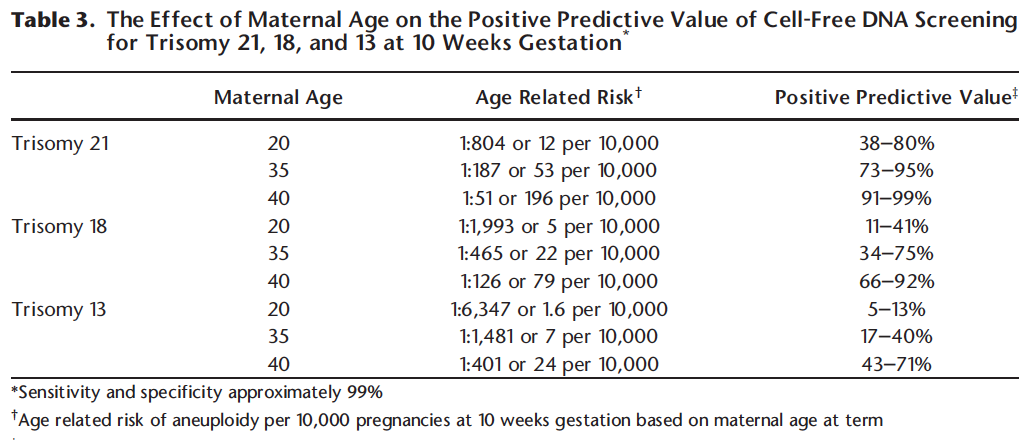
Also remember that positive predictive value of any test depends on the prevalence of that disease in the population, and in pregnancy, this is extremely dependent on maternal age. So, a positive cfDNA in a 40 year pregnant patient has very different implications than a positive cfDNA in a 20 year old patient. Dr. Mullin recommends the use of the prenatal screen calculator to help you help your patients understand their positive screening test.


That calculator is available here: NIPT Predictive Value Calculator      (https://ppv.geneticsupportfoundation.org/). See the images below to understand how a very highly sensitive screening test still gives very different PPV based on baseline risk. For example, note that a positive screen for Trisomy 21 in a 20 year old woman is still only going to turn out to be a true Trisomy 21 50% of the time. In contrast, a positive screen in a 39 year old woman will be true 91% of the time.
There is local help!
If you have a patient with a positive prenatal genetic screening test, our local MFM consultants are available to help you. Here's how to contact them: CPMC Sonoma Ave number: 707-569-7366 to reach on call Genetic Counselor and or MFM 

Phenobarbital for inpatient alcohol withdrawal (Bowen, 4/3/2024)

 A recording of this presentation can be found HERE.

***

Thanks to Dr. Anna Bowen, our future addiction medicine fellow (2024-2025), who gave an excellent talk this week on the use of Phenobarbital for Inpatient Alcohol Withdrawal. Dr. Bowen compiled the evidence for phenobarbital as well as a variety of phenobarbital protocols from different health systems. She urged us to create/modify one of our own at SSRRH, which seems like an excellent idea. 

My notes on her presentation:

  • Alcohol use disorder is very common in the US! 10.5% of the US population (+29 million people) over age 12 quality has having an AUD
  • In 2021, there were an estimated 178K deaths related to excessive alcohol use in the US. Alcohol is one of the leading causes of preventable deaths in our country
  • Complicated alcohol withdrawal syndrome (AWS) occurs in 5-20% of hospitalized patients
  • Alcohol use is responsible for nearly double the number of deaths per year as opiates
Most of us are well aware of the time course for AWS. See image below for a reminder. Remember that alcoholic hallucinosis, which often occurs early in the course, is a distinct entity from the more life-threatening delirium tremens (DTs). 

Our standard treatments for AWS include: 1) Benzodiazepines (the historic gold standard), 2) anti-epileptic drugs (including valproic acid, gabapentin, carbamazepine), and 3)Alpha-adrenergic blockers (clonidine, precedex and guanfacine).

Phenobarbital is a new old drug! It has recent (and growing) evidence for non-inferiority to the historic goal standards -- benzodiazepines-- as treatment for AWS. And in several studies, it is superior. It acts at both the GABA and NMDS receptors.

Studies of phenobarbital in AWS demonstrate:
  • shorter ICU stays, decreased ICU admissions
  • shorter hospital length of stay (LOS)
  • lower rates of mechanical ventilation
  • lower rates of adjuncts (including precedex, benzos)
Granted these studies, most recent -- between 2017 and 2023-- are all small (~100 patients each) and there are variable comparisons between different protocols, BUT in taken in totality, phenobarbital seems to have similar and/or better evidence for treatment of AWS compared to traditional treatment. If the goal is to decrease ICU admits and/or use of benzodiazepines in at-risk populations, phenobarbital is probably the tool of choice. 

So, how should it be used?

Dr. Bowen showed us 5 protocols from 5 different healthcare systems: Swedish (WA), BMC (MA), Yale (Connecticut), Contra Costa (CA) and ZSFGH (CA). While they have their own unique differences, there are three main steps to using phenobarbital in AWS:

1) Assessing risk for AWS (i.e. risk stratifying patients who screen positive for AUD for high risk AWS)
2) Understanding the risks/benefits of phenobarbital in different populations
3) Dosing protocols

Assessing for risk of Severe AWS
The benzo-sparing protocol that we currently use in the hospital -- often referred to as the Stanford Protocol --  uses the PAWSS score to risk-stratify for high risk AWS. Alternate protocols use other criteria to designate patients as high risk. These high risk characteristics include 1) a history of intubation or prior ICU stay for AWS 2) BAL>200 with signs of withdrawal despite high BAL, and/or 3) a personal history of seizures or DTs.

Whatever the methodology, the first step in treating AWS is the determination of this risk stratification. This will lead you to either treat or not treat prophylactically for AWS.

Understanding Risks/Benefits and Contraindications of Phenobarbital
Those of us who didn't "grow up" using phenobarbital may be less familiar with the pharmacology and/or risks and contraindications for phenobarbital. Here are a few important ones:
  • Concomitant high dose administration of benzodiazepines. Several protocols use <8mg lorazepam as an acceptable cut-off for liberal admin of phenobarbital. If a patient has received >20mg of lorazepam, phenobarbital is contraindicated
  • Respiratory depression (as a result of benzos or otherwise) makes patients high risk
  • Advanced cirrhosis WITH active hepatic encephalopathy and/or AMS is considered a contra-indication. But a prior history of HE or well controlled HE is not. Of note, cirrhosis itself is NOT a contraindication to use of phenobarbital
  • Patients on chronic seizure meds (including phenobarbital) is a relative contraindication
  • Pregnancy
  • Renal dysfunction (CrCl<30)
  • History of allergy and/or Steven's Johnson syndrome
It is important to check for drug-drug interactions with phenobarbital (warfarin, OCPs, furosemide). 
Also important to know that the half-life of phenobarbital is 40-140 hours, this is VERY long, which is a big reason it is desirable to use in AWS (which can go on for days), but also to know it will stay in a patient's system and can have an impact over several days time. 
Patients with cirrhosis will clear phenobarbital more slowly, so a PO taper and/or repeated doses are less needed
AND that if administered slowly (either via slow IV or IM), the risks of respiratory depression as a negative side effect are decreased. 

Phenobarbital Protocols

Actual administration and dosing protocols vary widely across systems. Variations include: 
  • Weight based vs. standard dosing
    • 5 to 10 to 15mg/kg IDEAL BODY WEIGHT loading doses vs. 130mg vs. 260mg doses
  • Single dose vs. subsequent 
    • as often as q30-60 minutes dosing with respiratory effects noted prior to additional dosing
  • IV vs. IM administration (vs. PO)
    • +/- PO taper after initial admin
  • Location of administration
    • ED vs. ICU vs. step-down units vs. medical floor patients
See images below for some of the protocols. Note variations in dosing, admin, etc. The final image is a table comparing the main components of the protocols:


summary Table comparing different phenobarb protocols in AWS


Here's what I took home from Dr. Bowen's talk:
  • Phenobarbital is a safe tool in our toolbox for management of AWS in many of our high risk patients
  • We should risk assess all patients for AWS and consider phenobarbital for patients who we deem "high risk"
  • Phenobarbital should ideally be administered early -- within the first 24 hours of that risk assessment
  • We should be careful about the use of all adjuncts -- including benzos, as well as benzo-sparing protocols -- when using phenobarbital due to its long half-life and risks for respiratory issues
  • We need a system for monitoring respiratory depression in patients who receive phenobarbital
  • We can give a large loading dose (10-15mg/kg IBW) in a highly monitored environment (e.g. ED or ICU) or lower amounts (e.g. 130-260mg x 1) with frequent rechecks for respiratory depression
  • Phenobarbital is safe in cirrhotic patients (except those with active HE) but with the understanding that it probably stays around even longer for these patients. No need for PO taper. 
I look forward to collaborating with Dr. Bowen and our ED in the coming months so that we can use phenobarbital more systematically for our high risk patients for AWS. 

Mysterious Encephalopathy (Manjuck, 3/27/2024)

 A link to this presentation is available HERE.

***

Thanks to Dr. Janice Manjuck, our amazing ICU director, for an entertaining and information-packed Grand Rounds this week on Evaluation of Encephalopathy in Medical Patients. I learned so much, and cannot wait to have Dr. Manjuck back. She is funnier as a presenter than I am a writer, so please do listen to her talk if you have time! If you do not, here are my brief notes.

Key points:

  • When evaluating an altered patients, make sure you know their baseline
  • Don't forget to look at vitals: BP (normal for them?), temperature (core) and oxygen saturation
  • Labs can be helpful to determine etiology
    • Labs include glucose, LFTs, ammonia (increase in mortality regardless of cause), calcium, sodium, thyroid function tests (+/- cortisol), VBG/ABG, carbon monoxide, tox screen, alcohol and drug levels.
  • Ask yourself if there is a primary neurological process
    • CT (non-con) vs. CTA, vs CTV (if you are concerned about hypercoagulable state), MRI (if CT normal)
  • Sometimes medication administration can be diagnostic: D50, naloxone (don't ever give naloxone without suction nearby), thiamine


Altered level of consciousness (ALOC) is a spectrum. Every time you evaluate and examine a patient, you should document their baseline level of consciousness. 
  • Alert
  • Lethargic ("patient looks like they are just waking up from a heavy sleep")
  • Obtunded ("patient looks like they took a sleeping pill)
  • Stupor ("patient not waking to shaking"
  • Coma
Dr. Manjuck, used a this acronym (a model by a neuro-intensivist) to explain most common reasons for encephalopathies: DOTSS: Drugs, Osmotic demyelination, Thiamine, Structural disease, Seizures)


Drugs
50% of patients with AMS are altered due to a "drug problem" -- either a drug taken by the patient, rx'd to the patient, or not given to the patient. This makes MEDICATION RECONCILIATION a very very very important tool in understanding why a patient is altered. Common meds that are associated with AMS in hospitalized patients and are not immediately recognized include: levodopa, antidepressants, and baclofen. 

Don't forget the half-life and a patient's renal function!
Anti-depressant discontinuation syndrome: FINISH (flu-like syndromes, insomnia, nausea, imbalance, and sensory disturbances including hyperarousal).
Also don't forget meth detox in altered patients

So,  as per Dr. Manjuck's pearl of the talk: "Look at the med list every single day like flossing"

Osmotic demyelination syndrome 
This is a rare but serious cause of AMS in patients with hyponatremia that is corrected too quickly.  Unlike what you may think, this actually happens much LATER than I realized -- 4-7 days AFTER correction. Clinical manifestations include: short term memory loss, dysarthrias and ataxia, flaccid quardiparesis, locked-in syndromes, seizures, and coma. 

Neuroimaging can confirm the diagnosis: "snout" and "trident" sign

ODS occurs really when initial sodium is <120 and MORE likely when it was <110, and it can occur EVEN if it was corrected slowly. 

Goal is to correct 6-8mg max per 24 hours

Thiamine Deficiency
Patients with chronic alcohol use are at high risk for Wernicke's encephalopathy, which presents as change in mental status, oculomotor dysfunction and cerebella dysfunction. 

Structural Abnormalities
10-15% of patients in the ICU with AMS have an abnormal head CT, but that doesn't mean that the abnormal head CT explains the AMS. In order for a structural lesion to cause AMS, you need to have broad disruption of the reticular activating system! This must occur in the dorsolateral upper midpons, upper mid pons, bilateral thalamus, or diffuse bi-hemispheric.

That being said, some structural abnormalities DO cause AMS. These include:
  • Posterior reversible encephalopathy syndrome (PRES
  • Hydrocephalus
  • Diffuse cerebral edema
  • Subdural hematoma
  • Subarachnoid hematoma
  • Diffuse cardioembolic stroke
Seizures
Non-convulsive status epilepticus (NCSE) is largely unrecognized. 
Seizures are not a "binary" thing -- that is, it is not 
The longer it takes to control them, the longer it takes to get rid of them. 

Final take homes from Dr. Manjuck:
  • Make sure you do a good neuro exam on Day #1 of admission and every day. And don't forget to document that!
  • Your exam should include: level of arousal, speech content, orientation, eye opening, and gross motor exam
  • Do a medication reconciliation every single day. Be aware of opiate creep (opiates you didn't even know the patient was taking)
  • Toxic-metabolic encephalopathy is very much a diagnosis of EXCLUSION
  • Be aware of taking patient OFF anti-coagulation (diffuse cardioembolic stroke is a definite risk)

Chest Pain Workup (Peng, 3/13/2024)

 A recording of this presentation is found HERE

***

Thanks to Dr. Jonathan Peng for an excellent Grand Rounds this week on Chest Pain Workup. A recording of his presentation is above. My favorite favorite moment of the presentation was his last statement: "If it is important to the patient, it should be important to us." In other words, don't dismiss a patient's concerns. I love this mantra, and I so appreciate Dr. Peng's presentation -- he took us through a little history of medicine, some biostatistics, a bit of art history, and finally, the black box of cardiac stress testing.


Here are my notes:

Dr. Peng's  recipe for cardiac evaluation:

  1. Evaluate the patient by their baseline characteristics (i.e. pretest probability).What are a patient's risks for CAAD? We should all be  aware that increasing age increases the likelihood.
  2. Evaluate the patient with their symptoms (using risk scoring). How likely is it that the patient in front of me has chest pain that is ACS?
  3. Evaluate the patient with testing (EKG, laboratories, stress testing, etc.)


Cardiologists love acronyms and scores!

There are two main calculators that help us predict cardiovascular risk using risk factors

  1. ASCVD Risk Estimator (2019) predicts 10 year risk 
  2. PREVENT Online Calculator (2024), new from AHA, predicts 10-30 year risk, in specific populations
There is additional score, called the HEART Score (2011) that helps to predict a patient's risk of ACS during an acute event. Factors include:
  • History
  • EKG
  • Age
  • Risk Factors
  • Troponin
This HEART Score for Major Cardiac Events predicts a patient's 6-week MACE (Major Adverse Cardiac Event) risk. A score of 0-3 is low risk (1.7%), 4-6 is intermediate risk (16%) and 7-10 is high risk (50%). The authors suggested that a low HEART score excludes a short term MACE with a 98% certainty!

Once cardiologists have decided that a patient needs evaluation, they consider the following:
  • indications: why am I ordering the test?
  • contraindications: why should I NOT order the test?
  • types of test: which one to choose?
  • interpretation: what do the results mean?
Stress tests are ordered to rule out ischemia and to assess for cardiac viability, but also to assess functional capacity (eg. in valvular heart disease, hypertrophic cardiomyopathy, cardiac vs. lung dz and preop capacity if otherwise unclear), risk stratify specific patients after an acute MI (if cardiac cath not performed), and assess efficacy of medical therapy. 

Dr. Peng reminded us that many such tests are likely to be most  helpful for patients in the middle -- that is patients who have a low pretest probability will likely have normal tests, and patients with known severe CAD will have abnormal tests. 
Complications from stress tests are extremely rare, as are complications from pharmacological stress. Absolute contraindications include: severe AS, recent MI (within 2 days), unstable angina, decompensate heart failure, unstable arrhythmia, acute PE, suspected aortic dissection, inability to walk. Relative contraindications include: left main disease, moderate AS, HCM, electrolyte abnormalities, afib w/RVR, high degree AV block, and resting BP >200/110.

All stress tests involve a stress (either treadmill/exercise or pharmacologic) and follow-up imaging (EKG, echo, or nuclear med). See diagram below for the menu of stress tests:


What they are looking during the stress for something called the ischemic cascade; that is, as stress is put on the heart in the form of an exercise load, you can see a cascade of events that occur in the setting of decreasing coronary blood flow. I really LOVE this image Dr. Peng shared about how that manifests on perfusion scans, echocardiograms and EKGs, as well as symptoms. 


Exercise (i.e. treadmill testing) remains the stress test of choice -- it's cheap, you don't need special equipment, and it gives us an idea of a patient's functional capacity. It does have lower sensitivity/specificity than pharmacologic stress and there are some conditions that make a stress EKG uninterpretable (e.g. people with pacemakers, LBBB).

Pharmacologic testing options include adenosine (a vasodilator), dobutamine (a beta agonist), and lexiscan (most commonly used, shown to be safer, okay in people with BOPD).

Nuclear isotopes used in the nuclear portion of the stress test expose patients to 48 hours of high dose radiation. These types of nuc med tests can last anywhere between 2-4 hours and 2 days. Patients with higher BMI (>32-35) will often require a higher tracer dose and a longer test. 
example of nuc med imaging protocols
Stress imaging can be either via echocardiogram or nuclear med studies. Echo tends to be more specific (i.e. better for "ruling in" ischemia), nuclear med imaging tends to be more sensitives (i.e. better for "ruling out" ischemia). Other differences are seen in the table below. 


The next slide is probably my favorite from his talk, I'll call it a "Dummy's guide to stress testing". It is a flowsheet that takes us through the patient's clinical scenario and leads us down a path of which stress test to choose. Dr. Peng stressed that having good echo techs (which we do!) is an important caveat to which tests you order. 

att: Dr. Jonathan Peng, 3/13/2024

A treadmill EKG is 68% sensitive and 77% specific. In comparison, a treadmill echocardiogram has slightly increased sensitivity and specificity at 81% and 88%, respectively. A treadmill myoview has sen/spec of 87% and 70%. This makes me conclude that if we had a good echo tech to do the study, I would prefer a treadmill echo for myself (to avoid the radiation!).

What does an adequate study mean?
The results of stress tests don't always seem obvious. And this is because, you must first understand if the test was adequate before being able to interpret the results. Adequacy is defined as 1) patient being able to reach target heart rate,  (max predicted heart rates is traditionally defined as 220-age in years; the target heart rate is 85% of the max heart rate). A stress test is only negative IF the patient reached the target heart rate. 

On a related note, should we hold a beta blocker before a stress test?
It depends: for diagnosing ischemia then YES because you need to reach the target heart rate. For evaluation of medication efficacy then NO because we want to know if the meds are working correctly

It is also important to understand why a stress test was stopped. Absolute reasons for stopping include: ST elevations, BP drop >10mm hg with evidence of ischemia, mod/severe angina, dizziness/syncope, cyanosis/pallor, and sustained VT. Relative reasons for stopping the test early include: asymptomatic drop in BP, ST depressions >2mm, increasing chest pain, multiple PVCs, BP>220/115, fatigue/SOB/leg pain. 

Exercise time is prognostic! >8-9 minutes on the treadmill is a good prognostic sign

Of course, since we are talking cardiology, there are different scales to assess the outcomes of a treadmill tests and to use that to predict CV morbidity and mortality. These include the Duke Treadmill Criteria and the Cleveland Clinic score. The Duke score takes into account how long you were able to exercise, how bad the EKG changes, and whether or not you had chest pain during the test. The higher the number, the higher the CV risk.

High risk stress tests involve people with short time to symptom (3 minutes or less), induced hypotension, and prolonged time to recovery. The notion that having your heartrate return to baseline with relative quickness predicts the severity of your cardiac disease. For more high risk stress test outcomes, see the image below.


Unsurprisingly, exercise ability predicts prognosis -- that is, the more you can exercise (i.e. the higher METS you  achieve), the better your prognosis, regardless of your comorbidities. This is a reminder to us all to move move move our bodies as much as we possibly can! Stay in shape. 

Dr. Peng spent just a few minutes at the end talking about CT coronary angiography, a relatively new imaging study for intermediate and low-risk patients, those who are younger, have a lower BMI. It exposes people to much less radiation than a nuclear med study and decreases a need for unnecessary cardiac catheterization in the lower risk population. 

And finally, Dr. Peng ended the way I began this blog --with a plea to listen to patients: "When I was a younger clinician, I used to ignore my patients, sometimes disregard their symptoms. They would complain of pain or shortness of breath, and I would think 'oh, that isn't cardiac'. With time, I have learned to listen to my patients. If it is important to them, it should be important to us."

Amen. Dr. Peng.
Go forth and listen to your patients. 

Why Discharge Before Noon. . and other Hospital Metrics (Picetti, 9/9/2026)

A recording of this presentation is available  HERE .